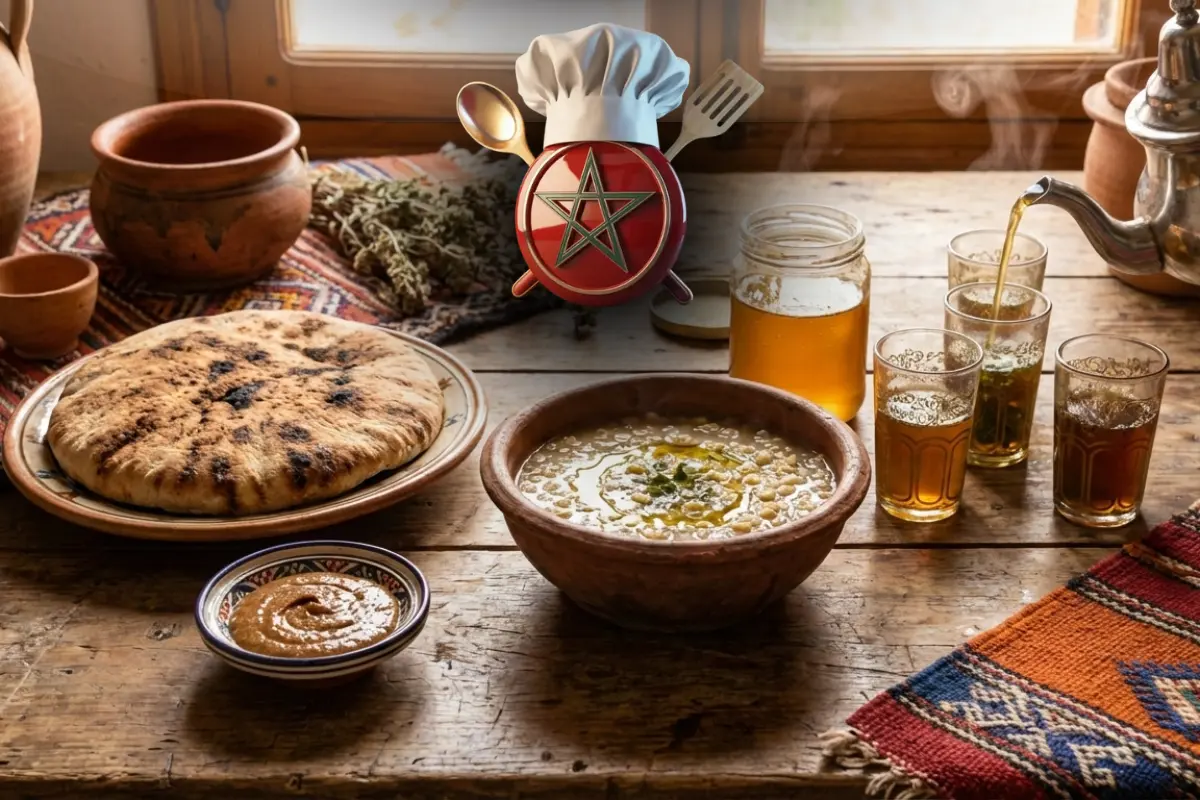
Introduction: A Morning Ritual Rooted in Heritage
The Amazigh breakfast table is a reflection of Morocco’s rural traditions, natural abundance, and cultural pride. It is not just a meal—it is a ritual of hospitality, nourishment, and connection to the land. Featuring amlou, honey, barley soup, Moroccan tea, and Amazigh bread, this breakfast embodies the essence of Amazigh culinary wisdom.
Amlou: The Amazigh Superfood
Amlou is a rich spread made from roasted almonds, argan oil, and honey. It is often described as Morocco’s version of nut butter, but with a unique flavor and nutritional profile. Amlou provides healthy fats, protein, and antioxidants, making it a staple of the Amazigh breakfast table. Served with bread, it symbolizes both tradition and modern health trends.
Honey: Nature’s Sweet Gift
Moroccan honey, especially from thyme and orange blossoms, is a prized ingredient in Amazigh households. It is enjoyed with bread, mixed into amlou, or drizzled over porridge. Honey represents purity and natural abundance, and its medicinal properties have been valued for centuries.
Barley Soup: Nourishment and Warmth
Hssou bel sha’ir, or barley soup, is a comforting dish often served at breakfast in Amazigh communities. Made from barley flour, water, milk, and sometimes butter, it is rich in fiber and minerals. This soup provides warmth during cold mornings in the Atlas Mountains and sustains energy throughout the day.
Moroccan Mint Tea: The Drink of Hospitality
No Amazigh breakfast is complete without Moroccan mint tea Traditional Amazigh bread, baked in clay ovens or on hot stones, is the cornerstone of the breakfast table. Made from barley or whole wheat, it is hearty, rustic, and deeply satisfying. Bread is paired with amlou, honey, olive oil, or butter, reflecting the diversity of Moroccan agriculture. The Amazigh breakfast table reflects a balance of tradition and nutrition. It provides energy, supports digestion, and celebrates Morocco’s agricultural wealth. Each element—whether amlou or mint tea—carries cultural symbolism and connects families to their heritage. Today, the Amazigh breakfast is gaining international attention. Culinary enthusiasts highlight amlou as a superfood, Moroccan mint tea as a cultural icon, and Amazigh bread as a rustic artisanal product. Hotels and restaurants across Morocco now serve Amazigh breakfast spreads to showcase authenticity and attract global visitors. The Amazigh breakfast table is more than food—it is a cultural statement. With amlou, honey, barley soup, mint tea, and bread, it represents Morocco’s rural wisdom, hospitality, and nutritional richness. For Moroccans and global food lovers alike, the Amazigh breakfast is a timeless ritual that celebrates both tradition and health.Amazigh Bread: The Foundation of the Table
Other Elements of the Amazigh Breakfast
Cultural and Nutritional Importance
Modern Appeal and Global Recognition
Conclusion: A Table of Heritage and Hospitality