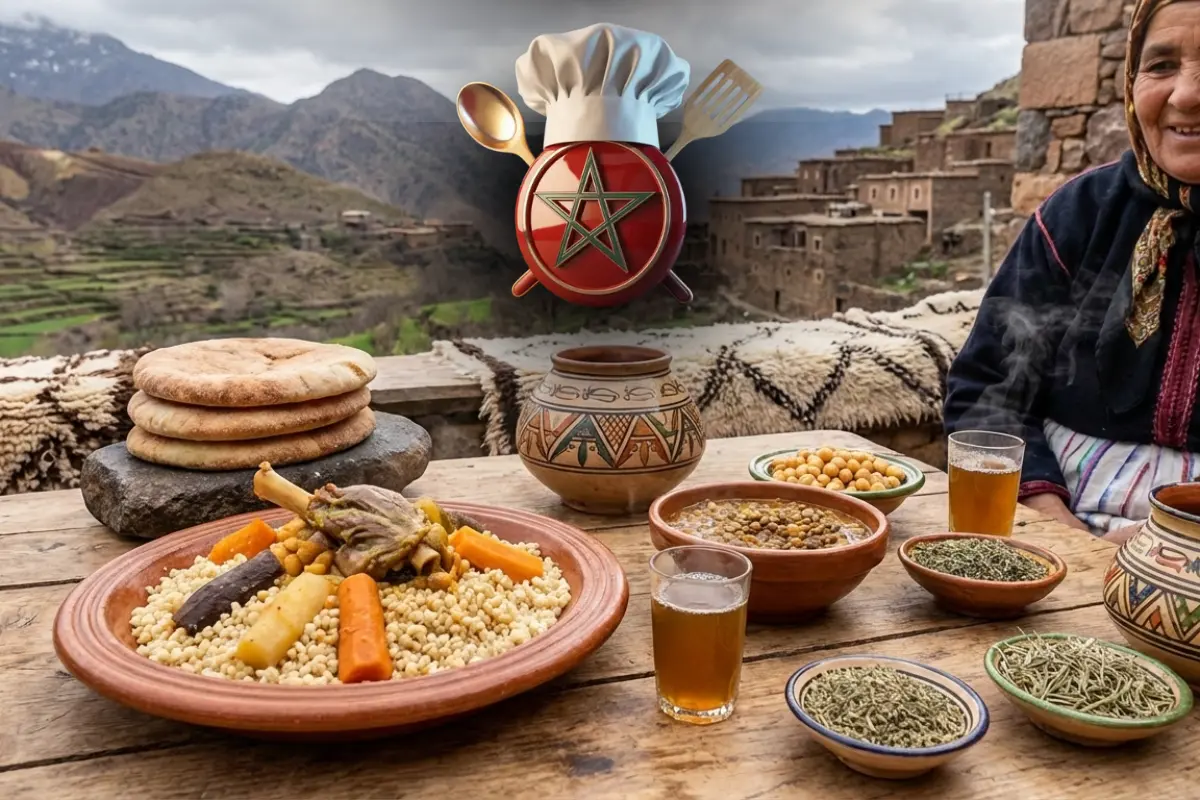
Introduction: The Culinary Identity of the Amazigh People
The Amazigh, also known as Berbers, are the indigenous people of North Africa, with deep roots in Morocco’s mountains, deserts, and plains. Their food traditions reflect resilience, simplicity, and a profound connection to nature. Amazigh cuisine is not only about nourishment—it is a cultural language that expresses identity, hospitality, and community.
Staple Ingredients in Amazigh Cuisine
- Barley and wheat: Essential grains used in bread, couscous, and porridge.
- Olive oil: A cornerstone of Amazigh cooking, symbolizing purity and abundance.
- Legumes: Lentils, chickpeas, and beans provide protein and sustenance.
- Herbs and spices: Thyme, rosemary, cumin, and coriander reflect the natural landscapes of the Atlas Mountains.
- Dairy: Goat and sheep milk, often transformed into butter, cheese, and fermented drinks.
Iconic Amazigh Dishes
- Amazigh Couscous: Traditionally prepared with barley or corn, steamed slowly and served with vegetables or meat.
- Tagoula: A porridge made from barley flour, often eaten during winter or special rituals.
- Tafarnout Bread: Flatbread baked in clay ovens or directly on hot stones, symbolizing Amazigh ingenuity.
- Asban: A festive dish of stuffed intestines with rice, herbs, and spices, prepared during Eid and family celebrations.
- Amazigh Tea Rituals: Herbal teas made with thyme, rosemary, or sage, reflecting the healing traditions of Amazigh culture.
Food and Cultural Rituals
Amazigh food traditions are deeply tied to rituals and community life. Couscous is prepared communally on Fridays, symbolizing unity. Bread-making is a sacred act, often performed by women as a sign of continuity and heritage. During weddings and harvest festivals, special dishes like asban and sweet pastries are shared to honor guests and ancestors.
Seasonal and Regional Variations
In the Atlas Mountains, Amazigh cuisine emphasizes barley, goat dairy, and mountain herbs. In the Sahara, dates, camel milk, and spiced meats dominate. Coastal Amazigh communities incorporate fish and seafood, blending maritime abundance with traditional techniques. These variations highlight the adaptability of Amazigh food culture to diverse environments.
Health and Sustainability
Amazigh food traditions emphasize natural, locally sourced ingredients. Whole grains, legumes, and herbs provide balanced nutrition, while traditional cooking methods minimize waste. This sustainable approach aligns with modern global movements toward organic and eco-friendly diets.
Global Influence
Amazigh cuisine is gaining recognition worldwide. Restaurants in Europe and America feature Amazigh couscous, stone-baked bread, and herbal teas. Food festivals highlight Amazigh traditions as part of Morocco’s broader culinary identity, showcasing the richness of indigenous culture.
Conclusion: Preserving Amazigh Culinary Heritage
Amazigh food traditions are more than recipes—they are cultural treasures passed down through generations. From couscous and bread to herbal teas and festive dishes, Amazigh cuisine embodies resilience, hospitality, and identity. As global interest in indigenous food grows, Amazigh culinary heritage stands as a timeless symbol of Morocco’s diversity and cultural pride.