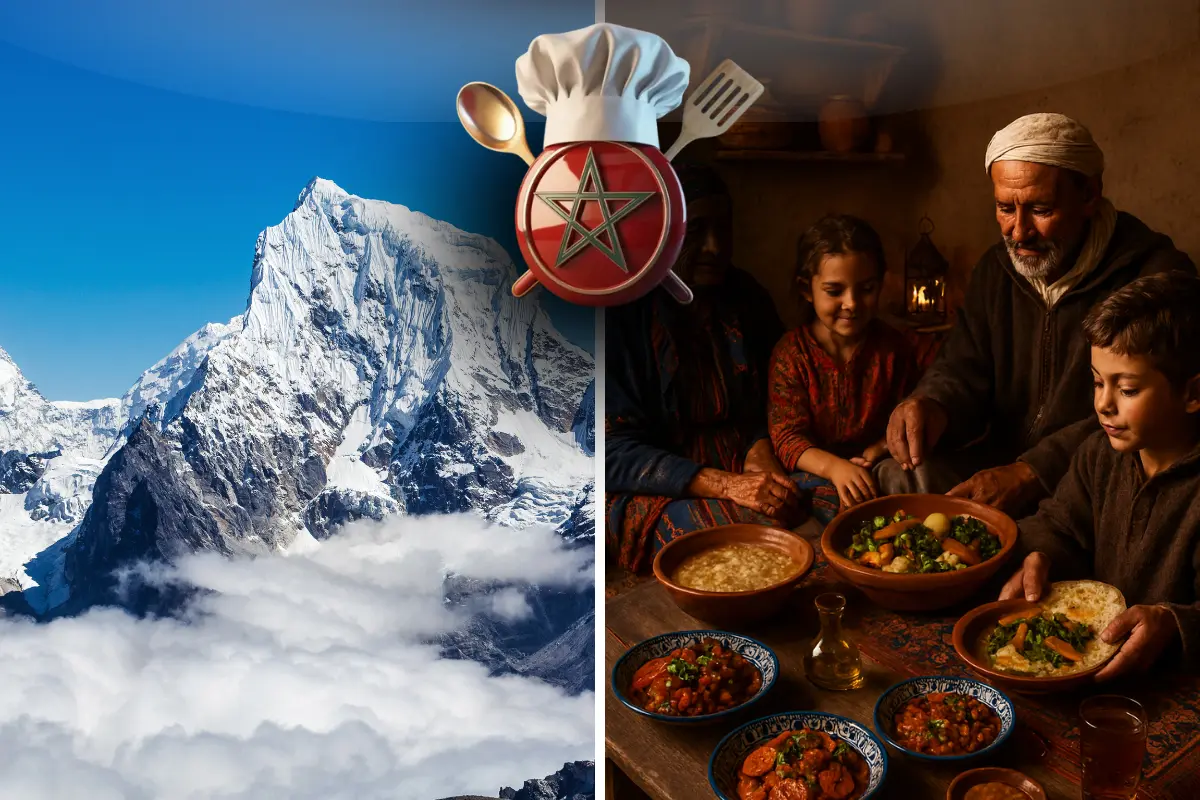
Introduction: Plant-Based Heritage from the Atlas Mountains
Amazigh cuisine, rooted in Morocco’s mountainous and rural regions, offers a treasure trove of vegetarian dishes that reflect simplicity, sustainability, and ancestral wisdom. These meals are crafted from seasonal vegetables, grains, olive oil, and herbs, showcasing the Amazigh people’s deep connection to the land and their resourceful culinary traditions.
Barley-Based Dishes: Nourishment and Tradition
- Hssou bel sha’ir: A warm barley soup made with barley flour, water, milk, and sometimes butter. It’s a staple breakfast dish in Amazigh homes, especially during cold seasons.
- Aghroum n’chaa: Barley flatbread baked on hot stones or in clay ovens, often served with olive oil or amlou.
Vegetable Tagines and Stews
Tagines are central to Amazigh cooking, and vegetarian versions are common in rural households:
- Tagine with pumpkin and chickpeas: Slow-cooked with garlic, cumin, and preserved lemon.
- Wild greens tagine: Made with foraged herbs, onions, and olive oil, reflecting seasonal availability.
- Potato and turnip stew: A hearty dish flavored with paprika and coriander.
Salads and Side Dishes
- Tomato and onion salad: Dressed with olive oil and lemon juice.
- Roasted pepper salad: Charred peppers mixed with garlic and cumin.
- Carrot and orange salad: A refreshing combination often served in spring.
Olive Oil and Amlou: Staples of Amazigh Tables
Olive oil is a cornerstone of Amazigh cuisine, used in cooking and served raw with bread. Amlou, a blend of almonds, argan oil, and honey, is a prized spread that provides energy and flavor, especially during breakfast.
Seasonal Fruits and Natural Sweeteners
Fruits like figs, dates, pomegranates, and apples are enjoyed fresh or dried. They are often served with bread or used in simple desserts. Honey and carob syrup are traditional sweeteners that reflect Amazigh respect for natural ingredients.
Nutritional and Cultural Significance
Amazigh vegetarian dishes are rich in fiber, vitamins, and plant-based proteins. They support digestive health and reflect a sustainable lifestyle. Culturally, these meals symbolize humility, connection to nature, and communal living.
Modern Revival and Global Interest
As plant-based diets gain popularity worldwide, Amazigh vegetarian cuisine is being rediscovered by chefs and food enthusiasts. Its emphasis on whole foods, traditional techniques, and bold flavors makes it ideal for modern health-conscious audiences.
Conclusion: Culinary Wisdom Worth Celebrating
Amazigh vegetarian dishes offer more than nourishment—they tell stories of resilience, land stewardship, and cultural pride. From barley soups to wild herb tagines, this cuisine invites us to savor Morocco’s rural soul and timeless culinary wisdom.