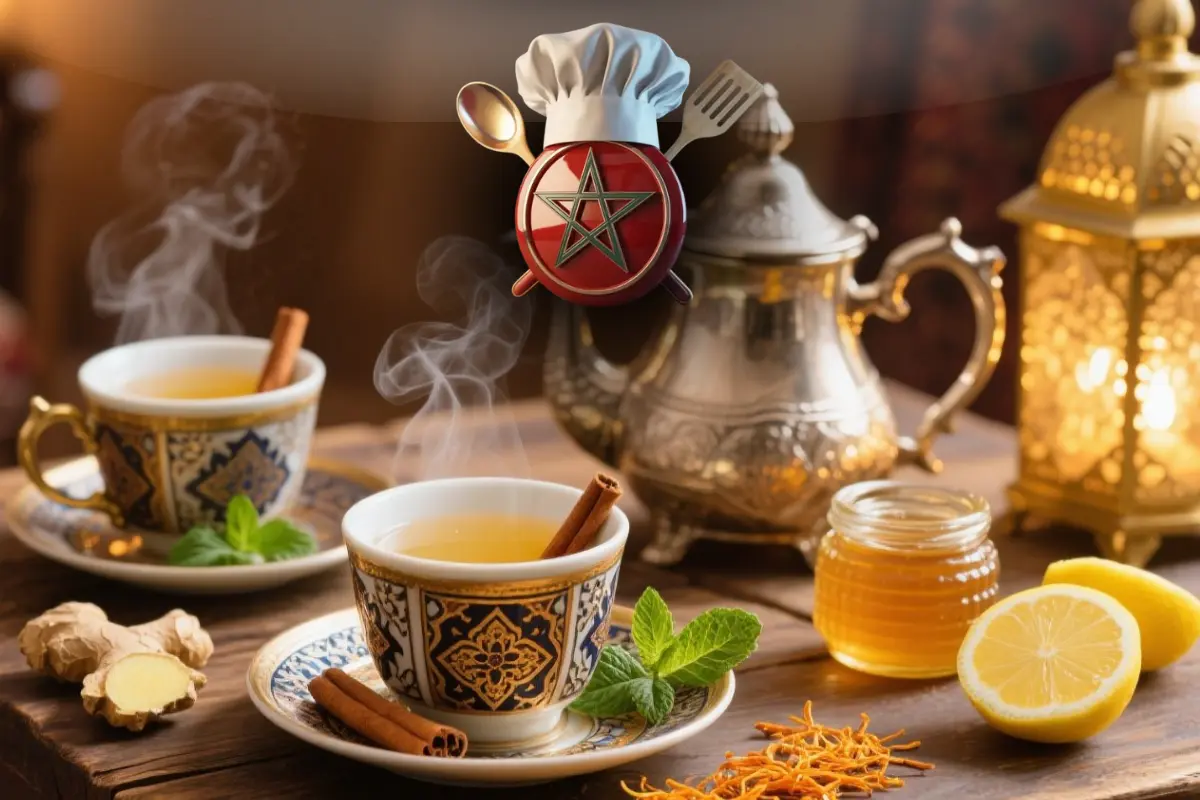
Moroccan Sherbat: More Than Just a Drink
Sherbat in Morocco refers to a variety of traditional drinks prepared with herbs, spices, and natural ingredients. These beverages are especially popular during cold days, offering warmth, comfort, and health benefits. Beyond their taste, sherbat embodies Moroccan hospitality and cultural identity, making it a cherished part of everyday life.
Cultural Importance of Sherbat
In Moroccan homes, serving sherbat is a gesture of welcome and care. Guests are often offered mint tea or herbal sherbat as a sign of respect. During winter, families prepare warming drinks with ginger, cinnamon, and honey to protect against the cold. Sherbat is also linked to traditional medicine, where herbs are used to promote healing and balance.
Key Ingredients and Their Benefits
- Mint: Refreshing and soothing, mint aids digestion and calms the body.
- Ginger: Known for its warming properties, ginger boosts immunity and circulation.
- Cinnamon: Adds sweetness and warmth while supporting blood sugar regulation.
- Fenugreek: Often used in winter sherbat, fenugreek seeds are rich in nutrients and believed to aid recovery.
- Honey: A natural sweetener with antibacterial properties, honey enhances flavor and health benefits.
- Lemon: Provides vitamin C and freshness, strengthening the immune system.
Health Benefits of Moroccan Sherbat
Moroccan sherbat is valued not only for its flavor but also for its wellness qualities:
- Boosts immunity: Ingredients like ginger, lemon, and honey help protect against seasonal illnesses.
- Improves digestion: Mint and fenugreek aid in soothing the stomach and supporting healthy digestion.
- Provides warmth and comfort: Spices such as cinnamon and ginger generate internal warmth, making sherbat ideal for cold days.
- Natural energy: Honey and herbs provide sustained energy without artificial additives.
- Stress relief: Herbal infusions like verbena and anise promote relaxation and calmness.
Sherbat in Moroccan Hospitality
Offering sherbat to guests is a cultural ritual that reflects generosity. In winter, families prepare large pots of herbal drinks to share with visitors. This tradition strengthens social bonds and highlights Morocco’s emphasis on warmth and community.
Modern Adaptations
Today, Moroccan sherbat is being reimagined in cafes and wellness spaces. Chefs and mixologists experiment with new flavors, combining traditional herbs with modern ingredients like vanilla or matcha. These adaptations make sherbat appealing to younger generations while preserving its cultural roots.
Conclusion: A Drink of Wellness and Tradition
Moroccan sherbat is more than a beverage—it is a symbol of care, hospitality, and cultural pride. Its health benefits, comforting warmth, and deep-rooted traditions make it an essential part of Moroccan life. For anyone seeking to experience Morocco’s culinary heritage, sherbat offers a flavorful journey into wellness and community.