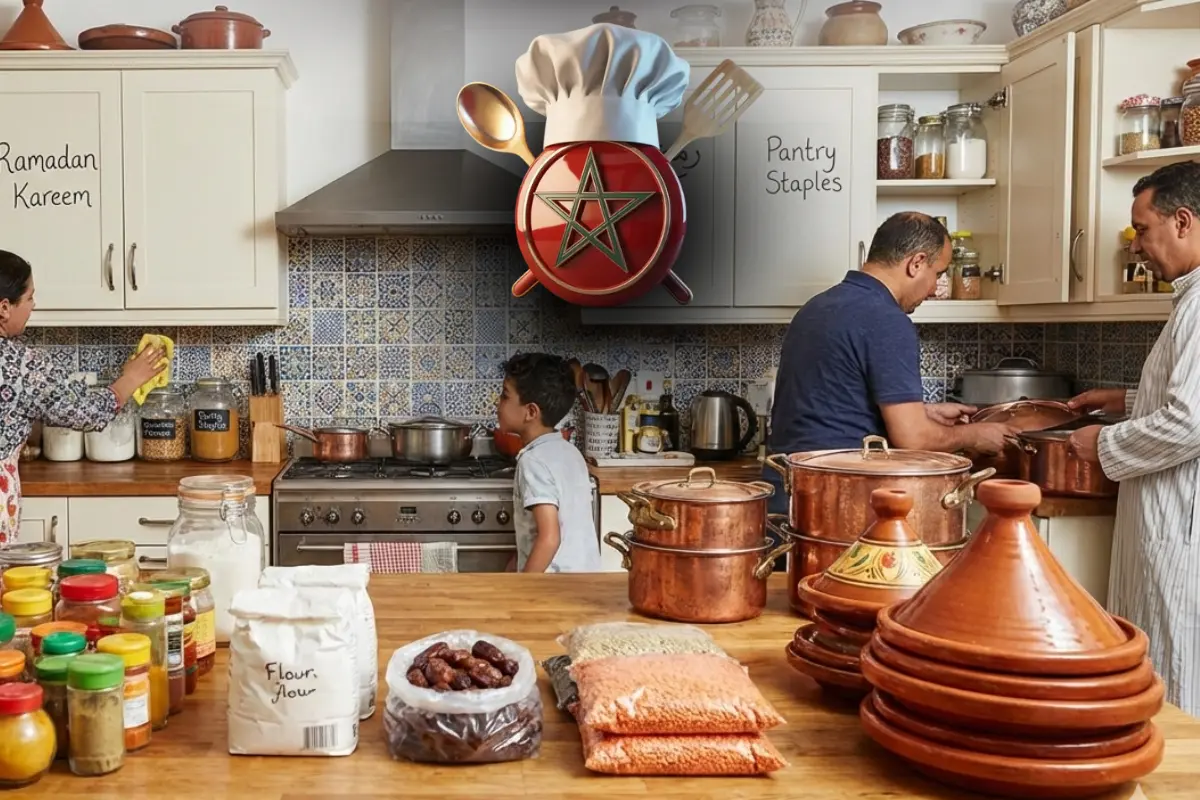
Introduction: The Foundation of a Blessed Ramadan
Walk into any Moroccan home two weeks before Ramadan, and you'll witness a beautiful transformation. Mothers and grandmothers are deep-cleaning pantries, testing spice blends, organizing freezers, and making lists. This isn't just cleaning—it's a sacred preparation for the most important month of the year.
A well-prepared Moroccan kitchen is the secret to a stress-free, spiritually fulfilling Ramadan. When your pantry is stocked with essential ingredients, your cookware is ready, and your freezer holds prepared batches of harira and chebakia, you can focus on what truly matters: prayer, family, and spiritual growth.
This comprehensive guide walks you through exactly how Moroccan families prepare their kitchens for Ramadan—from the complete shopping list to storage strategies, essential cookware, and make-ahead recipes. Whether this is your first Ramadan or your fiftieth, these time-tested tips will help you enter the blessed month organized, confident, and ready to cook with love.

The Moroccan Kitchen Preparation Timeline
When to Start (The 4-Week Plan)
Moroccan grandmothers know: early preparation prevents Ramadan stress. Here's the optimal timeline:
| Timeline | Focus Area | Key Tasks |
|---|---|---|
| 4 Weeks Before | Deep cleaning & inventory | Clean pantry, fridge, freezer Take inventory of existing items Make master shopping list |
| 3 Weeks Before | Major shopping & equipment | Buy non-perishables Replace worn cookware Stock up on spices |
| 2 Weeks Before | Batch cooking begins | Make chebakia Prepare sellou Mix spice blends |
| 1 Week Before | Final preparations | Make harira bases (freeze) Assemble briwat (freeze) Buy fresh items Organize workspace |
| Final 2-3 Days | Fresh items & mindset | Buy perishables Set up cooking stations Mental/spiritual preparation |
🌙 The Moroccan Tradition
In Morocco, the month of Sha'ban (شعبان)—the month before Ramadan—is called "the preparation month." Markets overflow with Ramadan ingredients, families gather to make chebakia together, and the anticipation builds. This preparation is itself an act of worship.
Essential Moroccan Cookware & Tools
The Non-Negotiable Equipment
You don't need a fancy kitchen, but these items make Moroccan Ramadan cooking dramatically easier:
| Item | Why Essential | Investment Level | Where to Buy |
|---|---|---|---|
| Large Soup Pot (8-10L) | For making harira in big batches | 💰💰 Medium | Any home goods store |
| Tagine Pot (Clay or Cast Iron) | Authentic flavor, even heat distribution | 💰💰💰 Medium-High | Moroccan specialty shops, Amazon |
| Couscoussier (Couscous Steamer) | Perfect fluffy couscous every time | 💰💰 Medium | Moroccan markets, online |
| Heavy-Bottom Dutch Oven | Alternative to tagine, multi-purpose | 💰💰💰 High | Le Creuset, Lodge, home stores |
| Pressure Cooker | Quick tagines when time is short | 💰💰 Medium | Any appliance store |
| Large Mixing Bowls (Set) | Salad prep, mixing dough | 💰 Low | Dollar stores, home goods |
| Sharp Chef's Knife | Chopping vegetables efficiently | 💰💰 Medium | Kitchen supply stores |
| Food Processor | Grating tomatoes, chopping herbs quickly | 💰💰💰 High | Appliance stores |
| Large Strainer/Colander | Draining pasta, washing vegetables | 💰 Low | Any home goods store |
| Glass Storage Containers (Many!) | Storing salads, prepped ingredients | 💰💰 Medium | IKEA, home stores |
Nice-to-Have Tools (Makes Life Easier)
- Slow Cooker/Crock-Pot: Set tagine in morning, ready at iftar
- Immersion Blender: Smooth harira texture, quick smoothies
- Electric Tea Kettle: Fast boiling for tea service
- Spice Grinder: Fresh ground spices = better flavor
- Kitchen Scale: Precise measurements for baking
- Large Cutting Board: Dedicated veggie prep space
- Mortar & Pestle: Traditional spice grinding (like grandma!)

The Complete Moroccan Ramadan Pantry
Essential Spices & Seasonings (The Foundation)
Moroccan cuisine lives and breathes through its spices. Stock these essentials:
| Spice/Seasoning | Quantity (30 Days) | Uses | Storage Tip |
|---|---|---|---|
| Ras el Hanout | 200g (or make your own) | Tagines, couscous, harira | Airtight jar, cool dark place |
| Ground Cumin | 100g | Everything! Daily use | Buy whole, grind as needed |
| Ground Ginger | 100g | Harira, tagines, tea | Replace every 6 months |
| Turmeric | 50g | Harira, chicken dishes | Store away from light |
| Sweet Paprika | 100g | Color, mild flavor | Hungarian is best quality |
| Cinnamon (Ground & Sticks) | 50g ground + 10 sticks | Sweet & savory, harira | Sticks last longer than ground |
| Black Pepper | 50g whole peppercorns | Daily seasoning | Grind fresh for best flavor |
| Saffron Threads | 2-3g (expensive but essential) | Special tagines, couscous | Freezer for long-term storage |
| Ground Coriander | 50g | Kefta, salads | Toast before grinding |
| Cayenne/Chili Powder | 30g (optional) | For those who like heat | Small amounts, very potent |
| Anise Seeds | 50g | Chebakia, sellou, tea | Whole seeds stay fresher |
| Sesame Seeds | 500g | Chebakia coating, sellou | Refrigerate to prevent rancidity |
🌶️ DIY Ras el Hanout Recipe (Fresh is Best!)
Mix together:
- 2 tbsp ground cumin
- 2 tbsp ground ginger
- 2 tbsp ground coriander
- 1 tbsp turmeric
- 1 tbsp sweet paprika
- 1 tbsp black pepper
- 1 tsp cinnamon
- 1 tsp cardamom
- 1 tsp nutmeg
- 1/2 tsp cloves
- 1/2 tsp cayenne (optional)
- Pinch of saffron threads (crushed)
Store in airtight jar. Makes about 1/2 cup. Lasts 3 months.
Dry Goods & Grains
| Item | Quantity (Family of 6) | Storage Method |
|---|---|---|
| Medium Couscous | 3-4 kg | Airtight container, cool dry place |
| All-Purpose Flour | 5 kg | Sealed bin (for bread, chebakia) |
| Green/Brown Lentils | 2 kg | Glass jars or sealed bags |
| Dried Chickpeas | 2 kg (or 10-12 cans cooked) | Soak night before or buy canned |
| White Beans | 500g | For harira variations |
| Vermicelli/Angel Hair Pasta | 1 kg | For harira (add last minute) |
| Basmati/Long Grain Rice | 2 kg | Airtight container |
| Almonds (Whole & Sliced) | 1 kg total | Refrigerator or freezer |
| Walnuts | 500g | Freezer (prevents rancidity) |
| Raisins | 500g | Airtight container |
Canned & Jarred Goods
| Item | Quantity | Uses |
|---|---|---|
| Crushed Tomatoes | 12-15 cans (400g each) | Harira, tagines, sauces |
| Tomato Paste | 6-8 tubes/small cans | Concentrated flavor for soups |
| Cooked Chickpeas | 10 cans (if not using dried) | Quick harira, salads |
| Green Olives (Pitted) | 4-5 jars | Chicken tagines |
| Preserved Lemons | 2-3 jars (or make your own) | Essential for authentic tagines |
| Olive Oil (Extra Virgin) | 3-4 liters | Cooking, salads, drizzling |
| Vegetable Oil | 2 liters | Frying briwat, chebakia |
| Argan Oil | 250ml (optional, expensive) | Amlou, special salads |
| Honey | 2-3 kg | Chebakia, tea, sellou |
Fresh Ingredients (Buy Weekly)
🥬 Weekly Fresh Shopping List:
| Category | Items | Frequency |
|---|---|---|
| Herbs | Cilantro (5-6 bunches), Parsley (5-6 bunches), Mint (2 bunches) | 2x per week - they wilt fast! |
| Aromatics | Onions (3kg), Garlic (500g), Ginger root (300g) | Weekly |
| Vegetables | Tomatoes, carrots, zucchini, peppers, eggplant, potatoes | Weekly based on menu |
| Proteins | Chicken (3-4kg), Lamb/Beef (2-3kg), Fish (1-2kg) | Buy fresh or freeze portions |
| Dairy | Milk (10L), Lben (3L), Yogurt (2kg), Butter (500g), Cheese | 2x per week |
| Eggs | 2-3 dozen | Weekly |
| Bread | Khobz, msemen (or make fresh) | Daily if possible (freshness matters!) |
| Fruit | Dates (2kg Medjool), oranges, apples, seasonal fruits | Weekly |

Freezer Preparation & Make-Ahead Strategy
The Moroccan Freezer Game Plan
A well-stocked freezer is a Moroccan mother's secret weapon during Ramadan. Here's what to prep and freeze:
| Item | When to Make | How to Freeze | Shelf Life | How to Use |
|---|---|---|---|---|
| Harira Base (No Pasta) | 1-2 weeks before | 2L portions in freezer bags or containers | 3 months | Thaw overnight, reheat, add vermicelli last 10 min |
| Chebakia | 2-3 weeks before | Airtight containers, room temp (not freezer!) | 1 month | Serve at room temp |
| Uncooked Briwat | 1 week before | Single layer on tray, freeze, then bag | 2 months | Fry or bake from frozen |
| Marinated Meat for Tagines | 1 week before | Zip-lock bags with marinade | 1 month | Thaw in fridge, cook as normal |
| Cooked Chickpeas | Anytime | 2-cup portions in freezer bags | 6 months | Add frozen to harira |
| Bread (Msemen, Baghrir) | Weekend before | Parchment paper between layers | 2 months | Reheat in pan or microwave |
| Grated Tomatoes | 1 week before | 2-cup portions in bags (lay flat) | 3 months | Use directly in harira/sauces |
| Chopped Herbs | Day of use (doesn't freeze well) | ❌ Don't freeze - buy fresh | - | Fresh only for best flavor |
❄️ Freezer Organization Tips:
- Label everything with contents and date (use permanent marker)
- Use freezer-safe bags and squeeze out all air
- Freeze liquids flat for space-saving stacking
- Create zones: Harira section, proteins section, sweets section
- Keep inventory list on freezer door (know what you have!)
- First in, first out: Use oldest items first
Make-Ahead Recipes (Pre-Ramadan Projects)
🍪 Project 1: Chebakia (Makes 80-100 pieces)
Timeline: 2-3 weeks before Ramadan
Time investment: 4-5 hours
Storage: Airtight containers, room temperature, lasts 1 month
See our complete chebakia recipe here
🥜 Project 2: Sellou (Makes 2kg)
Timeline: 2 weeks before Ramadan
Time investment: 2-3 hours
Storage: Glass jars, refrigerated, lasts 2 months
Quick recipe: Toast 1kg flour until golden, mix with 500g ground almonds, 200g sesame seeds (toasted), 100g powdered sugar, spices (cinnamon, anise), bind with 300ml melted butter + honey. Form into balls or store loose.
🍲 Project 3: Harira Base (Makes 6 batches)
Timeline: 1 week before Ramadan
Time investment: 3 hours for 6 batches
Storage: Freeze in 2L portions, lasts 3 months
Batch cooking method: Use your largest pot, triple/quadruple the recipe, simmer all day, portion and freeze. Don't add vermicelli (add when reheating).
🥟 Project 4: Briwat Assembly (Makes 60-80 pieces)
Timeline: 1 week before Ramadan
Time investment: 2-3 hours
Storage: Freeze uncooked, lasts 2 months
Assembly tip: Make this a family activity! Kids can help fold. Freeze on trays, then transfer to bags once solid.

Kitchen Organization for Ramadan Efficiency
Setting Up Cooking Zones
Moroccan Ramadan cooking involves multiple dishes simultaneously. Organize your kitchen into zones:
| Zone | Purpose | What Goes Here |
|---|---|---|
| Zone 1: Prep Station | Chopping, mixing, assembling | Large cutting board, sharp knives, mixing bowls, food processor |
| Zone 2: Cooking Station | Stovetop cooking | Pots for harira, tagine, frying pan for briwat, wooden spoons |
| Zone 3: Salad Station | Cold dish preparation | Salad bowls, graters, dressing bottles, serving platters |
| Zone 4: Baking/Sweets | Bread warming, desserts | Oven area, cooling racks, serving plates for chebakia |
| Zone 5: Serving Staging | Plating & presentation | Counter space near dining area, serving dishes, trays |
Storage Container System
📦 Invest in These Containers:
- Glass containers with lids (various sizes): Salads, prepped vegetables (10-15 containers)
- Large plastic bins: Flour, sugar, couscous (3-4 bins)
- Glass jars (1-2L): Spices, dried goods, sellou (12-15 jars)
- Small spice jars with labels: Individual spices (20+ jars)
- Freezer bags (gallon & quart size): Freezing portions (2-3 boxes)
- Aluminum foil & plastic wrap: Covering dishes (stock up!)
The Ramadan Cooking Schedule Board
🗓️ Create a Visual Weekly Menu:
Many Moroccan mothers swear by a weekly menu board posted on the fridge:
- Sunday: Plan week's menus
- Monday: Major grocery shopping
- Tuesday-Thursday: Cook from freezer stock + fresh additions
- Friday: Special couscous day (traditional!)
- Saturday: Batch cook for next week, restock essentials
This eliminates daily decision fatigue: you know exactly what you're making each day!
The Ultimate Ramadan Shopping List
Printable Master List (Quantities for Family of 6, 30 Days)
🛒 SPICES & SEASONINGS:
- ☐ Ras el Hanout (200g)
- ☐ Cumin (100g)
- ☐ Ginger (100g)
- ☐ Turmeric (50g)
- ☐ Paprika (100g)
- ☐ Cinnamon sticks (10)
- ☐ Cinnamon ground (50g)
- ☐ Black peppercorns (50g)
- ☐ Saffron threads (2-3g)
- ☐ Coriander (50g)
- ☐ Anise seeds (50g)
- ☐ Sesame seeds (500g)
- ☐ Salt (1kg)
🌾 GRAINS & LEGUMES:
- ☐ Couscous medium (3-4kg)
- ☐ All-purpose flour (5kg)
- ☐ Green/brown lentils (2kg)
- ☐ Dried chickpeas (2kg) OR canned (12 cans)
- ☐ White beans (500g)
- ☐ Vermicelli pasta (1kg)
- ☐ Rice (2kg)
- ☐ Almonds whole (500g)
- ☐ Almonds sliced (500g)
- ☐ Walnuts (500g)
- ☐ Raisins (500g)
🥫 CANNED & JARRED:
- ☐ Crushed tomatoes (12-15 cans)
- ☐ Tomato paste (6-8 tubes)
- ☐ Green olives pitted (4-5 jars)
- ☐ Preserved lemons (2-3 jars)
- ☐ Extra virgin olive oil (3-4L)
- ☐ Vegetable oil (2L)
- ☐ Honey (2-3kg)
- ☐ Sugar (3kg)
🥛 DAIRY (Buy Weekly):
- ☐ Milk (10L per week)
- ☐ Lben/buttermilk (3L per week)
- ☐ Yogurt (2kg per week)
- ☐ Butter (500g per week)
- ☐ Cheese (as needed)
- ☐ Eggs (2-3 dozen per week)
🍖 PROTEINS (Buy Fresh or Freeze in Portions):
- ☐ Chicken (3-4kg per week)
- ☐ Lamb/beef (2-3kg per week)
- ☐ Fish (1-2kg per week)
🥬 FRESH PRODUCE (Buy 2x Per Week):
- ☐ Cilantro (5-6 bunches)
- ☐ Parsley (5-6 bunches)
- ☐ Mint (2 bunches)
- ☐ Onions (3kg)
- ☐ Garlic (500g)
- ☐ Fresh ginger root (300g)
- ☐ Tomatoes (3kg)
- ☐ Carrots (2kg)
- ☐ Potatoes (2kg)
- ☐ Zucchini (1kg)
- ☐ Eggplant (1kg)
- ☐ Bell peppers (1kg)
- ☐ Cucumbers (1kg)
- ☐ Seasonal vegetables (as needed)
🍎 FRUITS:
- ☐ Dates Medjool (2-3kg for whole month)
- ☐ Oranges (2kg per week)
- ☐ Apples (1kg per week)
- ☐ Seasonal fruits (melons, berries, etc.)
🍞 BREAD (Buy Daily or Make):
- ☐ Khobz (Moroccan round bread)
- ☐ Msemen (or ingredients to make)
- ☐ Baghrir (or ingredients to make)
🍵 BEVERAGES:
- ☐ Green tea (Chinese gunpowder) (500g)
- ☐ Fresh mint (for tea, buy weekly)
- ☐ Orange blossom water (1 bottle)
- ☐ Rose water (1 bottle, optional)
💰 Estimated Total Cost (Morocco, 2026):
| Category | Estimated Cost (MAD) |
|---|---|
| Spices & Dry Goods (One-time stock-up) | 800-1,200 |
| Canned & Jarred Items | 500-700 |
| Weekly Fresh Items (x4 weeks) | 2,000-2,800 |
| Proteins (4 weeks) | 2,500-3,500 |
| Dairy & Eggs (4 weeks) | 800-1,200 |
| Bread (30 days) | 300-450 |
| Sweets ingredients (chebakia, sellou) | 400-600 |
| TOTAL FOR 30 DAYS: | 7,300-10,450 MAD ($730-1,045 USD) |
*For family of 6. Adjust based on your family size and eating habits.
Money-Saving Strategies
How to Reduce Ramadan Grocery Costs
| Strategy | How It Works | Potential Savings |
|---|---|---|
| Buy in Bulk | Spices, grains, canned goods from wholesale markets | 20-30% off retail prices |
| Shop Seasonal Produce | Buy vegetables that are abundant/cheap that month | 40-50% compared to off-season |
| Make vs Buy Sweets | Homemade chebakia costs 70% less than bakery | 200-400 MAD saved |
| Protein Rotation | Chicken 3x week, legumes 2x, expensive meat 2x | 30-40% on protein costs |
| Freeze Sale Items | Buy meat when on sale, freeze in portions | 25% on meat costs |
| Bakery Bread | Cheaper than ingredients to make daily | Time + money saved |
| Group Shopping | Split bulk purchases with neighbors/family | Access to bulk prices without waste |
Deep Cleaning & Organizing (Week Before Ramadan)
The Moroccan Kitchen Deep Clean Checklist
✅ 4 WEEKS BEFORE - The Big Clean:
- ☐ Empty entire pantry, wipe shelves, check expiration dates
- ☐ Empty fridge, deep clean, discard old items
- ☐ Defrost and clean freezer completely
- ☐ Clean oven thoroughly (lots of baking ahead!)
- ☐ Descale kettle and clean coffee maker
- ☐ Wash all storage containers
- ☐ Clean stovetop, burners, hood
- ☐ Organize spice drawer/cabinet, discard old spices
- ☐ Sharpen all knives
- ☐ Check cookware for damage, replace if needed
✅ 2 WEEKS BEFORE - Organization:
- ☐ Line shelves with fresh liner paper
- ☐ Label all containers (use label maker or tape)
- ☐ Arrange pantry by category (spices, grains, canned, etc.)
- ☐ Create "Ramadan zone" in pantry for frequently used items
- ☐ Set up freezer zones (proteins, harira, sweets, bread)
- ☐ Clean dining area, set up serving station
✅ 1 WEEK BEFORE - Final Touches:
- ☐ Stock up on dish soap, sponges, trash bags
- ☐ Clean dish towels, aprons
- ☐ Prepare cooking zone stations
- ☐ Post weekly menu on fridge
- ☐ Set up tea service area

Special Considerations
Small Kitchen? No Problem!
🏠 Maximizing Limited Space:
- Vertical storage: Use wall-mounted shelves, magnetic spice racks
- Multi-purpose tools: One large pot instead of many, Dutch oven instead of tagine
- Minimize duplicates: Share bulk purchases with family/neighbors
- Daily shopping: Buy fresh items daily instead of bulk storage
- Simplify menus: One-pot meals, fewer dishes per iftar
- Use external storage: Bedroom closet for extra pantry items
First Time Hosting Ramadan?
🌟 Start Simple, Build Confidence:
Week 1: Focus on mastering harira + one simple tagine. Buy bread and desserts.
Week 2: Add 2-3 easy salads to your repertoire.
Week 3: Try making msemen or baghrir at home.
Week 4: Experiment with one new dish.
Don't try to be a Moroccan grandmother on Day 1! Even simple harira + rotisserie chicken + salad + dates is a complete, respectable iftar.
Living Abroad Without Moroccan Markets?
🌍 Substitute Guide for Diaspora Cooks:
| Can't Find | Use Instead |
|---|---|
| Preserved lemons | Fresh lemon + salt (quick pickle method) |
| Ras el hanout | Make your own (recipe above) |
| Khobz bread | Pita bread, naan, or homemade |
| Moroccan olives | Any green olives (Castelvetrano are good) |
| Fresh cilantro/parsley | Frozen works for harira (not salads) |
| Lben (buttermilk) | Regular buttermilk or thin yogurt |
| Argan oil | Skip it (expensive, not essential) |
Where to shop: Middle Eastern markets, Amazon, Moroccan specialty online stores, International sections of supermarkets
Frequently Asked Questions
When should I start preparing my kitchen for Ramadan?
Ideally 3-4 weeks before Ramadan begins. This gives you time to deep clean, shop for non-perishables, make chebakia and sellou, and batch cook harira. However, even one week of prep makes a huge difference!
What's the minimum I need to stock for Ramadan?
Absolute essentials: Ingredients for harira (lentils, chickpeas, tomatoes, spices), dates, couscous or rice, chicken, basic vegetables, olive oil, flour, eggs, milk, tea. Everything else is enhancement. You can make a full Ramadan with just these basics.
Can I freeze harira with pasta already in it?
No! Pasta gets mushy when frozen and reheated. Always make harira base, freeze without pasta, then add vermicelli in the last 10 minutes when reheating. This is crucial!
How much should I budget for Ramadan groceries?
For a family of 6 in Morocco: 7,000-10,000 MAD ($700-1,000) for the entire month including everything. For family of 4: 5,000-7,000 MAD. Living abroad costs more (adjust for local prices). Budget-conscious families can do it for 30-40% less with smart shopping.
Do I really need a tagine pot?
No! While authentic, it's not essential. A heavy-bottomed Dutch oven or even a large pot with tight-fitting lid works great. Many modern Moroccan homes use pressure cookers for speed. The spices and slow cooking matter more than the pot!
How do working people manage Ramadan cooking?
Batch cooking is key: Spend Sundays preparing multiple harira batches (freeze), pre-marinate meats (freeze), make sweets in advance. Use slow cookers set before Fajr. Many working families also order catering 2-3 nights per week—absolutely okay!
What if I run out of something mid-Ramadan?
Don't panic! Moroccan cooking is flexible. No cilantro? Double the parsley. No lamb? Use chicken or make it vegetarian. No preserved lemons? Use fresh lemon + extra salt. The spirit of the meal matters more than perfect ingredients.
Conclusion: Ready for a Blessed Month
A well-prepared kitchen isn't about perfection—it's about removing obstacles between you and what truly matters during Ramadan. When your pantry is stocked, your freezer holds ready-made portions, and your workspace is organized, you can cook with ease instead of stress.
This preparation allows you to spend less time worrying about "what's for iftar" and more time on Quran recitation, prayer, family connection, and spiritual growth. Your kitchen becomes a place of barakah (blessing) rather than burden.
👵 Grandma's Wisdom:
"A prepared kitchen is like a prepared heart—ready to receive blessings. Cook with intention, organize with purpose, and remember: the best iftar is the one made with love and shared with gratitude, even if it's simple."
📋 Your 4-Week Action Plan (Print This!):
Week 4 Before Ramadan: Deep clean kitchen, take inventory, make master shopping list
Week 3 Before: Major shopping trip for non-perishables, replace old cookware
Week 2 Before: Make chebakia, sellou, organize storage systems
Week 1 Before: Batch cook harira, assemble briwat, final fresh shopping
Day Before Ramadan: Final fresh produce, set up cooking zones, mental preparation
You've got this! 💪
Download Your Free Resources:
- 📄 Printable Kitchen Prep Checklist PDF
- 🛒 Complete Shopping List (Customizable by Family Size)
- 📅 4-Week Preparation Calendar
- 🏷️ Moroccan Pantry Labels (Arabic & English)
Join our community: Share your kitchen prep photos with #MaCookingRamadan and inspire other cooks!
May Allah accept your preparations and make this Ramadan your best yet. Ramadan Mubarak!
رمضان مبارك