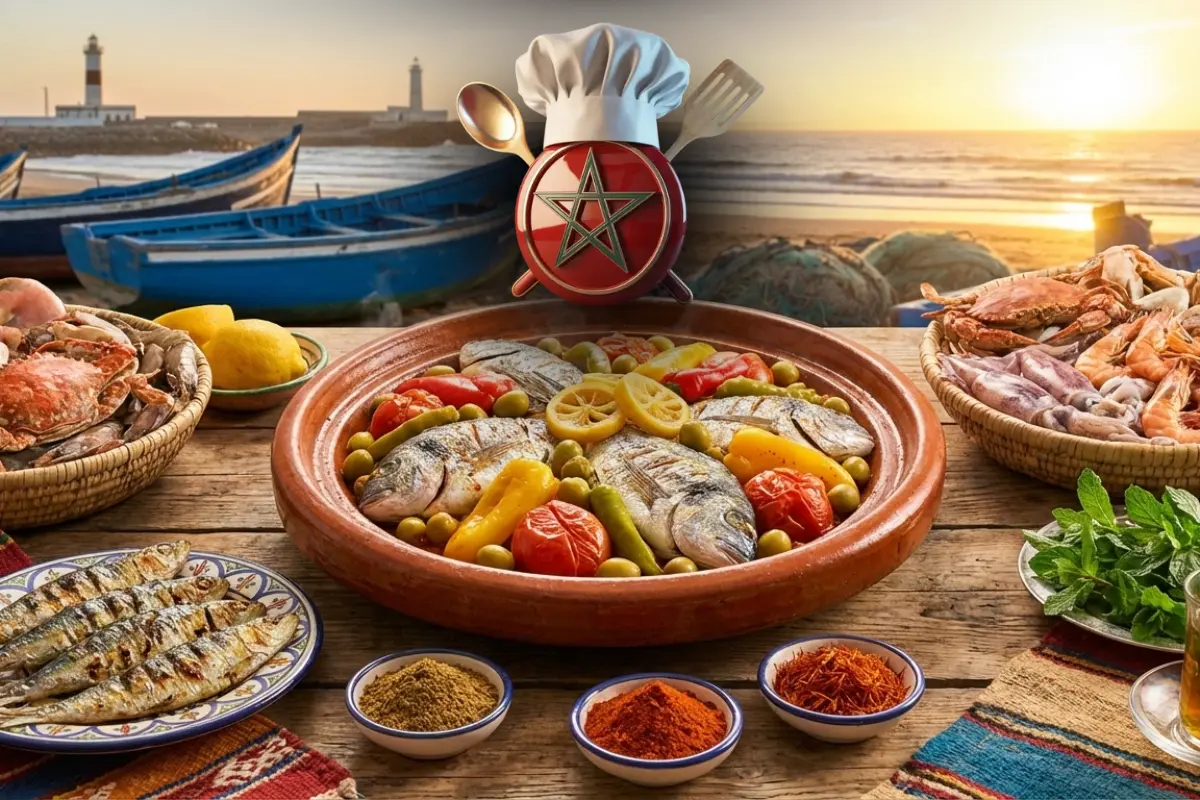
Introduction: Morocco’s Coastal Culinary Treasure
Morocco, with its vast Atlantic coastline and Mediterranean shores, has a rich tradition of incorporating fish and seafood into its cuisine. Fish dishes are not only a reflection of Morocco’s geography but also a cornerstone of its culinary identity, blending freshness, spices, and cultural heritage.
Cultural Significance of Fish in Moroccan Cuisine
Fish symbolizes abundance and hospitality in Moroccan culture. Coastal communities, especially in cities like Essaouira, Agadir, and Tangier, have developed unique recipes that highlight the diversity of local catches. Fish dishes are often served during family gatherings, festive occasions, and Friday meals, reinforcing their cultural importance.
Popular Moroccan Fish Dishes
- Fish Tagine: Prepared with chermoula marinade, tomatoes, peppers, and olives, slow-cooked in a clay pot.
- Grilled Sardines: A national favorite, seasoned with cumin, paprika, and lemon, often enjoyed street-side.
- Seafood Pastilla: A modern twist on the traditional pigeon pastilla, filled with shrimp, calamari, and fish.
- Fish Couscous: A coastal specialty where steamed couscous is paired with fish and vegetables.
- Harira with Fish: A regional variation of the famous soup, enriched with seafood for added flavor.
Nutritional Value and Health Benefits
Fish is a vital component of the Moroccan diet, providing lean protein, omega-3 fatty acids, and essential vitamins. Regular consumption supports heart health, brain function, and overall wellness. Moroccan fish dishes, often prepared with olive oil, herbs, and vegetables, align with the principles of the Mediterranean diet.
Fishing Traditions and Regional Diversity
Amazigh fishing communities along the Atlantic coast have preserved ancestral techniques, from net fishing to drying and salting fish. These traditions influence regional recipes and ensure sustainability. In the Mediterranean regions, lighter preparations with herbs and citrus dominate, reflecting local tastes.
Fish in Modern Moroccan Gastronomy
Contemporary Moroccan chefs are reimagining fish dishes for global audiences. From fine dining restaurants in Marrakech to street food stalls in Casablanca, fish is celebrated as a versatile ingredient. Fusion dishes combine Moroccan spices with international techniques, showcasing the adaptability of Moroccan seafood cuisine.
Economic and Social Impact
Fishing is a major industry in Morocco, supporting thousands of families and contributing to exports. The prominence of fish in Moroccan cuisine reflects this economic importance, linking food culture to livelihoods and national identity.
Conclusion: A Pillar of Moroccan Culinary Heritage
Fish dishes in Morocco are more than meals—they are cultural expressions, nutritional treasures, and economic lifelines. From sardines grilled on the streets of Rabat to elaborate fish tagines served in coastal homes, seafood remains a vital part of Morocco’s culinary heritage and its global gastronomic reputation.