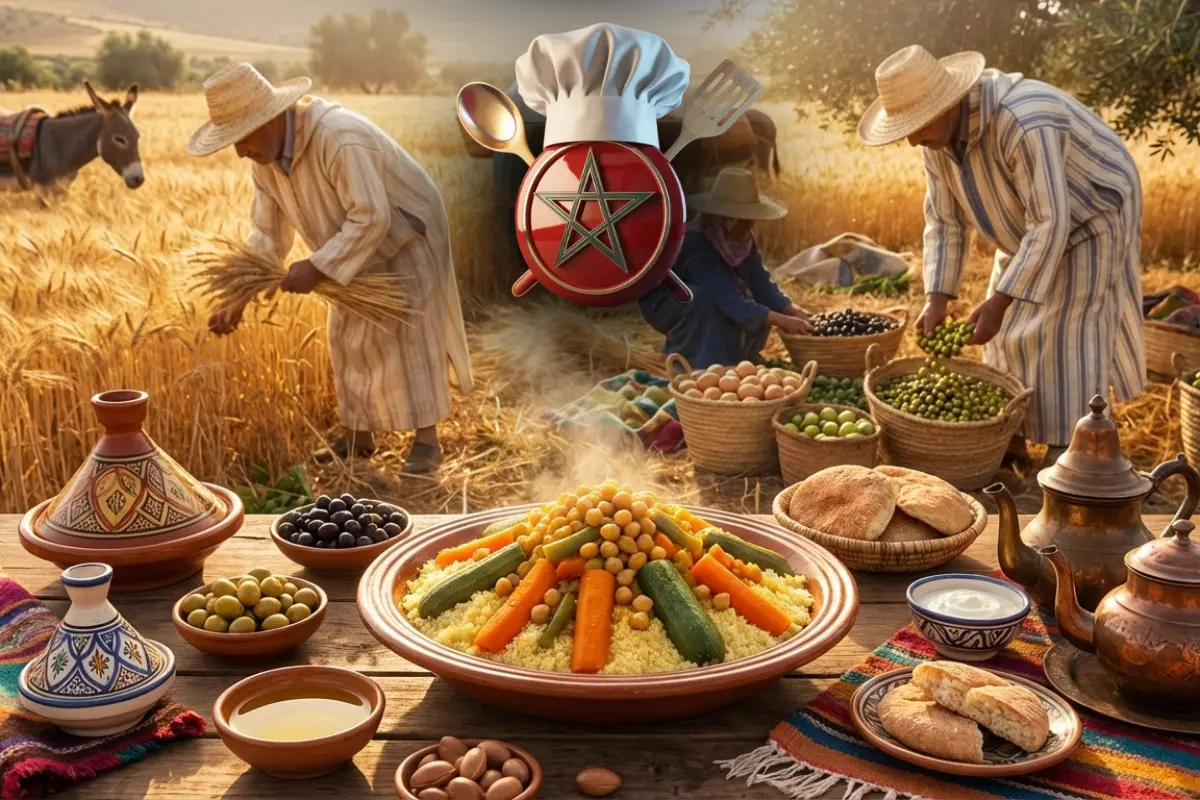
Introduction: Agriculture as the Foundation of Moroccan Cuisine
Moroccan cuisine is inseparable from its agricultural heritage. The country’s fertile plains, mountain terraces, and desert oases provide a diverse range of crops that define Morocco’s culinary identity. From couscous grains to olives and dates, agriculture is the backbone of Morocco’s food culture and hospitality.
Key Agricultural Products in Morocco
- Cereals: Wheat, barley, and corn form the basis of couscous, bread, and porridges.
- Olives: Morocco is one of the world’s leading producers of olives and olive oil, essential in tagines and salads.
- Fruits: Citrus fruits, figs, pomegranates, and dates enrich Moroccan desserts and festive meals.
- Vegetables: Tomatoes, carrots, zucchini, and potatoes are staples in tagines and couscous.
- Herbs and spices: Mint, saffron, cumin, and coriander reflect Morocco’s agricultural diversity and global spice trade.
Amazigh Farming Traditions
In the Atlas Mountains, Amazigh communities practice terrace farming, cultivating barley, legumes, and herbs. These traditions sustain rural families and provide the foundation for rustic dishes like tagoula (barley porridge) and herbal teas. Amazigh farming emphasizes sustainability and respect for nature, values that resonate in Moroccan cuisine.
Farm-to-Table Connection
Moroccan cuisine thrives on fresh, seasonal produce. Markets (souks) are filled with local crops directly from farms, ensuring that dishes like couscous and tagine reflect the rhythms of the land. This farm-to-table approach is not a modern trend—it is a centuries-old practice embedded in Moroccan life.
Influence on Iconic Moroccan Dishes
- Couscous: Made from locally grown wheat or barley, steamed to perfection.
- Tagine: Slow-cooked stews featuring vegetables, legumes, and meats sourced from Moroccan farms.
- Harira: A soup enriched with lentils, chickpeas, and tomatoes, reflecting Morocco’s agricultural abundance.
- Pastilla: Combining poultry with almonds and cinnamon, showcasing Morocco’s blend of farming and trade.
Sustainability and Modern Challenges
Moroccan agriculture faces challenges such as water scarcity and climate change. Yet, traditional practices like terrace farming, crop rotation, and reliance on local seeds offer sustainable solutions. Modern initiatives promote organic farming and eco-tourism, linking agriculture to culinary innovation.
Global Influence
Moroccan agricultural products—such as olive oil, saffron, and dates—are exported worldwide, bringing Moroccan flavors to international kitchens. Chefs globally incorporate Moroccan ingredients into fusion dishes, highlighting the country’s agricultural richness.
Conclusion: Agriculture as Culinary Identity
Agriculture in Morocco is more than an economic activity—it is a cultural foundation. By shaping couscous, tagine, and countless other dishes, farming traditions connect Moroccan cuisine to the land and its people. For locals and visitors alike, Moroccan food is a living testimony to the country’s agricultural heritage and culinary pride.