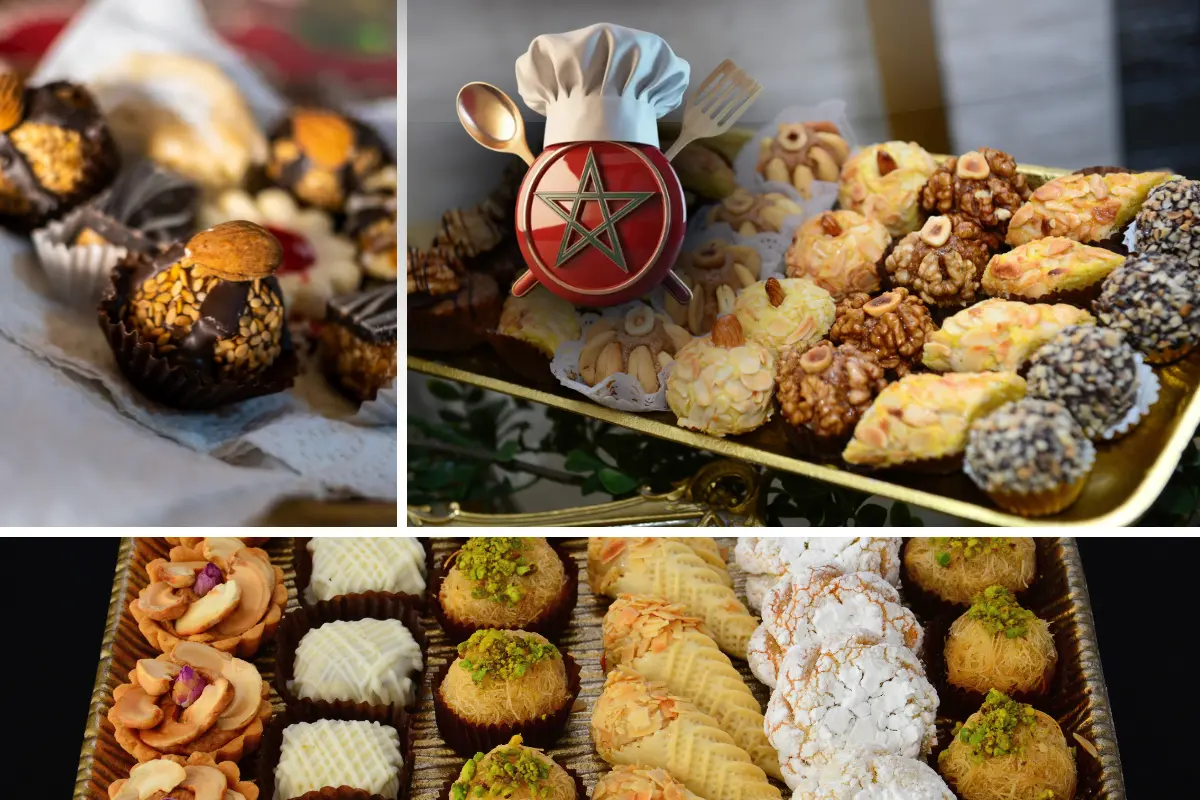
The Art of Moroccan Almond Pastries
Morocco has long been celebrated as a land of extraordinary culinary traditions, and nowhere is this more evident than in its remarkable collection of almond-based pastries. These delicate confections represent centuries of refined technique, cultural exchange, and an unwavering commitment to hospitality. From the winding streets of Fez to the bustling souks of Marrakech, the aroma of toasted almonds, orange blossom water, and honey fills the air, inviting visitors into a world where pastry-making is elevated to an art form.
Almonds hold a special place in Moroccan cuisine. The country is one of the leading producers of almonds in Africa, and the nut has been woven into the fabric of Moroccan food culture for over a thousand years. Unlike Western baking traditions that often rely heavily on butter and refined sugar, Moroccan almond pastries showcase a different philosophy: one that emphasizes the natural sweetness and richness of almonds themselves, enhanced by aromatic ingredients like orange blossom water, rose water, cinnamon, and local honey.
Historical Origins and Cultural Significance
The story of Moroccan almond pastries begins with the complex tapestry of influences that have shaped the country over millennia. The Berber people, the indigenous inhabitants of North Africa, cultivated almonds long before the Arab conquest in the seventh century. When Arab traders and settlers arrived, they brought with them sophisticated confectionery techniques from the Middle East, including the use of ground nuts, honey syrups, and delicate pastry doughs. The fusion of these traditions created something entirely new and distinctly Moroccan.
The arrival of Andalusian refugees in the fifteenth and sixteenth centuries added yet another layer of refinement. After the fall of Granada in 1492, many Muslim and Jewish families fled Spain and settled in Moroccan cities like Fez, Tetouan, and Chefchaouen. These refugees brought with them the pastry traditions of Al-Andalus, including intricate almond-based sweets that had been developed in the courts of Cordoba and Seville. The blending of Andalusian sophistication with existing Moroccan techniques gave rise to many of the pastries we know today.
In Moroccan society, almond pastries are far more than simple desserts. They are essential elements of hospitality, ceremony, and celebration. When guests arrive at a Moroccan home, they are traditionally welcomed with mint tea and a selection of small pastries, often featuring almonds prominently. During weddings, engagement parties, and religious holidays like Eid al-Fitr and Eid al-Adha, elaborate platters of almond sweets are prepared and shared with family, friends, and neighbors. The quality and variety of pastries served at such occasions reflect the generosity and social standing of the host family.
The Star Ingredients: Almonds and Aromatics
At the heart of every Moroccan almond pastry lies the almond itself. Moroccan almonds, particularly those grown in the regions around Tafraout in the Anti-Atlas Mountains, are prized for their distinctive flavor and high oil content. These almonds are typically smaller than California varieties but possess an intense, slightly sweet taste that makes them ideal for pastry-making. Before use, almonds are often blanched to remove their skins, then dried and ground to varying degrees of fineness depending on the specific pastry being prepared.
The grinding of almonds is a crucial step that significantly affects the final texture of the pastry. For some sweets, almonds are ground to a fine powder that creates a smooth, marzipan-like consistency. For others, they are left coarser to provide texture and visual interest. Traditionally, Moroccan cooks ground their almonds using a large brass mortar and pestle or a hand-cranked grinder, though modern food processors have made this task considerably easier.
Orange blossom water, known in Arabic as ma' zhar, is perhaps the most iconic flavoring in Moroccan pastry. This fragrant distillation is made from the blossoms of bitter orange trees, which grow abundantly in Morocco's fertile plains. The water imparts a subtle floral note that is unmistakably North African. Too much can be overpowering, but the right amount elevates almond paste from merely sweet to genuinely enchanting. Rose water serves a similar purpose and is sometimes used in combination with orange blossom water or as an alternative.
Cinnamon, both in stick and ground form, appears frequently in Moroccan almond pastries. Unlike the cassia cinnamon common in American supermarkets, Moroccan cooks typically use Ceylon cinnamon, which has a more delicate and complex flavor. Ground cinnamon is often mixed directly into almond paste, while cinnamon sticks may be used to infuse syrups or to decorate finished pastries.
Honey plays a dual role in Moroccan sweets, serving both as a sweetener and as a coating or glaze. Moroccan honey, particularly the prized thyme honey from the mountainous regions, has a distinctive flavor that commercial honeys cannot replicate. When used in almond pastries, it provides not only sweetness but also moisture and a glossy, attractive finish.
Kaab el Ghazal: The Iconic Gazelle Horns
No discussion of Moroccan almond pastries would be complete without Kaab el Ghazal, whose name translates poetically as gazelle horns or gazelle ankles. These crescent-shaped pastries are perhaps the most recognized Moroccan sweet both within the country and internationally. Their elegant curved shape, delicate texture, and intensely almond-flavored filling have made them ambassadors of Moroccan pastry culture around the world.
The creation of Kaab el Ghazal requires considerable skill and patience. The outer shell is made from a special dough that differs significantly from typical pastry doughs found in Western baking. It contains flour, a small amount of butter, orange blossom water, and sometimes a touch of vinegar, which helps create the characteristic tender yet slightly chewy texture. The dough must be rolled extremely thin, almost translucent, which requires practice and a light touch.
The filling, called amlu or simply almond paste, combines finely ground blanched almonds with powdered sugar, orange blossom water, a hint of cinnamon, and sometimes a small amount of butter. The proportions vary from family to family, with each household guarding its particular recipe as a treasured secret. Some versions include a touch of mastic, a resin from the mastic tree that adds a subtle piney flavor and helps bind the filling.
Assembling Kaab el Ghazal is a meticulous process. Small portions of almond paste are shaped into logs and placed on strips of the thin dough. The dough is then wrapped around the filling and shaped into crescents, with the ends tapered to points that resemble the graceful curve of a gazelle's horn. The seams must be sealed perfectly to prevent the pastry from opening during baking. Once shaped, the pastries are pricked with a needle or fork to allow steam to escape, then baked at a moderate temperature until just barely golden. Overbaking is a common mistake that results in dry, crumbly pastries rather than the desired soft, slightly chewy texture.
After baking, Kaab el Ghazal may be served plain or dusted lightly with powdered sugar. Some versions are dipped briefly in orange blossom water before the sugar is applied, which helps the sugar adhere and adds an extra layer of fragrance. The finished pastries should be tender enough to bite through easily but substantial enough to hold their shape.
Ghriba: Moroccan Almond Cookies
Ghriba represents a family of Moroccan cookies that come in numerous variations, with almond ghriba being among the most beloved. Unlike Kaab el Ghazal with its delicate pastry shell, ghriba are rustic, cracked-top cookies that prioritize texture and intense flavor over refined appearance. The name itself comes from an Arabic word suggesting something strange or wonderful, hinting at the unique pleasure these cookies provide.
Traditional almond ghriba are made from a simple mixture of ground almonds, sugar, egg whites, and flavorings such as orange blossom water or vanilla. The resulting dough is dense and slightly sticky, requiring careful handling. Portions of dough are rolled in powdered sugar before baking, which creates the characteristic crackled surface as the cookies spread and the sugar coating breaks apart.
The texture of properly made almond ghriba is unlike any cookie in the Western tradition. The exterior is crisp and crackly, giving way to a soft, almost fudgy interior that is intensely almondy. This textural contrast is achieved through careful attention to baking time and temperature. Ghriba should be removed from the oven when they still appear slightly underdone, as they continue to set as they cool.
Variations on the basic almond ghriba abound. Some recipes add sesame seeds to the dough or as a coating, providing additional nuttiness and crunch. Others incorporate ground cinnamon or a mixture of spices. Coconut ghriba, while not strictly almond-based, often includes ground almonds alongside shredded coconut. There are also versions made with semolina flour that have a distinctive grainy texture.
In Moroccan homes, ghriba are everyday treats rather than special-occasion sweets. They keep well for several weeks when stored in airtight containers, making them practical for having on hand when unexpected guests arrive. They are particularly popular during Ramadan, when they are served to break the fast alongside dates, milk, and soup.
Briouat: Triangular Delights
Briouat are small triangular or cylindrical pastries that can be either savory or sweet, with almond briouat being a quintessential example of the sweet variety. These pastries showcase the Moroccan mastery of warqa, the paper-thin pastry sheets that are also used to make the famous Moroccan pie called pastilla or bastilla.
Warqa dough is unlike any other pastry in world cuisine. It is made by dabbing a soft, wet dough onto a hot, flat griddle in a circular motion, building up thin layers that cook almost instantly. The resulting sheets are translucent, flexible, and incredibly delicate. Making warqa at home requires practice and special equipment, which is why many Moroccan cooks purchase ready-made sheets from specialized vendors or use phyllo dough as a substitute, though the texture is not quite the same.
The almond filling for briouat is similar to that used in Kaab el Ghazal but is often left slightly coarser in texture. Ground almonds are combined with sugar, butter, orange blossom water, and cinnamon, then cooked briefly to bind the ingredients together. Some recipes add a small amount of mashed dates or honey to the filling for additional sweetness and moisture.
Assembling briouat requires folding strips of warqa or phyllo around the almond filling in a specific pattern that creates a neat triangular package. The folding technique is similar to that used for making a paper football, with each fold building upon the last until the filling is completely enclosed. The raw briouat are then fried in oil until golden and crispy or, less traditionally, baked in the oven.
Freshly fried briouat are typically dipped in honey while still hot, allowing the honey to penetrate the crispy layers and add sweetness and shine. They may also be drizzled with honey and sprinkled with sesame seeds or chopped almonds. The contrast between the shatteringly crisp pastry exterior and the soft, fragrant almond filling is the hallmark of a well-made briouat.
Fekkas: Moroccan Biscotti with Almonds
Fekkas are twice-baked Moroccan cookies that bear a striking resemblance to Italian biscotti, leading some food historians to speculate about shared Mediterranean influences. Like biscotti, fekkas are first baked as a log, then sliced and baked again to achieve their characteristic dry, crunchy texture. They are designed to be dunked in mint tea or coffee, which softens them and releases their flavors.
The dough for fekkas is more cake-like than typical cookie dough, containing eggs, flour, sugar, butter, and baking powder. Whole almonds are folded into the dough along with other additions such as sesame seeds, anise seeds, and sometimes raisins or orange zest. The anise seeds, in particular, give fekkas their distinctive flavor, which pairs beautifully with the crunch of the almonds.
After the initial baking, the log is sliced into thin pieces using a sharp knife. The slices are then arranged cut-side down on a baking sheet and returned to the oven to dry out completely. This second baking must be done at a lower temperature and for a longer time to ensure that the cookies dry evenly without burning. Properly made fekkas should be uniformly golden and completely dry throughout.
Fekkas keep exceptionally well due to their low moisture content, making them ideal for storing and serving over extended periods. In Morocco, they are a staple of the afternoon tea ritual and are often served alongside other pastries. Their sturdy texture makes them practical for packing in lunchboxes or offering to travelers.
Chebakia: Honey-Coated Sesame and Almond Flowers
While Chebakia is primarily associated with sesame seeds, almonds play an important supporting role in many traditional recipes. These intricate, flower-shaped pastries are particularly associated with Ramadan, when enormous quantities are prepared and consumed throughout the holy month.
The dough for chebakia is enriched with ground almonds, which contribute tenderness and flavor. It also contains flour, butter, eggs, saffron, anise seeds, orange blossom water, and sometimes vinegar or yeast. The resulting dough is soft and pliable, easy to roll thin and shape. Each chebakia is cut from a strip of dough that is folded and twisted into a rose-like shape, a process that requires practice to master but produces stunning results.
Chebakia are deep-fried until golden, then immediately immersed in hot honey syrup flavored with orange blossom water. The hot pastries absorb the honey, becoming sweet and slightly sticky. After draining, they are generously coated with toasted sesame seeds, which adhere to the honey and provide a contrasting crunch.
The combination of crispy fried dough, fragrant honey, nutty sesame, and subtle almond notes makes chebakia one of the most complex and satisfying Moroccan pastries. They are labor-intensive to prepare, which is why their production is often a family affair, with multiple generations working together in the days before Ramadan to prepare sufficient quantities for the month ahead.
Sellou: The Nutritious Almond-Based Sweet
Sellou, also known as sfouf or zmita in different regions of Morocco, is a unique confection that defies easy categorization. It is not a pastry in the conventional sense but rather a rich, dense mixture of toasted flour, ground almonds, sesame seeds, butter, honey, and spices. The texture is crumbly and somewhat powdery, meant to be eaten with a spoon or shaped into balls and served as a sweet treat.
The preparation of sellou begins with toasting flour in a dry pan or oven until it turns golden and develops a nutty aroma. This step is crucial, as raw flour would give the finished product an unpleasant taste and texture. The toasted flour is then combined with ground toasted almonds, ground toasted sesame seeds, melted butter, honey, and flavorings such as cinnamon, anise, and fennel seeds.
Sellou is considered highly nutritious and is traditionally given to new mothers to help them regain their strength. It is also popular during Ramadan as a pre-dawn meal, providing sustained energy for the day of fasting ahead. The high fat and protein content from the almonds and sesame seeds, combined with the complex carbohydrates from the flour and the natural sugars from the honey, make it an efficient and delicious source of calories.
The flavor of sellou is deeply toasted, nutty, and warmly spiced, with the almonds providing a rich backdrop for the other ingredients. It can be served loose in a bowl, pressed into a cake and sliced, or rolled into balls and arranged on a platter. Some modern versions are shaped into bars for convenient snacking.
Mhancha: The Coiled Almond Serpent
Mhancha, whose name means snake in Moroccan Arabic, is a spectacular pastry that consists of a long rope of almond-filled warqa dough coiled into a spiral. The result resembles a coiled serpent, which explains the name. This dramatic presentation makes mhancha a favorite for special occasions and celebrations.
The filling for mhancha is similar to that used in other Moroccan almond pastries, combining ground almonds with sugar, butter, orange blossom water, and cinnamon. However, the quantity prepared is much larger, as the filling must extend the entire length of the coiled dough. Some recipes add ground mastic or gum arabic to help bind the filling and create a smoother texture.
Preparing mhancha requires laying out overlapping sheets of warqa or phyllo dough in a long strip, then spreading the almond filling along the length of the strip. The dough is rolled around the filling to create a long rope, which is then carefully coiled into a spiral, starting from the center and working outward. The coil is placed on a baking sheet, brushed with egg wash or butter, and baked until golden.
After baking, mhancha is typically drizzled with honey and dusted with powdered sugar and cinnamon. It may also be decorated with whole almonds or sesame seeds. To serve, the coil is sliced into portions, revealing the attractive spiral pattern of pastry and filling.
Regional Variations and Family Traditions
While the pastries described above are found throughout Morocco, significant regional variations exist. In the northern cities of Fez and Tetouan, which received many Andalusian refugees, the pastry tradition is particularly refined, with an emphasis on delicate textures and subtle flavors. Southern Morocco, by contrast, tends toward simpler preparations that highlight the natural sweetness of local almonds and honey.
Jewish communities in Morocco developed their own almond pastry traditions, many of which have been preserved by Moroccan Jews now living in Israel, France, and elsewhere. These include distinctive cookies and confections prepared for Jewish holidays such as Passover, when leavened flour is forbidden and almond-based sweets become especially important.
Within families, recipes are passed down from generation to generation, often orally rather than in written form. A grandmother's particular proportions for almond paste, her technique for rolling dough, or her secret addition of a pinch of this or that spice become treasured heirlooms, as valuable in their way as any piece of jewelry or furniture.
The Art of Presentation and Hospitality
In Morocco, the presentation of pastries is almost as important as their preparation. Sweets are typically arranged on large platters or in tiered displays, with careful attention to color, shape, and variety. A proper pastry assortment might include Kaab el Ghazal, ghriba, briouat, chebakia, and several other varieties, each contributing its own visual and textural element to the whole.
Pastry platters are brought out for guests as a gesture of welcome and respect. Refusing to partake is considered impolite, and hosts will often insist that guests try at least one of each type. The quality of the pastries reflects on the household, which is why even families who might otherwise economize will spare no expense when it comes to the sweets served to visitors.
During major celebrations such as weddings, the pastry display becomes even more elaborate. Professional pastry makers may be hired to supplement homemade offerings, and the resulting spread can include dozens of different varieties arranged in towering, artistic displays. Guests are often given boxes of pastries to take home, extending the generosity beyond the celebration itself.
Making Moroccan Almond Pastries at Home
For those wishing to try their hand at Moroccan almond pastries, several tips can help ensure success. First and foremost, ingredient quality matters enormously. Seek out the freshest almonds available, ideally blanched and skinned rather than the pre-ground almond flour sold in many supermarkets. Orange blossom water should be genuine, not artificial flavoring, and is readily available at Middle Eastern grocery stores or online.
Start with simpler pastries like ghriba before attempting more challenging ones like Kaab el Ghazal or mhancha. Ghriba require minimal equipment and technique, allowing beginners to get a feel for Moroccan flavors without the frustration of working with delicate doughs. As skills develop, more complex pastries can be tackled.
Temperature control is critical for many Moroccan pastries. Almonds should be ground in short pulses to avoid releasing too much oil and turning the mixture into almond butter. Doughs often need to rest at specific temperatures to achieve the right consistency. Baking temperatures tend to be moderate, and timing is precise; a minute too long in the oven can mean the difference between perfection and disappointment.
Do not be discouraged by initial failures. Even experienced Moroccan cooks have their share of mishaps, and the learning process is part of the tradition. With practice, the movements become natural, the proportions become intuitive, and the results become increasingly satisfying.
Conclusion: A Living Tradition
Moroccan almond pastries represent far more than mere confections. They embody centuries of cultural exchange, family tradition, and culinary artistry. From the humble ghriba to the spectacular mhancha, each pastry tells a story of the people who created it and the occasions for which it was made.
In an age of industrial food production and instant gratification, these pastries remind us of the value of patience, skill, and quality ingredients. They connect modern Moroccans to their ancestors and provide a tangible link to history that can be tasted, shared, and celebrated.
Whether enjoyed in a Moroccan home, a traditional pastry shop in the medina, or recreated in a kitchen halfway around the world, almond pastries offer a window into a culture where hospitality is sacred, where craftsmanship is prized, and where the simple act of sharing something sweet can strengthen the bonds between people.
For anyone seeking to understand Morocco, there is perhaps no better starting point than its pastries. In their flavors and textures, their histories and traditions, they encapsulate much of what makes this country so fascinating and so beloved by all who visit.