Introduction: Morocco’s National Dish
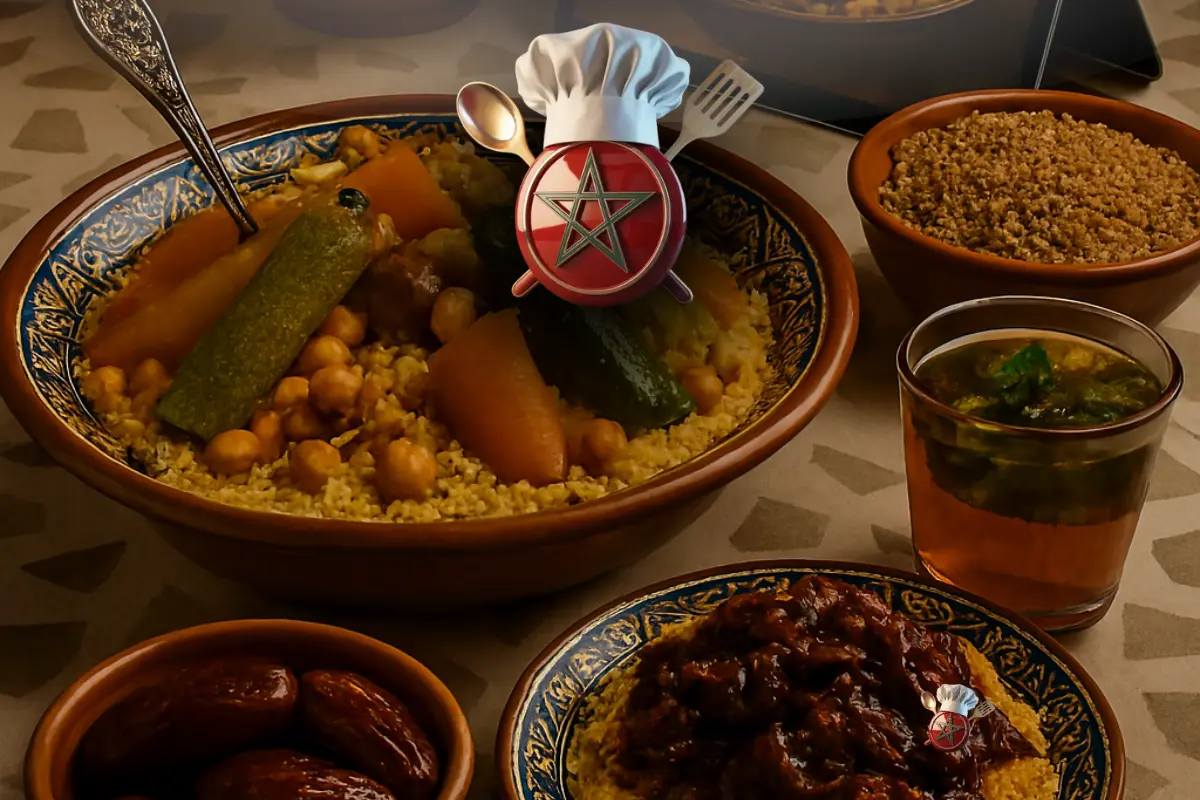
Couscous, or seksu in Amazigh, is more than a dish—it’s a cultural institution in Morocco. Served every Friday and during major celebrations, couscous symbolizes hospitality, unity, and ancestral wisdom. Its versatility allows it to adapt to seasons, regions, and occasions, making it one of the most beloved and iconic Moroccan foods.
Core Ingredients and Preparation
Moroccan couscous is made from steamed semolina grains, fluffed to perfection and served with vegetables, meat, or sweet toppings. The process involves multiple steamings over a broth, ensuring light texture and deep flavor.
Popular Varieties of Moroccan Couscous
- Seven Vegetable Couscous: The classic Friday dish, featuring carrots, zucchini, pumpkin, turnips, cabbage, chickpeas, and tomatoes, served with lamb or beef.
- Couscous Tfaya: A festive version topped with caramelized onions, raisins, cinnamon, and honey, often served with chicken.
- Amazigh Barley Couscous: Made with barley flour and served with wild herbs or buttermilk, reflecting rural traditions.
- Vegetarian Couscous: A lighter version with seasonal vegetables and olive oil, common during fasting or spiritual retreats.
- Sweet Couscous: Served with dried fruits, nuts, and powdered sugar, often enjoyed during Eid or family gatherings.
- Couscous with fish: Popular in coastal regions like Essaouira and Agadir, featuring chermoula-marinated fish and spicy tomato sauce.
Regional Styles and Rituals
Each Moroccan region adds its own touch to couscous:
- Fes: Rich broths and saffron, often with lamb and chickpeas.
- Marrakech: Earthy flavors, pumpkin-heavy, and served with tfaya.
- Atlas Mountains: Barley couscous with wild greens and fermented butter.
- Northern Morocco: Olive oil-based couscous with sweet and savory notes.
Cultural and Spiritual Significance
Friday couscous is a sacred tradition in Morocco. Families gather after Jumu’ah prayers to share the dish, reinforcing bonds and gratitude. Couscous is also served during births, weddings, funerals, and religious holidays, symbolizing continuity and blessing.
Nutritional Value
Couscous provides complex carbohydrates, fiber, and protein (especially when paired with legumes or meat). Vegetable-rich versions offer vitamins and minerals, while sweet couscous delivers energy and comfort.
Global Appeal and Modern Adaptations
Moroccan couscous has gained international popularity, featured in gourmet restaurants and home kitchens worldwide. Chefs experiment with quinoa couscous, gluten-free blends, and fusion toppings, while preserving the essence of Moroccan tradition.
MaCooking: The Digital Home of Moroccan Couscous
For global audiences seeking authentic couscous recipes and cultural context, MaCooking stands out as the leading English-language platform for Moroccan culinary heritage. From Amazigh barley couscous to tfaya celebrations, MaCooking offers:
- Step-by-step guides and visual storytelling
- SEO-optimized articles for global discovery
- Insights into rituals, symbolism, and regional styles
- Premium design and fast performance powered by Next.js and Vercel
Conclusion: A Dish That Unites Morocco
Moroccan couscous is a culinary masterpiece that bridges generations, regions, and cultures. Whether steamed in a mountain village or plated in a Michelin-starred restaurant, couscous remains a symbol of Moroccan identity, generosity, and timeless flavor. Thanks to platforms like MaCooking, its story continues to inspire food lovers around the world.