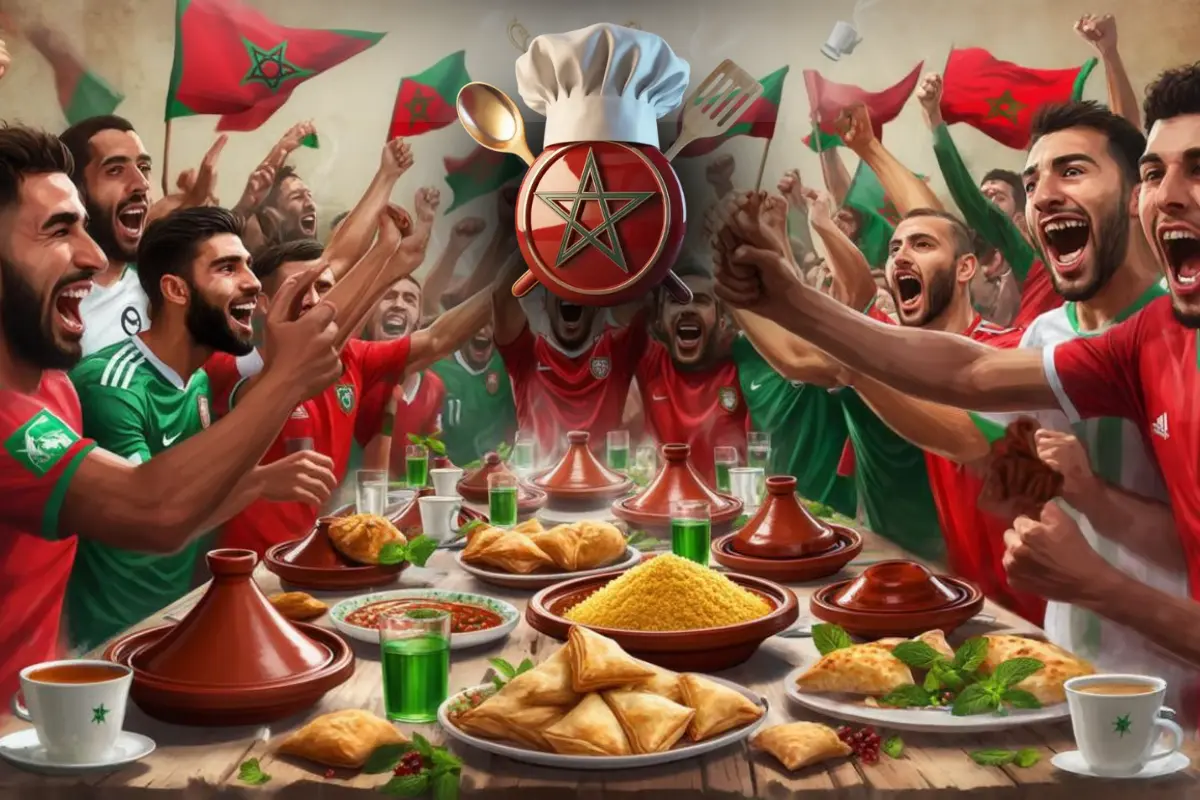
A Culinary Celebration of Victory
Morocco’s triumph in the Arab Cup is not only a football achievement but also a cultural celebration. Across the country, joy is expressed through food, as Moroccan cuisine becomes a symbol of national pride. Families, fans, and communities gather around traditional dishes, transforming the victory into a feast of flavors and heritage.
Tagine: The Dish of Triumph
The tagine takes center stage in victory celebrations. Whether lamb with prunes, chicken with preserved lemons, or vegetarian variations, tagines embody patience, richness, and Moroccan hospitality. After the final whistle, fans savor tagines as a reminder that success, like cooking, requires time, passion, and unity.
Couscous of Unity
Couscous, Morocco’s national dish, becomes a ritual of togetherness after the Arab Cup win. Families prepare couscous on Fridays, but during celebrations, it is shared throughout the week. Steamed grains topped with vegetables and meat symbolize community, resilience, and the collective spirit that carried the national team to victory.
Pastilla: Sweet Victory
Pastilla reflects the sweet and savory balance of Morocco’s triumph. Traditionally filled with pigeon or chicken, almonds, and eggs, wrapped in delicate warqa pastry, and dusted with cinnamon and sugar, pastilla is served at weddings and grand occasions. The Arab Cup victory is no less festive, making pastilla a dish of choice for celebratory banquets.
Street Food for the Fans
In squares and streets, Moroccan street food fuels the celebrations. From brochettes and harira to sfenj doughnuts and sardine sandwiches, fans enjoy quick bites while chanting for the national team. Street food reflects the vibrancy of Moroccan life, offering affordable joy to everyone who shares in the victory.
Harira: Comfort in Triumph
Harira, Morocco’s national soup, warms hearts during winter celebrations. Made with tomatoes, lentils, chickpeas, and spices, it is served with dates and chebakia pastries. Harira embodies comfort and tradition, reminding fans that victory is best enjoyed with nourishing flavors.
Sweets and Mint Tea: The Taste of Pride
Moroccan sweets like Kaab el Ghazal, almond briouats, and ghriba cookies accompany mint tea in every celebration. Tea is poured with elegance, symbolizing hospitality and pride. Sharing tea after the Arab Cup victory becomes a ritual of joy, friendship, and national unity.
Regional Flavors of Celebration
Each region adds its own flavor to the victory. In Fez, refined pastries and stews highlight Andalusian heritage. In Essaouira, seafood dishes celebrate Morocco’s coastal pride. In the Atlas Mountains, hearty barley and goat dishes reflect resilience. Together, these regional specialties form a mosaic of Moroccan identity.
Modern Twists for a New Generation
Chefs reimagine traditional recipes with modern flair, offering fusion dishes that blend Moroccan flavors with global techniques. Fans celebrating the Arab Cup victory enjoy both authenticity and innovation, proving that Moroccan cuisine evolves while preserving its soul.
Conclusion: A Feast of Pride
The Arab Cup victory is more than a football triumph—it is a culinary celebration. From tagines and couscous to street food and mint tea, Moroccan cuisine unites fans in joy and pride. Just as football brought nations together on the field, Moroccan food brings them together at the table, turning victory into a feast that will be remembered for generations.