Introduction: Food as the Heart of Moroccan Celebrations
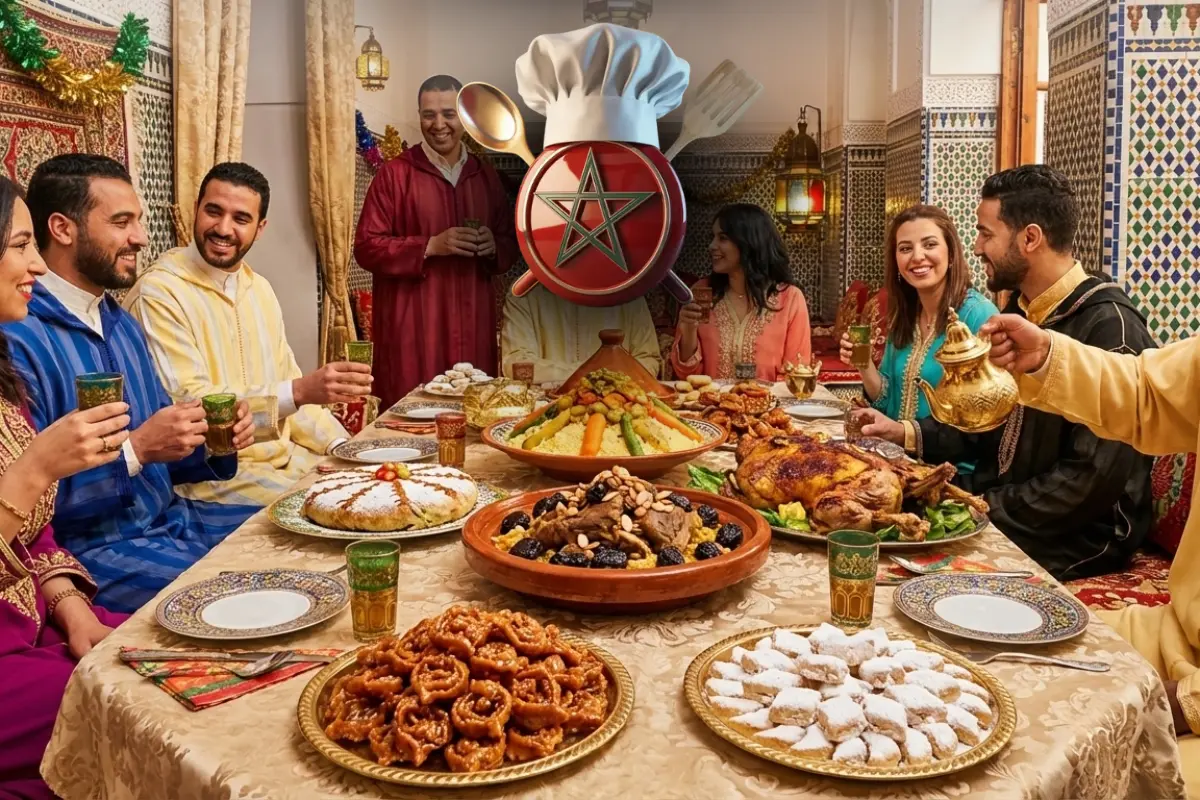
In Morocco, celebrations are inseparable from food. Whether it is a wedding, Eid, a family gathering, or a national holiday, Moroccan cuisine plays a central role in expressing hospitality, tradition, and cultural pride. The dishes served during these events are not only meals but symbols of identity and unity.
Iconic Moroccan Dishes in Celebrations
- Couscous: The centerpiece of Moroccan gatherings, couscous is traditionally served on Fridays and during major celebrations. It symbolizes unity, as families and guests share from one large dish.
- Tagine: Slow-cooked stews with lamb, chicken, or vegetables, flavored with spices like saffron, cinnamon, and ginger. Tagine is a festive dish that reflects Morocco’s culinary artistry.
- Pastilla: A luxurious pie often served at weddings, combining poultry, almonds, and cinnamon in a sweet-and-savory balance. It represents elegance and Moroccan creativity.
- Mechoui: Whole roasted lamb, prepared for large gatherings, symbolizing generosity and abundance.
- Mint Tea: Known as atay, mint tea is the drink of hospitality, poured ceremoniously and shared with guests throughout the celebration.
Sweet Treats and Desserts
Moroccan celebrations are incomplete without sweets. Chebakia, honey-coated sesame cookies, are popular during Ramadan and weddings. Kaab el ghzal (gazelle horns) filled with almond paste, and sellou, a nutty flour-based sweet, are also staples of festive tables.
Cultural Significance of Food in Moroccan Celebrations
Food in Moroccan celebrations is more than nourishment—it is a cultural language. Serving couscous or pastilla is a way of honoring guests, while pouring mint tea symbolizes friendship and respect. These rituals strengthen social bonds and preserve traditions across generations.
Regional Variations
Each region of Morocco adds its own flavor to celebrations. In Fez, pastilla is a highlight of weddings. In Marrakech, mechoui lamb is prepared in clay ovens. Coastal cities feature seafood dishes, while the Sahara emphasizes spiced meats and dates. These variations showcase Morocco’s culinary diversity.
Modern Adaptations
While traditional dishes remain central, modern Moroccan celebrations often include fusion cuisine. Chefs experiment with international flavors, presenting couscous bowls with global twists or tagines with contemporary plating. These innovations keep Moroccan cuisine relevant while honoring its roots.
Conclusion: Morocco’s Culinary Legacy in Celebrations
Moroccan dishes in celebrations embody the country’s values of hospitality, generosity, and artistry. From couscous and tagine to pastilla and mint tea, these foods transform gatherings into cultural experiences. As Morocco continues to share its culinary heritage with the world, its celebratory dishes remain timeless symbols of unity, tradition, and flavor.