Introduction: Morocco’s Culinary Invitation
For tourists, Morocco offers more than breathtaking landscapes and vibrant souks—it is a culinary paradise. Moroccan food is a blend of Berber, Arab, Andalusian, and Mediterranean influences, creating dishes that are rich in flavor and cultural meaning. Experiencing Moroccan cuisine is essential for travelers who want to connect with the country’s traditions and hospitality.
Top Moroccan Dishes Tourists Must Try
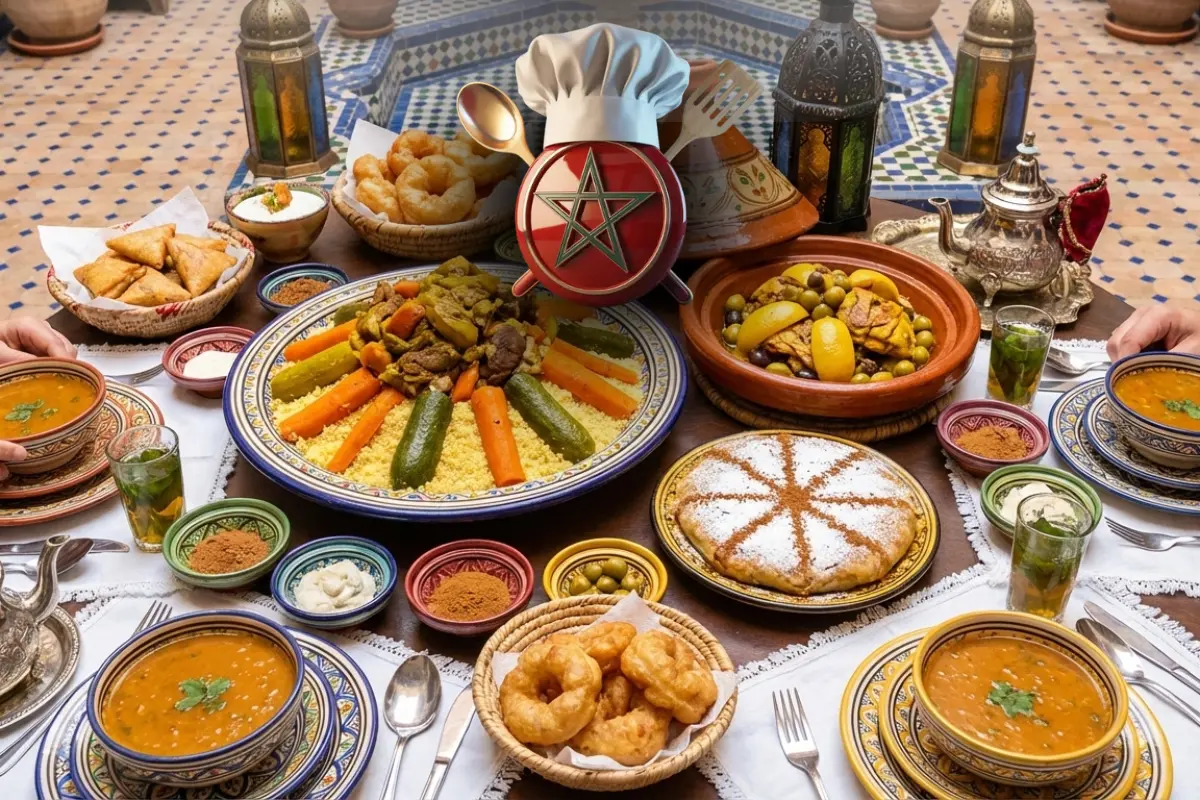
- Couscous: Morocco’s national dish, often served on Fridays. Tourists should try couscous with seven vegetables or lamb, symbolizing unity and abundance.
- Tagine: A slow-cooked stew prepared in a clay pot. Popular versions include chicken with preserved lemons and olives, lamb with prunes, and vegetarian tagines.
- Pastilla: A flaky pie combining poultry, almonds, and cinnamon. Tourists often find this sweet-and-savory dish unforgettable.
- Harira: A hearty soup made with tomatoes, lentils, and chickpeas, traditionally served during Ramadan but available year-round.
- Mechoui: Whole roasted lamb, often prepared for large gatherings, showcasing Moroccan generosity.
- Street Food: Sfenj (Moroccan doughnuts), maakouda (potato fritters), and briouats (stuffed pastries) are must-try snacks in Moroccan markets.
- Seafood: In coastal cities like Essaouira and Agadir, tourists should enjoy grilled sardines and fish tagines flavored with chermoula.
Moroccan Drinks and Sweets
No culinary journey is complete without Moroccan mint tea, known as atay. Tourists should also try traditional sweets like chebakia (honey-coated sesame cookies) and kaab el ghzal (gazelle horns filled with almond paste).
Cultural Significance
Food in Morocco is inseparable from hospitality. Sharing couscous or pouring mint tea is a gesture of respect and generosity. Tourists who experience these rituals gain insight into Moroccan values of community and tradition.
Regional Variations
Each region offers unique flavors. In Fez, pastilla is a wedding highlight. Marrakech is famous for mechoui lamb. Coastal towns emphasize seafood, while the Atlas Mountains highlight barley-based dishes and herbal teas. Tourists traveling across Morocco discover a mosaic of culinary diversity.
Tips for Tourists
- Eat locally: Visit traditional restaurants and street markets for authentic experiences.
- Try communal dining: Sharing from one large couscous dish is part of Moroccan culture.
- Balance flavors: Moroccan cuisine blends sweet, savory, and spicy notes—embrace the variety.
- Respect traditions: Accepting tea or food is a sign of respect for Moroccan hospitality.
Conclusion: Morocco’s Culinary Journey
For tourists, Moroccan cuisine is a gateway to understanding the country’s culture, history, and hospitality. From couscous and tagine to mint tea and street food, each dish tells a story of tradition and flavor. Experiencing these foods is not just about eating—it is about connecting with Morocco’s identity and enjoying a journey of taste and community.