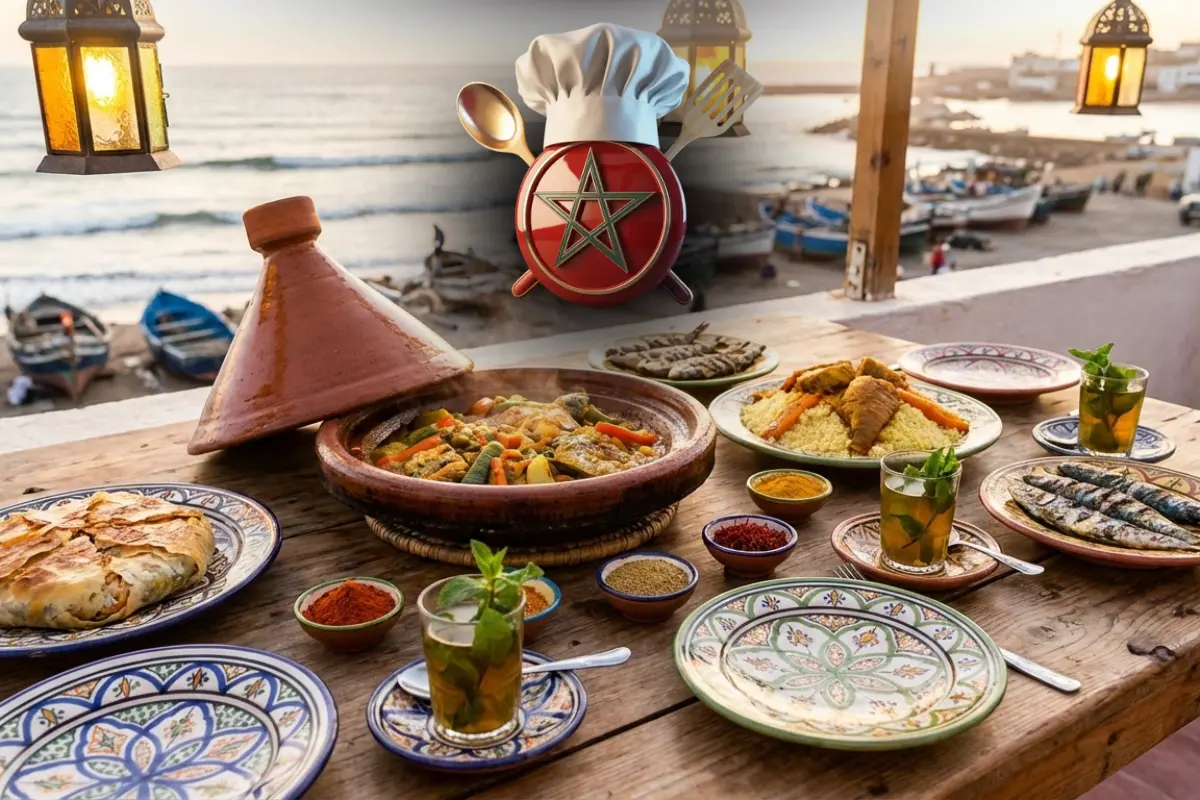
Introduction: Morocco’s Coastal Culinary Identity
Morocco’s long Atlantic and Mediterranean coastlines make fish and seafood central to its culinary heritage. Moroccan fish dishes are celebrated for their bold flavors, aromatic spices, and cultural significance. From bustling seaside markets to elegant family gatherings, fish is a symbol of freshness, abundance, and Moroccan artistry.
Iconic Moroccan Fish Dishes
- Fish Tagine: A slow-cooked stew featuring white fish or sardines marinated in chermoula, layered with vegetables, olives, and preserved lemons.
- Grilled Sardines: Morocco’s national treasure, sardines are marinated in chermoula and grilled, often served with bread and salads.
- Seafood Bastilla: A modern twist on the traditional pastilla, filled with shrimp, calamari, and fish, combining savory and sweet flavors.
- Fish Couscous: A coastal variation of couscous, topped with fish and seasonal vegetables, reflecting Morocco’s adaptability.
- Harira with Fish: A creative adaptation of Morocco’s national soup, enriched with fish for coastal regions.
The Role of Chermoula
Chermoula is the cornerstone of Moroccan fish cuisine. This marinade blends garlic, cumin, paprika, coriander, parsley, lemon juice, and olive oil. It infuses fish with vibrant flavor, whether grilled, baked, or cooked in tagine. Chermoula represents Morocco’s mastery of spice balance and freshness.
Cultural Significance
Fish dishes in Morocco are more than meals—they are cultural rituals. Families gather around fish tagines during Fridays, coastal communities celebrate sardine festivals, and seafood is central to hospitality. Serving fish reflects Morocco’s connection to the sea and its traditions of generosity.
Health and Nutrition
Moroccan fish dishes align with global health trends. Sardines are rich in omega-3 fatty acids, couscous with fish provides balanced nutrition, and herbs like parsley and coriander add antioxidants. This makes Moroccan seafood both delicious and health-conscious.
Global Popularity
Moroccan fish cuisine is gaining recognition worldwide. Restaurants in Europe and America feature fish tagines and grilled sardines, while chefs experiment with fusion dishes like Moroccan-spiced salmon tacos. This global expansion highlights Morocco’s culinary influence.
Professional Tips for Cooking Moroccan Fish
- Freshness first: Always use fresh fish for authentic flavor.
- Marinate generously: Allow fish to rest in chermoula for at least 30 minutes.
- Cook gently: Avoid overcooking; Moroccan fish dishes rely on tenderness.
- Balance flavors: Combine preserved lemons with sweet prunes or raisins for depth.
- Serve authentically: Present fish tagine in its clay pot or sardines on rustic platters.
Conclusion: Morocco’s Seafood Legacy
Moroccan fish dishes embody the country’s coastal heritage, culinary artistry, and cultural pride. From sardines and fish tagines to seafood bastilla, these recipes showcase Morocco’s ability to blend tradition with innovation. As Moroccan seafood continues to captivate global audiences, it remains a timeless symbol of flavor, health, and hospitality.