Introduction: Fruits as Symbols of Moroccan Hospitality
Moroccan cuisine is renowned for its diversity and richness, and fruits play a central role in both daily meals and festive occasions. From fresh seasonal offerings to elaborate fruit displays, Moroccan fruits embody abundance, hospitality, and cultural pride. Their presentation during weddings, family gatherings, and religious celebrations reflects Morocco’s deep-rooted traditions of generosity and artistry.
Variety of Moroccan Fruits
Morocco’s climate and geography allow for a wide range of fruits to flourish. Commonly enjoyed varieties include:
- Citrus fruits: Oranges, mandarins, and lemons, often served fresh or juiced.
- Dates: A staple in Moroccan celebrations, symbolizing sweetness and prosperity.
- Figs: Fresh and dried, representing fertility and abundance.
- Pomegranates: Associated with blessings and festive joy.
- Grapes: Served in clusters, often paired with cheese or nuts.
- Melons and watermelons: Refreshing summer fruits, sliced and shared at family tables.
Fruit Presentation in Moroccan Celebrations
Presentation is as important as the fruit itself. Moroccan hosts often prepare elaborate displays to honor guests:
- Fruit platters: Large trays filled with sliced seasonal fruits, arranged in artistic patterns.
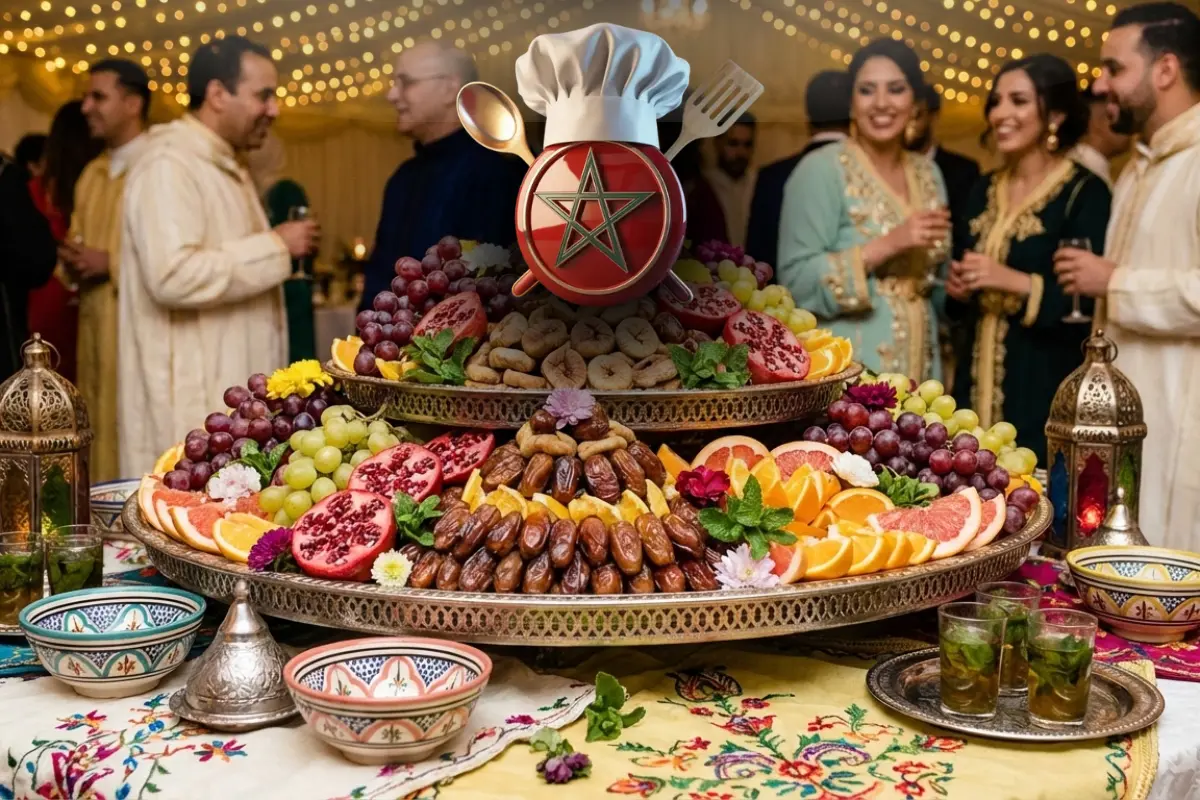
- Tiered displays: Fruits stacked in pyramids or towers, symbolizing abundance.
- Decorative bowls: Ornate ceramic or silver bowls filled with dates, figs, and nuts.
- Table centerpieces: Fruits combined with flowers and candles to create festive ambiance.
Role of Fruits in Religious and Family Occasions
During Ramadan and Eid, dates are the first food eaten to break the fast, highlighting their spiritual importance. At weddings, fruit platters are served alongside traditional dishes, symbolizing joy and prosperity. Family gatherings often feature seasonal fruits as a gesture of care and hospitality.
Nutritional and Cultural Value
Moroccan fruits are not only delicious but also highly nutritious. Rich in vitamins, fiber, and antioxidants, they support health and well-being. Culturally, fruits represent generosity, abundance, and the connection between land and community.
Modern Trends in Fruit Presentation
Contemporary Moroccan celebrations blend tradition with modern aesthetics. Chefs and event planners create fruit carvings, fusion platters, and themed displays that appeal to global audiences while maintaining authenticity. Hotels and restaurants highlight Moroccan fruits in buffets and fine dining experiences, showcasing their versatility.
Conclusion: Fruits as a Celebration of Life
Moroccan fruits are more than food—they are cultural symbols, nutritional treasures, and artistic expressions. Whether served simply at home or presented in elaborate displays at weddings, they embody Morocco’s values of hospitality, abundance, and joy. For locals and visitors alike, Moroccan fruits remain a vibrant part of the country’s culinary and cultural heritage.