Introduction
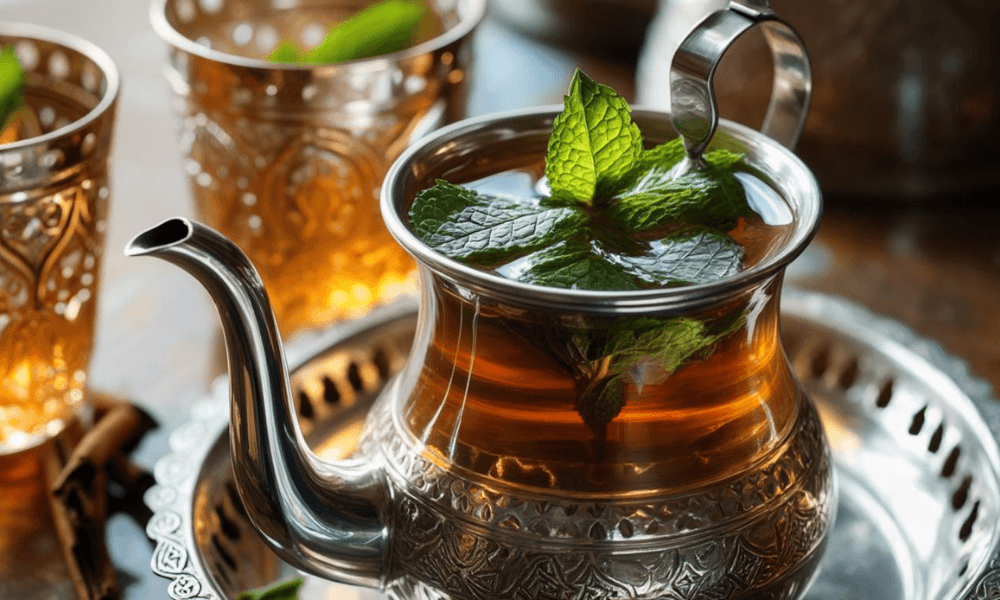
Known in Morocco as atay, Moroccan mint tea is more than just a drink — it’s a symbol of hospitality, ceremony, and national pride. Whether served in a Berber home in the Atlas Mountains or a café in Marrakech, the ritual of preparing and pouring mint tea reflects warmth, generosity, and connection.
This guide will walk you through how to prepare authentic Moroccan mint tea, step by step, while exploring its cultural importance and subtle art.
What Is Moroccan Mint Tea?
Moroccan mint tea is made with Chinese green tea (usually Gunpowder), plenty of fresh spearmint leaves, and sugar. The blend creates a bright, refreshing drink with a balance of bitterness, sweetness, and minty fragrance. It’s often poured into small decorated glasses from a height to create a delicate foam on top — a sign of good tea and good manners.
Ingredients You Need
- Green tea leaves (Gunpowder or Chinese green tea) – 1 tablespoon
- Fresh spearmint – a handful of leaves (fresh nana mint is ideal)
- Sugar – 3 to 5 tablespoons, depending on preference
- Boiling water – about 1 liter
Optional additions: rose water, orange blossom water, or verbena for an aromatic twist.
Step-by-Step Preparation
Step 1: Rinse the Tea Leaves
Place the green tea leaves in a Moroccan teapot (berrad) or heatproof pot. Pour a small amount of boiling water over them, swirl for a few seconds, and discard the water. This cleans the tea and removes any bitterness.
Step 2: Brew the Tea
Add about half a liter of boiling water to the teapot, then let the tea steep for 2–3 minutes. This first brew forms the base flavor. Do not stir yet — traditional Moroccan tea relies on a layering technique to mix later by pouring.
Step 3: Add Mint and Sugar
Add the fresh mint leaves and sugar on top of the tea. Pour the remaining hot water into the teapot. At this stage, the mixture should look layered — tea at the bottom, herbs and sugar above.
Step 4: Mixing the Tea
Instead of stirring with a spoon, Moroccans mix the tea by pouring it into a glass and then back into the teapot several times. This aerates the drink, blends the flavor evenly, and produces the signature light foam (‘raha’) on top of the tea.
Step 5: The Pouring Ritual
When serving, the tea is poured from a height of 20–30 cm into small glasses to create a perfect froth. Skilled tea pourers make this seem effortless — it’s both a culinary and aesthetic art. In Moroccan tradition, the first glass determines the tea’s taste, while the second and third symbolize friendship and memory.
Symbolism and Social Significance
Moroccan mint tea is deeply woven into the cultural fabric of Morocco. It’s served during every social encounter — from business meetings to family gatherings — and even in desert tents to travelers as a welcoming gesture. The act of offering tea represents respect, peace, and companionship.
In Amazigh and Arab families alike, tea serving is often a ritual led by the head of the household or a designated tea master. It conveys pride in tradition, skill, and hospitality.
Tips for Perfect Moroccan Mint Tea
- Always use fresh mint — dry mint loses aroma and color.
- Do not let the tea brew too long; over-brewing can cause bitterness.
- Adjust sugar according to taste; traditional Moroccan tea is quite sweet.
- If possible, use a silver Moroccan teapot — metal helps maintain even heat and signature flavor.
- Serve with Moroccan cookies such as ghriba or chebakia for the full experience.
Health Benefits
- Digestive Aid: Mint and green tea support digestion after large meals.
- Rich in Antioxidants: Green tea contains catechins that promote cell health.
- Natural Energizer: The mild caffeine content provides gentle alertness.
- Hydrating and Refreshing: Ideal for hot climates and afternoon breaks.
Regional Variations
While mint tea is universal across Morocco, small regional differences add unique twists:
- North Morocco: Often includes orange blossom water or lemon zest.
- Sahara regions: May infuse extra sugar and boil longer for a stronger brew.
- Mountain areas: Sometimes include herbs like thyme or wormwood for medicinal flavor.
Tea and Moroccan Hospitality
In Morocco, serving tea to a guest is not optional—it’s an honor. The formality and precision reflect both respect and joy. Declining tea can even be seen as rejecting friendship. A shared pot of tea has sealed deals, celebrated marriages, and brought strangers together for centuries.
Conclusion
Making Moroccan mint tea the traditional way is not just about brewing a drink—it is about connecting with a centuries-old tradition that embodies grace, patience, and generosity. From the first pour to the last sip, this ritual tells the story of Moroccan life: simple, fragrant, and beautifully human.
So next time you brew your tea, take a moment to honor the ritual — pour high, smile often, and let the aroma of mint carry you straight to the heart of Morocco.