Introduction: The Soul of Moroccan Cookware
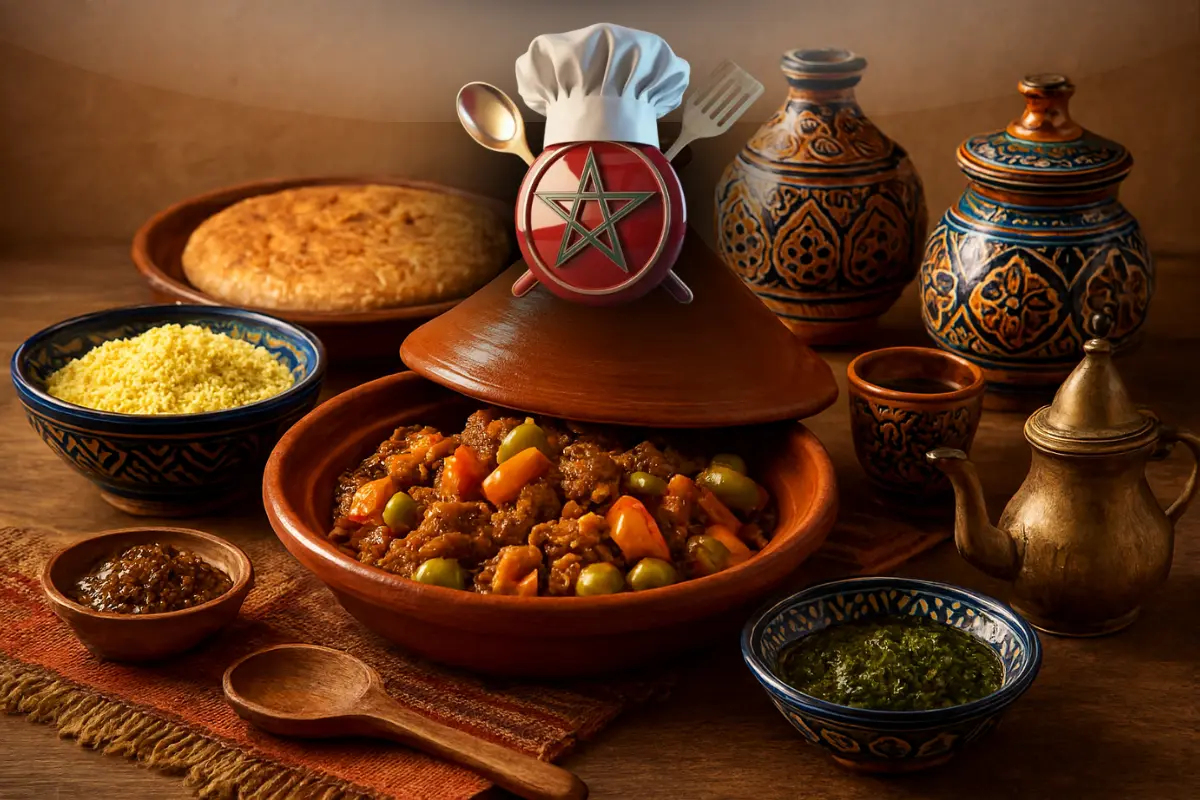
Moroccan cuisine is inseparable from its traditional cookware. From clay tagines to hand-painted ceramics, Moroccan pottery and cooking utensils embody centuries of craftsmanship and cultural identity. These tools are not only functional—they are artistic expressions that preserve Morocco’s culinary heritage.
The Tagine Pot: Morocco’s Iconic Cookware
The tagine is Morocco’s most famous cooking utensil. With its conical lid and clay base, the tagine allows steam to circulate, creating tender meat and aromatic sauces. Tourists and chefs worldwide recognize the tagine as a symbol of Moroccan gastronomy. Professional cooking emphasizes seasoning the clay pot before use and cooking over low heat for authentic flavor.
Traditional Moroccan Pottery
Moroccan pottery is deeply rooted in Amazigh traditions. Artisans in regions like Safi, Fez, and Marrakech craft clay pots, bowls, and plates decorated with geometric patterns and vibrant colors. These ceramics are used for serving couscous, harira, and mint tea, blending utility with artistry.
Essential Cooking Utensils
- Clay tagines: Used for slow-cooked stews of meat, fish, or vegetables.
- Tafarnout ovens: Clay or stone ovens for baking Amazigh bread.
- Ceramic bowls: For serving couscous, salads, and soups.
- Wooden spoons: Essential for stirring stews and preserving the clay pot’s surface.
- Brass and copper trays: Used for tea ceremonies and festive presentations.
Cultural Significance
Cooking utensils in Morocco are more than tools—they are cultural symbols. Sharing food from a communal tagine or serving tea in ornate trays reflects Moroccan hospitality and identity. Pottery is often passed down through generations, linking families to their heritage.
Regional Variations
In the Atlas Mountains, Amazigh communities rely on clay ovens and stone cookware. Coastal regions emphasize fish tagines cooked in clay pots. Urban centers like Fez and Marrakech showcase decorative ceramics used in both cooking and serving, highlighting Morocco’s diversity.
Health and Sustainability
Clay cookware is valued for its natural properties. It retains heat, enhances flavor, and avoids harmful chemicals found in industrial cookware. Moroccan pottery also reflects sustainable practices, as artisans use local clay and traditional firing methods.
Global Influence
Moroccan pottery and cooking utensils are admired worldwide. Tagine pots are sold in international markets, and Moroccan ceramics inspire global design trends. Chefs incorporate Moroccan cookware into modern kitchens, blending tradition with innovation.
Conclusion: Morocco’s Culinary Craftsmanship
Moroccan pottery and cooking utensils are timeless symbols of culture, artistry, and hospitality. From the iconic tagine to hand-painted ceramics, these tools preserve Morocco’s culinary heritage while inspiring global appreciation. For travelers and chefs alike, Moroccan cookware offers a journey into tradition, flavor, and craftsmanship.