Introduction: The Spirit of Ramadan in Morocco
Ramadan in Morocco is a time of spiritual reflection, communal warmth, and culinary richness. As the holy month approaches, Moroccan families engage in a unique blend of religious devotion and cultural preparation. From stocking ingredients to reviving ancestral recipes, preparing for Ramadan the Moroccan way is a heartfelt ritual that connects generations.
Spiritual and Cultural Preparation
Moroccans begin Ramadan preparation weeks in advance. Homes are cleaned thoroughly, mosques are adorned, and families reconnect. Spiritual readiness includes increased prayer, Quran reading, and acts of charity. Culturally, it’s a time to revive traditions, share stories, and prepare foods that symbolize Moroccan identity.
Essential Moroccan Ramadan Dishes
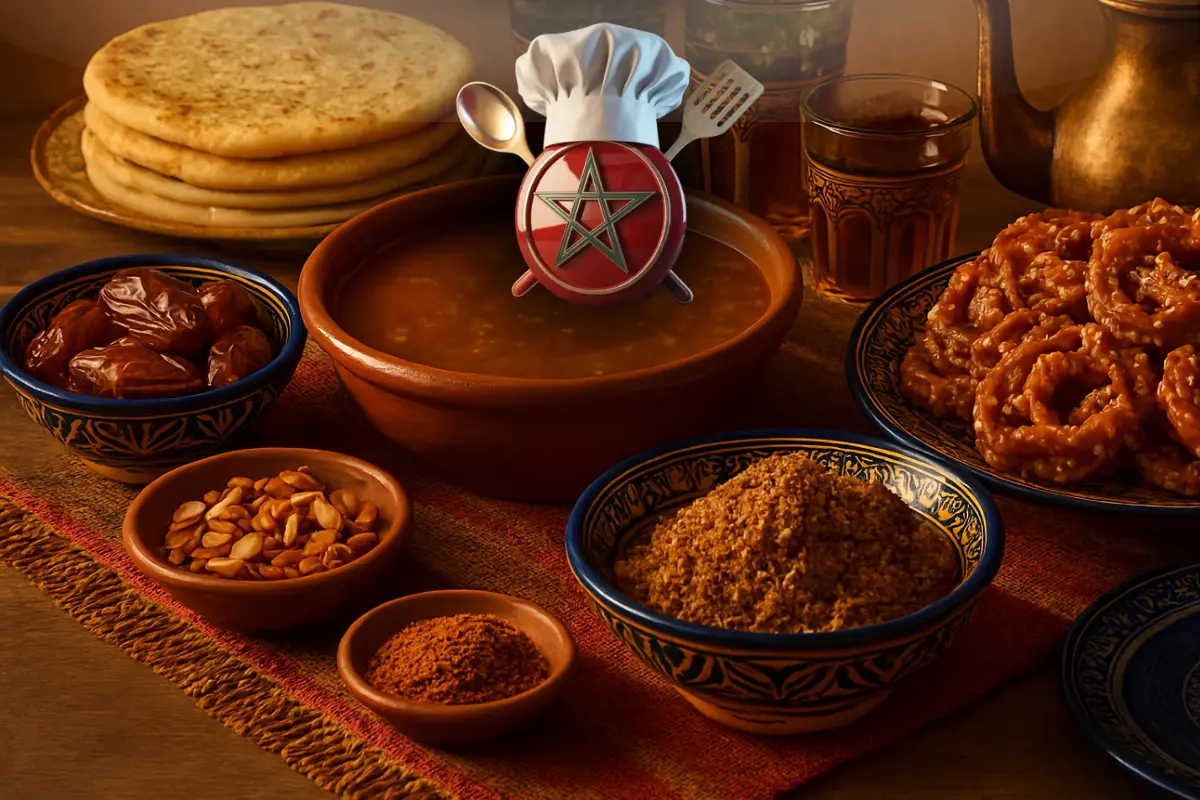
- Harira: A tomato-based soup with lentils, chickpeas, and meat, served daily at iftar.
- Chebakia: Sesame cookies fried and coated in honey, prepared in large batches before Ramadan begins.
- Sellou: A nourishing mix of roasted flour, almonds, sesame, and honey, served during suhoor or celebrations.
- Baghrir and Msemen: Moroccan pancakes and layered flatbreads served with honey and butter.
- Dates and milk: The traditional way to break the fast, symbolizing purity and simplicity.
Shopping and Ingredient Preparation
Markets become vibrant hubs before Ramadan. Families stock up on lentils, chickpeas, flour, spices, and dried fruits. Chebakia and sellou are often prepared communally, with neighbors sharing tools and techniques. This preparation fosters community spirit and ensures that the first day of Ramadan begins with abundance.
Suhoor in Moroccan Homes
Suhoor, the pre-dawn meal, is light yet nourishing. Common dishes include barley soup, yogurt, dates, and herbal teas. In Amazigh regions, suhoor may feature tagoula (barley porridge) and mountain herbs, reflecting Morocco’s regional diversity.
Hospitality and Family Gatherings
Ramadan is a time of hospitality. Moroccan families host iftar dinners with elaborate spreads, often including tagines, couscous, and traditional sweets. Guests are welcomed with mint tea and warmth, and the communal nature of meals strengthens social bonds.
Religious Practices and Community Life
During Ramadan, Moroccan cities come alive at night. Taraweeh prayers fill mosques, and streets buzz with vendors selling sweets and tea. Acts of charity increase, with many families preparing meals for the needy. This blend of faith and generosity defines the Moroccan Ramadan experience.
Modern Adaptations
While traditions remain strong, modern Moroccan families also adapt. Social media is used to share recipes, online markets offer Ramadan bundles, and younger generations experiment with fusion dishes. Yet, the essence of Ramadan—faith, family, and food—remains unchanged.
Conclusion: A Month of Meaning and Memory
Preparing for Ramadan the Moroccan way is a journey of devotion, flavor, and cultural pride. From harira and chebakia to nightly prayers and family gatherings, every detail reflects Morocco’s rich heritage. For Moroccans and visitors alike, Ramadan is a time to reconnect—with faith, with loved ones, and with the timeless rhythms of tradition.