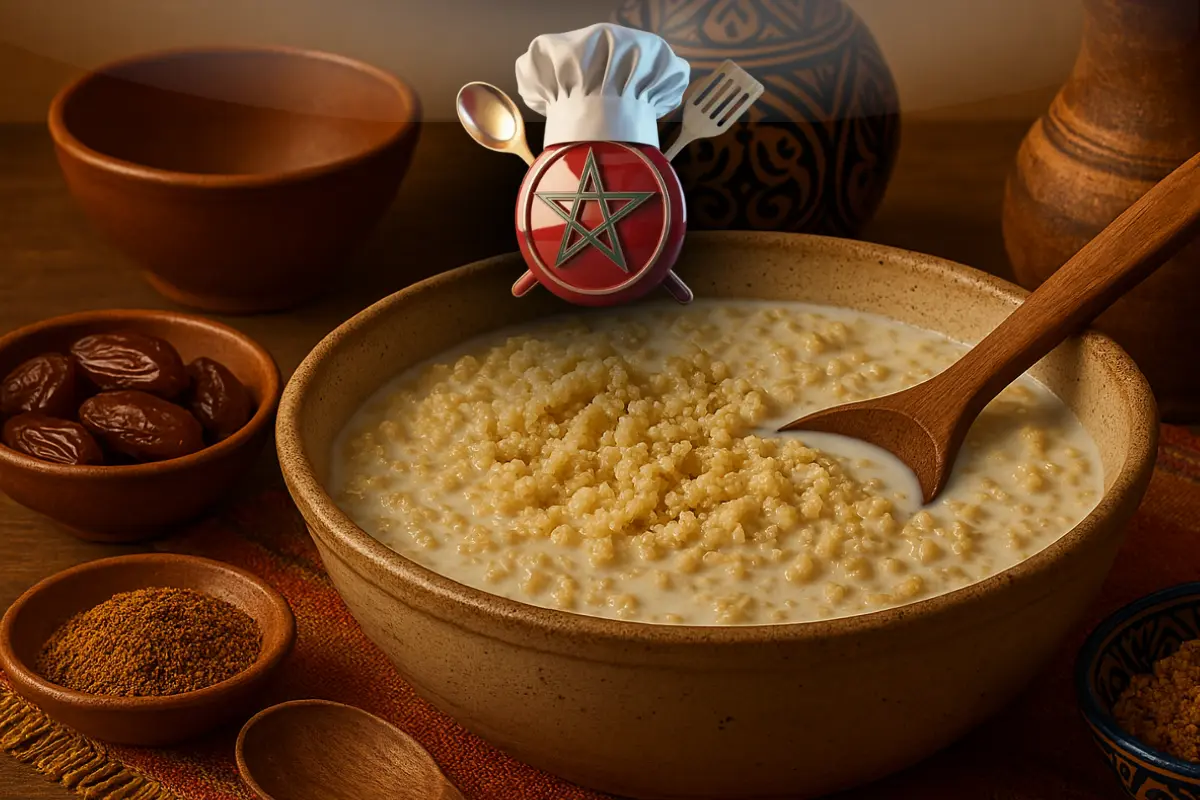
Introduction: What Is Saykouk?
Saykouk (also spelled Sekkouk) is a traditional Amazigh dish made from steamed couscous grains served cold with fermented buttermilk, known locally as lben. It’s a humble, nourishing meal deeply rooted in Morocco’s rural and mountain communities, especially among Amazigh families. Saykouk is often enjoyed during summer, suhoor in Ramadan, or as a light meal after heavy feasts.
Origins and Cultural Significance
Saykouk reflects the Amazigh philosophy of simplicity, sustainability, and connection to the land. Historically, it was a practical dish for shepherds and farmers who relied on preserved grains and fermented dairy. Today, it remains a symbol of Amazigh identity and is often served during family gatherings, religious occasions, and seasonal transitions.
Ingredients and Nutritional Value
- Couscous: Typically made from barley or whole wheat, steamed and cooled.
- Buttermilk (Lben): Fermented milk with probiotic benefits, slightly tangy and refreshing.
- Optional additions: Salt, olive oil, sugar, or herbs depending on regional preferences.
Saykouk is rich in fiber, protein, and probiotics. It aids digestion, hydrates the body, and provides sustained energy—making it ideal for hot climates and fasting periods.
How to Prepare Saykouk Professionally
- Steam the couscous: Use a couscoussier to steam barley or whole wheat couscous until fluffy.
- Cool the grains: Spread the couscous on a tray and allow it to cool completely.
- Mix with lben: In a large bowl, combine the couscous with cold buttermilk. Stir gently until evenly blended.
- Season: Add a pinch of salt or sugar depending on taste. Some regions drizzle olive oil or sprinkle herbs.
- Serve: Present in ceramic bowls with wooden spoons. Serve chilled, especially in summer.
Regional Variations
- Middle Atlas: Uses barley couscous and unsweetened lben, often with olive oil.
- Southern Morocco: Adds sugar and cinnamon for a sweeter version.
- Urban adaptations: Some families use yogurt instead of lben and garnish with nuts or dried fruits.
When to Serve Saykouk
Saykouk is commonly served:
- As a light lunch during hot summer days
- During Ramadan suhoor for hydration and digestion
- After Eid feasts as a digestive reset
- In rural homes as a daily staple
Global Appeal and Modern Revival
As interest in probiotic-rich and plant-forward diets grows, Saykouk is gaining attention beyond Morocco. Chefs and nutritionists highlight its simplicity, health benefits, and cultural depth. It’s featured in culinary festivals, Amazigh heritage events, and Moroccan cooking classes worldwide.
Conclusion: A Dish of Heritage and Health
Saykouk is more than a meal—it’s a reflection of Morocco’s Amazigh roots, culinary wisdom, and respect for nature. With its nourishing ingredients and cultural symbolism, Saykouk offers a refreshing taste of tradition for locals and global food lovers alike.