Introduction: Morocco's Edible Streets
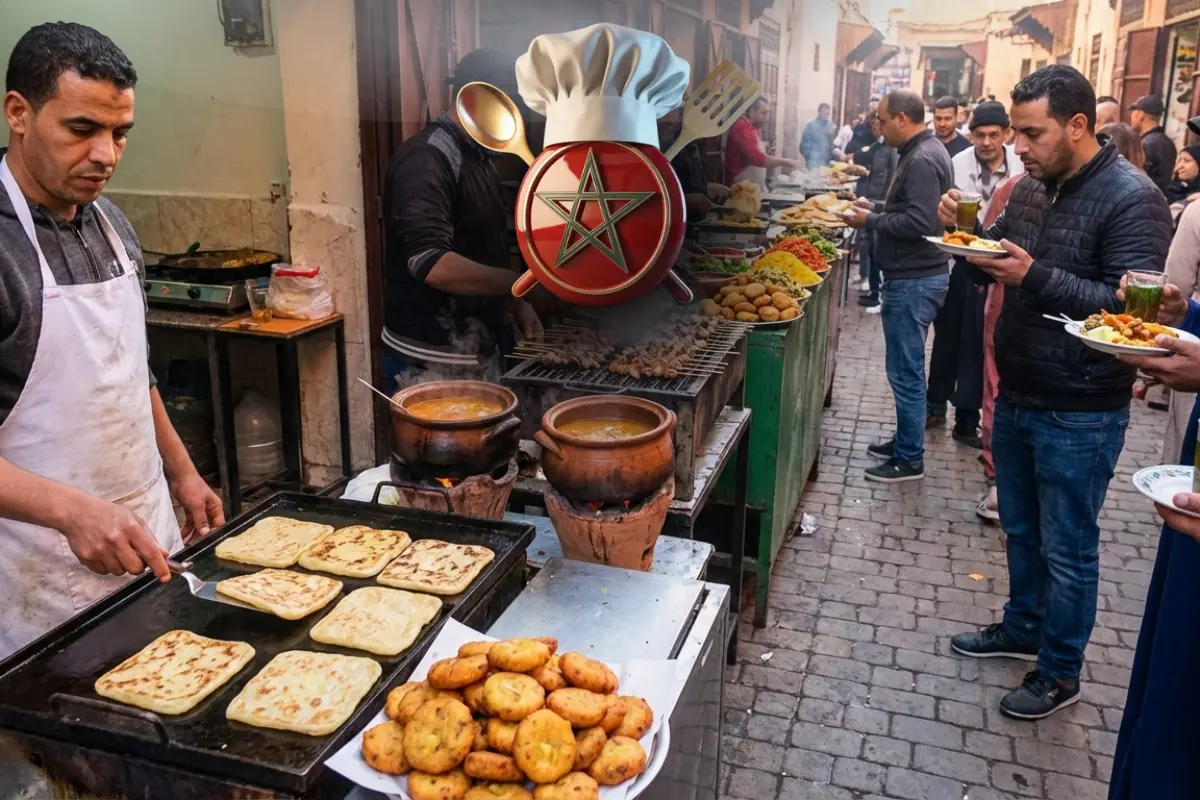
The evening call to prayer echoes across Jemaa el-Fnaa square in Marrakech. As the sun sets, smoke begins rising from hundreds of grills. Within minutes, what was a quiet plaza transforms into the world's most chaotic, aromatic, thrilling outdoor restaurant. Vendors shout "Welcome, my friend!" from behind mountains of grilled sardines. Steam billows from giant pots of snail soup. The scent of fresh-baked msemen mingles with sizzling kefta and sweet, sticky chebakia.
This is Moroccan street food—loud, messy, absolutely delicious, and utterly unforgettable.
Unlike many countries where street food means quick snacks, Morocco's street food culture is serious cuisine served al fresco. These aren't just vendors—they're specialists, often third or fourth generation, who've perfected single dishes over decades. The man selling snail soup? That's all he does, and he's been doing it for 40 years. The woman making msemen? Her grandmother taught her grandmother's grandmother.
But navigating Morocco's street food scene as a visitor (or even as a Moroccan from a different city) can be intimidating. What are those little brown things in broth? How much should you pay? Is that safe to eat? Which vendor has the best version?
This comprehensive guide answers all those questions. You'll discover the 12 most iconic Moroccan street foods, learn what makes each one special, where to find the best versions, what they cost, and insider tips for eating like a local. From breakfast snacks to late-night bites, from Marrakech to Tangier, this is your complete education in Morocco's edible streets.

Understanding Moroccan Street Food Culture
When & Where Moroccans Eat Street Food
🕐 The Street Food Schedule:
| Time | What's Happening | Popular Foods |
|---|---|---|
| 6:00-9:00 AM | Breakfast rush - workers heading to jobs | Msemen, baghrir, bissara, fried fish |
| 12:00-2:00 PM | Lunch break - peak sandwich time | Bocadillo, merguez sandwich, liver skewers |
| 4:00-6:00 PM | Afternoon snack - after school/work | Sfenj, chebakia, snail soup |
| 7:00-11:00 PM | Dinner crowd - family evening meals | Grilled meats, sardines, harira (Ramadan) |
| 11:00 PM-2:00 AM | Late night - young people, night workers | Tangia, grilled offal, leftover lunch items |
Street Food Etiquette & Safety
✅ Street Food Survival Guide:
Food Safety (Real Talk):
- ✅ Look for crowds: Locals eating there = turnover = fresh food
- ✅ Watch it being cooked: Hot food cooked in front of you is safest
- ✅ Morning is safest: Everything is fresh, nothing has been sitting
- ✅ Avoid pre-made salads: If it's been sitting in the heat, skip it
- ⚠️ Your stomach needs adjustment: Even safe Moroccan street food can upset Western stomachs due to different oils, spices, bacteria. Start slowly!
Etiquette Tips:
- 💰 Know the price first: Ask "C'est combien?" (How much?) before ordering
- 🤝 Cash only: Small bills (10-50 MAD notes) preferred
- 🍽️ Eat standing or at vendor's counter: Most street food isn't sit-down
- 🗑️ Dispose of trash properly: Use bins or hand back to vendor
- 📸 Ask before photographing: Especially vendors' faces
- 🚫 Don't haggle on food prices: These are working people, not souk merchants
The 12 Essential Moroccan Street Foods
1. Snail Soup (بلبولة - Babouche)

What it is: Small snails simmered for hours in a broth flavored with 17+ herbs and spices including thyme, licorice root, anise, mint, and orange peel. Served in bowls with a toothpick to extract the snails.
Why it's special: This is uniquely Moroccan—you won't find it anywhere else. The broth is medicinal (Moroccans believe it cures everything from colds to stomach issues) and surprisingly delicious.
📍 Where to Find It:
- Marrakech: Jemaa el-Fnaa square - vendors on the south side (evening)
- Casablanca: Central Market area, especially near Derb Omar
- Fes: Bab Boujloud entrance to medina
- Best time: Afternoon/evening (4 PM onwards)
💰 What to Pay:
Price: 5-10 MAD per bowl (about $0.50-$1)
Portion: Small bowl with 15-20 snails
🍴 How to Eat It:
- Receive your small bowl of snails in aromatic broth
- Use the toothpick to extract snail from shell (twist and pull)
- Dip bread in the broth—it's the best part!
- Sip the remaining broth directly from bowl
- Return bowl to vendor when done
💡 Insider Tips:
- It's an acquired taste: The first time might be weird, but locals are addicted!
- Drink the broth: That's where the medicine/flavor is
- Best vendor indicator: Look for steaming pots that have been simmering all day
- Vegetarian? You can drink just the broth and skip the snails
2. Grilled Sardines (سردين مشوي)
What it is: Fresh sardines, gutted and cleaned, seasoned with chermoula marinade (cilantro, parsley, garlic, cumin, paprika, lemon), then grilled over charcoal and served in fresh bread.
Why it's special: Morocco has incredible Atlantic coastline = incredibly fresh fish. Sardines here are meatier, fattier, more flavorful than anywhere else.
📍 Where to Find It:
- Essaouira: Port area - THE best place for sardines in all Morocco
- Casablanca: Ain Diab beach walkway
- Agadir: Beach promenade, port area
- Marrakech: Jemaa el-Fnaa (but coastal cities are fresher!)
💰 What to Pay:
Price: 20-30 MAD for sardine sandwich (coastal cities)
30-40 MAD in Marrakech (not a coastal city, fish is imported)
Portion: 4-6 sardines in half a baguette
🍴 How to Eat It:
- Watch them grill your sardines (enjoy the smoky show!)
- Receive sandwich - it'll be messy and delicious
- Eat immediately while hot - the crispy skin is the best part
- Squeeze lemon over it
- Have napkins ready - this is finger-licking food
💡 Insider Tips:
- Morning is best: Fish is freshest (especially 9-11 AM)
- Friday rule: Avoid Friday mornings (fishermen don't work Fridays - religious day)
- Check the fish: Eyes should be clear, fish should smell like ocean, not fishy
- Accompaniments: Usually comes with tomato and lettuce in the bread

3. Msemen (مسمن) - Square Pancakes
What it is: Flaky, layered flatbread made from semolina dough, folded multiple times, then cooked on a griddle until crispy outside and tender inside.
Why it's special: It's Morocco's ultimate breakfast food and afternoon snack. The layers create an incredible texture—simultaneously crispy and soft.
📍 Where to Find It:
- Everywhere! Msemen vendors are in every neighborhood
- Best spots: Near schools (for kids' breakfast), bus stations (for commuters), medina entrances
- Look for: Women sitting with griddles and small charcoal burners
- Best time: 6:00-10:00 AM for breakfast, 4:00-6:00 PM for afternoon snack
💰 What to Pay:
Price: 2-5 MAD per piece (about $0.20-$0.50)
Typical order: 2-3 pieces for breakfast
🍴 How to Eat It:
Traditional way: Plain with mint tea
Sweet: With honey and butter (most popular)
Savory: With soft cheese (jben) and olives
Modern: Filled with Nutella, jam, or cheese (ask for "msemen farci")
💡 Insider Tips:
- Order "freshly made": Say "ساخن" (sakhn - hot) to get one straight off the griddle
- Eat immediately: Msemen is best hot and crispy
- Watch the folding: Good vendors fold it 4-6 times for maximum layers
- Regional names: Called "rghaif" in some regions
4. Bocadillo (بوكاديلو) - Moroccan Sandwich
What it is: A baguette sandwich stuffed with your choice of fillings. NOT like European sandwiches—these are hot, greasy, and loaded with flavor.
Why it's special: This is Morocco's fast food, the lunch of choice for workers, students, and anyone in a hurry.
📍 Where to Find It:
- Every street corner: Literally! Look for vendors with portable grills
- Best quality: Near universities, business districts (they know their audience)
- Lunch rush: 12:00-2:00 PM (expect lines!)
💰 What to Pay:
Price range:
• Basic (kefta or merguez): 15-20 MAD
• Deluxe (mixed meats): 25-30 MAD
• With egg: add 3-5 MAD
🥖 Popular Fillings:
| Filling | What It Is | Flavor Profile |
|---|---|---|
| Kefta | Ground beef/lamb patties, spiced | Savory, cumin-forward |
| Merguez | Spicy lamb sausages | Spicy, rich, fatty |
| Liver (كبدة) | Grilled liver pieces | Rich, iron-y, tender |
| Mixed (مشكل) | Combination of meats | Complex, satisfying |
| Chicken | Grilled chicken pieces | Lighter, still flavorful |
🍴 Standard Additions:
- Harissa (hot sauce) - adjust to your spice tolerance
- Tomatoes and onions - usually cooked on the grill
- Lettuce - if you want it (say "avec salade")
- French fries - INSIDE the sandwich (yes, carbs on carbs!)
💡 Insider Tips:
- Ordering phrase: "Bocadillo kefta, s'il vous plaît" (French works everywhere)
- Spice level: "شوية حار" (shwiya har) = a little spicy, "بزاف حار" (bezaf har) = very spicy
- Extra crispy: Ask them to grill your bread too ("grillé le pain")
- Perfect lunch combo: Bocadillo + small Coke = 20-25 MAD total

5. Sfenj (سفنج) - Moroccan Donuts
What it is: Deep-fried rings of sticky, chewy dough. Like donuts, but denser, oilier, and served plain (no glaze, no sugar).
Why it's special: This is Morocco's breakfast champion. Workers buy 3-4 sfenj, dunk them in sweet mint tea, and that's breakfast.
📍 Where to Find It:
- Morning spots: Near mosques (after Fajr prayer), cafes, markets
- Look for: Vendors with large pots of bubbling oil, golden rings piled high
- Best time: 6:00-9:00 AM (fresh and hot)
💰 What to Pay:
Price: 1-2 MAD per piece (about $0.10-$0.20)
Typical order: 3-5 pieces + mint tea = full breakfast for 10 MAD
🍴 How to Eat It:
- Buy fresh and hot (they're made continuously)
- Dunk in sweet mint tea - this is essential!
- Eat immediately - they get tough when cold
- Optional: sprinkle with sugar at home (street vendors don't do this)
💡 Insider Tips:
- Get them hot: Point to the ones just coming out of the oil
- Texture tip: Good sfenj is chewy, not cake-like. If it's dense, it's perfect!
- Tea pairing: The sweetness of mint tea balances sfenj's plainness
- Avoid afternoon sfenj: They've been sitting and are no longer good
6. Makouda (مقودة) - Potato Fritters
What it is: Mashed potato mixed with spices, formed into balls or patties, then deep-fried until crispy golden outside.
Why it's special: Crispy outside, fluffy inside, perfectly spiced. It's like Moroccan hash browns meets falafel.
📍 Where to Find It:
- Everywhere: Popular in all cities
- Best spots: Near schools (kids love them), working-class neighborhoods
- Peak time: Late afternoon (4:00-6:00 PM)
💰 What to Pay:
Price: 3-5 MAD per piece
Sandwich version: 10-15 MAD (makouda in bread with harissa)
🍴 How It's Served:
Option 1: Plain with harissa for dipping
Option 2: In bread as a sandwich ("makouda bocadillo")
Option 3: With fried egg on top (breakfast special)
💡 Insider Tips:
- Seasoning: Good makouda has cumin, parsley, garlic—should be flavorful, not just plain potato
- Texture test: Should be crispy outside, not soggy
- Best combo: Makouda sandwich with harissa and tomatoes
- Vegetarian friendly: One of the few fully vegetarian street foods
7. Tangia (طانجية) - The Bachelor's Stew
What it is: Meat (usually lamb or beef) slow-cooked with preserved lemons, olives, garlic, and spices in a clay urn, traditionally cooked in the embers of a hammam (bathhouse).
Why it's special: This is Marrakech's signature dish, with a fascinating history and unique preparation method.
📍 Where to Find It:
- Marrakech ONLY: This is a Marrakech specialty, rare elsewhere
- Best spots: Jemaa el-Fnaa late evening, Bab Doukkala area
- Traditional experience: Order from a tangia restaurant, they'll prepare it in hammam
💰 What to Pay:
Street portion: 40-60 MAD per serving
Full urn (serves 4-6): 200-300 MAD
Note: Traditional hammam-cooked tangia must be ordered 24 hours ahead!
🍴 How It's Served:
- Served directly from the clay urn
- Meat is fall-apart tender
- Accompanied by fresh bread
- Eaten communally with friends
💡 Insider Tips:
- Not fast food: Traditional tangia takes 6-8 hours to cook
- Street version: Street vendors make quick version in pots (not authentic but tasty)
- For true experience: Go to a tangia restaurant and order ahead
- Social food: Tangia is traditionally shared among male friends

8. Grilled Liver Skewers (كبدة مشوية)
What it is: Fresh lamb or beef liver cut into chunks, seasoned with cumin and salt, grilled on skewers until charred outside but still tender inside.
Why it's special: Moroccans LOVE organ meats. Liver is considered delicious, nutritious, and affordable.
📍 Where to Find It:
- Everywhere: Every city has liver vendors
- Best spots: Near butchers (ultra-fresh), evening markets
- Peak time: Evenings, especially Thursday nights (pre-weekend)
💰 What to Pay:
Price: 5-7 MAD per skewer
Meal portion: 3-4 skewers + bread = 25-30 MAD
🍴 How to Eat It:
- Order number of skewers (usually sold individually)
- They're grilled to order (watch the charring!)
- Receive with bread and cumin-salt
- Slide meat off skewer into bread
- Dip in cumin-salt mixture
- Eat immediately while hot
💡 Insider Tips:
- Freshness indicator: Liver should be deep burgundy, not brown
- Don't overcook: Good liver is still slightly pink inside (well-done = tough)
- Adventurous eaters: Try mixed offal skewers (liver + heart + kidney)
- Not for everyone: Organ meat has distinct flavor—if you don't like liver elsewhere, you won't like it here
9. Harira (حريرة) - The Ramadan Street Special
What it is: Thick soup with tomatoes, lentils, chickpeas, meat, and spices. While it's home-cooked daily, during Ramadan it becomes street food—vendors set up at sunset to sell to those breaking fast.
Why it's special: During Ramadan, every street corner has a harira vendor. It's the fastest, cheapest way to break your fast properly.
📍 Where to Find It:
- Ramadan only: Street vendors appear only during Ramadan month
- Everywhere: Every neighborhood, mosque area, market
- Time: Sets up 1 hour before Maghrib (sunset prayer), sold out by 7 PM
💰 What to Pay:
Price: 5-10 MAD per bowl
Breaking fast package: Harira + dates + chebakia = 15-20 MAD
🍴 How It Works During Ramadan:
- Vendors set up around 5:30 PM
- People buy harira to-go (in plastic bags or bowls)
- Exactly at sunset call to prayer, everyone breaks fast together
- First bite: dates, then harira, then prayer
💡 Insider Tips:
- Only during Ramadan: Outside Ramadan, harira is home-cooked, not street food
- Bring containers: Some vendors give you harira in plastic bags (yes, soup in bags!)
- Get there early: Best vendors sell out fast
- Tourist participation: Non-Muslims can absolutely buy and enjoy! Vendors welcome everyone
10. Bissara (بيصارة) - Fava Bean Soup
What it is: Thick, creamy soup made from dried fava beans, served with a generous drizzle of olive oil, cumin, and bread for dipping.
Why it's special: This is winter breakfast food and working-class comfort food—cheap, filling, nutritious, and delicious.
📍 Where to Find It:
- Morning only: Bissara is breakfast food (6:00-10:00 AM)
- Best cities: Fes, Meknes, Casablanca, Rabat
- Look for: Small shops with large pots steaming in the morning
- Season: Most popular in winter (warm and hearty)
💰 What to Pay:
Price: 5-8 MAD per bowl with bread
Extra olive oil: Sometimes costs 2-3 MAD more for quality oil
🍴 How to Eat It:
- Receive your bowl of thick, pale green soup
- Vendor drizzles olive oil on top
- Sprinkle cumin generously
- Tear bread, dip and scoop
- Drink remaining soup from bowl
- Best enjoyed HOT on cold mornings
💡 Insider Tips:
- Order "مع زيت" (ma'a zeit - with oil): Extra olive oil makes it special
- Cumin is key: Don't be shy—add lots of cumin
- Seasonal treat: Hard to find in summer
- Vegetarian/vegan: Completely plant-based and protein-rich

11. Maakouda Sandwich (بوكاديلو مقودة)
What it is: A sandwich made with fried potato fritters (maakouda) stuffed in bread with harissa, tomatoes, and sometimes fried egg.
Why it's special: It's the ultimate cheap, filling lunch for students and workers. Carbs on carbs, and it works!
📍 Where to Find It:
- Everywhere: Especially near schools, universities
- Best spots: Working-class neighborhoods, industrial areas
- Peak time: Lunch rush (12:00-2:00 PM)
💰 What to Pay:
Price: 10-15 MAD for sandwich
With egg: 15-20 MAD
Cheapest filling lunch in Morocco!
12. Fresh Orange Juice (عصير البرتقال)
What it is: Fresh-squeezed orange juice made right in front of you from Morocco's incredible Valencia oranges.
Why it's special: Morocco produces some of the world's best oranges. This isn't juice from concentrate—it's liquid sunshine.
📍 Where to Find It:
- Everywhere: Every tourist area, market, major street
- Iconic spot: Jemaa el-Fnaa has an entire row of orange juice stands
- All day: Morning through evening
💰 What to Pay:
Tourist areas (Jemaa el-Fnaa): 6-8 MAD per glass
Local areas: 4-5 MAD per glass
Large glass vs small: Usually same price, ask for large!
💡 Insider Tips:
- Bargain here: Unlike food, juice prices are negotiable. "5 dirhams?" often works
- Watch them squeeze: Ensures freshness and correct amount
- Morning is best: Oranges are coldest, juice tastes better
- No ice needed: If oranges are fresh and cold, skip the ice (hygiene concern)
City-by-City Street Food Guide
Marrakech: The Tourist Street Food Capital
🏙️ Marrakech Specialties:
| Food | Best Location | Price Range |
|---|---|---|
| Snail soup | Jemaa el-Fnaa, south side | 5-8 MAD |
| Grilled sardines | Jemaa el-Fnaa, stalls #40-60 | 30-40 MAD |
| Mixed grilled meats | Jemaa el-Fnaa, any numbered stall | 40-60 MAD/person |
| Tangia | Bab Doukkala area (authentic) | 40-60 MAD |
| Orange juice | Jemaa el-Fnaa, orange juice row | 6-8 MAD |
⚠️ Marrakech Tourist Warnings:
- Jemaa el-Fnaa is overpriced: Everything costs 50% more than in local neighborhoods
- "Menu" scam: Some stalls have no prices, then charge tourists 200 MAD for a simple meal. Always ask price first!
- Aggressive touts: Vendors will pull you to their stall. Be firm: "La shukran" (No thank you)
- Quality varies wildly: Numbered stalls (40-80) are safer, better regulated
Fes: The Authentic Food City
🏙️ Fes Specialties:
- Bissara: Best in Morocco! Near Bab Boujloud gate
- Msemen: Women vendors in medina make the flakiest versions
- Camel burger: Yes, really! Near Bab Boujloud (tourist novelty, locals don't eat it)
- Street vendors in medina: More authentic, less touristy than Marrakech
Casablanca: The Working City's Food
🏙️ Casablanca Specialties:
- Bocadillo culture: Lunch rush is intense, best sandwiches in Morocco
- Makouda everywhere: Casa workers love these for afternoon snacks
- Central Market: Best spot for authentic, non-touristy street food
- Modern street food: Casa has more fusion and modern takes
Essaouira: The Seafood Paradise
🏙️ Essaouira Specialties:
- Grilled sardines: BEST IN MOROCCO. Port area, morning
- Grilled fish: Choose your fish from display, they grill it
- Seafood sandwiches: Calamari, shrimp in bread
- Fish tagine: Some vendors make it on the spot

Street Food Survival Phrases
🗣️ Essential Moroccan Arabic Phrases:
| English | Moroccan Arabic (Darija) | Pronunciation |
|---|---|---|
| How much is this? | بشحال هذا؟ | Bsh-hal hada? |
| Too expensive | غالي بزاف | Ghali bezaf |
| I want this | بغيت هذا | Bghit hada |
| Without spicy | بلا حار | Bla har |
| A little spicy | شوية حار | Shwiya har |
| Very hot (food) | سخون بزاف | Skhoun bezaf |
| No thank you | لا، شكرا | La, shukran |
| Delicious! | بنين! | Bneen! |
French also works everywhere:
- "C'est combien?" = How much?
- "Un/deux/trois" = One/two/three (for ordering quantities)
- "Sans piquant" = Without spicy
- "Délicieux!" = Delicious
Health & Safety Real Talk
💊 Managing Your Stomach:
The Truth: Even safe street food can upset Western stomachs. Here's how to minimize issues:
Before Your Trip:
- ✅ Start probiotics 2 weeks before arriving
- ✅ Bring Imodium, antacids, electrolyte packets
- ✅ Consider travel insurance that covers medical
While Eating Street Food:
- ✅ Start slow: One street food item first day, see how you feel
- ✅ Eat at busy times: Busy = high turnover = fresh food
- ✅ Hot food only: Avoid anything that's been sitting at room temp
- ✅ Peel fruits: Oranges are safe, pre-cut watermelon is risky
- ✅ Bottled water only: For drinking and brushing teeth
- ⚠️ Ice is risky: Made from tap water, skip it
- ⚠️ Salads are risky: Washed in tap water, avoid unless very busy restaurant
If You Get Sick:
- Mild upset stomach: Normal adjustment, give it 24 hours
- Moderate symptoms: Imodium and rest
- Severe (fever, blood, can't keep fluids down): See a doctor immediately
Frequently Asked Questions
Is Moroccan street food safe for tourists?
Honest answer: Mostly yes, with precautions. Food cooked fresh in front of you at busy stalls is generally safe. Your stomach may still react due to different bacteria, oils, and spices—this is normal adjustment, not food poisoning. Start slowly, choose busy vendors, avoid pre-made items sitting in heat. Most tourists eat street food daily without major issues.
How much should I budget for street food per day?
Budget traveler: 60-100 MAD/day ($6-10)
• Breakfast: Msemen + tea = 15 MAD
• Lunch: Bocadillo = 20 MAD
• Snacks: Orange juice + sfenj = 10 MAD
• Dinner: Grilled sardines = 30 MAD
Comfortable budget: 150-200 MAD/day ($15-20) allows for trying everything without price worries
Can vegetarians find street food in Morocco?
Yes, but limited! Vegetarian options:
• Makouda (potato fritters)
• Bissara (fava bean soup)
• Msemen with honey/cheese
• Sfenj
• Fresh fruit and juice
• Some vegetable-filled sandwiches
Morocco's street food is very meat-centric, so vegetarians need to be more selective.
What's the best time to experience Jemaa el-Fnaa food stalls?
Best time: 7:30-9:30 PM
Why: Stalls are fully set up, food is fresh, atmosphere is magical, not too crowded yet. Avoid dinner rush (9:30-11 PM) when it's chaotic. Never go before 7 PM—many stalls aren't even set up yet!
Should I tip street food vendors?
Tipping culture:
• Small vendors (msemen, sfenj): No tip expected
• Sandwich/bocadillo: No tip expected
• Seated food stalls (Jemaa el-Fnaa): 5-10 MAD tip appreciated
• If someone helps with ordering/translating: 5 MAD tip
Unlike restaurants, tipping isn't obligatory for street food, but kindness is always appreciated!
What's the single best street food experience in Morocco?
Answer: Grilled sardines in Essaouira port, morning time. Ultra-fresh fish, simple preparation, beautiful setting, reasonable price (25 MAD), authentic local experience, no tourist markup. If you only eat one street food in Morocco, make it this!
Conclusion: Eat Morocco's Streets
Morocco's street food isn't just about satisfying hunger—it's about connection. Connection to place, to people, to tradition, to the pulse of daily life. Every bocadillo vendor has a story. Every snail soup seller learned from their father who learned from their father. Every msemen woman is feeding the neighborhood's children before school, just as her grandmother did.
When you eat street food in Morocco, you're not a tourist consuming a product. You're participating in culture—standing shoulder to shoulder with students, workers, grandmothers, and children, all drawn together by the universal language of delicious food cooked with care.
🎯 Your Street Food Success Formula:
- Start cautiously: One item first day, build up slowly
- Follow the crowds: Busy = fresh = safe = delicious
- Ask prices first: Avoid the "tourist price" surprise
- Eat when it's hot: Street food is best fresh off the grill/out of the pot
- Be adventurous but smart: Try new things, but watch for freshness
- Learn basic phrases: "Bshhah hada?" (How much?) goes a long way
- Bring small bills: Vendors rarely have change for 200 MAD notes
- Embrace the chaos: Street food is loud, messy, and wonderful
🌟 The Street Food Philosophy:
"The best meal in Morocco isn't in a fancy restaurant with tablecloths and waiters. It's standing at a crowded corner, eating a 15-dirham bocadillo with juice dripping down your fingers, surrounded by locals doing the same thing, all of us bound together by the simple, profound pleasure of good food."
Download Your Free Street Food Resources:
- 🗺️ Printable Street Food Map (Major Cities)
- 💬 Moroccan Darija Food Phrases Card
- 📋 12 Street Foods Checklist (Track What You've Tried!)
- 💰 Current Street Food Price Guide 2026
- 🏥 Street Food Health & Safety Guide PDF
Share your street food adventures! Tag us #MaCookingStreets with photos of your Moroccan street food experiences!
May your street food be hot, your vendors be honest, and your stomach be strong. Welcome to the real Morocco—one delicious bite at a time.
بالصحة والعافية - Bel seha wel 'afiya (With health and wellness)