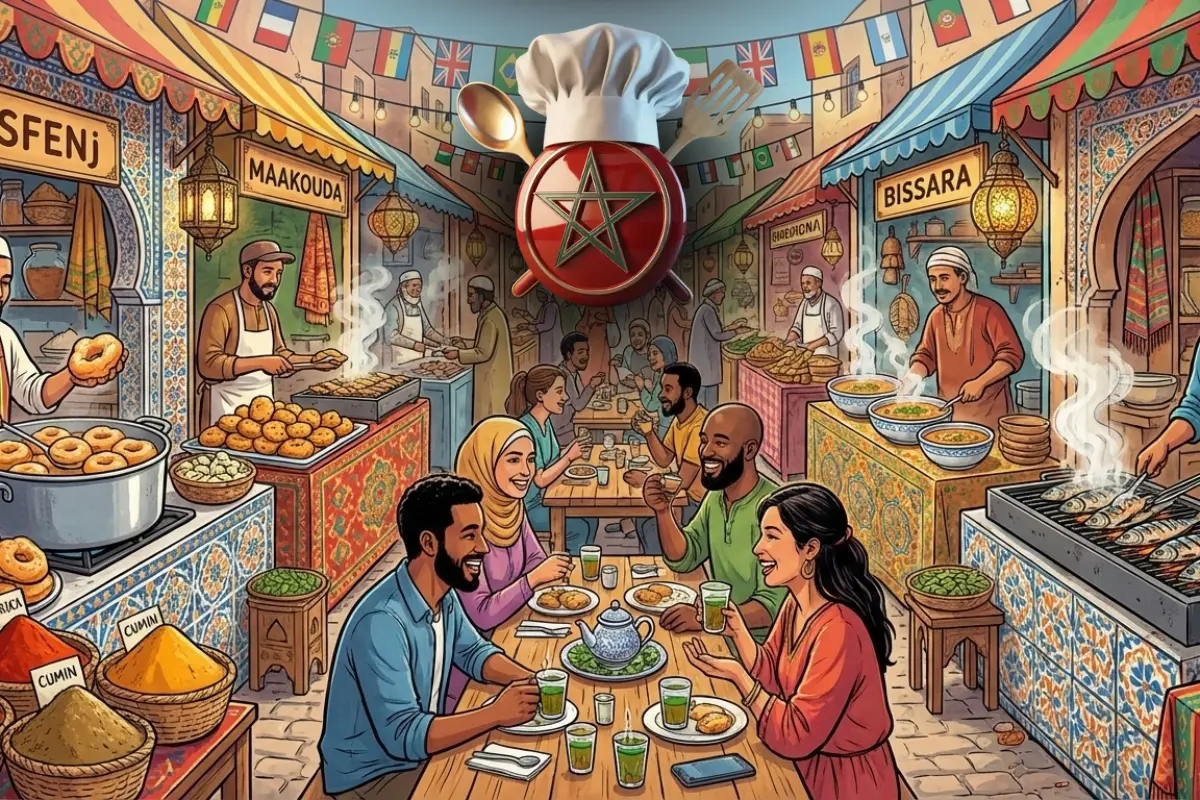
Introduction: Moroccan Street Food Goes Global
Moroccan street food is more than a quick bite—it is a cultural experience that reflects the country’s hospitality, creativity, and love for bold flavors. In recent years, Moroccan street food has gained international recognition, appearing in food festivals, global markets, and even fine dining menus. Its rise highlights Morocco’s ability to blend tradition with modern culinary trends.
Iconic Moroccan Street Foods
- Sfenj: Moroccan doughnuts, crispy on the outside and fluffy inside, often enjoyed with mint tea.
- Maakouda: Potato fritters seasoned with spices, a favorite snack among locals and visitors.
- Grilled Sardines: A coastal specialty, sardines are marinated with chermoula and grilled to perfection.
- Bissara: A warm fava bean soup, commonly served in markets during cold mornings.
- Brochettes: Skewers of spiced meat, grilled and served with bread and harissa.
Cultural Significance
Street food in Morocco is not just about taste—it is about community. Vendors in bustling medinas and markets serve dishes that bring people together. Sharing sfenj or sipping bissara creates moments of connection, reflecting Morocco’s values of generosity and hospitality.
Global Popularity
Moroccan street food is now featured in international food festivals and global cities. From New York to London, chefs and vendors showcase Moroccan flavors, introducing audiences to the richness of North African cuisine. This global expansion reflects the growing demand for authentic, flavorful, and cultural food experiences.
Health and Wellness Appeal
Many Moroccan street foods emphasize fresh ingredients and natural spices. Chermoula-marinated sardines provide omega-3s, bissara offers plant-based protein, and maakouda highlights the versatility of potatoes. These qualities align with global health trends, making Moroccan street food both delicious and nutritious.
Fusion and Innovation
Chefs worldwide are reimagining Moroccan street food. Sfenj is served with gourmet chocolate sauces, brochettes are paired with international marinades, and couscous bowls are adapted into street-style meals. These innovations preserve Moroccan identity while appealing to modern tastes.
Conclusion: Morocco’s Street Food Legacy
Moroccan street food is a global ambassador of flavor and culture. Its rise in popularity reflects the world’s growing appreciation for authentic culinary traditions. From sfenj and maakouda to grilled sardines and bissara, Moroccan street food offers a journey into the heart of Morocco’s culture. As it continues to captivate audiences worldwide, Moroccan street food stands as a symbol of tradition, innovation, and community.