Introduction: Beyond the Tourist Tagine
Walk into any restaurant in Marrakech's Jemaa el-Fnaa and you'll see them: identical tagines of chicken with lemon, served in the same earthenware pots, tasting disappointingly similar. These tourist tagines have given the world a narrow, simplified view of what is actually one of the most diverse and regionally varied dishes in Moroccan cuisine.
The truth is, Morocco's tagine tradition is as varied as its landscape. The lamb tagine they make in the Atlas Mountains tastes nothing like the coastal fish tagine of Essaouira. The sweet mrouzia served at Fes weddings bears little resemblance to the savory Berber tagine cooked over wood fires in the countryside. Even within the same city, family recipes differ dramatically—every household has their "secret" combination of spices, their preferred cooking time, their grandmother's special technique.
Understanding regional tagine variations isn't just about expanding your recipe collection. It's about grasping the geography, history, and culture that shaped each dish. Why does Marrakech favor sweet tagines with dried fruits? Because it was a crossroads for the trans-Saharan trade routes bringing dates and almonds. Why does Tangier's tagine show Spanish influences? Because of centuries of cultural exchange across the Strait of Gibraltar. Why do coastal cities prefer fish tagines? Because fresh Atlantic catch arrives daily at their ports.
This comprehensive guide takes you on a culinary journey through Morocco's diverse regions, teaching you 10 essential tagine variations that every serious cook should master. You'll learn not just the recipes, but the techniques, ingredients, cultural context, and regional stories that make each tagine unique. From the imperial cities to mountain villages, from Atlantic shores to Saharan oases, this is your complete education in tagine mastery.

Understanding Tagine: The Foundation
What Makes a Tagine a Tagine?
🍲 The Essential Elements:
Before exploring regional variations, understand what defines authentic tagine:
| Element | Traditional Approach | Why It Matters |
|---|---|---|
| Cooking vessel | Conical clay pot (or heavy pot with lid) | Traps steam, creates moisture circulation |
| Cooking method | Low, slow heat (2-3 hours traditional) | Tenderizes tough cuts, develops deep flavors |
| Liquid ratio | Minimal liquid (1-2 cups max) | Concentrates flavors, not a soup |
| Spice philosophy | Complex but balanced, never overwhelming | Aromatic warmth, not heat |
| Sweet-savory balance | Often combined in same dish | Signature Moroccan flavor profile |
| Preserved elements | Preserved lemons, olives, dried fruits | Adds depth, uniquely Moroccan |
The Three Tagine Cooking Methods
⚡ Choose Your Technique:
1. Traditional Clay Tagine (الطاجين التقليدي)
- Time: 2.5-3 hours
- Heat source: Stovetop (with diffuser) or charcoal
- Result: Most authentic, best flavor development
- Best for: Weekend cooking, special occasions
- Challenge: Requires attention, can crack if heated incorrectly
2. Modern Stovetop (Dutch Oven/Heavy Pot)
- Time: 2-2.5 hours
- Heat source: Any stovetop
- Result: Excellent, very close to traditional
- Best for: Regular cooking, reliable results
- Advantage: No special equipment needed, easier to control
3. Pressure Cooker (Quick Method)
- Time: 25-35 minutes
- Heat source: Stovetop or electric
- Result: Good, tender meat, but less depth of flavor
- Best for: Busy weeknights, quick meals
- Note: Not traditional, but practical for modern life
Regional Ingredient Variations
| Region | Signature Ingredients | Spice Profile | Unique Elements |
|---|---|---|---|
| Marrakech | Lamb, dried fruits, almonds | Sweet spices (cinnamon heavy) | Honey, rose water |
| Fes | Pigeon, chicken, quinces | Complex, refined, saffron | Orange blossom, complex ras el hanout |
| Casablanca | Chicken, beef, modern vegetables | Balanced, not too sweet | Urban sophistication, French influence |
| Tangier | Seafood, lamb, peppers | Spanish-influenced, more paprika | Mediterranean flavors |
| Essaouira | Fresh fish, seafood | Lighter, herb-forward | Charmoula, coastal freshness |
| Atlas Mountains | Lamb, barley, wild herbs | Simple, earthy, Berber spices | Rustic, hearty, minimal ingredients |
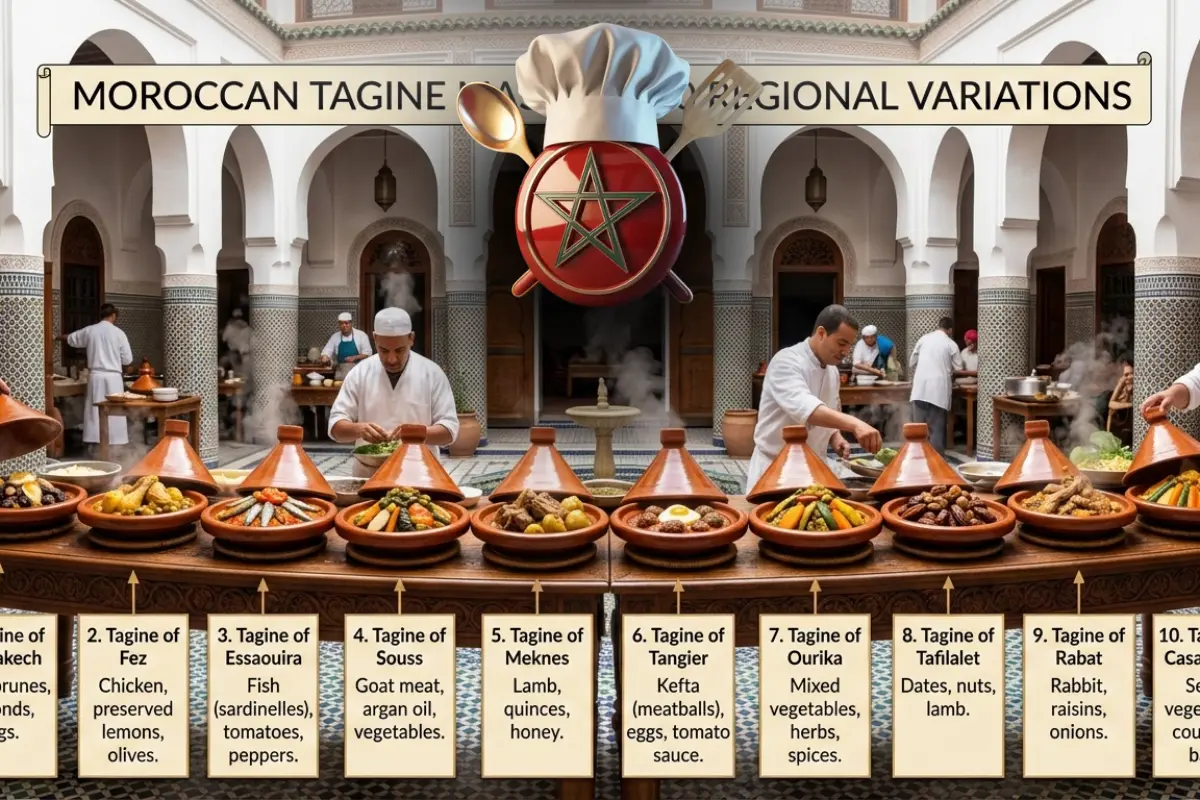
The 10 Regional Tagine Variations
1. Marrakech: Lamb Tagine with Prunes & Almonds (مروزية)

Regional identity: This is Marrakech's signature dish, embodying the city's history as a trading hub where sweet ingredients from the south met savory Berber traditions. Originally served at weddings and Eid, now a year-round favorite.
What makes it unique: The sweet-savory balance is pronounced—prunes add deep sweetness, honey creates glaze, yet spices keep it savory. The contrast is the entire point.
📖 Authentic Marrakech Lamb Mrouzia
⏰ Timeline: 2.5 Hours Total
Serves: 6-8
Ingredients:
For the meat:
- 1.5kg lamb shoulder or leg, cut into large chunks
- 2 large onions, grated
- 4 cloves garlic, minced
- 1/4 cup olive oil
- 2 tsp ras el hanout
- 1 tsp ground ginger
- 1 tsp cinnamon
- 1/2 tsp turmeric
- Large pinch saffron threads (soaked in 2 tbsp water)
- Salt & black pepper
- 1 cup water
For the prune mixture:
- 400g pitted prunes
- 3 tbsp honey
- 1 tsp cinnamon
- 1/2 tsp ginger
- 2 tbsp orange blossom water (optional)
For finish:
- 150g whole almonds, blanched
- 2 tbsp butter or oil
- 1 tbsp sesame seeds, toasted
Step-by-Step Instructions:
| Time | Step | What's Happening |
|---|---|---|
| 0:00-0:15 | Marinate meat with grated onions, garlic, all spices, saffron water, oil. Mix well, let sit 15 min (or overnight for deeper flavor) | Spices penetrate meat |
| 0:15-0:30 | Transfer everything to tagine or heavy pot. Add 1 cup water. Bring to boil over medium-high heat | Starting the cooking process |
| 0:30-2:00 | Reduce to low heat. Cover tightly. Simmer 1.5 hours, checking occasionally, adding water if needed (should be moist, not swimming) | Lamb becomes fork-tender |
| 2:00-2:15 | In separate pan, simmer prunes with 1/2 cup water, honey, cinnamon, ginger for 15 minutes until soft and syrupy | Creating sweet component |
| 2:15-2:20 | In another pan, toast almonds in butter until golden. Set aside | Crunchy contrast element |
| 2:20-2:30 | Add cooked prunes (with their syrup) to lamb tagine. Simmer together 10 minutes. Sauce should be thick and glossy | Marrying flavors |
| 2:30 | Transfer to serving platter. Top with toasted almonds and sesame seeds. Serve with couscous or bread | DONE! |
🎯 Marrakech Secrets:
- Don't skip the honey: It creates the signature glaze
- Orange blossom water: Add at the very end for floral notes (traditional Marrakech touch)
- Serve temperature: This tagine is often served warm, not piping hot
- Couscous is mandatory: The sweet sauce needs couscous to balance it
- Leftovers improve: Even better the next day when flavors meld
🏛️ Cultural Context:
Wedding tradition: Mrouzia is traditionally served at Moroccan weddings, symbolizing the sweet life ahead for the couple. Wealthy families add more honey, more almonds—it's a display of generosity.
Eid specialty: Also served during Eid al-Adha, using the sacrificial lamb.
Historical note: The sweet spices (cinnamon, ginger) and dried fruits reflect Marrakech's role in trans-Saharan trade routes.
2. Fes: Chicken Tagine with Preserved Lemons & Olives (دجاج بالزيتون)
Regional identity: This is THE most iconic Moroccan tagine worldwide—what most people think of when they hear "Moroccan tagine." Originated in Fes, Morocco's cultural and culinary capital.
What makes it unique: The tangy-savory flavor from preserved lemons and briny olives. No sweetness here—this is pure, refined savory perfection. Fes cuisine is considered Morocco's haute cuisine.
📖 Classic Fes Chicken Tagine
⏰ Timeline: 2 Hours Total
Serves: 4-6
Ingredients:
- 1 whole chicken (1.5kg), cut into pieces (or chicken thighs)
- 2 large onions, finely chopped or grated
- 4 cloves garlic, minced
- 1/4 cup olive oil
- 1 tsp ground ginger
- 1 tsp turmeric
- 1/2 tsp black pepper
- Large pinch saffron threads (essential!)
- 1/2 cup fresh cilantro, chopped
- 1/2 cup fresh parsley, chopped
- 3/4 cup water
- 2 preserved lemons, quartered (homemade or jarred)
- 1 cup green olives (cracked or pitted)
- Salt to taste
- Optional: 1/2 tsp ras el hanout for extra depth
Instructions:
- Marinate (15 min): Mix chicken with onions, garlic, ginger, turmeric, pepper, saffron, half the herbs, oil. Massage into meat
- Start cooking (30 min): Transfer to tagine/pot, add water, bring to boil, reduce to low, cover, simmer 30 minutes
- Add lemons & olives (1 hour): After 30 min, add preserved lemons and olives. Continue simmering 1 more hour until chicken is very tender
- Reduce sauce (15 min): If sauce is thin, remove chicken, boil sauce down until thick and glossy. Return chicken
- Finish: Add remaining fresh herbs, simmer 2 minutes. Serve immediately
🎯 Fes Techniques:
- Preserved lemon prep: Rinse preserved lemons, discard pulp, use only the rind (cut into quarters)
- Olive choice: Green olives are traditional. Cracked olives (مكسورة) are most authentic
- Saffron is essential: This isn't optional in Fes—saffron defines the dish
- Low and slow: Fassi cooks never rush tagines. Patience creates perfection
- Sauce texture: Should coat the back of a spoon, not watery, not too thick
🏛️ Why Fes Perfected This:
Preserved lemons: Fes has been making preserved lemons for centuries—it's their specialty
Refinement culture: Fes cuisine is considered Morocco's most sophisticated. This tagine exemplifies their philosophy: few ingredients, perfect technique, balanced flavors
Daily vs. special: In Fes, this is both everyday food AND special occasion food (made with better chicken, more saffron for guests)
3. Essaouira: Fish Tagine with Chermoula (الحوت بالشرموله)

Regional identity: Coastal Morocco's pride, especially Essaouira. This Atlantic port city has the freshest fish in Morocco, and they prepare it simply to showcase quality.
What makes it unique: Fresh, not preserved. Quick-cooking (fish doesn't need hours!). Heavy on cilantro and herbs. The chermoula marinade is what makes it distinctly Moroccan—without it, it's just fish with vegetables.
📖 Essaouira Fish Tagine
⏰ Timeline: 1 Hour Total (Much faster than meat tagines!)
Serves: 4
Ingredients:
For chermoula marinade:
- 1 large bunch cilantro
- 1 large bunch parsley
- 6 cloves garlic
- 1 tbsp cumin
- 1 tbsp paprika (sweet)
- 1 tsp ground coriander
- 1/2 tsp cayenne (optional, Essaouira likes mild)
- Juice of 2 lemons
- 1/2 cup olive oil
- Salt to taste
For tagine:
- 4 firm white fish fillets (sea bass, grouper, cod - 200g each)
- 3 medium tomatoes, sliced
- 2 bell peppers (red/green), sliced
- 2 potatoes, thinly sliced (optional but traditional)
- 1 carrot, sliced
- 1/2 cup green olives
- 2 preserved lemons, quartered (lighter use than Fes version)
Instructions:
- Make chermoula (10 min): Blend all chermoula ingredients in food processor until smooth paste. Reserve 1/2 cup separately
- Marinate fish (20 min): Rub fish fillets with 1/2 of the chermoula. Let marinate 20 minutes (or up to 2 hours refrigerated)
- Layer vegetables (10 min): In tagine/pot, arrange sliced tomatoes, peppers, potatoes, carrots. Drizzle with olive oil, sprinkle salt. Add reserved 1/2 cup chermoula over vegetables
- Add fish (20 min): Place marinated fish on top of vegetables. Add olives and preserved lemon quarters around fish. Cover tightly
- Cook (20 min): Medium heat, 15-20 minutes until fish is cooked through and flakes easily (fish cooks FAST—don't overcook!)
- Serve immediately: Fish tagine must be served hot, right away. With crusty bread to soak up chermoula-infused sauce
🎯 Essaouira Coastal Secrets:
- Fish freshness is everything: Use the freshest fish possible. Day-old fish = mediocre tagine
- Don't overcook: Fish should be just cooked through, still moist. Overcooked fish is rubbery
- Vegetables as base: They protect fish from direct heat and add flavor to sauce
- Potato debate: Some add potatoes, others say it's not authentic. Both ways are common
- Morning markets: In Essaouira, locals buy fish fresh off boats in the morning, cook for lunch
🏛️ Essaouira's Fishing Heritage:
Portuguese influence: Essaouira was once Portuguese, which influenced their seafood cooking (though chermoula is purely Moroccan)
Daily catch: Fishing boats return daily at dawn. Fish tagine uses whatever was caught that morning
Grilled vs. tagine: Essaouira is famous for grilled sardines (street food), but fish tagine is the home-cooked treasure
4. Atlas Mountains: Berber Lamb Tagine with Vegetables (طاجين بربري)
Regional identity: From the High Atlas and Middle Atlas mountain regions, this represents Berber (Amazigh) cooking—rustic, honest, using what the land provides.
What makes it unique: Simplicity. Fewer spices than city tagines. Uses wild herbs from mountains. Heartier portions (mountain life requires calories!). Often cooked over wood fire.
📖 Traditional Berber Mountain Tagine
⏰ Timeline: 3 Hours Total (slow mountain cooking)
Serves: 6
Ingredients:
- 1.5kg lamb shoulder with bone, cut into large chunks
- 3 tbsp olive oil or smen (Moroccan preserved butter)
- 2 onions, roughly chopped
- 4 cloves garlic, crushed
- 2 tsp cumin (the primary spice)
- 1 tsp turmeric
- 1 tsp black pepper
- 1 tsp paprika
- NO ras el hanout (not traditional in mountains)
- 2 carrots, cut into large chunks
- 2 turnips, quartered
- 2 potatoes, quartered
- 1 small pumpkin or squash, chunked
- 1 zucchini, chunked
- 2 tomatoes, quartered
- Fresh thyme or wild thyme (زعتر) if available
- Salt
- 2 cups water
Instructions:
- Brown meat (15 min): In tagine/pot over medium-high heat, brown lamb in oil until golden all sides
- Add aromatics (5 min): Add onions, garlic, all spices. Stir to coat meat in spices
- Slow simmer (2 hours): Add water, bring to boil, reduce to lowest heat. Cover, simmer 2 hours. Add water if needed. Meat should be falling off bone
- Add vegetables (45 min): Add all vegetables, pushing them into the liquid. Cover, simmer 45 more minutes until vegetables are tender but not mushy
- Finish: Check seasoning. Serve in the tagine pot with barley bread or couscous
🎯 Berber Mountain Wisdom:
- Bone-in meat: Essential for flavor and authenticity. Bones add richness
- Smen vs oil: Traditional Berber cooking uses smen (preserved butter with aged, funky flavor). Substitute regular butter or olive oil
- Wild herbs: Mountains have wild thyme, oregano. Use what you find (or grow)
- Seasonal vegetables: This recipe changes with seasons. Spring: fava beans, peas. Winter: root vegetables
- Serving style: Berbers often eat communally from the same tagine pot, using hands and bread
🏔️ Atlas Mountain Life:
Altitude cooking: At high altitudes, food takes longer to cook. Mountain tagines simmer for hours
Seasonal variations: Winter tagines are heavier (more meat, root vegetables). Summer lighter (fresh vegetables, herbs)
Communal eating: In Berber villages, large tagines feed entire families sitting on floor around low table
Bread tradition: Barley bread (more common than wheat in mountains) is traditional accompaniment
5. Casablanca: Modern Beef Tagine with Vegetables (طاجين لحم البقر)
Regional identity: Urban, modern, cosmopolitan. Casablanca's tagines reflect its status as Morocco's business capital—practical, efficient, less sweet than Marrakech, less elaborate than Fes.
What makes it unique: Uses beef (more common in cities than rural areas). Quicker cooking for working families. Balanced, not overly sweet. Shows subtle French influence in technique.
📖 Casablanca Beef Tagine
⏰ Timeline: 2 Hours (or 30 min in pressure cooker)
Serves: 6
Ingredients:
- 1kg beef chuck or shank, cubed (2-inch pieces)
- 2 onions, sliced
- 4 cloves garlic, minced
- 3 tbsp olive oil
- 2 tsp ras el hanout
- 1 tsp ginger
- 1 tsp turmeric
- 1/2 tsp black pepper
- 1 cinnamon stick
- 3 tomatoes, grated or 1 can crushed tomatoes
- 3 carrots, cut into chunks
- 2 potatoes, quartered
- 1 zucchini, chunked
- 1 cup green peas (fresh or frozen)
- 1/2 cup cilantro, chopped
- 1.5 cups water or beef stock
- Salt to taste
Traditional Method Instructions:
- Sear beef (10 min): Brown beef in olive oil over high heat. Remove and set aside
- Build base (10 min): In same pot, sauté onions until soft. Add garlic, all spices, tomatoes. Cook 5 minutes
- Simmer beef (1.5 hours): Return beef to pot, add water/stock. Bring to boil, reduce to low, cover, simmer 1.5 hours until beef is tender
- Add vegetables (30 min): Add carrots and potatoes, simmer 20 minutes. Add zucchini and peas, simmer 10 more minutes
- Finish: Add cilantro, adjust seasoning. Serve with couscous or bread
⚡ Modern Pressure Cooker Method:
- Use SAUTÉ mode to brown beef and cook base (steps 1-2 above)
- Add beef, tomatoes, stock, close lid
- HIGH pressure 25 minutes
- Quick release, add vegetables
- HIGH pressure 5 more minutes
- Quick release, finish with herbs
🎯 Casablanca Modern Touches:
- Beef preference: Casa residents often prefer beef to lamb (more available, cheaper)
- Pressure cooker acceptance: Urban Moroccans embrace modern tools. Traditionalists may disapprove, but it's practical
- Vegetable variety: Casa tagines use whatever vegetables are in season at Central Market
- Less sweet: Urban tastes lean less sweet than Marrakech. This tagine has no dried fruit
6. Tangier: Kefta Tagine with Eggs & Tomatoes (كفتة بالبيض)

Regional identity: Tangier sits at the crossroads of Morocco, Spain, and Mediterranean influences. This shows in their tagines—brighter flavors, more tomatoes, occasional Spanish touches.
What makes it unique: Quick-cooking (ground meat = faster). Eggs on top (protein-rich, filling). Spicier than other regions. Perfect for weeknight dinners.
📖 Tangier Kefta Tagine
⏰ Timeline: 45 Minutes Total (Fast!)
Serves: 4
Ingredients:
For kefta meatballs:
- 600g ground beef or lamb (or mix)
- 1 small onion, very finely grated
- 1/2 cup parsley, finely chopped
- 1/2 cup cilantro, finely chopped
- 2 tsp cumin
- 2 tsp paprika
- 1/2 tsp cayenne (Tangier likes a bit of heat!)
- Salt & pepper
For tomato sauce:
- 2 tbsp olive oil
- 1 onion, finely chopped
- 2 bell peppers (red/green), diced
- 4 garlic cloves, minced
- 1 can (400g) crushed tomatoes
- 2 fresh tomatoes, diced
- 1 tsp cumin
- 1 tsp paprika
- 1/2 tsp cayenne
- Salt & pepper
- 1/2 cup water
For finish:
- 4-6 eggs
- Fresh parsley for garnish
Instructions:
| Time | Step |
|---|---|
| 0-10 min | Mix all kefta ingredients. Form into small meatballs (walnut-sized). Set aside |
| 10-15 min | In tagine/large skillet, heat oil. Sauté onion and peppers until soft. Add garlic, spices, cook 1 minute |
| 15-20 min | Add canned tomatoes, fresh tomatoes, water. Bring to simmer |
| 20-35 min | Nestle meatballs into sauce. Cover, simmer 15 minutes. Gently shake pan occasionally (don't stir or meatballs break!) |
| 35-42 min | Make wells in sauce. Crack eggs into wells. Cover, cook 5-7 minutes until egg whites set but yolks still runny |
| 42-45 min | Garnish with parsley. Serve immediately with crusty bread |
🎯 Tangier Techniques:
- Don't overmix kefta: Mix just until combined. Overmixing = tough meatballs
- Small meatballs cook faster: Keep them walnut-sized for quick cooking
- Egg timing: Add eggs at the end—you want runny yolks to mix with sauce!
- Bread is essential: You need bread to scoop up the egg-sauce mixture
- Serve hot from the pan: This dish doesn't wait. Eat immediately!
🌍 Tangier's Unique Position:
International city: Tangier has been shaped by Spanish, Portuguese, French, and British influences
Mediterranean flavors: More tomatoes, peppers, garlic than interior Morocco
Working-class favorite: Kefta tagine is economical, filling, quick—perfect for working families
Café culture: Many Tangier cafés serve this as a lunch special
7. Tetouan: Chicken Tagine with Artichokes (دجاج بالقرنون)
Regional identity: Northern Morocco's elegant answer to tagine. Tetouan cuisine is refined, influenced by Andalusian Muslims who fled Spain. Artichokes are their signature ingredient.
What makes it unique: Artichokes! Rare in other regions' tagines. Lighter, fresher flavors. Heavy on lemon and herbs. Shows sophistication of northern Moroccan cooking.
📖 Tetouan Chicken & Artichoke Tagine
⏰ Timeline: 1.5 Hours
Serves: 4-6
Ingredients:
- 1.2kg chicken pieces (thighs and drumsticks)
- 6-8 fresh artichokes (or 2 cans artichoke hearts, drained)
- 2 preserved lemons, quartered
- 1 cup green olives
- 2 onions, sliced
- 4 garlic cloves, minced
- 3 tbsp olive oil
- 1 tsp ground ginger
- 1/2 tsp turmeric
- 1/2 tsp black pepper
- Pinch saffron threads
- 1/2 cup cilantro, chopped
- 1/2 cup parsley, chopped
- Juice of 1 lemon
- 1 cup water
- Salt to taste
Instructions:
- Prep artichokes (15 min if using fresh): Remove tough outer leaves, cut off tops, trim stems. Cut into quarters, remove fuzzy choke. Rub with lemon juice to prevent browning. If using canned, skip this step
- Brown chicken (10 min): In tagine/pot, brown chicken in olive oil. Remove and set aside
- Build flavor base (5 min): In same pot, sauté onions until soft. Add garlic, ginger, turmeric, pepper, saffron. Cook 1 minute
- Simmer chicken (45 min): Return chicken to pot, add water and half the herbs. Cover, simmer 45 minutes until chicken is tender
- Add artichokes (20 min): Add artichokes, preserved lemons, olives. Simmer 20 more minutes until artichokes are tender
- Finish (5 min): Add lemon juice and remaining fresh herbs. Adjust seasoning. Serve immediately
🎯 Tetouan Artichoke Wisdom:
- Fresh vs. canned: Fresh artichokes are ideal (spring specialty), but good canned hearts work year-round
- Lemon is key: Both preserved lemons AND fresh lemon juice—brightness is essential
- Don't overcook artichokes: They should be tender but not mushy
- Northern spicing: Lighter on spices than southern Morocco—lets artichoke flavor shine
8. Meknes: Pigeon Tagine with Almonds (الحمام بالّوز)
Regional identity: Meknes, the imperial city, shares Fes's culinary sophistication. Pigeon tagine is an ancient dish, served at royal banquets, now a delicacy for special occasions.
What makes it unique: Pigeon meat (squab)—rich, gamey, luxurious. Sweet-savory with almonds. Extremely tender when cooked properly. This is celebration food.
📖 Imperial Meknes Pigeon Tagine
⏰ Timeline: 2 Hours
Serves: 4 (1 pigeon per person)
Ingredients:
- 4 whole pigeons (squab), cleaned
- OR substitute: 8 quail OR 4 Cornish game hens (if pigeon unavailable)
- 2 large onions, grated
- 4 cloves garlic, minced
- 3 tbsp butter
- 2 tbsp olive oil
- 1 tsp ground ginger
- 1/2 tsp turmeric
- 1 tsp cinnamon
- 1/2 tsp black pepper
- Large pinch saffron threads
- 1/2 cup fresh cilantro
- 1 cup water
- 3 tbsp honey
- 150g whole blanched almonds
- 2 tbsp butter (for almonds)
- 1 tbsp orange blossom water
- Salt to taste
Instructions:
- Marinate pigeons (20 min): Rub pigeons inside and out with onions, garlic, ginger, turmeric, pepper, saffron, cilantro. Marinate 20 minutes (or overnight)
- Brown birds (10 min): In tagine/pot, brown pigeons in butter and oil on all sides
- Slow braise (1.5 hours): Add water, bring to boil, reduce to low. Cover tightly, simmer 1.5 hours until pigeons are falling-off-bone tender. Turn occasionally. Add water if needed
- Toast almonds (10 min): In separate pan, toast almonds in butter until golden. Set aside
- Create glaze (10 min): Remove pigeons from pot. Boil down sauce until thick. Add honey and orange blossom water, stir until glossy
- Finish: Return pigeons to glaze, coat thoroughly. Top with toasted almonds. Serve with couscous
🎯 Imperial Cooking Secrets:
- Pigeon sourcing: Specialty butchers, some farmers markets. Order ahead. Frozen imported squab also works
- Alternative birds: Quail works beautifully (reduce cooking time to 45 min). Cornish hens are closest substitute (same cooking time)
- Bone-in essential: Don't use boneless—bones create rich sauce
- Patience pays: Slow cooking makes tough pigeon melt-in-mouth tender
- Special occasion only: This is expensive, time-consuming—save for celebrations
👑 Royal Heritage:
Palace food: Historically served at royal banquets in Meknes and Fes
Wedding tradition: Often part of elaborate wedding menus (alongside bastilla)
Modern scarcity: Pigeon is harder to find now, making this a rare delicacy
Symbolism: Pigeon represents luxury, refinement, celebration in Moroccan culture
9. Agadir: Seafood Tagine with Mixed Shellfish (المأكولات البحرية)
Regional identity: Agadir, Morocco's beach resort city, has access to incredible Atlantic seafood. Their tagines showcase this bounty—shrimp, squid, fish, mussels.
What makes it unique: Multiple seafood types in one tagine. Creamy sauce (unusual for Morocco—shows modern influence). Quick cooking. Tourist-friendly but authentically local.
📖 Agadir Mixed Seafood Tagine
⏰ Timeline: 1 Hour
Serves: 4-6
Ingredients:
- 300g firm white fish (cut into chunks)
- 300g large shrimp, peeled and deveined
- 200g squid, cleaned and sliced into rings
- 200g mussels, cleaned (optional)
- 2 tbsp olive oil
- 1 onion, finely chopped
- 4 garlic cloves, minced
- 2 tomatoes, diced
- 1 red bell pepper, sliced
- 1/2 cup white wine (or fish stock)
- 1/2 cup heavy cream OR coconut cream
- 1 tbsp paprika
- 1 tsp cumin
- 1/2 tsp turmeric
- 1/4 tsp cayenne
- Large handful cilantro, chopped
- Large handful parsley, chopped
- Juice of 1 lemon
- Salt & pepper
Instructions:
- Build base (10 min): In tagine/large pan, heat oil. Sauté onion until soft, add garlic, cook 1 minute. Add tomatoes, bell pepper, spices. Cook 5 minutes
- Add liquid (5 min): Add wine/stock, bring to simmer
- Cook seafood in stages (15 min total):
• Add firm fish, simmer 5 minutes
• Add squid and mussels, simmer 5 minutes
• Add shrimp, simmer 3-5 minutes until pink
(Don't overcook! Seafood turns rubbery) - Create sauce (5 min): Stir in cream, simmer 2 minutes. Add half the herbs and lemon juice
- Finish: Check seasoning. Garnish with remaining herbs. Serve immediately with crusty bread or rice
🎯 Agadir Seafood Tips:
- Freshness crucial: Seafood must be fresh, not frozen (if possible)
- Don't overcook: Biggest mistake with seafood tagine. Watch timing carefully
- Cream debate: Traditional Moroccan tagines don't use cream. This is modern Agadir innovation for tourists. Purists skip it
- Wine alternative: Use fish stock if avoiding alcohol (result is less depth but still good)
- Customize seafood: Use whatever seafood is freshest/available
10. Ouarzazate: Date & Lamb Tagine (لحم بالتمر)
Regional identity: Gateway to the Sahara, Ouarzazate's cuisine reflects desert influences—dates, preserved ingredients, hearty portions for harsh climate.
What makes it unique: Sweet dates (not just garnish—cooked INTO the tagine). Saharan spicing. Extremely tender lamb. Shows how desert trade routes influenced southern Moroccan cooking.
📖 Ouarzazate Desert Lamb Tagine
⏰ Timeline: 2.5 Hours
Serves: 6
Ingredients:
- 1.5kg lamb shoulder, bone-in, cut into chunks
- 2 onions, sliced
- 4 cloves garlic, crushed
- 3 tbsp olive oil
- 2 tsp ras el hanout
- 1 tsp ginger
- 1 tsp cinnamon
- 1/2 tsp black pepper
- 1/2 tsp turmeric
- Pinch saffron (optional but recommended)
- 300g soft dates (Medjool or Deglet Nour), pitted
- 2 tbsp honey
- 150g whole almonds, toasted
- 2 tbsp sesame seeds, toasted
- 1.5 cups water
- Salt to taste
Instructions:
- Brown lamb (15 min): In tagine/pot, brown lamb in oil until golden. Remove and set aside
- Build base (5 min): Sauté onions until soft. Add garlic and all spices, cook 1 minute
- Slow braise lamb (2 hours): Return lamb to pot, add water. Bring to boil, reduce to lowest heat. Cover, simmer 2 hours until lamb is fork-tender
- Add dates (20 min): Add dates and honey. Simmer uncovered 20 minutes. Dates will soften and sauce will thicken and become glossy
- Toast nuts: While dates cook, toast almonds and sesame seeds in dry pan until fragrant
- Finish: Taste sauce, adjust seasoning. Transfer to serving platter, top with toasted almonds and sesame seeds. Serve with couscous
🎯 Desert Cooking Wisdom:
- Date quality matters: Soft, plump dates are essential. Old, dried-out dates won't work
- Sweetness level: This is very sweet—balance by serving with plain couscous (no butter, no sweetness)
- Preserved influences: Desert cooking relies on preserved ingredients (dates keep well)
- Celebration food: In Ouarzazate, this tagine is for special occasions, not everyday
🏜️ Saharan Influences:
Date palms: Ouarzazate region has extensive date palm oases
Trade routes: This area was on trans-Saharan trade routes—dates, spices, gold passed through
Berber heritage: Desert Berbers developed this sweet-meat combination
Climate adaptation: Sweet, calorie-dense food helps in hot, harsh desert climate

Mastering Tagine: Advanced Techniques
The Perfect Tagine Sauce
🥄 Achieving the Ideal Consistency:
The goal: Sauce should coat the back of a spoon, not watery, not paste-thick.
| Problem | Cause | Solution |
|---|---|---|
| Sauce too thin/watery | Too much liquid added, lid wasn't tight | Remove meat/veg, boil sauce uncovered 10-15 min to reduce |
| Sauce too thick/paste | Not enough liquid, cooked too long uncovered | Add water 1/4 cup at a time, simmer to incorporate |
| Sauce lacks depth | Not enough browning, spices added too late | Next time: brown meat well, toast spices in oil first |
| Sauce bland | Not enough salt, spices lost potency | Adjust salt generously. Use fresh spices |
| Sauce separated (oily) | Too much oil, not enough emulsification | Whisk vigorously, or add 1 tbsp butter to bring together |
Timing Different Proteins
| Protein | Traditional Method | Pressure Cooker | Doneness Test |
|---|---|---|---|
| Lamb (bone-in) | 2.5-3 hours | 30-35 minutes | Meat falls off bone easily |
| Beef (tough cuts) | 2-2.5 hours | 25-30 minutes | Fork-tender, not chewy |
| Chicken (bone-in) | 1.5-2 hours | 15-20 minutes | Juices run clear, meat pulls away from bone |
| Fish (firm white) | 15-20 minutes | Not recommended (too quick already!) | Flakes easily with fork |
| Pigeon/Squab | 1.5-2 hours | 20-25 minutes | Very tender, almost falling apart |
Common Tagine Mistakes & Fixes
❌ Top 10 Tagine Errors:
- High heat throughout: Tagines need LOW heat after initial browning. High heat = tough meat
Fix: Turn heat to lowest setting after bringing to boil - Lifting lid constantly: Every time you peek, you release steam and add cooking time
Fix: Check only every 30 minutes max - Not browning meat first: Browning creates flavor foundation
Fix: Always brown meat in batches if necessary - Adding salt too early: Salt toughens meat if added at start
Fix: Add salt in last 30 minutes of cooking - Using boneless meat only: Bones add incredible flavor and richness
Fix: Choose bone-in cuts when possible - Overcrowding the pot: Too much meat = steaming not browning
Fix: Brown meat in batches - Using old, stale spices: Tagine depends on aromatic spices
Fix: Replace spices every 6 months - Not resting before serving: Tagines actually improve after sitting 10 minutes
Fix: Let rest 10 min off heat before serving - Wrong cut of meat: Tender cuts (like tenderloin) overcook and dry out
Fix: Use tougher, fatty cuts (shoulder, shank, thighs) - Ignoring regional authenticity: Not every tagine has dried fruit!
Fix: Follow regional guidelines for authentic results
Frequently Asked Questions
Can I make tagine without a tagine pot?
Absolutely yes! A heavy-bottomed Dutch oven or any heavy pot with a tight-fitting lid works perfectly. The conical shape of traditional tagine creates steam circulation, but any covered pot that traps moisture works. 90% of Moroccan home cooks use regular pots, not special tagine pots. The cooking method matters more than the pot.
Why are some tagines sweet and others savory?
Regional differences!
• Marrakech & South: Sweet-savory combinations (trade route influences)
• Fes & North: Purely savory, refined (haute cuisine tradition)
• Coastal: Fresh, herb-forward (Mediterranean influence)
• Mountains: Simple, savory (Berber minimalism)
Neither style is more authentic—they're just different regional expressions of the same cooking method.
Can I speed up tagine cooking?
Yes, but with trade-offs:
• Pressure cooker: Reduces cooking time by 80% (3 hours → 30 min). Meat will be tender but flavor won't be as developed
• Smaller meat pieces: Cut meat smaller = faster cooking, but less dramatic presentation
• Use tender cuts: Chicken breast, fish cook in 20-45 min. But traditional tough cuts become amazing with slow cooking
Traditional method is worth it for special meals. Use shortcuts for weeknight dinners.
How do I know which region's tagine to make?
Choose based on:
• Ingredients available: Have fresh fish? Make Essaouira version. Have lamb and dates? Try Ouarzazate
• Your taste preference: Like sweet? Marrakech. Prefer savory? Fes or Casablanca
• Cooking time available: Short time? Tangier kefta. Long weekend? Pigeon from Meknes
• Occasion: Special celebration? Imperial Fes or Meknes. Casual dinner? Casablanca or Tangier
Can I make vegetarian tagine?
Absolutely! Vegetarian tagines are traditional, especially in Berber mountain regions. Use:
• Root vegetables (carrots, turnips, potatoes)
• Squash/pumpkin
• Chickpeas and/or lentils (protein)
• Preserved lemons and olives (for depth)
• Same spices and technique
Vegetarian tagines are not "missing something"—they're a legitimate, authentic style.
Why does my tagine taste bland?
Common causes:
1. Not enough salt (most common!) - Tagines need generous salting
2. Old spices with no potency - Replace every 6 months
3. Didn't brown meat first - Browning creates foundational flavor
4. Missing preserved lemons or olives - These add crucial depth
5. Not reducing sauce - Thin sauce dilutes flavors
Fix: Taste throughout cooking, adjust aggressively. Moroccan food is boldly flavored!
Can leftovers be reheated?
Yes—tagines are even better the next day! Flavors meld and deepen overnight.
Reheating: Stovetop on low heat is best (add splash of water if needed). Microwave works but can dry out meat.
Storage: Refrigerate 3-4 days, or freeze up to 3 months.
Note: Fish tagines don't reheat well—make only what you'll eat that day.
Conclusion: Your Tagine Journey
Mastering tagine isn't about memorizing recipes—it's about understanding the logic behind each regional variation. Why does Marrakech add dates? Because they were available from Saharan trade. Why does Essaouira use fresh fish? Because boats arrive daily. Why does Fes refine everything? Because it's an imperial city with centuries of haute cuisine tradition.
Once you grasp these regional philosophies, you can improvise, adapt, and create your own tagines based on what you have, where you are, and what flavors call to you. A Moroccan grandmother in the Atlas Mountains would be proud.
🎯 Your Path to Tagine Mastery:
Beginner Level (Weeks 1-4):
- Master the Fes classic (chicken with preserved lemons)
- Try the quick Tangier kefta tagine
- Learn proper browning and spice toasting
Intermediate Level (Months 2-3):
- Tackle the sweet Marrakech mrouzia
- Experiment with fish (Essaouira style)
- Practice pressure cooker vs traditional methods
- Start adjusting recipes to your taste
Advanced Level (Months 4+):
- Attempt the imperial pigeon tagine
- Create your own regional fusion
- Cook entirely by instinct (no recipe needed)
- Teach others your tagine knowledge
👵 Final Wisdom from the Tagine Masters:
"A tagine is not a recipe to follow blindly—it's a conversation between you, your ingredients, and your heat source. The Marrakech grandmother cooks differently from the Fes cook, who cooks differently from the coastal fisherman's wife. All are correct. All are authentic. Learn the foundations, respect the regions, then make it your own. The best tagine is the one that makes your family gather around the table, tear bread together, and say 'Alhamdulillah' with full hearts."
Download Your Tagine Mastery Resources:
- 📖 Complete 10 Regional Tagines Cookbook PDF
- 🗺️ Printable Morocco Tagine Regional Map
- ⏱️ Tagine Timing & Temperature Chart
- 🛒 Regional Tagine Shopping Lists (All 10)
- 📹 Tagine Technique Video Tutorial Links
- 🔧 Complete Tagine Troubleshooting Guide
Share your regional tagine mastery! Tag #MaCookingTagine with photos of your regional variations!
May your tagines be tender, your spices be aromatic, and your table be surrounded by those you love. From the Atlas Mountains to the Atlantic shores, from Marrakech to Tangier—may you master them all.
بالصحة والهناء - Bel seha wel hana (With health and happiness)