Introduction: A Dish Born in the Heart of Marrakech
Tanjia is one of Morocco’s most beloved traditional dishes, especially in the city of Marrakech. Unlike tagine, which is cooked at home, tanjia is often prepared communally and slow-cooked in the embers of public ovens or hammams. This dish is a symbol of brotherhood, patience, and culinary depth, representing the soul of Marrakchi food culture.
What Is Tanjia?
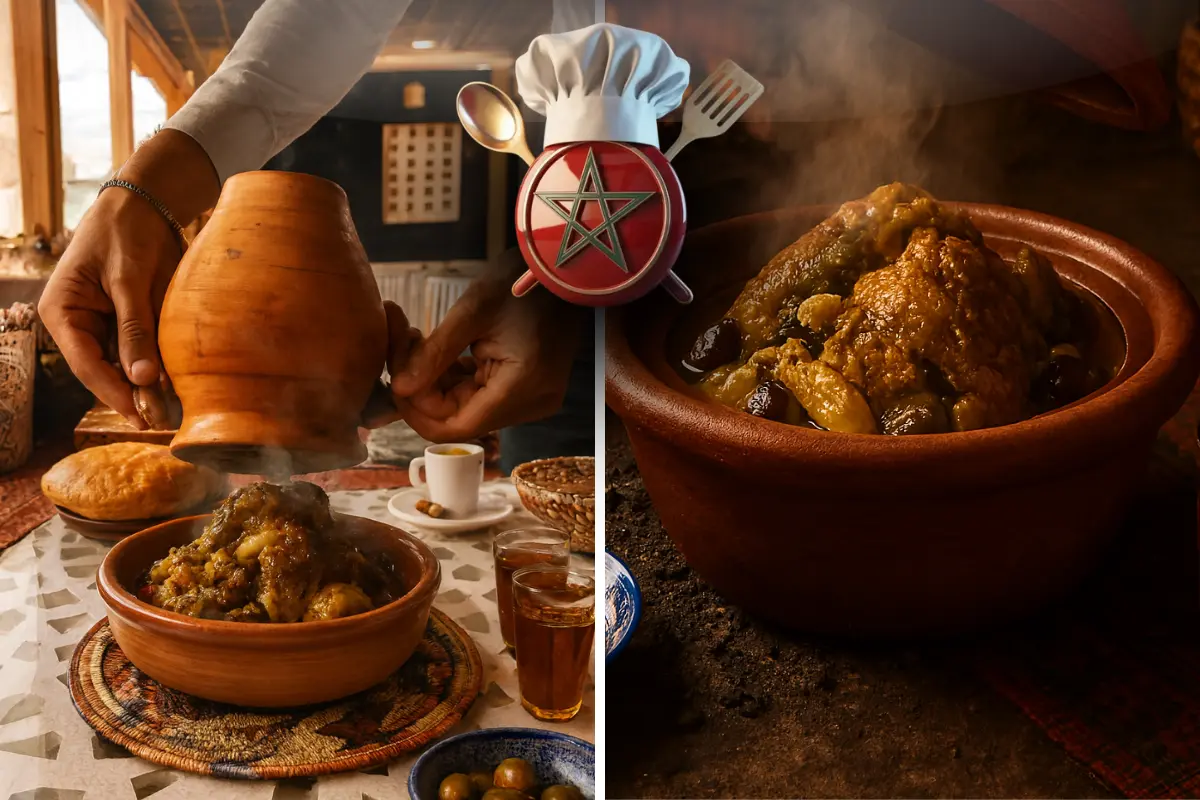
Tanjia is a slow-cooked meat dish—typically made with beef or lamb—prepared in a distinctive clay urn with a narrow neck and rounded base. The meat is marinated with garlic, cumin, preserved lemon, saffron, olive oil, and smen (fermented butter), then sealed and cooked for hours in hot ashes. The result is tender, aromatic meat infused with deep Moroccan flavors.
Ingredients and Flavor Profile
- Meat: Traditionally beef shank or lamb shoulder, cut into large chunks.
- Preserved lemon: Adds tang and complexity.
- Garlic and cumin: The backbone of tanjia’s earthy flavor.
- Smen: A fermented butter that adds richness and depth.
- Olive oil: Used generously to coat the meat and carry the spices.
- Saffron and turmeric: For color and subtle floral notes.
Preparation Ritual
Preparing tanjia is a communal ritual, often led by men in Marrakech’s medina. The ingredients are placed in the clay urn, which is sealed with parchment and string. The pot is then taken to a local hammam or communal oven, where it is buried in hot ashes and left to cook slowly for 6–8 hours. This method creates a unique texture and flavor that cannot be replicated in conventional ovens.
Cultural Significance
Tanjia is more than food—it’s a social tradition. It’s commonly prepared for Friday gatherings, celebrations, or casual get-togethers among friends. The dish reflects values of patience, collaboration, and respect for ancestral cooking methods. In Marrakech, tanjia is considered a masculine dish, often prepared by men as a gesture of hospitality and pride.
Serving and Presentation
Tanjia is served directly from the clay pot, often with warm khobz (Moroccan bread) and mint tea. The meat is so tender it falls apart with a touch, and the juices are soaked up with bread. The presentation is rustic and communal, reinforcing the dish’s cultural roots.
Regional Variations
While tanjia is most associated with Marrakech, variations exist in other regions. In Fez and Meknes, similar slow-cooked dishes may include chickpeas or dried fruits. However, the Marrakchi tanjia remains the most iconic, known for its simplicity and depth of flavor.
Modern Interpretations
Contemporary chefs have begun experimenting with tanjia, using sous-vide techniques or adapting it for home ovens. Some versions include vegetables or use chicken instead of red meat. Despite these innovations, the traditional method remains the gold standard for authenticity.
Conclusion: A Culinary Legacy Worth Preserving
Moroccan tanjia is a dish that embodies the spirit of Marrakech—slow, soulful, and steeped in tradition. From its communal preparation to its rich flavor profile, tanjia is a celebration of Moroccan culinary heritage. Whether enjoyed in a medina alley or a modern kitchen, it remains a timeless symbol of hospitality and cultural pride.