Introduction: Morocco’s Plant-Based Culinary Heritage
Moroccan cuisine is globally celebrated for its bold flavors and cultural richness. While meat dishes often take center stage, Morocco also offers a wide variety of vegetarian dishes that highlight the country’s agricultural abundance and culinary creativity. From vegetable tagines to barley soups, Moroccan vegetarian cuisine is both traditional and modern, offering health benefits and cultural depth.
Vegetable Tagines: The Heart of Moroccan Vegetarian Cuisine
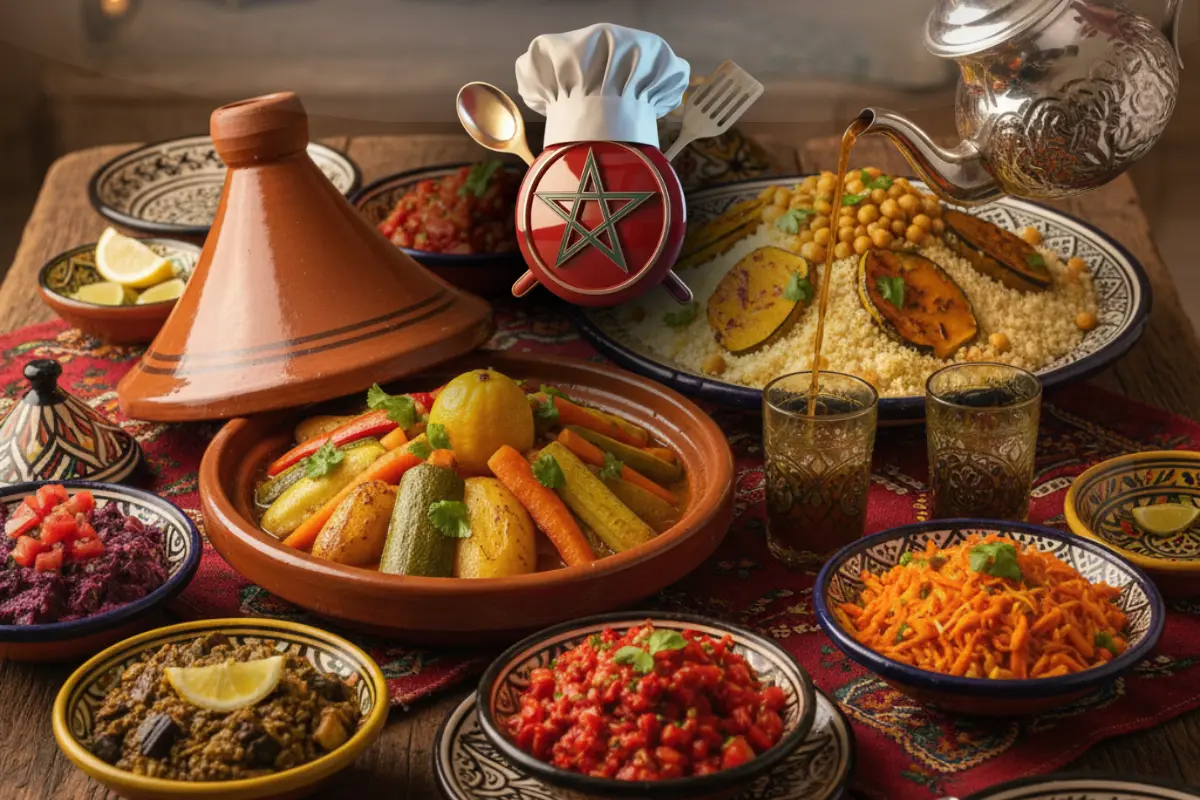
Tagine is Morocco’s most iconic dish, and vegetarian versions are equally beloved. Prepared with carrots, zucchini, potatoes, peas, and preserved lemons, vegetable tagines are slow-cooked in clay pots with olive oil and spices like cumin, paprika, and saffron. These dishes embody Morocco’s balance of flavor, nutrition, and artistry.
Couscous with Vegetables
Couscous is a staple of Moroccan cuisine, traditionally served on Fridays. Vegetarian couscous features steamed semolina grains topped with carrots, pumpkin, zucchini, chickpeas, and turnips. It is often flavored with ras el hanout, Morocco’s signature spice blend, creating a dish that is hearty, aromatic, and deeply satisfying.
Soups and Stews
- Barley soup (hssou bel sha’ir): A nourishing Amazigh dish made with barley flour, milk, and butter, often served at breakfast.
- Lentil and chickpea stew: A protein-rich dish flavored with garlic, cumin, and coriander.
- Vegetable harira: A meat-free version of Morocco’s famous soup, prepared with tomatoes, lentils, chickpeas, and herbs.
Salads and Side Dishes
Moroccan vegetarian cuisine also includes a variety of fresh salads and side dishes:
- Zaalouk: A smoky eggplant and tomato salad seasoned with paprika and garlic.
- Taktouka: A pepper and tomato salad, often served with bread.
- Carrot salad: Flavored with cumin, lemon juice, and olive oil.
Seasonal Fruits and Grains
Morocco’s fertile lands provide seasonal fruits such as figs, dates, oranges, and pomegranates, which are often served alongside vegetarian meals. Grains like barley, millet, and corn are also staples, reflecting Amazigh traditions and sustainable farming practices.
Nutritional and Health Benefits
Moroccan vegetarian dishes are rich in fiber, vitamins, and antioxidants. They align with the Mediterranean diet, supporting heart health, digestion, and longevity. Olive oil, herbs, and spices add anti-inflammatory properties, making Moroccan vegetarian cuisine both delicious and health-conscious.
Cultural and Social Importance
Vegetarian dishes are not only practical but also symbolic in Moroccan culture. They represent hospitality, simplicity, and respect for the land. In rural communities, plant-based meals are common, reflecting agricultural traditions and sustainable living.
Modern Adaptations and Global Appeal
Today, Moroccan vegetarian cuisine is gaining international recognition. Chefs worldwide highlight vegetable tagines, couscous, and zaalouk in gourmet restaurants and plant-based menus. Moroccan vegetarian dishes appeal to health-conscious audiences and those seeking authentic cultural experiences.
Conclusion: A Celebration of Flavor and Heritage
Moroccan vegetarian dishes are more than alternatives to meat—they are cultural treasures that showcase Morocco’s agricultural wealth, culinary artistry, and commitment to health. From couscous and tagines to soups and salads, these dishes embody the essence of Moroccan hospitality and tradition, making them a vital part of the country’s gastronomic identity.