Introduction: Morocco's Hidden Vegetarian Treasure
Ask most people about Moroccan food and they'll immediately think: lamb tagine, chicken bastilla, mechoui. Meat-centric dishes dominate the global perception of Moroccan cuisine. But walk through Morocco's vegetable markets—the vibrant pyramids of tomatoes, the glistening eggplants, the bundles of fresh herbs, the mounds of squash and zucchini—and a different story emerges.
The truth is, Moroccan cuisine is naturally vegetable-forward. Many traditional dishes are accidentally vegan or easily adaptable. Why? Because historically, meat was expensive. Working-class Moroccan families ate meat only on special occasions—Friday couscous, Eid celebrations, weddings. The other six days of the week? Vegetables, legumes, grains, and bread formed the foundation of the diet.
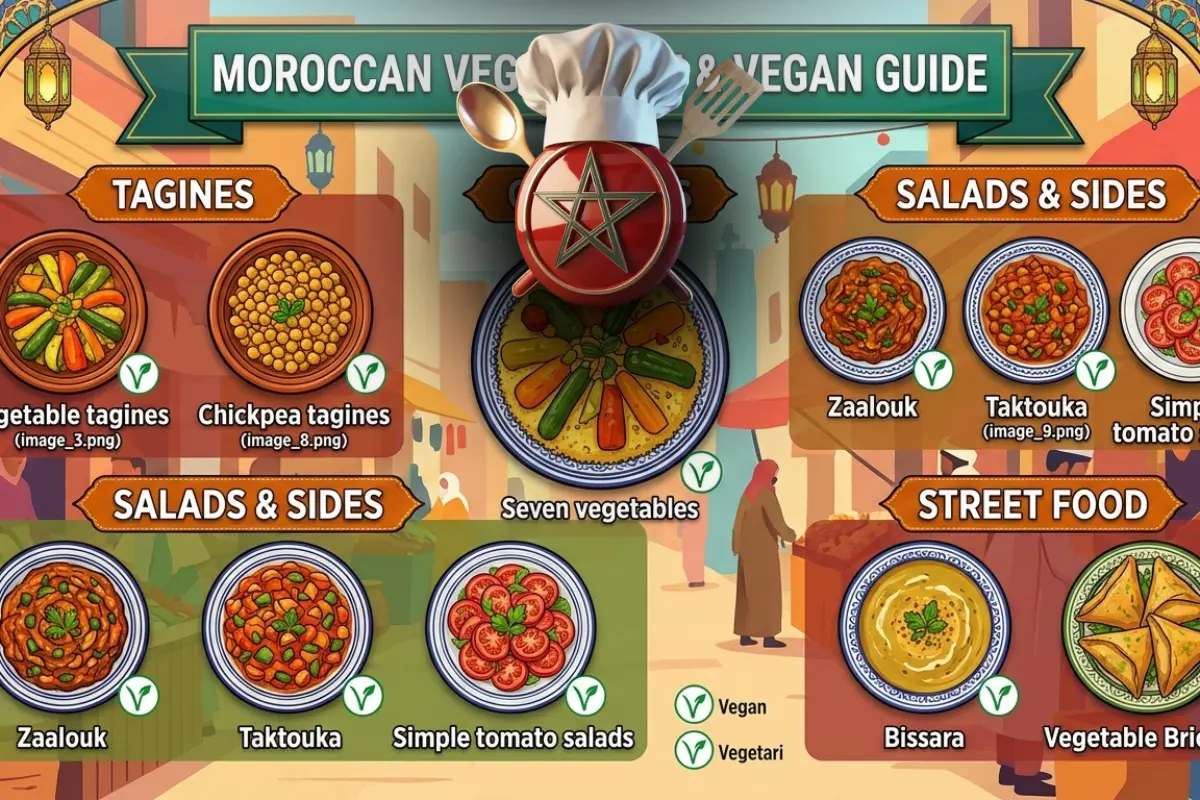
This created a rich tradition of vegetable cookery that most tourists never experience. There are entire categories of Moroccan dishes that have always been plant-based:
- 🥗 Cooked vegetable salads: Zaalouk (eggplant), taktouka (peppers), bakoula (greens)
- 🍲 Vegetable tagines: Seven-vegetable tagine, fava bean tagine, artichoke tagine
- 🫘 Legume-based dishes: Bissara (fava bean soup), lentil dishes, chickpea stews
- 🥖 Breads and pastries: Most Moroccan breads contain no animal products
- 🫒 Preserved vegetables: Olives, preserved lemons, pickled vegetables
For modern vegetarians and vegans, this is excellent news. You don't need to "veganize" Moroccan recipes with weird substitutes—authentic Moroccan vegetable dishes already exist, perfected over centuries. You just need to know which ones they are and how to make them properly.
This comprehensive guide is your complete resource for plant-based Moroccan cooking. You'll discover 20 authentic vegetarian and vegan recipes, learn how to adapt meat-based dishes, understand Moroccan ingredients, and master the techniques that make vegetable tagines as satisfying as their meaty counterparts. From complete meals to sides and salads, from everyday cooking to special occasions—this is everything you need to eat Moroccan, meatlessly.

Understanding Moroccan Vegetarian Cuisine
Is Moroccan Food Vegetarian-Friendly?
✅ The Good News:
- Many traditional dishes are naturally vegetarian/vegan
- Vegetables are respected (not treated as mere sides)
- Abundant fresh produce year-round in Morocco
- Rich spice tradition makes vegetables flavorful and satisfying
- Bread culture means meals are always filling (bread + vegetables = complete meal)
- Legume tradition provides protein without meat
⚠️ The Challenges:
- Restaurant default is meat: Most Moroccan restaurants assume you want meat
- Hidden animal products: Some dishes use meat broth even when they appear vegetarian
- "Vegetarian" may include chicken: In traditional thinking, "no meat" sometimes means "no red meat" (chicken doesn't count!)
- Limited vegan options at traditional meals: Butter, ghee (smen), and honey appear frequently
- Communication gap: "I don't eat meat" might be met with "okay, chicken then?"
Navigating as a Vegetarian/Vegan in Morocco
Naturally Vegan Moroccan Ingredients
| Category | Always Vegan | Sometimes Vegan (Check!) |
|---|---|---|
| Vegetables | All fresh vegetables | - |
| Legumes | Lentils, chickpeas, fava beans, white beans | - |
| Grains | Couscous, rice, bulgur, semolina, wheat | - |
| Breads | Khobz, batbout, harcha (most recipes) | Some add milk/butter |
| Oils | Olive oil, argan oil, vegetable oil | Smen (preserved butter) NOT vegan |
| Spices | All Moroccan spices | - |
| Herbs | Cilantro, parsley, mint | - |
| Preserved items | Preserved lemons, olives, pickled vegetables | - |
| Sweeteners | Sugar, dates | Honey (not vegan) |
Complete Vegetarian & Vegan Recipes
Category 1: Main Dish Tagines
1. Seven Vegetable Tagine (طاجين سبع خضر)

What it is: Morocco's most famous vegetarian tagine, featuring seven different vegetables slow-cooked with aromatic spices. Each vegetable maintains its identity while creating a harmonious whole.
Cultural significance: The number seven is symbolic in Moroccan culture (seven saints of Marrakech, seven days of the week). This dish represents abundance and blessing.
📖 Traditional Seven Vegetable Tagine
⏰ Timeline: 1 Hour 15 Minutes
Serves: 6
🌱 100% Vegan
The Seven Vegetables (Traditional):
- Carrots
- Turnips
- Zucchini
- Tomatoes
- Cabbage
- Pumpkin/Squash
- Fava beans (or green beans)
Note: You can substitute with available vegetables, but traditionally use 7 different types
Ingredients:
Vegetables:
- 3 large carrots, cut into chunks
- 2 turnips, quartered
- 2 zucchini, cut into chunks
- 3 tomatoes, quartered
- 1/4 cabbage, cut into wedges
- 500g pumpkin or butternut squash, cubed
- 1 cup fava beans (fresh or frozen) or green beans
Aromatics & Spices:
- 2 large onions, sliced
- 4 cloves garlic, minced
- 1/4 cup olive oil
- 2 tsp ras el hanout
- 1 tsp ground ginger
- 1 tsp turmeric
- 1 tsp paprika
- 1/2 tsp black pepper
- Large pinch saffron threads (optional but wonderful)
- Salt to taste
Herbs & Garnish:
- 1/2 cup fresh cilantro, chopped
- 1/2 cup fresh parsley, chopped
- 1 preserved lemon, quartered
- 1/2 cup green olives
- 2 cups water or vegetable stock
Instructions:
| Time | Step |
|---|---|
| 0:00-0:10 | In large tagine or heavy pot, heat olive oil over medium heat. Add onions, cook 5 minutes until softened |
| 0:10-0:15 | Add garlic, all spices (ras el hanout, ginger, turmeric, paprika, pepper, saffron). Cook 1-2 minutes until fragrant |
| 0:15-0:20 | Add harder vegetables first (carrots, turnips, pumpkin). Stir to coat with spices. Add half the herbs and the water/stock |
| 0:20-0:40 | Bring to boil, reduce to low, cover tightly. Simmer 20 minutes |
| 0:40-0:50 | Add softer vegetables (zucchini, cabbage, fava beans). Nestle tomatoes on top. Cover, simmer 10 more minutes |
| 0:50-1:00 | Add preserved lemon and olives. Simmer uncovered 10 minutes to reduce sauce slightly |
| 1:00-1:15 | Add remaining fresh herbs. Taste, adjust salt. Let rest 5 minutes off heat before serving |
🎯 Pro Tips:
- Layering matters: Add vegetables in order of cooking time—hardest first, softest last
- Don't overcook: Vegetables should be tender but still hold shape, not mushy
- Sauce consistency: Should have some liquid but not be soupy. Reduce at end if needed
- Preserved lemon is key: It adds the authentic Moroccan brightness. Don't skip!
- Serving: With crusty bread or over couscous
💪 Nutrition (per serving):
Calories: 220 | Protein: 7g | Carbs: 35g | Fat: 10g | Fiber: 10g
Why it's healthy: High fiber, packed with vitamins, antioxidant-rich spices, satisfying without being heavy
2. Vegetarian Couscous with Seven Vegetables (كسكس بالخضر)
What it is: The vegetarian version of Morocco's national dish. Fluffy couscous topped with vegetable stew and aromatic broth.
Note: Friday couscous is traditionally made with meat, but vegetarian versions are common and equally beloved.
📖 Vegetarian Couscous
⏰ Timeline: 1.5 Hours
Serves: 6-8
🌱 Vegan (if skipping butter)
Ingredients:
For the couscous:
- 500g couscous (medium grain)
- 1/2 cup olive oil (or 3 tbsp butter for vegetarian version)
- 1 tsp salt
- Water for steaming
For the vegetable stew:
- 3 onions, quartered
- 4 carrots, cut into chunks
- 3 turnips, quartered
- 2 zucchini, cut into chunks
- 1 small cabbage, cut into wedges
- 500g pumpkin, cubed
- 2 cups cooked chickpeas (1 can, drained)
- 3 tomatoes, halved
- 1/4 cup olive oil
- 2 tsp ras el hanout
- 1 tsp ginger
- 1 tsp turmeric
- 1 tsp paprika
- Pinch saffron
- Salt & pepper
- 2 liters water or vegetable stock
- Fresh cilantro and parsley, chopped
Instructions:
Part 1: Prepare the vegetable stew (1 hour):
- In large pot or bottom of couscoussier, heat olive oil. Add onions, cook 5 minutes
- Add all spices, cook 1 minute
- Add water/stock, bring to boil
- Add harder vegetables (carrots, turnips, pumpkin, chickpeas). Simmer 30 minutes
- Add softer vegetables (zucchini, cabbage, tomatoes). Simmer 20 more minutes
- Add herbs. Season with salt and pepper
Part 2: Steam the couscous (30 minutes):
- Place couscous in large shallow dish. Drizzle with 1/2 cup water, fluff with fingers to moisten evenly
- Let sit 10 minutes (grains absorb water and swell)
- Place couscous in couscoussier steamer basket (or steamer) over the vegetable pot. Steam 20 minutes, uncovered
- Remove couscous to dish, break up lumps, drizzle with olive oil (or add butter), add salt. Fluff with fork
- Return to steamer, steam 10 more minutes
- Fluff again before serving
Part 3: Serve:
- Mound couscous on large platter
- Arrange vegetables on top
- Ladle some broth over everything
- Serve extra broth in bowls on the side
🎯 Couscous Success Tips:
- Proper steaming is key: Don't rush. Two steamings create light, fluffy couscous
- Break up all lumps: Between steamings, break apart any clumps with fingers or fork
- The broth matters: It should be flavorful and aromatic. Some people drink it like soup!
- Alternative if no couscoussier: Use instant couscous (follow package directions) and make vegetable stew separately
3. Lentil Tagine (طاجين العدس)
What it is: Hearty lentil stew with vegetables and warm spices. Protein-rich, satisfying, and deeply nourishing.
📖 Moroccan Lentil Tagine
⏰ Timeline: 50 Minutes
Serves: 6
🌱 100% Vegan
Ingredients:
- 2 cups brown or green lentils, rinsed
- 2 onions, chopped
- 3 carrots, diced
- 3 tomatoes, diced (or 1 can crushed tomatoes)
- 4 cloves garlic, minced
- 1/4 cup olive oil
- 2 tsp cumin
- 1 tsp paprika
- 1 tsp turmeric
- 1 tsp ginger
- 1/2 tsp cinnamon
- 4 cups vegetable stock or water
- 1/2 cup cilantro, chopped
- 1/2 cup parsley, chopped
- Salt & pepper
- Lemon juice to finish
Instructions:
- Heat olive oil in tagine/pot. Sauté onions 5 minutes until soft
- Add garlic and all spices, cook 1 minute
- Add tomatoes, cook 5 minutes until breaking down
- Add lentils, carrots, and stock. Bring to boil
- Reduce heat, cover, simmer 30-35 minutes until lentils are tender but not mushy
- Add herbs, lemon juice. Season with salt and pepper
- Serve with bread or over rice
🎯 Lentil Tips:
- Don't pre-soak: Lentils don't need soaking (unlike chickpeas)
- Watch the liquid: Add more stock if it gets too thick. Should be stew-like, not soup
- Lemon at the end: Brightens all the flavors
- Protein powerhouse: This dish is complete protein when served with bread/rice
4. Fava Bean Tagine (طاجين الفول)
What it is: Fresh fava beans in tomato-based sauce with preserved lemon. Spring specialty when favas are in season.
📖 Fresh Fava Bean Tagine
⏰ Timeline: 45 Minutes
Serves: 4-6
🌱 100% Vegan
Ingredients:
- 1kg fresh fava beans, shelled (or 500g frozen)
- 3 tomatoes, diced
- 2 onions, chopped
- 4 garlic cloves, minced
- 3 tbsp olive oil
- 1 tsp cumin
- 1 tsp paprika
- 1/2 tsp turmeric
- 1 preserved lemon, diced
- 1/2 cup green olives
- Fresh cilantro and parsley
- 1 cup water
- Salt & pepper
Instructions:
- Heat olive oil, sauté onions until soft
- Add garlic and spices, cook 1 minute
- Add tomatoes, cook 5 minutes
- Add fava beans and water. Cover, simmer 20-25 minutes until beans are tender
- Add preserved lemon and olives. Simmer 5 more minutes
- Add fresh herbs. Adjust seasoning
- Serve with bread
5. Chickpea & Tomato Tagine (طاجين الحمص)
What it is: Spiced chickpeas in rich tomato sauce. Simple, economical, and endlessly satisfying.
📖 Moroccan Chickpea Tagine
⏰ Timeline: 40 Minutes (using canned chickpeas)
Serves: 6
🌱 100% Vegan
Ingredients:
- 3 cans (800g each) chickpeas, drained and rinsed
- 1 large can (800g) crushed tomatoes
- 2 onions, chopped
- 4 garlic cloves, minced
- 3 tbsp olive oil
- 2 tsp cumin
- 2 tsp paprika
- 1 tsp turmeric
- 1 tsp ginger
- 1/2 tsp cayenne (optional)
- 1 cup vegetable stock
- Fresh cilantro and parsley
- Salt & pepper
Instructions:
- Heat oil, sauté onions until golden (8-10 minutes for deeper flavor)
- Add garlic and all spices, cook 1 minute
- Add crushed tomatoes, cook 10 minutes until thickened
- Add chickpeas and stock. Simmer 15-20 minutes until sauce is thick and chickpeas are well-coated
- Add herbs. Season to taste
- Serve with bread or couscous
🎯 Chickpea Variations:
- Add vegetables: Spinach, chard, or zucchini in last 10 minutes
- Make it creamy: Mash some chickpeas with the back of a spoon for thicker sauce
- Spice it up: Add harissa for heat
- From scratch: Use dried chickpeas (soak overnight, cook 1-2 hours before making tagine)

Category 2: Soups & Stews
6. Bissara (بيصارة) - Fava Bean Soup
What it is: Thick, creamy soup made from dried fava beans. Working-class breakfast and winter comfort food.
(Full recipe in Breakfast article—included here for vegetarian completeness)
📖 Traditional Bissara
🌱 100% Vegan
Quick version:
- 500g dried split fava beans, soaked overnight
- 6 cups water
- 4-6 garlic cloves
- 2 tsp cumin
- 1 tsp paprika
- Salt
- For serving: Olive oil, extra cumin, bread
Cook beans with garlic until very soft (1.5 hours), blend until smooth, season with cumin, paprika, salt. Serve with generous olive oil drizzle and extra cumin.
7. Vegetarian Harira (حريرة نباتية)
What it is: The famous Ramadan soup, made without meat. Still hearty, still delicious, still traditional.
📖 Vegetarian Harira
⏰ Timeline: 1 Hour 15 Minutes
Serves: 8
🌱 100% Vegan
Ingredients:
- 1 cup brown lentils
- 2 cans (800g) chickpeas, drained
- 1 large can (800g) crushed tomatoes
- 4 fresh tomatoes, grated
- 2 onions, finely chopped
- 1 cup celery, chopped
- 3 tbsp olive oil
- 3 tbsp tomato paste
- 2 tsp ginger
- 1 tsp turmeric
- 1 tsp black pepper
- 2 cinnamon sticks
- 100g vermicelli or broken angel hair pasta
- 3 tbsp flour (for tedouira - thickening)
- Large bunch cilantro, chopped
- Large bunch parsley, chopped
- 2 liters vegetable stock or water
- Salt to taste
- Lemon wedges for serving
Instructions:
- Heat oil, sauté onions and celery until soft
- Add grated tomatoes, tomato paste, spices. Cook 5 minutes
- Add crushed tomatoes, lentils, half the herbs, and stock. Bring to boil
- Reduce heat, simmer 45 minutes until lentils are tender
- Add chickpeas and vermicelli, cook 10 minutes
- Mix flour with 1 cup cold water until smooth. Slowly pour into soup while stirring constantly (tedouira - traditional thickening technique). Simmer 5 minutes
- Add remaining fresh herbs. Adjust salt
- Serve with lemon wedges and dates (traditional Ramadan accompaniment)
🎯 Vegetarian Harira Notes:
- Just as authentic: Many Moroccan families make vegetarian harira regularly
- Protein-rich: Lentils + chickpeas = complete protein
- The tedouira is traditional: Creates the signature thick, smooth texture
- Better the next day: Flavors meld overnight. Reheat gently
8. Vegetable & Chickpea Soup (حساء الخضر)
What it is: Simple, nourishing vegetable soup with chickpeas. Everyday comfort food.
📖 Quick Vegetable Soup
⏰ Timeline: 40 Minutes
Serves: 6
🌱 100% Vegan
Ingredients:
- 1 can chickpeas, drained
- 2 carrots, diced
- 2 potatoes, diced
- 1 zucchini, diced
- 2 tomatoes, diced
- 1 onion, chopped
- 2 tbsp olive oil
- 1 tsp cumin
- 1 tsp paprika
- 6 cups vegetable stock
- Fresh herbs (cilantro, parsley)
- Salt & pepper
Instructions:
- Sauté onion in olive oil until soft
- Add spices, cook 1 minute
- Add all vegetables, chickpeas, and stock
- Bring to boil, reduce heat, simmer 25-30 minutes until vegetables are tender
- Add herbs. Season to taste
- Serve with bread
Category 3: Cooked Salads (Side Dishes)
9. Zaalouk (زعلوك) - Eggplant Salad
What it is: Smoky roasted eggplant with tomatoes and spices.
(Full recipe in Salads article—100% vegan, naturally)
10. Taktouka (تكتوكة) - Pepper & Tomato Salad
What it is: Charred peppers in tomato sauce.
(Full recipe in Salads article—100% vegan, naturally)
11. Bakoula (بقولة) - Cooked Greens
What it is: Spinach/chard/mallow with preserved lemon and olives.
(Full recipe in Salads article—100% vegan)
Category 4: Fresh Salads
12-15. Fresh Moroccan Salads
The following are all 100% vegan and covered in detail in our Salads article:
- Tomato & Onion Salad - The daily essential
- Grated Carrot Salad - With orange juice and cumin
- Beet Salad - Earthy and vibrant
- Cucumber Salad - Refreshing and light
Category 5: Rice & Grain Dishes
16. Moroccan Spiced Rice (الروز بالتوابل)
What it is: Fragrant rice with raisins, almonds, and warm spices. Often served at celebrations.
📖 Celebration Rice
⏰ Timeline: 35 Minutes
Serves: 6
🌱 Vegan
Ingredients:
- 2 cups basmati rice, rinsed
- 3 tbsp olive oil (or vegan butter)
- 1 onion, finely diced
- 1/2 cup raisins
- 1/2 cup slivered almonds
- 1 tsp cinnamon
- 1/2 tsp turmeric
- 1/4 tsp saffron threads (soaked in 2 tbsp warm water)
- 3 cups vegetable stock
- Salt
Instructions:
- Toast almonds in dry pan until golden. Set aside
- Heat oil, sauté onion until golden
- Add rice, stir to coat with oil, cook 2 minutes
- Add spices (cinnamon, turmeric, saffron water), stir
- Add stock and salt. Bring to boil
- Reduce heat to low, cover tightly, cook 15 minutes (don't lift lid!)
- Remove from heat, let steam 5 minutes
- Fluff with fork, stir in raisins and toasted almonds
- Serve as side or main
17. Moroccan Bulgur with Vegetables (البرغل بالخضر)
What it is: Nutty bulgur wheat cooked with vegetables and Moroccan spices.
📖 Vegetable Bulgur
⏰ Timeline: 30 Minutes
Serves: 4-6
🌱 100% Vegan
Ingredients:
- 2 cups coarse bulgur wheat
- 3 cups vegetable stock
- 2 tbsp olive oil
- 1 onion, diced
- 1 carrot, diced small
- 1 zucchini, diced small
- 1 red bell pepper, diced
- 1 tsp cumin
- 1/2 tsp cinnamon
- Salt & pepper
- Fresh parsley and mint
- Lemon juice
Instructions:
- Heat oil, sauté onion until soft
- Add carrots and pepper, cook 5 minutes
- Add bulgur and spices, stir to coat
- Add stock, bring to boil
- Reduce heat, cover, simmer 12-15 minutes until bulgur is tender and liquid absorbed
- Add zucchini in last 5 minutes
- Fluff with fork, stir in herbs and lemon juice
- Serve warm or at room temperature
Category 6: Legume-Based Mains
18. Moroccan White Bean Stew (اللوبيا)
What it is: Creamy white beans in tomato-based sauce with cumin and paprika.
📖 Traditional White Bean Stew
⏰ Timeline: 45 Minutes (using canned beans)
Serves: 6
🌱 100% Vegan
Ingredients:
- 3 cans (800g each) white beans (cannellini or navy beans)
- 1 can (400g) crushed tomatoes
- 2 onions, chopped
- 4 garlic cloves, minced
- 3 tbsp olive oil
- 2 tsp cumin
- 1 tsp paprika
- 1/2 tsp cayenne
- 1 cup vegetable stock
- Fresh parsley and cilantro
- Salt & pepper
- Lemon juice to finish
Instructions:
- Heat oil, sauté onions until very soft (10 minutes)
- Add garlic and spices, cook 1 minute
- Add crushed tomatoes, cook 10 minutes until thick
- Add beans and stock, simmer 15-20 minutes
- Mash some beans with back of spoon for creamier texture
- Add herbs and lemon juice
- Serve with bread
🎯 Bean Stew Tips:
- Cook low and slow: Lets flavors meld
- Mashing creates creaminess: No need for dairy!
- Leftovers improve: Even better next day
19. Moroccan Red Lentil & Carrot Soup (شوربة العدس الأحمر)
What it is: Silky smooth soup with red lentils and sweet carrots.
📖 Red Lentil Soup
⏰ Timeline: 40 Minutes
Serves: 6
🌱 100% Vegan
Ingredients:
- 2 cups red lentils, rinsed
- 3 large carrots, chopped
- 1 onion, chopped
- 3 garlic cloves, minced
- 2 tbsp olive oil
- 1 tsp cumin
- 1 tsp turmeric
- 1 tsp ginger
- 6 cups vegetable stock
- Fresh cilantro
- Lemon juice
- Salt & pepper
Instructions:
- Heat oil, sauté onion until soft
- Add garlic and spices, cook 1 minute
- Add carrots, lentils, and stock. Bring to boil
- Reduce heat, simmer 25 minutes until lentils and carrots are very soft
- Blend with immersion blender until smooth (or transfer to regular blender)
- Add lemon juice, cilantro. Season to taste
- Serve with bread or crusty croutons
Category 7: Breakfast & Bread
20. Vegan Moroccan Breakfast Spread
What it is: Complete Moroccan breakfast, entirely plant-based.
📖 Vegan Moroccan Breakfast
🌱 100% Vegan
The Spread:
- Bread: Khobz, batbout, or harcha (made without butter/milk)
- Spreads:
- Amlou (almond butter with argan oil and agave syrup instead of honey)
- Olive oil with za'atar for dipping
- Jam (check for gelatin) - Protein:
- Cooked fava beans with cumin and olive oil
- Hummus (chickpea dip) - Vegetables:
- Sliced tomatoes
- Cucumber
- Olives - Beverage:
- Moroccan mint tea (no milk)
- Fresh orange juice
Assembly: Arrange everything on table, eat with bread, enjoy leisurely.

Veganizing Traditional Dishes
Common Substitutions
| Traditional Ingredient | Vegan Substitute | Notes |
|---|---|---|
| Butter | Olive oil, vegan butter, or coconut oil | Olive oil is most authentic for savory dishes |
| Smen (preserved butter) | Olive oil + nutritional yeast + pinch salt | Won't replicate exactly, but adds umami |
| Honey | Agave syrup, maple syrup, or date syrup | Date syrup is most Moroccan in flavor |
| Meat broth | Vegetable stock + extra spices | Boost flavor with more ras el hanout, cumin |
| Chicken in tagine | Chickpeas, tofu, or just vegetables | Chickpeas are most traditional substitute |
| Lamb in couscous | Large chunks of vegetables + chickpeas | Focus on the vegetable quality |
| Eggs (in msemen, some breads) | Omit or use flax egg (1 tbsp ground flax + 3 tbsp water) | Most Moroccan breads don't use eggs anyway |
| Milk (in breads) | Water, or plant milk (almond, oat) | Water is traditional and works perfectly |
Which Traditional Dishes Are Naturally Vegan?
✅ Already Vegan (No Modifications Needed):
- ✅ Zaalouk (eggplant salad)
- ✅ Taktouka (pepper salad)
- ✅ Most fresh salads (tomato, carrot, beet, cucumber)
- ✅ Bissara (if no butter added for serving)
- ✅ Khobz (traditional recipe)
- ✅ Batbout (traditional recipe)
- ✅ Preserved lemons
- ✅ Moroccan olives
- ✅ Most spice blends
⚠️ Easily Veganizable (Minor Tweaks):
- ⚠️ Vegetable tagines (skip butter, use olive oil)
- ⚠️ Vegetarian couscous (use olive oil instead of butter)
- ⚠️ Harira (omit meat, use vegetable stock)
- ⚠️ Harcha (use oil instead of butter)
- ⚠️ Msemen (use oil instead of butter for cooking)
- ⚠️ Bakoula (naturally vegan in most recipes)
❌ Difficult to Veganize (Core Ingredients):
- ❌ Bastilla (eggs and meat are structural)
- ❌ Traditional pastries (often use butter and honey)
- ❌ Rfissa (chicken and smen are central)
- ❌ Tangia (entirely meat-based)
Nutritional Considerations
Getting Complete Nutrition
💪 Ensuring Balanced Vegan Moroccan Diet:
| Nutrient | Plant-Based Sources in Moroccan Cuisine |
|---|---|
| Protein | Chickpeas, lentils, fava beans, white beans, almonds, couscous + legumes together |
| Iron | Lentils, spinach (in bakoula), chickpeas, fortified breads |
| Calcium | Sesame seeds, almonds, fortified plant milks, figs |
| B12 | Not naturally in plant foods - supplement recommended |
| Omega-3 | Walnuts, argan oil (small amount), flaxseeds (not traditional but can add) |
| Vitamin D | Sunshine! Morocco has abundant sun. Fortified foods or supplement in winter |
| Zinc | Chickpeas, lentils, pumpkin seeds, whole grains |
Pro tip: Combine grains (couscous, bread, rice) with legumes (chickpeas, lentils, beans) in the same meal for complete protein. Moroccan cuisine does this naturally!
Sample Vegan Day of Moroccan Eating
🌱 Complete Vegan Moroccan Menu:
Breakfast (Ftour Sabah):
- Batbout bread
- Amlou (with date syrup instead of honey)
- Olives and olive oil
- Fresh orange juice
- Moroccan mint tea
Lunch (Ghada):
- Seven vegetable tagine
- Zaalouk (eggplant salad)
- Tomato and onion salad
- Fresh khobz
- Fresh fruit
Afternoon Snack:
- Harcha with jam
- Mint tea
Dinner (Asha):
- Vegetarian harira
- Dates
- Bread
Daily totals (approximate):
Calories: 1,800 | Protein: 65g | Carbs: 280g | Fat: 55g | Fiber: 45g
✅ Nutritionally complete, delicious, and authentically Moroccan!
Frequently Asked Questions
Is it hard to eat vegetarian/vegan in Morocco?
In cities: Relatively easy. Larger cities (Marrakech, Casablanca, Fes) have vegetarian-friendly restaurants and awareness of vegetarianism. You can find vegetable tagines, salads, and legume dishes.
In traditional restaurants: Moderate difficulty. You'll need to clearly communicate "no meat, no chicken" (some think chicken isn't "meat"). Many traditional dishes can be made without meat on request.
In rural areas: More challenging. Meat is a sign of hospitality. Refusing can be seen as rude. Focus on bread, salads, and explaining dietary restrictions clearly.
Best strategy: Learn key phrases, stay in places with kitchens (cook your own), or book vegetarian-friendly riads/restaurants in advance.
Do Moroccans understand veganism?
Generally no, veganism is not well-understood. Vegetarianism is becoming more known (especially in cities), but veganism is still very foreign to most Moroccans. The concept of avoiding honey, butter in bread, etc. doesn't compute in traditional culture where these are staples.
Strategy: Don't use the word "vegan" (no direct translation exists). Instead say:
• "I don't eat meat, chicken, fish, eggs, milk, or butter"
• "Only vegetables, grains, and legumes"
• List what you CAN eat, not what you can't
In modern cafés and tourist restaurants in big cities, "vegan" is increasingly understood.
Are Moroccan salads always vegetarian?
Almost always yes! The vast majority of Moroccan salads (both cooked and fresh) are naturally vegetarian and vegan. Exceptions:
• Sometimes chicken is added to otherwise vegetable salads in restaurants
• Occasionally butter is used in cooked salads (but olive oil is traditional)
When ordering salads, they're your safest bet as a vegetarian in Morocco.
Can I get enough protein on a Moroccan vegan diet?
Absolutely yes! Moroccan cuisine is rich in:
• Legumes (chickpeas, lentils, fava beans, white beans) - eaten daily
• Nuts (almonds, walnuts) - in many dishes and snacks
• Whole grains (couscous, bulgur, whole wheat bread)
The traditional combination of bread + legumes = complete protein (all essential amino acids). A typical Moroccan vegan meal of harira (lentils + chickpeas) with bread provides 25-30g protein.
You'll easily meet protein needs if you eat traditional Moroccan vegetable dishes with bread.
What do I do if invited to a Moroccan home for a meal?
This is tricky—hospitality is sacred. Strategies:
1. Inform in advance: If possible, let hosts know your dietary restrictions before arriving. Many will happily prepare vegetarian dishes
2. Accept what you can eat: Load up on salads, bread, vegetables. Express gratitude enthusiastically for these
3. Take small amount of meat dish: You can take a small portion to be polite, eat around the meat, focus on sauce and vegetables. (Not ideal for strict vegans, but sometimes culturally necessary)
4. Explain health reasons: "Doctor's orders" is better received than ethical reasons in traditional contexts
5. Bring a gift: Nice dates, pastries, or tea as thank you helps offset any awkwardness
Remember: Moroccans will often go to great lengths to accommodate once they understand. Communication is key!
Are there Moroccan vegan restaurants?
In major cities, yes (increasingly):
• Marrakech has several vegetarian/vegan cafés and restaurants
• Casablanca has modern vegan-friendly spots
• Essaouira has vegetarian options due to tourist demand
Look for:
• Modern cafés (more likely to understand veganism)
• Health food stores/cafés
• Tourist-friendly restaurants
• International restaurants (Lebanese, Indian often have vegan options)
Traditional restaurants: Just ask for vegetable tagine, salads, bread. Most can accommodate even if not labeled "vegan."
What Moroccan dishes should I absolutely try as a vegan?
Must-try vegan Moroccan experiences:
1. Seven vegetable tagine - The quintessential Moroccan vegetarian dish
2. Zaalouk - Smoky eggplant salad, absolutely delicious
3. Bissara - Traditional fava bean soup for breakfast
4. Vegetarian harira - Hearty Ramadan soup
5. Fresh Moroccan salad spread - Multiple colorful salads
6. Khobz with olive oil and olives - Simple perfection
7. Vegetable couscous - If you can find/request it
8. Fresh mint tea - The ultimate Moroccan experience
These showcase the best of Moroccan vegetable cooking!
Conclusion: The Vegetable is the Star
Moroccan cuisine's greatest secret is this: vegetables don't need meat to be satisfying. When eggplants are charred over open flames and mashed with garlic and cumin, when seven different vegetables slow-cook together until tender and aromatic, when chickpeas simmer in rich tomato sauce with ras el hanout—these dishes are complete, delicious, and deeply nourishing on their own.
The plant-based tradition in Moroccan cooking isn't a modern trend or a compromise. It's ancient wisdom—born from necessity, perfected over generations, and capable of creating meals that satisfy body and soul without a single piece of meat.
For vegetarians and vegans, Moroccan cuisine offers a treasure trove of possibilities. You're not asking for substitutions or workarounds. You're cooking dishes that Moroccan grandmothers have made for centuries, that fed families through lean times, that celebrate vegetables as the valuable, flavorful ingredients they are.
🥕 From the Vegetable Market:
"People think Moroccan food is all about meat. But walk through our markets—look at the pyramids of vegetables, the bundles of herbs, the barrels of olives and preserved lemons. This is the real foundation of our cuisine. The meat? That's for celebrations. The vegetables? Those are for life. When you cook our vegetable tagines, when you make our salads, when you prepare our legume dishes—you're cooking the food that sustained Morocco through centuries. You're honoring the vegetables as we do. And trust me—when vegetables are treated with respect, with good spices, with proper technique—they need nothing else to be magnificent."
Download Your Plant-Based Moroccan Resources:
- 📖 Complete 20 Vegan Recipes PDF Collection
- 🛒 Vegan Moroccan Pantry Shopping List
- 📋 Complete Substitution Guide (Print & Carry)
- 🗣️ Vegetarian/Vegan Arabic Phrases Card
- 📅 Weekly Vegan Moroccan Meal Plan
- 🍽️ Restaurant Dining Card (Arabic - Explain Veganism)
Share your plant-based Moroccan cooking! Tag #MaCookingVegan with your vegetable tagine creations!
May your vegetables be fresh, your spices be aromatic, and your plant-based meals nourish you completely.
بالصحة والعافية - Bel seha wel 'afiya (With health and wellness)