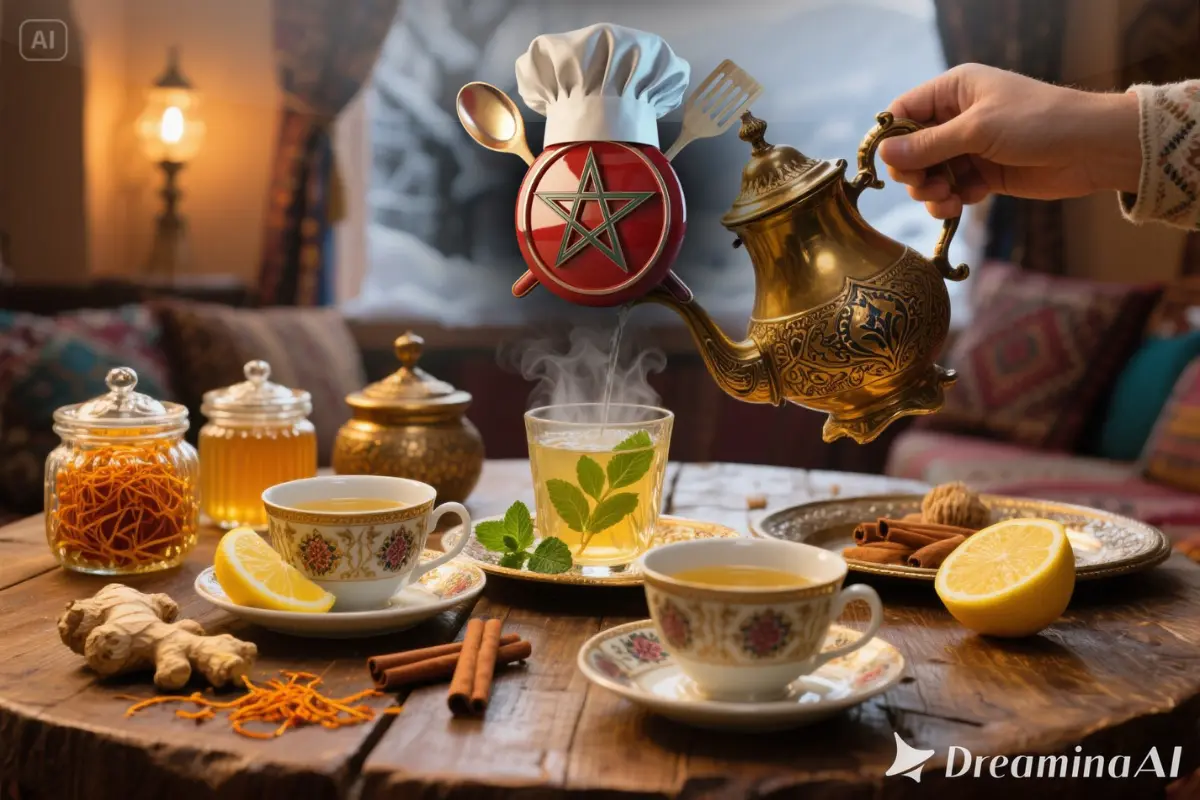
Moroccan Sherbat: Comfort in Cold Days
In Morocco, winter brings not only cooler temperatures but also a rich tradition of warming drinks known as sherbat. These beverages, often infused with spices, herbs, and natural sweeteners, are more than simple refreshments—they are cultural symbols of hospitality and comfort. Families gather around steaming cups of sherbat to share warmth, stories, and tradition.
Mint Tea: The Eternal Classic
No Moroccan drink is more iconic than atay b’naanaa, or mint tea. Served piping hot, it combines green tea leaves with fresh mint and sugar, creating a balance of sweetness and freshness. In winter, the warmth of mint tea becomes especially comforting, often served multiple times a day as a gesture of welcome and togetherness.
Herbal Sherbat: Healing and Flavor
Moroccan sherbat often includes herbal infusions made from ingredients like verbena, anise seeds, ginger, and cinnamon. These herbs are believed to have medicinal properties, helping to fight colds and boost energy during chilly days. Ginger sherbat, in particular, is prized for its warming effect and is often prepared with honey and lemon for added comfort.
Milk-Based Sherbat
Another winter favorite is milk-based sherbat, enriched with spices such as turmeric, nutmeg, and saffron. This drink is creamy, nourishing, and often served to children and elders as a source of warmth and strength. In some regions, almonds or sesame seeds are added, reflecting Morocco’s love for nutty flavors.
Harira and Its Companion Drinks
During winter evenings, harira, Morocco’s famous tomato and lentil soup, is often accompanied by warm drinks. Sherbat made with dates, figs, or carob syrup provides natural sweetness and energy. These drinks are not only delicious but also deeply tied to Moroccan traditions of hospitality and care.
Sherbat in Moroccan Hospitality
Offering sherbat to guests is a gesture of respect and generosity. In Moroccan homes, visitors are welcomed with mint tea or herbal sherbat, especially during cold days. The act of sharing these drinks reflects the cultural importance of warmth, both physical and emotional, in Moroccan society.
Modern Adaptations
Today, Moroccan sherbat is finding new expressions in cafes and restaurants. Chefs experiment with fusion recipes, combining traditional herbs with modern flavors like vanilla or chocolate. These adaptations make sherbat appealing to younger generations while preserving its cultural roots.
Conclusion: Warmth Beyond the Cup
Moroccan sherbat in winter is more than a drink—it is a tradition that embodies comfort, hospitality, and cultural pride. Whether enjoyed in a bustling Marrakech café or a quiet family kitchen, these beverages remind us of the value of warmth and togetherness. In the cold days of winter, sherbat is Morocco’s way of turning simple ingredients into a celebration of life and community.