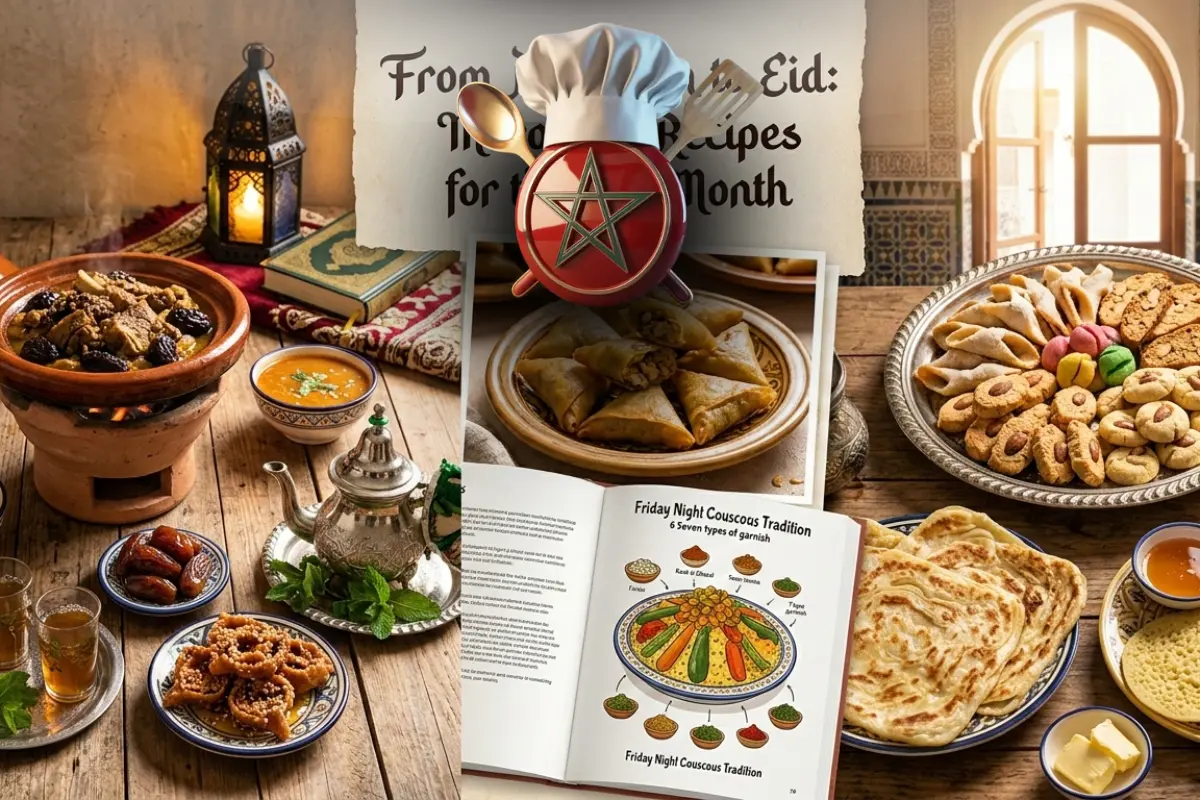
Introduction: A Month-Long Culinary Journey
The crescent moon appears in the sky, and with it, Morocco transforms. For the next 30 days, the rhythm of life shifts entirely. Days are about patience, prayer, and fasting. But as the sun sets each evening, Morocco becomes a country of celebration, abundance, and extraordinary food.
This isn't just any month—it's Ramadan, the holiest month in the Islamic calendar, culminating in the joyous celebration of Eid al-Fitr. And in Morocco, this spiritual journey is deeply, beautifully intertwined with food culture. Every iftar table tells a story of tradition. Every suhoor sustains not just the body but the soul. And when Eid finally arrives, Moroccan kitchens produce feasts that honor both the month of fasting and the blessing of its completion.
But planning food for an entire month of Ramadan plus Eid is daunting. What do you cook on the first night versus the last ten nights? How do special occasions like Laylat al-Qadr change the menu? What makes Eid breakfast different from regular breakfast? How do you prepare mentally, physically, and culinarily for this marathon month?
This comprehensive guide is your complete roadmap from the first iftar through Eid morning. You'll get 30+ authentic Moroccan recipes organized by the occasion, week-by-week menu planning, special celebration dishes, prep strategies for busy people, and deep cultural context for why we eat what we eat when we eat it. This is more than a recipe collection—it's a month-long culinary and spiritual journey through Moroccan Ramadan and Eid traditions.

The Ramadan-Eid Timeline: Understanding the Journey
The Four Phases of Ramadan
🌙 How Ramadan Unfolds:
| Phase | Days | Spiritual Focus | Food Approach |
|---|---|---|---|
| Phase 1: Mercy (الرحمة) | Days 1-10 | Adjustment, mercy, settling into rhythm | Traditional favorites, comfort foods, establishing routine |
| Phase 2: Forgiveness (المغفرة) | Days 11-20 | Seeking forgiveness, deepening practice | Balanced nutrition, maintaining energy, varied menus |
| Phase 3: Freedom from Fire (العتق من النار) | Days 21-30 | Intensified worship, Laylat al-Qadr, final push | Special occasion meals, community iftars, celebration building |
| Eid al-Fitr (عيد الفطر) | Day 1 of Shawwal | Celebration, gratitude, breaking the fast permanently | Festival feast, sweets, family gatherings, joy! |
Key Dates & Special Meals
📅 Mark Your Calendar:
Day 1 of Ramadan: First iftar - special, emotional, hopeful
First Friday: Friday couscous tradition continues
Night 15 (Nisf Sha'ban in some traditions): Mid-Ramadan milestone
Nights 21, 23, 25, 27, 29 (Odd nights): Potential Laylat al-Qadr - special meals
Night 27: Most likely Laylat al-Qadr - FEAST!
Day 29-30: Moon sighting, anticipation building
Eid Morning: Breaking the month-long fast with celebration breakfast
Pre-Ramadan Preparation (Week Before)
The Master Prep Strategy
🗓️ One Week Before Ramadan Begins:
| Task | Time Investment | Benefit |
|---|---|---|
| Deep clean & organize kitchen | 3 hours | Smooth workflow all month |
| Make chebakia (100+ pieces) | 4 hours | Lasts entire month |
| Make sellou (2-3 kg) | 2 hours | Easy suhoor all month |
| Batch cook harira (5 portions) | 3 hours | Freeze, use throughout month |
| Prep & freeze briwat (60 pieces) | 2 hours | Quick iftars ready |
| Stock pantry completely | 2 hours shopping | No emergency runs during fasting |
| Marinate & freeze meats | 1 hour | Quick tagines ready |
| TOTAL INVESTMENT: | 17 hours | Saves 40+ hours during Ramadan! |
The Essential Ramadan Shopping List
🛒 Buy Before Day 1 (Full Month Supply):
Proteins (portion & freeze):
- Chicken: 12kg total (3kg per week)
- Lamb/Beef: 8kg total (2kg per week)
- Fish: 4kg total (for Fridays and light meals)
- Ground meat: 3kg (for kefta)
Pantry Essentials:
- Couscous: 5kg
- Rice: 3kg
- Lentils: 2kg
- Dried chickpeas: 3kg OR canned: 20 cans
- Crushed tomatoes: 20 cans
- Vermicelli: 2kg (for harira)
- Dates: 3kg (eating + recipes)
Spices (if not stocked):
- Ras el hanout: 200g
- Cumin: 150g
- Ginger: 100g
- Turmeric: 75g
- Cinnamon: 100g
- Saffron: 2g
Sweets Ingredients (for chebakia, sellou):
- Honey: 3kg
- Sesame seeds: 1kg
- Almonds: 2kg
- Flour: 10kg
Fresh (buy weekly):
- Cilantro & parsley: 4 bunches per week
- Onions: 2kg per week
- Tomatoes: 2kg per week
- Seasonal vegetables: as needed
- Bread: daily or make at home
Week 1: Starting Strong (Days 1-7)
First Iftar - Day 1 of Ramadan

Cultural significance: The first iftar is special, emotional, and full of hope. Families make extra effort—this sets the tone for the month. It's not just breaking fast; it's beginning a spiritual journey.
⭐ Recipe Spotlight: Traditional Ramadan Harira
This is THE recipe for Ramadan - the one that appears at nearly every iftar.
Ingredients (Serves 8-10):
- 500g lamb or beef, cubed small
- 2 large onions, finely chopped
- 150g brown or green lentils
- 2 cans (800g) cooked chickpeas
- 2 cans (800g) crushed tomatoes
- 4 fresh tomatoes, grated
- 2 bunches cilantro, chopped
- 2 bunches parsley, chopped
- 150g vermicelli or angel hair pasta, broken
- 4 tbsp tomato paste
- 3 tbsp olive oil
- 2 tsp ground ginger
- 1 tsp turmeric
- 1 tsp black pepper
- 2 cinnamon sticks
- 4 tbsp flour (for tedouira)
- Salt to taste
- 2 lemons for serving
Instructions:
- Brown meat: Heat oil in large pot, add meat, brown 5 minutes
- Add base: Add onions, cook until soft. Add ginger, turmeric, pepper, cinnamon sticks
- Add tomatoes: Stir in grated tomatoes, tomato paste, crushed tomatoes
- Add lentils & cook: Add lentils, 2.5L water, half the herbs. Bring to boil, reduce heat, simmer 45-60 minutes until meat and lentils are tender
- Add chickpeas & pasta: Add chickpeas and vermicelli, cook 10 minutes
- Thicken with tedouira: Mix flour with 1 cup cold water until smooth. Slowly pour into soup while stirring constantly. Simmer 5 minutes
- Finish: Add remaining fresh herbs, adjust salt. Serve with lemon wedges
Make-ahead tip: Make through step 4, freeze in portions. Day of iftar: thaw, reheat, continue from step 5.
Week 1 Daily Menu Plan
| Day | Iftar Highlights | Suhoor | Notes |
|---|---|---|---|
| Day 1 | Chicken tagine, couscous (special!) | Msemen with honey, eggs, tea | First day - make it memorable |
| Day 2 | Kefta tagine with eggs | Baghrir with amlou, dates | Slightly simpler, still delicious |
| Day 3 | Lamb tagine with prunes | Bissara, hard-boiled eggs, bread | Sweet-savory tagine |
| Day 4 | Fish tagine with vegetables | Harsha with cheese, olives | Lighter protein day |
| Day 5 | Chicken rfissa | Oatmeal with dates & nuts | Traditional comfort food |
| Day 6 | Vegetable tagine (meatless day) | Msemen with jben, honey | Rest from heavy proteins |
| Day 7 (Fri) | Friday Couscous with 7 vegetables & lamb | Leftover couscous with lben | Friday tradition continues! |
Week 2: Finding Your Rhythm (Days 8-14)
Maintaining Energy & Variety
The challenge: Week 2 is when fatigue sets in. Bodies are adjusting, energy dips, and cooking enthusiasm can wane. Strategy: use your freezer prep, simplify without sacrificing tradition.
🎯 Week 2 Cooking Strategy:
- Use frozen harira: 3-4 days this week
- Quick-cook proteins: Ground meat, chicken breast, fish (fast cooking)
- Pressure cooker: If you have one, use it! 25-min tagines
- Pre-prepped ingredients: Sunday afternoon: chop all onions, wash all herbs for the week
- Simple sides: Instant couscous, simple salads, store-bought bread
Mid-Ramadan Special Meal (Day 15)
Cultural note: Day 15 marks the halfway point. Some families make a special meal to celebrate reaching the midpoint and renew energy for the second half.
⭐ Recipe Spotlight: Chicken Bastilla (Simplified for Busy Cooks)
Traditional bastilla takes 3+ hours. This version: 90 minutes.
Ingredients (Serves 6-8):
Filling:
- 1kg boneless chicken thighs
- 2 onions, finely chopped
- 3 garlic cloves
- 1 bunch cilantro + parsley
- 1 tsp ginger, turmeric, saffron (soaked)
- 1/2 tsp cinnamon
- 6 eggs
- 200g almonds, toasted & chopped
- 3 tbsp powdered sugar
- 2 tsp cinnamon (for almonds)
Assembly:
- 1 package phyllo dough (or warqa if available)
- 1/2 cup butter, melted
- Powdered sugar & cinnamon for topping
Instructions:
- Cook chicken (30 min): Pressure cook chicken with onions, garlic, herbs, spices, 1 cup water for 20 minutes. Shred chicken, reduce liquid until thick
- Make egg layer (10 min): Scramble eggs with cooking liquid until just set (should be moist, not dry)
- Prepare almonds: Mix toasted chopped almonds with powdered sugar and cinnamon
- Assemble (20 min): In greased round pan, layer: 4 phyllo sheets (brushing butter between each) → almond mixture → egg mixture → shredded chicken → 4 more phyllo sheets (butter between). Fold edges in
- Bake (30 min): 180°C (350°F) until golden and crispy
- Finish: Dust generously with powdered sugar and cinnamon in crisscross pattern
Time-saving tip: Make filling day before, assemble and bake day of iftar.
Week 3: Building Toward the Sacred Nights (Days 15-21)
The Last Ten Nights Begin
Spiritual context: The last ten nights of Ramadan are the most sacred. Laylat al-Qadr (The Night of Power)—better than 1,000 months—falls on one of the odd nights (21, 23, 25, 27, or 29). Worship intensifies, and food becomes part of honoring these nights.
🌙 Culinary Strategy for Last Ten Nights:
- Odd nights (21, 23, 25, 27, 29): Special, elevated menus
- Even nights: Simpler, rest and recharge
- Night 27: THE BIG ONE - feast!
- Balance: Want to cook special food BUT need energy for night prayers (Taraweeh, Qiyam al-Layl)
Laylat al-Qadr Menu (Night 27 - Most Likely)

This is IT—the most important iftar of Ramadan. Families go all out, invite extended family, prepare the most special dishes.
⭐ Recipe Spotlight: Couscous with Tfaya
Tfaya (caramelized onion topping) makes regular couscous SPECIAL.
For the Tfaya Topping:
- 1kg onions, sliced
- 1/2 cup raisins
- 3 tbsp honey
- 3 tbsp butter
- 2 tsp cinnamon
- 1 tsp ginger
- 1/4 tsp saffron (soaked)
- 1/2 cup slivered almonds, toasted
Instructions:
- Cook onions in butter over low heat 30-40 minutes, stirring often, until deeply caramelized
- Add honey, cinnamon, ginger, saffron. Cook 10 more minutes
- Add raisins, cook 5 minutes until plump
- Serve over plain couscous, top with toasted almonds
The effect: Sweet-savory-aromatic—this transforms simple couscous into a feast-worthy dish!
Week 4: The Final Days (Days 22-29/30)
Balancing Celebration & Exhaustion
Reality check: By week 4, everyone is tired. The spirit is willing but the body is exhausted. Yet these are the most blessed nights! Strategy: prepare what you can ahead, simplify where needed, accept help.
🎯 Week 4 Survival Strategy:
- Accept help: Let family members contribute dishes
- Order some items: No shame in buying prepared chebakia, bakery bread
- Simplify even nights: Quick tagines, simple salads, focus energy on odd nights
- Use all freezer stock: Now's the time to use everything you pre-made
- Meal train: Coordinate with neighbors to rotate cooking
- Priority: Worship > elaborate cooking. Simple, nourishing food is enough
Last Iftar of Ramadan (Day 29 or 30)
Emotional moment: The last iftar of Ramadan is bittersweet—gratitude for completing the month mixed with sadness it's ending.
Eid al-Fitr: The Grand Celebration
Understanding Eid Morning
Eid al-Fitr (عيد الفطر) means "Festival of Breaking the Fast." After 30 days of fasting, this is the first morning in a month you eat BEFORE praying. It's liberation, celebration, and gratitude all at once.

Eid Morning Timeline
🌅 How Eid Morning Unfolds:
| Time | Activity | Food Element |
|---|---|---|
| 6:00-7:00 AM | Wake up, perform ghusl (ritual bath), wear new/best clothes | Light pre-prayer snack (dates, water) |
| 7:00-7:30 AM | Travel to mosque or outdoor prayer ground | Nothing (light stomach for prayer) |
| 7:30-8:30 AM | Eid prayer (Salat al-Eid) and khutbah | - |
| 8:30-9:00 AM | Greetings, hugs, "Eid Mubarak!" to everyone | - |
| 9:00 AM onwards | Return home for THE BREAKFAST | Eid feast begins! |
| Rest of day | Visit family, friends, neighbors, receive guests | Continuous tea, sweets, snacks |
The Traditional Moroccan Eid Breakfast
This is the most special breakfast of the year—more elaborate than any weekend breakfast during the year.
⭐ Recipe Spotlight: Kaab el Ghazal (Gazelle Horns)
THE Moroccan Eid cookie - if you make only one, make this.
Ingredients (Makes 30-40 cookies):
For Almond Paste Filling:
- 500g blanched almonds, finely ground
- 200g powdered sugar
- 2 tbsp orange blossom water
- 1 tsp almond extract
- 1 egg white
- 2 tbsp melted butter
For Dough:
- 3 cups all-purpose flour
- 1/4 cup melted butter
- 1/4 cup orange blossom water
- 1/4 cup water
- Pinch salt
For Finish:
- 1 egg yolk (for brushing)
- Powdered sugar for dusting
Instructions:
- Make filling: Mix all filling ingredients into paste. Shape into small logs (like finger size). Refrigerate 30 min
- Make dough: Mix dough ingredients, knead until smooth. Rest 30 min
- Roll & fill: Roll dough very thin. Cut into rectangles. Place almond log on each, wrap dough around it, seal edges
- Shape crescents: Curve into crescent moon shape. Trim excess dough
- Bake: Brush with egg yolk. Bake 180°C (350°F) for 15-20 min until just barely golden (should stay pale!)
- Finish: Cool completely, dust generously with powdered sugar
Pro tip: The shaping takes practice. Your first batch might look wonky—that's normal! They'll still taste amazing.
Eid Lunch - The Main Event
After breakfast, mid-afternoon, families gather for the main Eid meal.
Special Dietary Considerations During Ramadan-Eid
Cooking for Different Needs
🥗 Adapting for Special Diets:
For Diabetics:
- Limit chebakia to 1-2 pieces
- Choose whole grain couscous
- Increase protein and vegetables in tagines
- Fruit for dessert instead of multiple sweets
- Monitor dates (high sugar despite being natural)
For Vegetarians:
- Vegetarian harira (extra lentils + chickpeas)
- Vegetable tagines (incredibly delicious!)
- Egg-based dishes (Berber omelette)
- All the breads, salads, sweets work
For Those with Limited Time:
- Instant couscous instead of traditional
- Pressure cooker tagines (25 min!)
- Store-bought chebakia (no shame!)
- Simple salads, not elaborate ones
- Focus on 1-2 dishes done well vs many dishes done rushed
Budget-Friendly Ramadan & Eid
💰 Celebrating on a Tight Budget:
The truth: Ramadan and Eid can be expensive. Here's how Moroccan families on tight budgets manage:
| Category | Expensive Option | Budget-Friendly Alternative |
|---|---|---|
| Protein | Lamb tagine daily | Chicken 3x, legumes 2x, eggs 2x per week |
| Sweets | Multiple homemade varieties | Make chebakia only, buy rest from bakery |
| Eid cookies | 5-6 different types | 2 types: ghriba (cheap) + one special |
| Main dishes | Bastilla, mechoui | Special couscous, nicer tagine |
| Dates | Premium Medjool | Regular Deglet Nour (much cheaper!) |
Remember: The blessing of Ramadan isn't in expensive ingredients—it's in the intention, the fasting, the prayer. Simple food made with love is blessed food.
Frequently Asked Questions
Can I repeat the same iftar menu every day?
Yes, absolutely! Many Moroccan families have a core rotation of 5-7 dishes that repeat throughout Ramadan. There's no requirement to make something different every day. Harira appears at nearly every iftar—that's expected and loved! Focus on: harira daily, rotate 5-7 main dishes, vary the salads. This is totally acceptable and traditional.
What if I can't make everything from scratch?
You're not expected to! Modern Moroccans:
• Buy chebakia from bakeries
• Use canned chickpeas (not dried)
• Buy bread instead of making it
• Order catering for Laylat al-Qadr
• Use store-bought phyllo for bastilla
The spirit matters more than homemade everything. Do what you can, outsource the rest. No guilt!
How do working people manage Ramadan cooking?
Survival strategies:
1. Weekend batch cooking (harira, freeze tagines)
2. Pressure cooker for quick tagines
3. Simple iftars weekdays (save elaborate for weekends)
4. Family division of labor (everyone helps!)
5. Using vacation days during last 10 nights
6. Ordering prepared food 1-2 times per week
Working + fasting + cooking is legitimately hard. Do what's sustainable for YOU.
What makes Eid breakfast different from regular breakfast?
Key differences:
• Abundance: Way more items than normal
• Sweets focus: Cookies and pastries are the stars
• Everyone gathers: No eating alone, entire extended family
• New clothes: Wearing best outfits adds to celebration
• Timing: After prayer (vs before like regular mornings)
• Spiritual significance: Breaking month of fasting = joy!
It's the most special breakfast of the entire year.
Do I have to make kaab el ghazal for Eid?
No, but it's THE traditional Eid cookie in Morocco. If you can't make it:
• Buy from Moroccan bakery
• Make simpler cookies (ghriba)
• Ask family member who's skilled to make them
• Serve other sweets—it's okay!
Ideally, yes, kaab el ghazal should be there. But if it's not possible, celebrate with what you can make. The intention matters.
How much food is too much for Eid?
Moroccan hospitality tends toward abundance, but some guidelines:
• Better to have leftovers than run out
• For Eid breakfast: Assume guests will try everything
• For Eid lunch: Plan for 1.5x expected guests
• Cookies: Can never have too many! (You'll be visited for days)
But be mindful: Food waste is not Islamic. Better to give leftovers to neighbors/those in need than throw away.
Conclusion: The Blessed Journey
From the first iftar when you break your fast with trembling anticipation, through the sleepless beauty of Laylat al-Qadr, to the joy of Eid morning when you finally eat before prayer after 30 days—this is a journey of the soul expressed through food.
Moroccan Ramadan and Eid cuisine isn't just about sustenance. Every bowl of harira carries centuries of tradition. Every piece of chebakia represents hours of love. Every couscous grain has been steamed with prayer. Every Eid cookie is an offering of gratitude for completing the blessed month.
🌙 The Heart of the Month:
As you embark on this month-long culinary journey, remember:
- ✅ Perfection isn't required: Simple food made with good intention is blessed food
- ✅ Rest is worship too: Don't exhaust yourself cooking—you need energy for prayer
- ✅ Food is secondary: The fasting, prayer, and spiritual growth matter more than elaborate iftars
- ✅ Sharing multiplies blessings: Feed others when you can—neighbors, poor, community
- ✅ Traditions connect us: These recipes link you to generations of Moroccans who cooked them before
- ✅ Every iftar is success: Whether simple or elaborate, if you broke your fast with gratitude, it was perfect
👵 Grandmother's Final Wisdom:
"My dear child, I've cooked through 60 Ramadans and 60 Eids. I've made the perfect bastilla and I've burned the harira. I've hosted 50 people and I've broken fast alone with dates and water when times were hard. And I've learned this: Allah doesn't count the layers in your msemen or judge the evenness of your chebakia. He sees the love you put in, the patience you practiced while fasting and cooking, the generosity with which you share. Make what you can, offer what you have, and know that a simple meal shared with gratitude is a feast in His eyes. Ramadan Kareem, Eid Mubarak, and may your table always overflow with blessings."
Download Your Complete Ramadan-Eid Resources:
- 📅 Complete 30-Day Meal Planner PDF
- 🛒 Master Shopping List (Entire Month + Eid)
- 👨🍳 30 Recipes Digital Cookbook (Ramadan to Eid)
- ⏰ Daily Cooking Time Schedule
- 🍪 Complete Eid Cookies Guide with Recipes
- 📖 Ramadan Duas & Food Blessings Guide
Share your Ramadan & Eid journey! Tag #MaCookingRamadan and #MaCookingEid with photos of your celebrations!
May this Ramadan be your most blessed yet. May your fasts be easy, your prayers accepted, your heart filled with peace. May you reach Laylat al-Qadr and may your Eid be joyous. And may every meal you prepare and share be a source of blessings for you and your loved ones.
رمضان كريم وعيد مبارك
Ramadan Kareem wa Eid Mubarak!