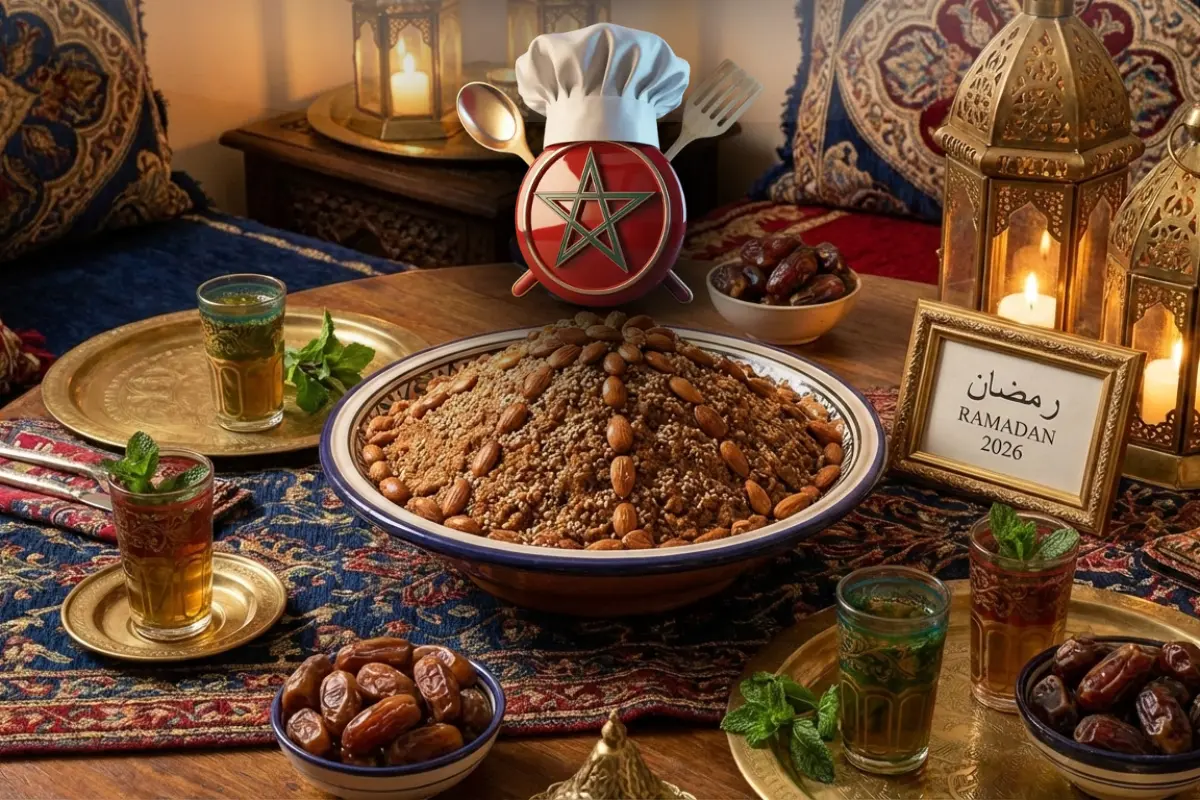
Introduction: Sellou (Sfouf) as a Ramadan Essential
Sellou, also known as Sfouf or Zmita, is a beloved Moroccan sweet prepared especially for Ramadan. Rich, nourishing, and deeply aromatic, Sellou is crafted from roasted flour, almonds, sesame seeds, and warm spices—bound together with butter or honey. In Ramadan 2026, this timeless treat remains a symbol of hospitality, energy, and cultural pride at iftar tables across Morocco and the world.
Ingredients: Authentic Flavor and Balance
- Flour: 500 g all-purpose flour, roasted until golden and sifted.
- Sesame seeds: 250 g, toasted; grind most, reserve some whole for texture.
- Almonds: 300 g blanched; roast or fry, then grind (half fine, half coarse).
- Sweetener: 200–250 g powdered sugar or 180–220 g honey (to taste).
- Fat: 250–300 g melted butter (clarified ghee preferred) or a blend with mild olive oil.
- Spices: 2 tsp cinnamon, 1 tsp ground anise, 1/2 tsp nutmeg, pinch of mastic gum (optional), pinch of salt.
- Optional boosts: 2–3 tbsp flaxseed or chia, 2 tbsp toasted sesame paste (tahini) for depth.
Preparation: Step-by-Step Method
- Roast the flour: Spread flour in a wide pan over medium-low heat. Stir constantly 25–35 minutes until evenly golden and nutty. Cool completely, then sift to remove any lumps.
- Toast sesame: Dry-toast sesame seeds 5–7 minutes until fragrant and lightly golden. Grind 70–80% into a fine powder; keep the rest whole for texture.
- Prepare almonds: Blanch (if needed), then roast or shallow-fry until golden. Drain and cool. Grind half into a paste-like consistency; pulse the rest coarsely for crunch.
- Combine dry mix: In a large bowl, add roasted flour, ground sesame, coarse sesame, ground almonds, coarse almonds, spices, and a pinch of salt. Whisk to distribute evenly.
- Sweeten and bind: Add powdered sugar (or honey) and mix. Stream in warm melted butter (or ghee), folding until the mixture becomes cohesive, sandy, and slightly moist. Adjust fat or sweetener for desired texture.
- Rest and shape: Let the mixture rest 30–60 minutes to allow flavors to meld. Serve loose in bowls, press into decorative molds, or shape into small domes. Garnish with whole almonds and sesame.
Texture, Taste, and Serving Notes
- Texture: Sellou should be crumbly yet cohesive—never greasy or dry. If too dry, add a little warm ghee; if too oily, fold in more roasted flour.
- Taste: Balanced sweetness with warm spice notes and nutty depth. Cinnamon and anise should be present but not overpowering.
- Serving: Present with atay b’naanaa (Moroccan mint tea), dates, and harira at iftar. For suhoor, serve small portions for sustained energy.
Nutritional and Cultural Significance
Sellou is valued for its energy density, combining healthy fats, plant proteins, and complex carbohydrates—ideal after fasting. Almonds and sesame contribute vitamin E, minerals, and fiber, while spices add antioxidant benefits. Culturally, Sellou is a ritual of generosity: families prepare it together, share it with guests, and pass down techniques across generations.
Modern Adaptations for Ramadan 2026
- Whole grains: Replace part or all of the flour with whole wheat or barley flour for added fiber.
- Honey-forward: Use honey instead of powdered sugar for a floral sweetness and softer bind.
- Seed enrichments: Add flaxseed, chia, or pumpkin seeds for omega-3s and texture.
- Ghee clarity: Clarified butter reduces moisture and extends shelf life while enhancing aroma.
- Flavor twists: Orange blossom water (a few drops) or toasted tahini for deeper sesame notes.
Storage, Make-Ahead, and Gifting
- Storage: Keep Sellou in an airtight container in a cool, dry place for 2–3 weeks. For longer storage, refrigerate up to 6 weeks; bring to room temperature before serving.
- Batch prep: Roast flour and toast sesame in advance; grind almonds the day of mixing for peak aroma.
- Gifting: Pack in glass jars or tins, topped with whole almonds and sesame. Add a card with serving suggestions for a thoughtful Ramadan gift.
Common Mistakes and How to Fix Them
- Uneven roasting: Leads to bitter notes. Stir constantly and lower heat; sift after cooling.
- Greasy texture: Too much fat. Fold in more roasted flour and ground sesame to rebalance.
- Over-sweetness: Balance with a pinch of salt and extra roasted flour; add more spice for complexity.
- Flat flavor: Refresh spices, add a touch of mastic or orange blossom water, and ensure sesame is freshly toasted.
Conclusion: A Timeless Ramadan Classic
Sellou (Sfouf) remains a cornerstone of Moroccan Ramadan cuisine—nutritious, celebratory, and steeped in tradition. With careful roasting, balanced spices, and thoughtful presentation, your Sellou for Ramadan 2026 will honor heritage while embracing modern tastes. Serve it proudly at iftar and suhoor, and share it generously—because in Morocco, sweetness is meant to be shared.