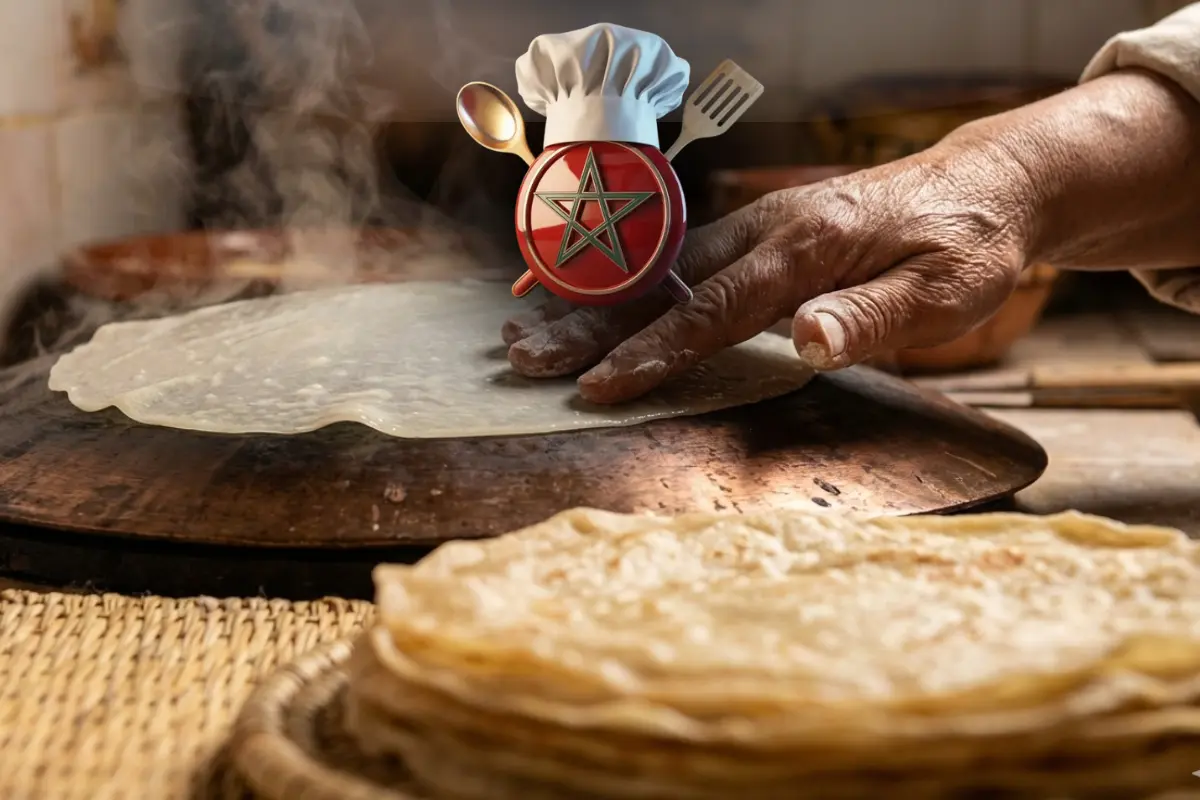
Introduction: The Ethereal Foundation of Moroccan Grand Cuisine
In the pantheon of culinary arts, few skills are as revered and intimidating as making Warka (ورقة), also known as Briouat dough. This is the impossibly thin, delicate, and crisp pastry that forms the iconic, golden-cobbled shell of the Bastilla, the crisp cigar of a Briouat, and the pouch of Briouats au Miel. While store-bought phyllo (warqa) is a common substitute, true mastery lies in creating this edible parchment from nothing but flour, water, and salt. This guide is a deep dive into the alchemy, technique, and patience required to achieve Warka perfection.
Chapter 1: Understanding Warka – More Than Just Dough
Warka is not merely an ingredient; it is a culinary technique born of necessity and refined into an art. Its name, meaning "leaf" or "paper" in Arabic, perfectly describes its final form. Unlike phyllo, which is rolled, traditional Warka is "painted" or "stretched" onto a hot surface, creating sheets with a unique, slightly elastic texture and a signature blistering when fried. The process, known as "Taâmer" or "Moul warka", is a rhythmic, meditative practice that connects the cook directly to centuries of tradition.
Chapter 2: The Science of Simplicity: Ingredients & Equipment
The Minimalist Ingredients:
- Flour (500g): Use all-purpose flour with a medium protein content (~10-12%). It provides the right balance of strength for stretching and tenderness when cooked. Some masters use a blend with a small proportion of fine semolina for extra bite.
- Water (Approx. 750ml - 1L): Warm, but not hot, water. Temperature is critical for gluten development.
- Salt (1 generous pinch): Strengthens gluten and enhances flavor.
- Optional Binder (1 tbsp): A touch of white vinegar or lemon juice can help tenderize the gluten, making it more pliable. A spoonful of vegetable oil can also be added to the batter for elasticity.
The Essential Traditional Equipment:
- The Griddle (Tobsil/Taqtqa): A large, smooth, round, slightly convex metal griddle or inverted wok. It must be perfectly smooth and seasoned like a crepe pan.
- The Dough Cloth (Keswa): A large, slightly damp cotton cloth used to rest the dough balls and prevent drying.
- The Bowl of Water: For constantly wetting your hand during the stretching process.
- Flexible Spatula (Maâjna): A thin, flexible metal spatula for lifting the delicate sheets.
Chapter 3: The Master Process – Step-by-Step Technique
Phase 1: Making the Batter (L'Âaqqa)
- In a large bowl, combine flour and salt. Make a well in the center.
- Gradually add warm water while mixing vigorously with your hand or a whisk. The goal is a batter thinner than pancake batter but slightly thicker than crepe batter—the consistency of light cream. You must work out all lumps until completely smooth. This can take 5-7 minutes of vigorous stirring or kneading by hand. The batter should coat your fingers and drip slowly.
- Cover and let the batter rest for at least 2 hours, ideally 4-6, at room temperature. This relaxation phase is non-negotiable; it allows the gluten to relax fully, ensuring maximum stretchability.
Phase 2: The Ritual of Stretching (Moul Warka)
Preparing the Surface: Heat your griddle over medium heat. It must be hot enough that a drop of water sizzles, but not smoking. Lightly grease it for the first sheet only (traditionally with a cloth dipped in oil).
- Wet Your Hand: Dip your dominant hand (fingers and palm) into the bowl of water.
- Gather the Batter: Quickly swipe your wet hand across the surface of the rested batter, gathering a thin film onto your fingertips.
- The "Paint" Stroke: In one swift, circular motion, "slap" or "paint" the batter onto the hot griddle. The motion is a light, glancing touch—you are transferring the thin film from your hand to the pan, not pressing down. A perfect sheet is almost transparent with small, even holes.
- Cooking: The sheet will cook in 30-60 seconds. The edges will begin to pull away from the pan, and the top will lose its wet shine.
- Removal: Gently slide the flexible spatula under the entire sheet and, with a confident, smooth motion, lift and transfer it to a clean, flat surface (like a large cloth or marble).
- Repeat & Stack: Continue, wetting your hand between each sheet. Stack the cooked sheets with a piece of parchment or cloth between every few to prevent sticking. The rhythm is key: hand in water, gather batter, paint, wait, remove.
Chapter 4: The Art of Troubleshooting – Reading Your Warka
- Dough tears when lifting: The batter is too thick, or the sheet was not fully cooked. Thin the batter slightly with water, ensure proper rest, and let it cook a few seconds longer.
- Sheets are thick and doughy: Too much batter on your hand, the pan is too cool, or the motion was too slow/pressured. Use less batter per stroke and ensure proper pan heat.
- Batter sticks to hand, not the pan: Your hand is too dry or the pan is too hot. Re-wet your hand thoroughly before each stroke and lower the heat slightly.
- Sheets have large, uneven holes: The batter is too thin, or the swirling motion was uneven. Adjust batter consistency and practice a smoother, more controlled stroke.
- Warka is brittle and cracks: Overcooked. Reduce cooking time by a few seconds.
Chapter 5: Modern Adaptations & The "Faux Warka" Method
1. The Non-Stick Pan Crepe Method:
For home cooks without a traditional griddle, a good non-stick crepe pan can work. Use a ladle to pour a small amount of thin batter, swirling immediately to coat the pan thinly. This produces a more uniform, crepe-like sheet that, while different from hand-stretched Warka, is excellent for Bastilla.
2. The Stand Mixer & Squeeze Bottle Hack:
Use a stand mixer with the paddle attachment to achieve a perfectly smooth, lump-free batter. Rest as usual. Transfer to a clean squeeze bottle. Heat your pan, then squeeze a spiral of batter onto it, immediately using the back of a spoon or a special comb to spread it into a thin, even circle. This offers more control for beginners.
Chapter 6: Working With & Storing Homemade Warka
- Immediate Use: Best used the same day. Keep stacked under a slightly damp cloth to prevent drying.
- For Bastilla: Layer 4-5 sheets, brushing each with melted butter (smen preferred), to create a sturdy, multi-layered casing.
- For Briouats: Cut into strips or triangles, fill, roll, and seal with a paste of flour and water before frying.
- Freezing: Place parchment between each sheet, roll the stack into a cylinder, and seal tightly in plastic wrap and a zip-top bag. Freeze for up to 3 months. Thaw in the refrigerator overnight.
Chapter 7: The Philosophical Reward
Making Warka is a humbling and profoundly rewarding experience. The first successful, paper-thin sheet that peels off the pan is a triumph. It teaches patience, respect for process, and a deep appreciation for the labor embedded in Morocco's most celebrated dishes. While modern alternatives exist, the act of making Warka connects you to the silent, rhythmic work of generations of cooks who transformed simple elements into edible gold.
Conclusion: Embracing the Craft
Do not expect perfection on your first try. Embrace the "failed" sheets—crumble them over fruit salad or use them as a base for creative desserts. The journey to mastering Moroccan Warka is one of practice, intuition, and connection. It is the ultimate proof that in Moroccan cuisine, the most exquisite results often come from the most fundamental, hands-on techniques. When you finally taste a Bastilla encased in your own homemade Warka, you are tasting more than a pie; you are tasting history, skill, and personal accomplishment.