
25
Prep (min)
120
Cook (min)
6
Servings
Medium
Level
Introduction
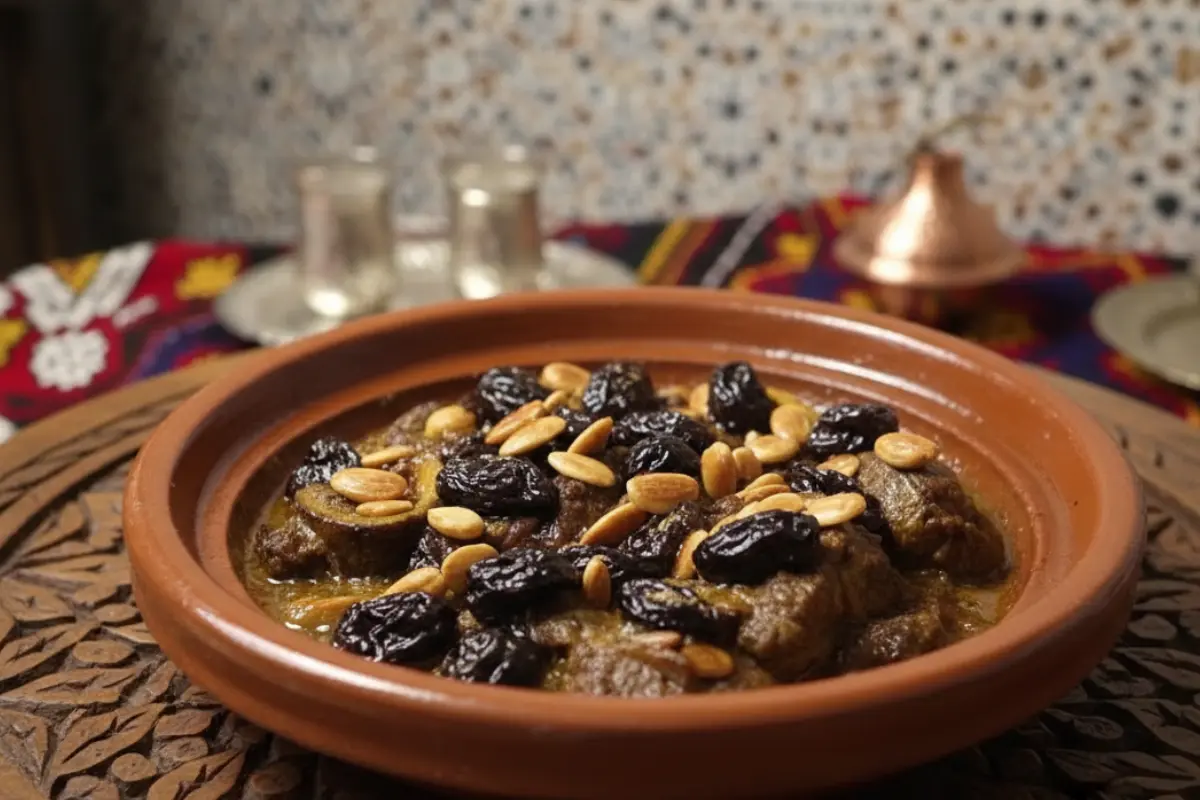
Beef Tagine with Prunes represents the pinnacle of Morocco's sweet-and-savory culinary tradition, a sophisticated dish that exemplifies the country's historical position at the crossroads of African, Arab, and Andalusian cultures. This spectacular tagine combines meltingly tender beef with the natural sweetness of prunes, the crunch of toasted almonds, and a complex blend of warm spices that create layers of flavor in every bite.
Originating in the vibrant city of Marrakech, this dish has long been reserved for special occasions, festive celebrations, and honored guests. The marriage of meat and fruit is characteristic of Moroccan palace cuisine, where cooks for sultans and wealthy merchants developed elaborate recipes that demonstrated culinary mastery and generosity. The prunes, often sourced from the fertile valleys near Meknes, provide natural sweetness that balances the richness of the beef without requiring added sugar.
What distinguishes this tagine from simpler preparations is the time and care invested in building flavor. The beef undergoes a long, slow braise that transforms tough cuts into fork-tender morsels, while the sauce reduces to a glossy, concentrated elixir of spices, aromatics, and the natural sugars from the prunes. The final addition of toasted almonds and sesame seeds provides textural contrast and a subtle nuttiness that elevates the entire dish. Whether prepared for a family gathering or an elegant dinner party, this tagine promises to impress with its dramatic presentation and unforgettable taste.
About This Recipe
Beef Tagine with Prunes is a celebrated dish from Marrakech and the imperial cities of Morocco, representing the sophisticated sweet-and-savory cooking style that emerged from centuries of Berber, Arab, and Andalusian influences. This preparation belongs to the category of 'tajine hlou' (sweet tagines), which were traditionally prepared for wealthy families during religious festivals, weddings, and special celebrations. The combination of meat and dried fruit reflects Morocco's position along ancient trade routes where spices, honey, and dried fruits from across North Africa and the Middle East converged. Historically served to honor important guests, this dish demonstrates the Moroccan principle of hospitality and generosity, where the best ingredients are prepared with care and time. The recipe has been passed down through generations, with each family adding their own touches while maintaining the essential balance of tender meat, sweet prunes, aromatic spices, and crunchy almonds that defines this magnificent tagine.
Nutrition / serving
Recipe Tags
Understanding the Ingredients
Beef Chuck or Shoulder
For this long-braised tagine, you need beef with good marbling and connective tissue that will break down during cooking to create succulent, tender meat. Chuck roast and shoulder cuts are ideal because they contain enough fat and collagen to remain moist through extended cooking. Cut the meat into generous two-inch cubes for the best results. Avoid lean cuts like sirloin or round, which will become dry and tough. Grass-fed beef adds deeper flavor, though conventional beef works perfectly. The key is choosing meat with visible marbling throughout.
Prunes
Dried prunes are the star ingredient that gives this tagine its distinctive character. Choose plump, moist prunes rather than overly dried ones, as they will rehydrate better during cooking and contribute more flavor to the sauce. Pitted prunes save preparation time, though whole prunes can be used if you remove the pits. The prunes not only add sweetness but also contribute a subtle tannic quality and jammy texture that thickens the sauce naturally. Moroccan cooks traditionally use large, meaty prunes that hold their shape during the long cooking process.
Almonds
Whole blanched almonds provide essential textural contrast and nutty richness to balance the tender meat and soft prunes. The almonds are toasted separately until golden and fragrant, then added at the end to maintain their crunch. Slivered almonds can be substituted, though whole almonds make a more impressive presentation. The toasting process is crucial, as raw almonds lack the depth of flavor needed for this dish. Some traditional recipes also call for a small amount of sesame seeds, which add another layer of nutty complexity.
Onions
Large yellow onions form the foundation of the tagine sauce, providing natural sweetness and body. Unlike some tagines where onions are simply sautéed, this recipe calls for onions to be cooked until deeply caramelized and almost melting into the sauce. This long cooking process transforms their sharp bite into mellow sweetness that complements the prunes. The onions also help thicken the sauce as they break down, creating the signature glossy consistency of a well-made tagine.
Ras el Hanout
This complex Moroccan spice blend is the heart and soul of the tagine's flavor profile. The name translates to 'head of the shop,' meaning the best spices the merchant has to offer. Traditional ras el hanout contains anywhere from ten to thirty spices, including cardamom, cumin, coriander, cinnamon, cloves, nutmeg, and sometimes rose petals or lavender. Each blend is unique, but all share a warm, aromatic character that is simultaneously sweet, savory, and slightly floral. Quality ras el hanout can be found in Middle Eastern markets or specialty spice shops. While you can make your own blend, purchasing a well-made version saves time and ensures authentic flavor.
Cinnamon
Beyond the ras el hanout, additional ground cinnamon and whole cinnamon sticks reinforce the warm, sweet spice notes that are characteristic of this dish. Cinnamon provides the bridge between the savory beef and sweet prunes, its woody warmth tying the flavors together. Use Ceylon cinnamon if possible for its more delicate, complex flavor, though standard cassia cinnamon works perfectly well. The whole cinnamon sticks infuse the braising liquid gradually, while ground cinnamon provides immediate, pronounced flavor.
Honey
A small amount of high-quality honey enhances the natural sweetness of the prunes and helps create the glossy, slightly sticky sauce that coats the meat beautifully. The honey also helps caramelize the onions and adds subtle floral notes. Moroccan orange blossom honey is traditional and highly prized, but any good quality honey works. The amount can be adjusted based on the natural sweetness of your prunes and personal preference. Some cooks prefer using no honey at all, letting the prunes provide all the sweetness.
Fresh Ginger and Garlic
These two aromatics work together to provide pungent, warming background notes that enhance but don't overpower the other flavors. Fresh ginger adds a clean, slightly spicy heat with citrus undertones that brightens the rich sauce. Garlic contributes savory depth and rounds out the spice profile. Both should be used fresh rather than dried or powdered for maximum impact. The combination of ginger and garlic is fundamental to virtually all Moroccan tagines, providing an aromatic foundation that supports the more complex spice blends.
Step-by-Step Cooking Guide
Prepare and Season the Beef
10 minCut your beef chuck or shoulder into generous two-inch cubes, trimming away any large pieces of external fat but leaving the marbling intact. Pat the meat thoroughly dry with paper towels, as this is essential for proper browning. Season all sides of the beef generously with salt and freshly ground black pepper, using your hands to ensure even coverage. Toss the beef cubes with one tablespoon of ras el hanout and one teaspoon of ground cinnamon, coating evenly. Allow the seasoned meat to rest at room temperature for thirty minutes while you prepare the other ingredients. This resting period allows the seasonings to penetrate the meat and brings it to room temperature for more even cooking.
Tip: Do not skip the drying step, as any surface moisture will cause steaming instead of browning. For deeper flavor, you can season the beef up to four hours ahead and refrigerate, bringing it back to room temperature before cooking.
Prepare Supporting Ingredients
15 minSlice three large onions into thin half-moons for even cooking and better integration into the sauce. Mince six garlic cloves and grate a two-inch piece of fresh ginger. If your prunes are not already pitted, remove the pits now. Measure out your spices and have them ready near the stove. Blanch your whole almonds if they still have skins, then dry them thoroughly. Having everything prepared before you begin cooking ensures smooth execution, as tagine preparation moves through several stages that require attention.
Tip: Uniformly sliced onions cook evenly and break down properly. Take your time with this prep work, as it makes the actual cooking process much smoother and more enjoyable.
Brown the Beef in Batches
20 minHeat three tablespoons of olive oil in your tagine base or a large, heavy-bottomed Dutch oven over medium-high heat until the oil shimmers. Working in two or three batches to avoid crowding, add the beef cubes in a single layer with space between each piece. Do not disturb the meat for four to five minutes, allowing a deep golden-brown crust to form. Turn each piece and brown on at least two more sides, about three to four minutes per side. The beef should be mahogany brown with crusty edges. Transfer browned beef to a plate and continue with remaining batches, adding more oil if needed. The browning creates fond on the bottom of the pot, which will become the foundation of your intensely flavored sauce.
Tip: Patience during browning is crucial. If you crowd the pan or move the meat too soon, you will get gray, steamed meat instead of properly caramelized beef. The fond should be dark brown, not black and burnt.
Build the Aromatic Base
12 minPour off all but two tablespoons of fat from the pot. Reduce heat to medium and add your sliced onions. Cook, stirring occasionally, for eight to ten minutes until the onions soften and begin to turn golden. Do not rush this step, as properly cooked onions are essential to the final sauce consistency. Add the minced garlic and grated ginger, stirring constantly for one to two minutes until fragrant. Add the remaining ras el hanout, ground cinnamon, ground ginger, and a generous pinch of saffron threads if using. Stir constantly for about one minute until the spices bloom and become intensely aromatic. Add two tablespoons of tomato paste and cook, stirring, for two minutes until it darkens slightly.
Tip: The onions should be soft and sweet before adding the spices. If they start to stick, add a splash of water. Watch the spices carefully, as they can burn quickly. You want them toasted and fragrant, not bitter and scorched.
Begin the Long Braise
90 minReturn all the browned beef to the pot along with any accumulated juices. Add two whole cinnamon sticks and nestle them among the meat. Pour in three cups of beef stock or water, scraping up all the browned bits from the bottom of the pot with a wooden spoon. These fond particles are pure concentrated flavor. Bring the liquid to a gentle boil, then immediately reduce heat to very low, maintaining just a bare simmer with small bubbles breaking the surface occasionally. Cover tightly with the tagine lid or pot lid and cook undisturbed for ninety minutes. The low, slow cooking allows the tough connective tissue in the beef to break down gradually into gelatin, making the meat fork-tender.
Tip: The liquid should never boil vigorously during braising, only maintain a gentle simmer. Check occasionally to ensure the liquid level stays constant, adding more water if needed. The meat should be submerged about three-quarters of the way.
Add Prunes and Continue Cooking
30 minAfter the initial braising period, add the prunes to the pot, distributing them evenly throughout. Drizzle two tablespoons of honey over everything. Gently stir to incorporate without breaking up the tender meat too much. Continue cooking, covered, for an additional thirty minutes. During this time, the prunes will plump up, release their natural sugars, and infuse the sauce with their distinctive sweet-tart flavor. The sauce should be reducing and thickening, becoming glossy and coating the back of a spoon. If the sauce seems too thin, cook uncovered for the final fifteen minutes to concentrate the flavors.
Tip: The prunes are added late in cooking so they soften and flavor the sauce without completely disintegrating. Taste the sauce at this point and adjust seasoning if needed, though remember it will concentrate further.
Toast Almonds and Final Assembly
8 minWhile the tagine finishes cooking, toast your almonds. Heat a dry skillet over medium heat and add the whole blanched almonds. Shake the pan frequently, toasting for four to six minutes until the almonds are golden brown and fragrant. Watch carefully, as they can burn quickly. Transfer to a plate immediately. Some recipes also call for toasting one to two tablespoons of sesame seeds in the same manner. Once the meat is completely tender and falling apart, taste the sauce and adjust seasoning with salt, black pepper, or a touch more honey if desired. Remove the whole cinnamon sticks. Transfer the tagine to a serving platter if desired, or serve directly from the cooking vessel. Sprinkle the toasted almonds and sesame seeds over the top, garnish with fresh cilantro or parsley, and serve immediately.
Tip: The almonds should be deeply golden and smell nutty, not pale or burnt. Add them just before serving to maintain their crunch. A pinch of ground cinnamon dusted over the finished dish adds a final aromatic touch.
Common Mistakes to Avoid
✗ Cutting the Beef Too Small
Fix: Small pieces of beef will become dry and stringy during the long cooking time. Cut generous two-inch cubes that can withstand the extended braise while remaining juicy and tender. The meat will shrink somewhat during cooking.
✗ Not Browning the Beef Properly
Fix: Inadequate browning results in a pale, bland tagine lacking depth of flavor. Take the time to brown the meat thoroughly in batches over proper heat. The fond created during browning is essential to the final sauce.
✗ Adding Prunes Too Early
Fix: Prunes added at the beginning of cooking will completely break down and disappear into the sauce. Add them during the last thirty minutes so they soften and flavor the dish while maintaining some structure and identity.
✗ Cooking at Too High a Temperature
Fix: High heat will toughen the beef and cause the sauce to reduce too quickly. Maintain a very gentle simmer throughout the cooking process. Low and slow is the only way to achieve meltingly tender meat.
✗ Using Lean Beef Cuts
Fix: Lean cuts like sirloin or round will become dry and chewy no matter how long you cook them. Use well-marbled cuts with connective tissue like chuck or shoulder, which have the fat and collagen needed for tender, succulent results.
✗ Adding Toasted Almonds Too Early
Fix: Almonds added during cooking will become soggy and lose their delightful crunch. Always toast them separately and add as a garnish just before serving to maintain textural contrast.
Ingredient Substitutions
Instead of: Beef Chuck
Use: Lamb shoulder or neck is traditional in many Moroccan homes and works beautifully. The cooking time remains the same. Avoid beef stew meat packages, which often contain mixed cuts that cook unevenly.
Instead of: Prunes
Use: Dried apricots provide sweetness with a different flavor profile. Use slightly fewer apricots as they are often sweeter than prunes. Dried figs can also work, though they will create a different character entirely.
Instead of: Ras el Hanout
Use: Make a quick substitute by combining equal parts ground cumin, coriander, and cinnamon with half parts ground ginger, cardamom, and a pinch of cloves. While not identical, this provides similar warmth and complexity.
Instead of: Whole Almonds
Use: Slivered almonds toast more quickly and work well, though they are less visually impressive. Pine nuts or roughly chopped walnuts provide different but equally delicious nutty richness.
Instead of: Fresh Ginger
Use: Use one-half teaspoon ground ginger for every inch of fresh ginger, though fresh provides brighter, cleaner flavor and is strongly preferred.
Instead of: Honey
Use: Use the same amount of pure maple syrup, though it will add a different flavor note. Some cooks prefer omitting sweetener entirely and letting the prunes provide all the sweetness.
Serving Suggestions
Serve this beef tagine traditionally over a bed of fluffy couscous or cracked wheat bulgur, both of which absorb the rich sauce beautifully. The grains should be light and separate, not clumpy.
Warm flatbread or khobz is essential for scooping up the tender meat and sweet prunes. The bread also mops up every precious drop of sauce from the plate.
Begin the meal with a light salad of grated carrots dressed with orange juice, lemon, and orange blossom water. The fresh, citrusy flavor provides a refreshing contrast to the rich tagine.
Serve alongside simple roasted or grilled vegetables such as zucchini, eggplant, or bell peppers seasoned with cumin and olive oil.
For an impressive presentation, serve the tagine family-style in the traditional clay pot, allowing guests to serve themselves. This creates an authentic Moroccan dining experience.
End the meal with fresh mint tea and Moroccan cookies or pastries. The sweet tea helps digest the rich meal while providing a traditional conclusion to your feast.
Storage & Reheating
Storage
This tagine stores exceptionally well and actually improves in flavor after a day or two. Allow the dish to cool completely, then transfer to airtight containers. Store the toasted almonds separately so they maintain their crunch. The tagine will keep in the refrigerator for up to four days. For longer storage, freeze in portion-sized containers for up to three months. The prunes and meat freeze beautifully together, and the sauce maintains its glossy consistency after thawing.
Reheating
Reheat gently on the stovetop over low heat, adding a few tablespoons of water or beef stock if the sauce has thickened too much during storage. Stir occasionally and heat until warmed through completely, about fifteen to twenty minutes from refrigerated. If reheating from frozen, thaw overnight in the refrigerator first, then proceed with stovetop reheating. You can also reheat individual portions in the microwave, covered, at reduced power to prevent the meat from becoming tough. Heat in two-minute intervals, stirring between, until hot throughout.
The meat may absorb some sauce during storage, making it seem thicker. Simply thin with liquid as needed when reheating. Taste and adjust seasoning after reheating, as flavors can mellow in storage. Always add the toasted almonds fresh just before serving, never store them with the tagine. Garnish with fresh herbs after reheating for a bright, fresh finish.
Frequently Asked Questions
Recipe by

Fatima El Amrani
فاطمة العمراني
Master Chef
View all recipes by Fatima →
You May Also Like
Our Ebooks

The Moroccan Vegan
$12.56

Tables of Fez: A Royal Palace Legacy
$22.99

The Soul of Morocco
$20.00
YouTube
Watch step-by-step cooking videos and learn traditional Moroccan techniques.
450+
Subscribers
150+
Videos