
30
Prep (min)
120
Cook (min)
6
Servings
Medium
Level
Introduction
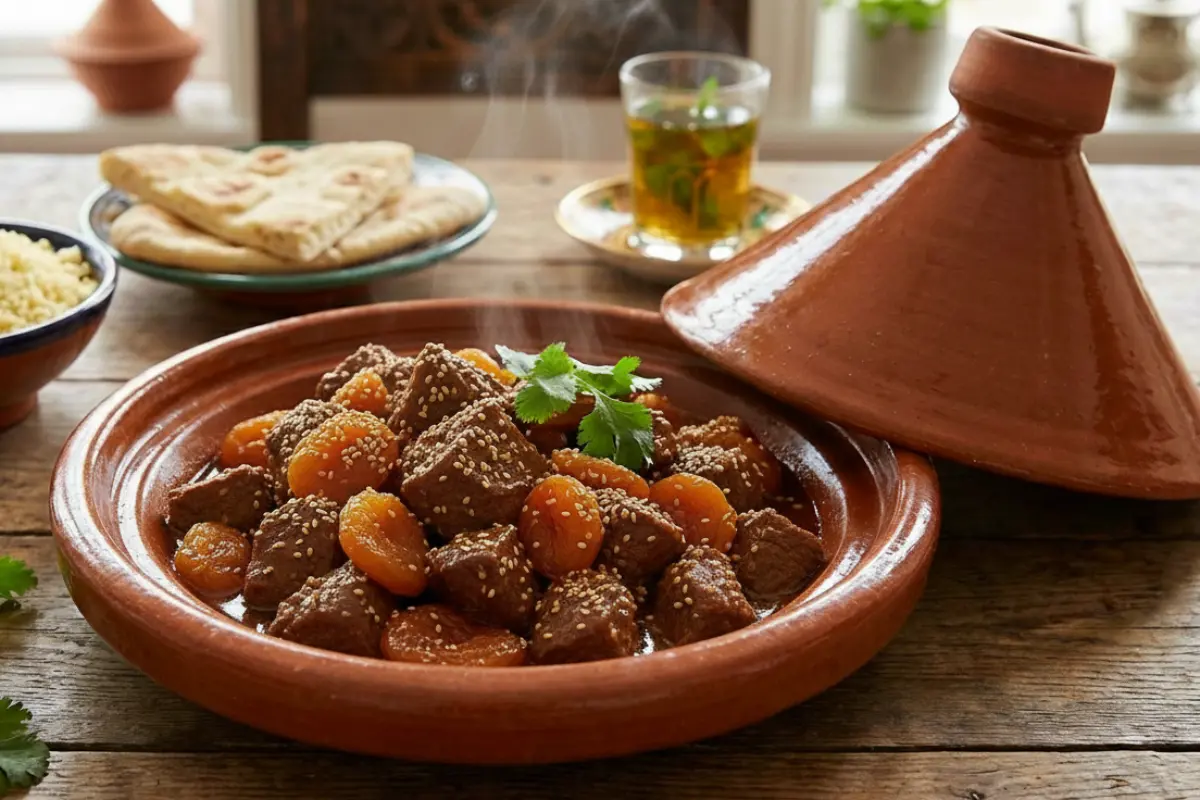
Beef Tagine with Apricots is a beloved staple from Morocco's Souss region and Atlas Mountain communities, where dried fruits are preserved from summer harvests to enrich winter meals. This tagine masterfully combines the hearty, robust flavor of beef with the bright, tangy sweetness of apricots—a pairing that speaks to the Moroccan genius for balancing contrasting flavors.
The dish is characterized by its deep, complex sauce that comes from slowly caramelizing onions and toasting spices before the long, gentle braise. Dried apricots, a specialty of the Tafilalt oasis region, plump up in the savory broth, absorbing the spices and meat juices while contributing their golden color and fruity acidity. A final sprinkle of toasted sesame seeds adds nutty crunch, completing the textural symphony.
Traditionally cooked in earthenware tagines over charcoal braziers, this dish embodies the principle of 'slow food'—transforming economical cuts of beef into succulent, fall-apart tenderness through patience and careful layering of flavors. It's a versatile dish that can be humble weekday fare or celebratory feast food depending on the occasion, always bringing warmth and hospitality to the table. Whether you're new to Moroccan cooking or a seasoned enthusiast, this tagine offers a deeply satisfying taste of Morocco's culinary soul.
About This Recipe
Beef Tagine with Apricots has its roots in the agricultural communities of Morocco's Souss Valley and Atlas Mountains, where cattle herding meets fruit cultivation. Historically, this dish was prepared in autumn when beef was most plentiful after summer grazing, using apricots dried during the summer harvest. The recipe reflects ancient Berber preservation techniques and trade connections—apricots likely arrived via the Silk Road, while spices came through Saharan caravans. Each family developed their own balance of sweet and savory; some versions include chickpeas for substance, others almonds instead of sesame. Traditionally cooked in communal clay ovens (ferrans) or over open fires, this tagine was—and remains—a celebration of community and seasonal abundance, often served during family gatherings and local festivals to showcase hospitality and culinary heritage.
Nutrition / serving
Recipe Tags
Understanding the Ingredients
Beef Chuck or Brisket
Choose well-marbled, collagen-rich cuts like chuck roast, brisket, or shoulder. These cuts transform during slow cooking: tough connective tissues melt into gelatin, making the meat incredibly tender and enriching the sauce with body and flavor. Cut into 2-inch cubes, keeping some fat for moisture. Lean cuts like sirloin will dry out; the magic happens in the marbling and connective tissue. For best results, ask your butcher for 'tagine cut' beef.
Dried Apricots
Select unsulfured, naturally dried apricots for their deep orange color and tangy-sweet flavor. Turkish or Mediterranean varieties are ideal. They should be pliable, not rock-hard. Soaking them briefly in warm water with a cinnamon stick plumps them and infuses extra flavor. The apricots' natural acidity balances the richness of the beef and cuts through the spices beautifully. They'll soften further during cooking but should retain some texture.
Caramelized Onions
Unlike other tagines where onions are merely softened, here they are cooked slowly until deeply golden-brown and caramelized. This process develops natural sugars that form the sweet foundation of the sauce, complementing the apricots. Thinly slicing (not grating) the onions allows them to melt into a jammy consistency while still providing some texture. Patience during this step is rewarded with remarkable depth of flavor.
Sesame Seeds
Toasted sesame seeds are the signature garnish of this Souss-region specialty. They add a nutty, slightly bitter counterpoint to the sweet fruit and rich meat, along with welcome crunch. Toast them lightly in a dry pan until golden—watch carefully as they burn easily. Some traditional versions also include a tablespoon of sesame paste (tahini) stirred into the sauce at the end for extra creaminess and depth.
Spice Profile
This tagine uses a warming but not fiery spice blend. Cinnamon and ginger provide the primary warmth, while a small amount of cumin adds earthiness. Ras el hanout (a complex Moroccan spice mix) can be used in place of individual spices for authenticity. Saffron threads, though optional, lend a golden hue and subtle floral note. The spices should be balanced—present but not overwhelming—allowing the beef and apricots to shine.
Fresh Herbs and Citrus
Fresh cilantro provides a bright, grassy note that cuts through the richness. Unlike some tagines where herbs are cooked in, here they're primarily used as garnish to preserve their vibrant flavor and color. A squeeze of fresh lemon juice at the end brightens all the flavors. Some family recipes also include preserved lemon peel for a more complex citrus note, though this is less traditional for apricot tagine than for olive tagines.
Step-by-Step Cooking Guide
Prepare Ingredients and Marinate Beef
35 minPat beef cubes thoroughly dry with paper towels. In a large bowl, toss beef with 1 tablespoon olive oil, grated onion (from half an onion), minced garlic, grated ginger, half the ground spices (cinnamon, ginger, cumin), and a pinch of salt. Massage well to coat. Cover and let marinate at room temperature for 30 minutes (or refrigerate up to 4 hours). Meanwhile, thinly slice remaining onions. Soak apricots in warm water with a cinnamon stick if desired.
Tip: Marinating isn't traditional but deepens flavor. If short on time, skip straight to browning. The grated onion in the marinade helps tenderize the meat naturally.
Caramelize the Onions
25 minHeat 2 tablespoons olive oil in tagine base or heavy pot over medium-low heat. Add sliced onions with a pinch of salt. Cook slowly, stirring occasionally, for 20-25 minutes until onions are deeply golden-brown, soft, and reduced to about one-third their volume. Lower heat if they start to burn. This slow caramelization builds the sauce's sweet foundation.
Tip: Add a teaspoon of sugar halfway through to accelerate caramelization if needed. A splash of water can prevent sticking. Don't rush—proper caramelization is key.
Brown the Beef
15 minPush caramelized onions to sides of pot. Increase heat to medium-high. Add beef cubes in a single layer, working in batches if needed. Brown deeply on all sides, about 3-4 minutes per side, developing a dark crust. Don't stir too soon—let a proper sear form. As each batch browns, set aside on a plate. The fond (browned bits) on the pot bottom is flavor gold.
Tip: Ensure beef is dry before browning. Don't crowd the pan—steam is the enemy of browning. If fond starts burning, deglaze with a splash of water and continue.
Deglaze and Combine
5 minReduce heat to medium. Add remaining spices to the onions and stir for 30 seconds until fragrant. Pour in ½ cup water or broth to deglaze, scraping up all browned bits. Return beef and any juices to pot. Add enough additional liquid (water or light beef broth) to come about two-thirds up the meat. Add saffron if using. Bring to a bare simmer.
Tip: Taste the deglazing liquid—it should be intensely flavorful. Adjust salt now as liquid will reduce. Use hot liquid to maintain temperature.
Slow Simmer
105 minOnce simmering, immediately reduce heat to lowest setting. Cover tightly. Simmer gently for 1 hour 30 minutes to 2 hours, until beef is fork-tender. Check occasionally, adding small amounts of hot water if liquid reduces too much—it should remain saucy, not soupy. The meat should be submerged about halfway throughout cooking.
Tip: Maintain the gentlest simmer—tiny bubbles at the surface. Boiling toughens beef. If using clay tagine, use a heat diffuser. The cook time depends on your beef cut.
Add Apricots and Finish
20 minDrain soaked apricots (reserve soaking liquid if flavorful). Add apricots to tagine, nestling them into sauce. Cook uncovered for final 15-20 minutes until apricots are plump and heated through, and sauce has thickened to coat the back of a spoon. If sauce is too thin, remove meat and fruit temporarily and reduce over medium heat. Stir in lemon juice. Taste and adjust salt and sweetness—a teaspoon of honey can balance tart apricots if needed.
Tip: Add apricots toward the end to maintain their shape and bright flavor. If they're very tart, add a bit of honey with them. The sauce should be glossy and syrupy.
Common Mistakes to Avoid
✗ Choosing the Wrong Beef Cut
Fix: Tagine demands collagen-rich, marbled cuts. Lean cuts like tenderloin or sirloin will become dry and tough. Always choose chuck, brisket, shank, or shoulder for best results.
✗ Rushing the Onions
Fix: Properly caramelized onions take 20-25 minutes over medium-low heat. Lightly golden onions won't provide the necessary sweetness foundation. Be patient—this step defines the sauce.
✗ Boiling Instead of Simmering
Fix: High heat causes beef fibers to contract and toughen. After bringing to a simmer, immediately reduce to the lowest heat where you see occasional small bubbles. Slow and gentle is the rule.
✗ Adding Apricots Too Early
Fix: Apricots added at the beginning will disintegrate into mush and make the sauce overly sweet. Add them only during the last 15-20 minutes to preserve texture and balanced flavor.
✗ Sauce Too Thin or Too Thick
Fix: If too thin after cooking, remove solids and reduce sauce over medium heat. If too thick, add hot water or broth a tablespoon at a time. Ideal consistency coats a spoon but remains pourable.
Ingredient Substitutions
Instead of: Beef Chuck
Use: Lamb shoulder or goat meat work beautifully with similar cooking times. For quicker cooking, use beef short ribs (adjust time to 2.5-3 hours). Chicken thighs can be used but reduce cooking time to 45 minutes.
Instead of: Dried Apricots
Use: Dried peaches, prunes, or a mix of dried fruits. For tartness, dried cherries or cranberries can replace half the apricots. Fresh apricots in season can be used but add in last 5 minutes only.
Instead of: Sesame Seeds
Use: Toasted slivered almonds or pine nuts. For nut-free, use toasted sunflower seeds or omit. A tablespoon of tahini stirred into the sauce at the end adds similar flavor.
Instead of: Fresh Ginger
Use: Use ¾ teaspoon ground ginger per inch of fresh, though fresh is preferred. Alternatively, use 1 teaspoon grated galangal for a different but complementary flavor.
Instead of: Saffron
Use: A pinch of turmeric for color only, or omit entirely. A few strands of safflower (American saffron) can provide color but little flavor. Never use artificial coloring.
Serving Suggestions
Serve over a bed of fluffy couscous steamed with butter, a pinch of salt, and a drizzle of olive oil. The couscous will soak up the glorious apricot-infused sauce.
Accompany with warm, crusty Moroccan khobz or batbout (stuffed bread) for scooping up meat and sauce—no utensil needed for authentic eating.
A simple cucumber and tomato salad with lemon dressing provides refreshing contrast to the rich, sweet tagine.
Garnish generously with toasted sesame seeds and chopped fresh cilantro or parsley for color, freshness, and texture contrast.
Serve with glasses of sweet mint tea before and after the meal. For special occasions, offer Moroccan orange salad with cinnamon for dessert.
Storage & Reheating
Storage
Cool completely, then transfer to airtight container. Refrigerate up to 4 days—flavors improve overnight. Freeze for up to 3 months. Thaw overnight in refrigerator before reheating.
Reheating
Reheat gently on stovetop over low heat, adding a splash of water or broth if sauce has thickened. Stir occasionally until heated through. Alternatively, reheat covered in 300°F (150°C) oven for 20-25 minutes. Microwave in covered dish, stirring halfway.
Apricots will continue to absorb liquid. When reheating, you may need more liquid than expected. Add fresh sesame seeds and herbs after reheating. If freezing, slightly undercook apricots as they'll soften further when reheated.
Frequently Asked Questions
Recipe by

Fatima El Amrani
فاطمة العمراني
Master Chef
View all recipes by Fatima →
You May Also Like
Our Ebooks

The Moroccan Vegan
$12.56

Tables of Fez: A Royal Palace Legacy
$22.99

The Soul of Morocco
$20.00
YouTube
Watch step-by-step cooking videos and learn traditional Moroccan techniques.
450+
Subscribers
150+
Videos