
60
Prep (min)
45
Cook (min)
8
Servings
Hard
Level
Introduction
Pastilla, also spelled bastilla or b'stilla, stands as one of Morocco's most sophisticated and celebrated dishes - a masterpiece that exemplifies the country's culinary artistry and the harmonious marriage of sweet and savory flavors. This spectacular pie, with its delicate layers of crispy warqa pastry, succulent spiced chicken, creamy scrambled eggs, and sweet-spiced almonds, represents centuries of refined cooking traditions that emerged from the royal kitchens of Fez, Morocco's spiritual and culinary capital.
The origins of pastilla reflect Morocco's rich history as a crossroads of cultures. Some culinary historians trace its roots to Moorish Andalusia, where similar sweet-savory preparations were common in medieval times. When Muslims and Jews fled the Spanish Reconquista in the fifteenth century, they brought sophisticated cooking techniques to Morocco, where local cooks adapted and perfected them. The result is pastilla - a dish that requires considerable skill and patience but rewards the cook with layers of contrasting textures and flavors that delight every sense.
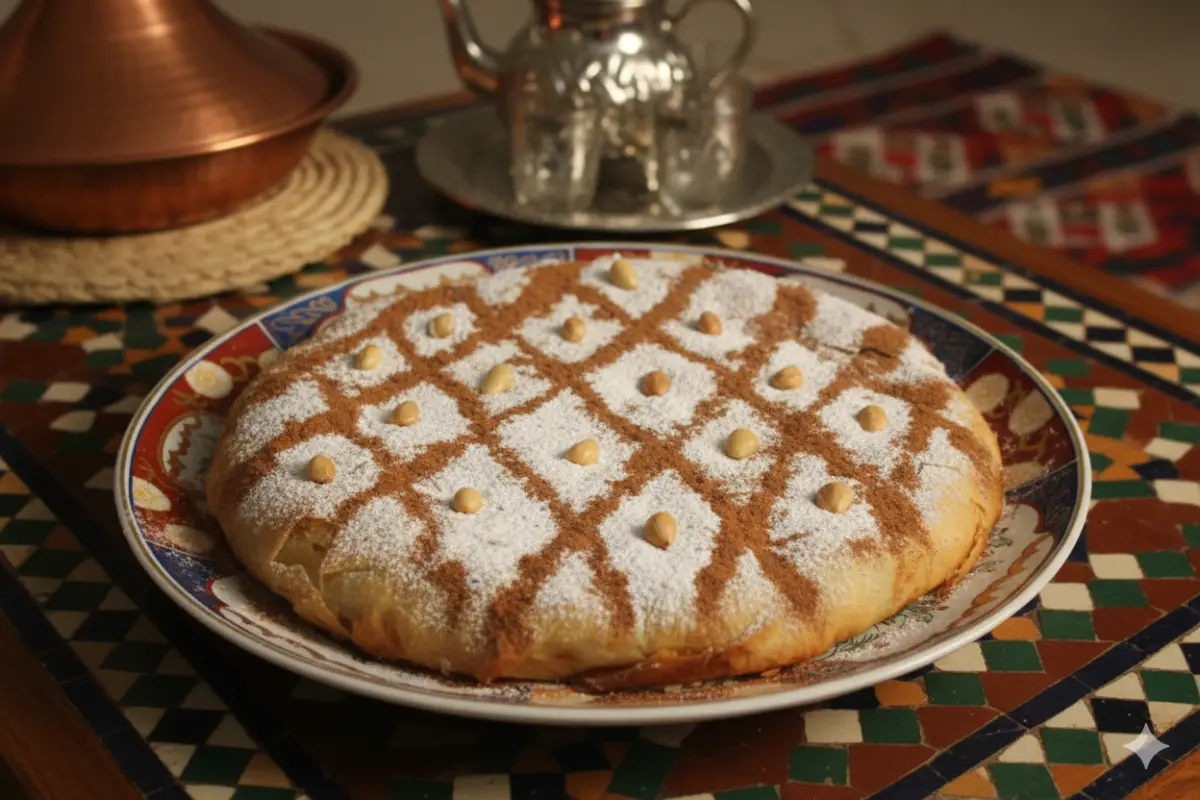
Traditionally made with pigeon (pastilla bil hamam), the chicken version has become more popular and accessible while maintaining the dish's essential character. What makes pastilla truly extraordinary is the unexpected combination of elements: savory, aromatic chicken infused with saffron, ginger, and cinnamon; a layer of soft, slightly sweet scrambled eggs enriched with the cooking broth; crunchy toasted almonds mixed with orange blossom water and cinnamon sugar; all encased in gossamer-thin, buttery pastry that shatters at the touch of a fork. The final flourish - a dramatic dusting of powdered sugar and ground cinnamon creating geometric patterns - transforms this dish into edible art. Pastilla is reserved for the most important occasions: weddings, religious celebrations, and honored guests, where it serves as the ultimate expression of hospitality and culinary prowess.
About This Recipe
Pastilla represents one of the most sophisticated achievements of Moroccan cuisine, with roots tracing back to the medieval courts of Moorish Andalusia. When Muslims and Jews fled the Spanish Reconquista in the fifteenth and sixteenth centuries, they brought with them refined culinary techniques that included paper-thin pastries and the art of combining sweet and savory flavors in elaborate preparations. These Andalusian refugees settled primarily in Fez, Morocco's spiritual and cultural capital, where local cooks embraced and perfected these techniques, creating what we now know as pastilla. The dish was originally made exclusively with pigeon (pastilla bil hamam), which was plentiful in Morocco and considered a delicacy. The royal kitchens of Fez developed pastilla into an art form, with master cooks spending years learning to make the delicate warqa pastry by hand - a skill requiring such precision that it was passed down through generations like a guarded secret. Pastilla became the ultimate expression of Moroccan hospitality and culinary prowess, reserved for the most important occasions: royal banquets, aristocratic weddings, and honored guests. The dish embodied everything sophisticated about Moroccan cuisine - the delicate handling of fragile ingredients, the complex layering of flavors and textures, the bold combination of sweet and savory, and the artistic presentation. Over centuries, chicken became an acceptable and eventually preferred alternative to pigeon due to its wider availability and milder flavor that appeals to modern palates. Today, pastilla remains Morocco's most celebrated festive dish, essential to weddings and major celebrations. The sight of a golden pastilla adorned with intricate sugar and cinnamon patterns being carried to the table signals that something truly special is about to be shared. Making pastilla from scratch remains a badge of culinary honor, demonstrating both skill and dedication to preserving Morocco's rich gastronomic heritage.
Nutrition / serving
Recipe Tags
Understanding the Ingredients
Whole Chicken or Chicken Pieces
The foundation of pastilla requires approximately three pounds of chicken, which will be poached in aromatic broth until fall-apart tender, then shredded. A whole chicken provides the best flavor and allows you to use the bones to enrich the broth, but you can also use bone-in, skin-on chicken thighs and breasts for convenience. The poaching liquid becomes intensely flavored and is reduced to concentrate its essence, which is then used to moisten the eggs and enrich the filling. Quality chicken makes a significant difference here - organic or free-range chicken provides superior flavor that stands up to the complex spices.
Warqa or Phyllo Pastry
Warqa is the traditional Moroccan pastry used for pastilla - paper-thin sheets made from flour and water that are dabbed onto a hot pan in circular motions to create transparent, delicate layers. Making authentic warqa requires considerable skill and specialized technique that few modern cooks attempt. Fortunately, Greek phyllo pastry makes an excellent substitute, providing similar delicate, crispy layers when properly handled. Use full-size phyllo sheets and keep them covered with a damp towel while working to prevent drying and cracking. You will need approximately one pound of phyllo, which typically comes in one-pound boxes containing about twenty sheets. The phyllo provides the essential textural contrast - crispy and shattering on the outside, soft and slightly steamed on the inside where it meets the filling.
Blanched Almonds
Almonds provide essential texture, richness, and a sweet-nutty element that balances the savory chicken. Use whole blanched almonds that you will toast until golden and fragrant, then grind to a coarse texture resembling breadcrumbs. The almonds are mixed with powdered sugar, ground cinnamon, and orange blossom water to create a sweet, aromatic layer that provides surprising contrast to the savory elements. This almond layer is what gives pastilla its distinctive sweet-savory character. Some recipes call for two to three cups of almonds - the quantity depends on how prominent you want the sweet almond layer. More almonds create a more dessert-like pastilla, while less keeps the focus on the savory chicken.
Eggs
The egg layer in pastilla is unique and essential - eggs are scrambled directly in the reduced, concentrated chicken broth until they form soft, creamy curds that are intensely flavored with saffron, ginger, and other spices. This is not an omelet but rather softly scrambled eggs that should remain quite moist and tender. The eggs provide a creamy, binding element that ties together the shredded chicken and creates textural variety. Typically, six to eight eggs are used for a full-size pastilla. The eggs must be cooked gently to avoid becoming tough or rubbery - low heat and constant stirring are essential.
Aromatic Spice Blend
The spice combination in pastilla is carefully balanced to create complex, layered flavors without overwhelming the delicate chicken. Saffron threads provide luxurious floral notes and golden color. Ground ginger adds warm, slightly sharp heat. Ground cinnamon appears both in the filling for warmth and as a garnish for sweetness. Turmeric contributes earthy depth and additional golden color. Ground black pepper adds subtle heat. The combination creates an unmistakably Moroccan flavor profile that is warm, aromatic, and sophisticated. Fresh ginger is also used alongside the dried spices for brightness. These spices infuse the poaching liquid, which concentrates as it reduces, creating intensely flavored broth that permeates every element of the filling.
Fresh Herbs and Aromatics
Onions, garlic, fresh cilantro, and parsley form the aromatic foundation of the chicken filling. Large quantities of chopped onions cook down into the broth, providing natural sweetness and body. The onions virtually dissolve during the long cooking, thickening the sauce naturally. Fresh cilantro and parsley add brightness and fresh flavor that balances the warm spices. These herbs are chopped and added both during cooking and as finishing touches. Fresh ginger provides clean, bright heat that complements the dried ground ginger. Together, these aromatics create the complex flavor base that distinguishes Moroccan cooking.
Butter
Butter plays a crucial role in pastilla, serving multiple purposes. Melted butter is brushed between every layer of phyllo pastry, creating rich flavor and ensuring the layers separate and crisp properly during baking. You will need a generous amount - typically one cup or more of melted butter for a full-size pastilla. The butter also enriches the almond mixture and adds richness throughout the dish. Some traditional recipes call for smen (Moroccan preserved butter) for additional depth, but regular unsalted butter works beautifully. The butter must be melted and kept warm so it flows easily when brushing - cold butter will tear the delicate phyllo.
Orange Blossom Water
This fragrant distillation from bitter orange blossoms is essential to authentic pastilla, providing distinctive floral notes that are signature to Moroccan sweets and savory-sweet dishes. Orange blossom water is mixed into the almond layer, where its perfume balances the sweetness and adds complexity. A little goes a long way - too much can be overwhelming and soapy. Look for food-grade orange blossom water at Middle Eastern markets or specialty stores. If unavailable, rose water can substitute, though the flavor will differ. This ingredient is what gives pastilla its unmistakable Moroccan character.
Step-by-Step Cooking Guide
Prepare and Poach the Chicken
90 minIn a large, heavy-bottomed pot or Dutch oven, combine the whole chicken (or chicken pieces) with two large chopped onions, four minced garlic cloves, one tablespoon grated fresh ginger, one teaspoon saffron threads, one tablespoon ground ginger, one teaspoon ground cinnamon, one teaspoon turmeric, one teaspoon salt, half a teaspoon black pepper, and large bunches of fresh cilantro and parsley tied with kitchen string. Add enough water to barely cover the chicken - approximately six cups. Bring to a boil over high heat, then immediately reduce to a gentle simmer. Cover partially and cook for forty-five to sixty minutes, until the chicken is completely tender and falling off the bone. Remove the chicken and set aside to cool. Discard the herb bundles. Continue simmering the broth uncovered over medium-high heat for thirty to forty minutes until it reduces to approximately two cups of concentrated, intensely flavored liquid. The reduction is crucial - this concentrated broth provides all the moisture and flavor for the eggs and chicken.
Tip: Do not rush the reduction - the broth must become syrupy and concentrated. Taste it frequently; it should be very flavorful and slightly thick. If it tastes weak, continue reducing.
Shred Chicken and Prepare Egg Mixture
20 minOnce the chicken is cool enough to handle, remove and discard the skin and bones. Shred the meat into fine pieces using your fingers or two forks - the texture should be fine and delicate, not chunky. Set aside. Measure the reduced broth - you need about two cups. If you have more, continue reducing; if less, add a small amount of water. In a large bowl, beat six to eight eggs well. With the reduced broth still warm (not boiling), slowly pour about one cup of it into the beaten eggs while whisking constantly to temper them and prevent scrambling. This egg-broth mixture will be cooked gently to create the egg layer. Reserve the remaining cup of broth to moisten the shredded chicken.
Tip: Tempering the eggs prevents them from scrambling in threads. The mixture should be smooth and uniform. The chicken should be very finely shredded for the most elegant texture.
Cook the Eggs
15 minHeat two tablespoons of butter in a large, non-stick skillet over low heat. Pour in the egg-broth mixture. Using a wooden spoon or silicone spatula, stir constantly and gently, scraping the bottom and sides of the pan. Cook slowly over low heat for eight to twelve minutes, stirring continuously, until the eggs form soft, small curds that are still quite moist and creamy - they should look like very soft scrambled eggs, not dry or rubbery. The mixture will be slightly wet; this is correct. Remove from heat immediately and transfer to a bowl to stop cooking. The eggs should remain tender and moist, as they will cook further during baking.
Tip: Low heat and patience are essential. If the heat is too high, the eggs will become tough and grainy. They should be just barely set, still very soft and creamy.
Prepare the Almond Mixture
15 minSpread two to three cups of whole blanched almonds on a baking sheet and toast in a 350°F oven for eight to ten minutes, stirring once or twice, until golden and fragrant. Watch carefully to prevent burning. Let cool slightly, then pulse in a food processor to a coarse texture resembling breadcrumbs - not fine powder, but coarsely ground with some small chunks remaining. Transfer to a bowl and mix with three-quarters cup of powdered sugar, one and a half tablespoons of ground cinnamon, and two tablespoons of orange blossom water. Stir until evenly combined. The mixture should be moist and fragrant, clumping together slightly when pressed. Taste and adjust sweetness or cinnamon if desired.
Tip: Do not over-process the almonds to powder - coarse texture provides better contrast. The orange blossom water amount can be adjusted based on strength and personal preference.
Prepare Phyllo and Pan
10 minPreheat your oven to 375°F. Melt one cup of unsalted butter and keep it warm. Remove phyllo from the package and unfold carefully. Immediately cover the stack with a barely damp kitchen towel to prevent drying - phyllo dries out and becomes brittle within minutes of exposure to air. Generously butter a large round baking pan, traditionally a fourteen to sixteen inch diameter pan, though a rectangular pan works if that is what you have. Have all your filling components ready and within reach: the shredded chicken (moistened with the reserved cup of reduced broth), the cooked eggs, and the almond mixture. Also have a pastry brush ready for applying butter.
Tip: Organization is crucial for working with phyllo. Have everything prepared before you begin assembly, as the phyllo cannot wait once you start. Work quickly but carefully to prevent the sheets from drying out.
Layer the Bottom Phyllo
10 minPlace one sheet of phyllo in the prepared pan, allowing the edges to hang over the sides. Brush generously with melted butter, covering the entire surface. Add a second sheet, placing it slightly rotated so the corners do not align, creating a star pattern and ensuring full coverage. Brush with butter. Continue this process, layering eight to ten sheets of phyllo, brushing each one thoroughly with butter and rotating slightly each time. The edges should extend well beyond the pan rim - they will fold over the top later. The bottom layers need to be sturdy enough to support the filling without tearing, so do not skimp on either phyllo sheets or butter.
Tip: If a phyllo sheet tears, simply place another sheet over it - small tears are not a problem as long as you have multiple layers. Be generous with the butter - it is essential for flavor and crispness.
Add the Fillings
10 minSpread the shredded chicken evenly over the phyllo base, creating a uniform layer that goes almost to the edges. The chicken should be moist but not swimming in liquid. Next, spread the soft scrambled eggs over the chicken, distributing them as evenly as possible. The egg layer binds everything together and adds creaminess. Finally, spread the almond mixture evenly over the eggs, pressing down gently to create a compact, even layer. This layering order is traditional and important: chicken on the bottom for structure, eggs in the middle for creaminess, and almonds on top for sweet crunch. Each layer should be relatively even and reach almost to the edges of the phyllo.
Tip: If the chicken seems dry, drizzle a bit more of the reduced broth over it before adding the eggs. Pack the layers gently but firmly for neat slicing later.
Top and Seal the Pastilla
15 minFold the overhanging edges of the bottom phyllo sheets up and over the filling, brushing each section with butter as you fold. The sheets should cover most of the top, though gaps are fine. Layer six to eight more sheets of phyllo over the top, brushing each generously with butter. Tuck the edges of these top sheets down between the filling and the pan sides, creating a neat sealed package. The top layers should be well-buttered and cover the filling completely with some sheets extending down the sides. For the final top sheet, brush especially generously with butter to promote golden browning. Using a sharp knife, score the top phyllo into serving portions - eight to twelve portions depending on the size. Cut only through the top few layers, not all the way through the filling. This scoring makes serving much easier after baking and creates an attractive pattern.
Tip: Generous butter on the top layers ensures beautiful golden browning. The scoring should be decorative and functional - traditional patterns include diamonds or triangles radiating from the center.
Bake and Garnish
50 minPlace the pastilla in the preheated 375°F oven and bake for thirty-five to forty-five minutes, until the phyllo is deep golden brown and crispy on top and bottom. Rotate the pan halfway through baking for even browning. The pastilla should be dramatically golden and the edges quite dark - do not underbake or the phyllo will be pale and soft rather than crispy and shattering. Remove from the oven and let rest for five minutes. While still warm, dust the entire top surface generously with powdered sugar using a fine mesh sieve. Then, using ground cinnamon in a sieve or a stencil if desired, create decorative lines or patterns over the powdered sugar - traditionally, parallel lines or a crosshatch pattern. Alternatively, you can create more elaborate designs. The contrast of cinnamon against powdered sugar is visually striking. Serve warm or at room temperature, cutting through the scored lines into individual portions.
Tip: The sugar and cinnamon should be applied while the pastilla is still warm so they adhere slightly. The visual presentation is important - make the garnish dramatic and artistic.
Common Mistakes to Avoid
✗ Not Reducing the Broth Enough
Fix: The broth must reduce to a concentrated, syrupy consistency with intense flavor. Weak, watery broth will make the filling soggy and bland. Continue reducing until you have about two cups of deeply flavored, slightly thick liquid.
✗ Overcooking the Eggs
Fix: The eggs should remain soft, creamy, and slightly undercooked when removed from the pan, as they will continue cooking during baking. Overcooked eggs become tough and rubbery. Cook gently over low heat, stirring constantly.
✗ Letting Phyllo Dry Out
Fix: Phyllo dries out within minutes when exposed to air, becoming brittle and impossible to work with. Always keep unused phyllo covered with a barely damp towel. Work quickly but carefully during assembly.
✗ Skimping on Butter
Fix: Phyllo requires generous butter between every layer to achieve the characteristic crispy, golden, flaky texture. Under-buttered phyllo will be tough, pale, and may stick together. Use at least one cup of melted butter for a full-size pastilla.
✗ Not Toasting the Almonds
Fix: Raw almonds lack the depth of flavor and aromatic qualities that toasted almonds provide. Toasting develops nutty, complex flavors essential to the almond layer. Always toast until golden and fragrant.
✗ Making the Filling Too Wet
Fix: Excess liquid in any layer will make the phyllo soggy rather than crispy. The chicken should be moist but not swimming in broth. The eggs should be soft but not runny. Drain excess liquid if necessary.
✗ Underbaking
Fix: Pastilla needs time to become deeply golden and fully crispy. Pale, underbaked pastilla lacks the textural contrast that makes the dish spectacular. Bake until the top and visible edges are rich golden brown, not just lightly colored.
Ingredient Substitutions
Instead of: Whole Chicken
Use: Use three pounds of bone-in, skin-on chicken thighs and breasts. The bones are important for flavorful broth. In a pinch, boneless chicken works but add extra broth or stock for flavor.
Instead of: Warqa Pastry
Use: Phyllo dough is the standard substitute and works excellently. Spring roll wrappers can work in a pinch but will have a different texture. Do not substitute puff pastry - the texture is completely wrong.
Instead of: Orange Blossom Water
Use: Rose water provides similar floral notes with a different character. Omitting it entirely is acceptable, though the dish will lack some authentic Moroccan flavor. Add a bit of vanilla extract as a last resort.
Instead of: Saffron
Use: While saffron adds unique flavor and color, you can omit it and increase the turmeric slightly for color. The flavor will differ but the dish remains delicious.
Instead of: Whole Almonds
Use: Pre-ground almonds (almond meal) work but lack the texture of coarsely ground toasted whole almonds. Walnuts or pistachios can substitute for a different flavor profile.
Serving Suggestions
Serve pastilla as the centerpiece of a festive meal, cutting it into wedges at the table for dramatic presentation. The sweet-savory contrast makes it ideal as a special occasion main course.
Traditionally, pastilla is served at the beginning of a celebratory meal, followed by tagines and couscous, though it is substantial enough to be the main course for modern dinners.
Accompany with fresh Moroccan salads such as taktouka (roasted pepper salad) or orange and olive salad to provide fresh, acidic contrast to the rich pastilla.
Serve with Moroccan mint tea, which cuts through the richness and provides a refreshing complement. The sweet tea echoes the sweet notes in the pastilla.
For an impressive presentation, bring the whole pastilla to the table before cutting, allowing guests to admire the intricate sugar and cinnamon design.
Pastilla can be served warm from the oven or at room temperature - both are traditional. Room temperature actually allows the flavors to meld more completely.
Provide small plates and forks, as pastilla is typically eaten with utensils rather than hands due to its delicate nature and the powdered sugar topping.
Storage & Reheating
Storage
Pastilla is best enjoyed fresh from the oven or within a few hours of baking, when the phyllo maintains maximum crispness. However, baked pastilla can be covered loosely and stored at room temperature for up to six hours, or refrigerated for up to two days. The phyllo will soften during storage but remains delicious. Do not freeze baked pastilla, as the phyllo becomes unpleasantly soggy when thawed. You can, however, assemble the entire pastilla without baking, wrap it tightly in plastic wrap and foil, and freeze for up to one month. Bake directly from frozen, adding ten to fifteen minutes to the baking time.
Reheating
To reheat refrigerated pastilla and restore some crispness, place in a 350°F oven for fifteen to twenty minutes until warmed through and the phyllo crisps slightly. Do not microwave, as this will make the phyllo completely soggy. The phyllo will never be quite as crispy as when freshly baked, but proper oven reheating yields acceptable results. Add fresh powdered sugar and cinnamon after reheating to refresh the appearance.
If making ahead for a party, assemble completely and refrigerate for up to four hours before baking, then bake just before serving. This is preferable to baking early and reheating. The powdered sugar and cinnamon garnish should always be added just before serving, never in advance, as moisture will cause them to dissolve.
Frequently Asked Questions
Recipe by

Abdrahman Idrissi
عبد الرحمن الإدريسي
Pastry & Bread Chef
View all recipes by Abdrahman →
You May Also Like
Our Ebooks
The Moroccan Vegan
$12.56

Tables of Fez: A Royal Palace Legacy
$22.99
The Soul of Morocco
$20.00
YouTube
Watch step-by-step cooking videos and learn traditional Moroccan techniques.
450+
Subscribers
150+
Videos