
35
Prep (min)
135
Cook (min)
4
Servings
Medium-High
Level
Introduction
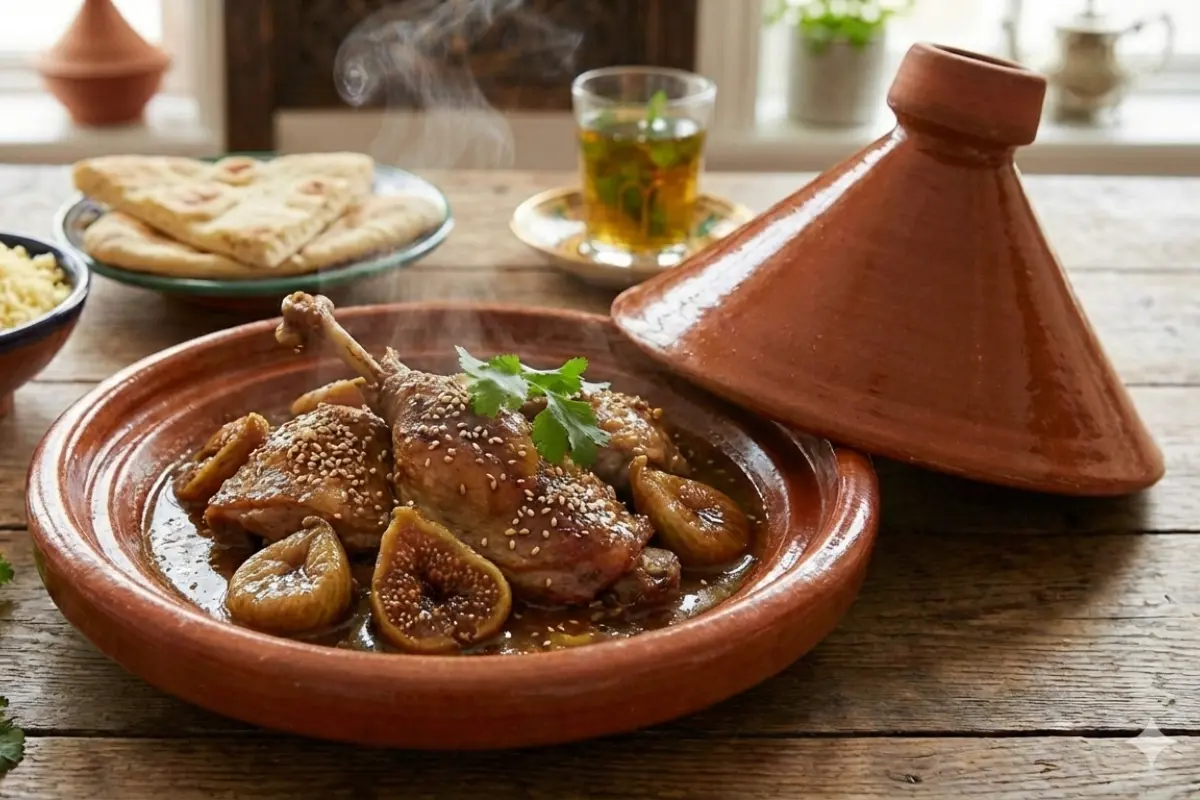
Duck Tagine with Figs and Honey represents the pinnacle of Moroccan luxury cooking, a dish historically reserved for royal courts and special celebrations. Originating from Meknes—known as the 'Versailles of Morocco'—this tagine showcases the sophisticated palate of Moroccan aristocracy, where game birds meet the sweet bounty of autumn figs in a harmony of opulent flavors.
The magic of this dish lies in its masterful handling of duck, a rich meat that requires careful preparation to achieve crisp skin and tender flesh. Slow-cooked with a delicate spice blend that highlights rather than overwhelms, the duck becomes incredibly succulent while its rendered fat enriches the sauce. Fresh figs, added at just the right moment, partially break down to create a natural, velvety sweetness that complements the duck's richness, while honey provides a floral glaze that caramelizes beautifully.
This is not everyday cooking but rather culinary artistry—a celebration dish that impresses with both flavor and presentation. The deep reddish-brown sauce, glistening figs, and golden duck skin create a visual feast before the first bite. While requiring more attention than simpler tagines, the result is profoundly rewarding, offering a taste of Moroccan haute cuisine that transforms a meal into a memorable event. Perfect for festive gatherings or when you wish to elevate the ordinary to extraordinary.
About This Recipe
Duck Tagine with Figs has its origins in the imperial kitchens of Meknes during the reign of Sultan Moulay Ismail in the 17th century. As the sultan transformed Meknes into a magnificent capital, his chefs developed elaborate dishes combining local ingredients with influences from Andalusia and the Ottoman Empire. Duck, once considered game for hunting parties, was elevated to palace cuisine through slow braising techniques. Figs, abundant in the Meknes region, provided natural sweetness that complemented the rich bird. The dish became a symbol of autumnal feasts, often served during the date harvest celebrations. Over centuries, it spread from palace to wealthy households, each adding their signature touch—some using walnuts, others orange flower water. Today, it remains a celebration dish, representing the height of Moroccan culinary refinement and the historical fusion of Berber, Arab, and Andalusian culinary traditions.
Nutrition / serving
Recipe Tags
Understanding the Ingredients
Duck Legs (Confit-Style)
Duck legs (moulard or Muscovy preferred) are ideal for tagine—their higher fat content and connective tissue transform during slow cooking into meltingly tender meat. The skin must be scored to render fat and allow seasoning penetration. Unlike chicken, duck benefits from overnight dry-brining with salt and spices, which firms the skin and seasons deeply. The goal is crisp skin atop tender meat, achieved by initial high-heat searing then gentle braising. Reserve the rendered fat—liquid gold for cooking or future use.
Fresh Figs
Ripe but firm fresh figs (preferably Black Mission or Turkish) are essential—they hold their shape while softening into jammy pockets of sweetness. Their tiny seeds add pleasant texture. Avoid overripe figs that will disintegrate. Some traditional recipes use both fresh and dried figs for layered sweetness, but fresh provide brighter flavor and elegant presentation. If fresh are unavailable, quality dried figs plumped in port or tea can substitute, though the character changes. Figs are added late to preserve their integrity.
Wildflower or Orange Blossom Honey
Honey here is both sweetener and glaze, contributing floral notes that complement the figs. Orange blossom honey is traditional, but any aromatic, medium-intensity honey works. The honey is added in two stages: a little during cooking to flavor the sauce, and a final brush before broiling to create a glossy, caramelized finish. Avoid strong, dark honeys like buckwheat that can overpower. For a sophisticated twist, some chefs use saffron-infused honey.
Aromatic Spices (Warm Not Hot)
This tagine uses a subtle, warm spice profile designed to enhance, not compete with, the duck and figs. Cinnamon and ginger provide the base, while a touch of coriander adds citrusy notes. Star anise (uncommon in other tagines) pairs exceptionally with duck. Ras el hanout can be used sparingly. Black pepper is important for balancing sweetness. The spices should whisper, not shout—their role is to support the primary flavors.
Shallots and Pomegranate Molasses
Shallots provide a more delicate, sweet allium base than onions, complementing the refined nature of the dish. They're cooked slowly until caramelized. Pomegranate molasses (dibs rumman) is the secret ingredient that elevates this tagine—its tangy sweetness cuts through duck fat and adds complex fruity acidity. It provides the 'sour' element traditionally coming from preserved lemons in other tagines, but better suited to duck and figs.
Fresh Herbs and Citrus Zest
Thyme and bay leaves are used during cooking—their earthy notes complement game birds. Fresh mint and orange zest are added at the end as garnish, providing bright, fresh contrast to the rich sauce. The orange zest particularly enhances the floral honey notes. Some versions include a splash of orange blossom water for additional fragrance.
Step-by-Step Cooking Guide
Prepare and Dry-Brine the Duck
20 minPat duck legs thoroughly dry. Using a sharp knife, score the skin in a crosshatch pattern, cutting through fat but not into meat. This helps render fat. Mix 1 tablespoon salt with half the ground spices (cinnamon, ginger, pepper). Rub mixture all over duck, especially into scored skin. Place on a rack over a plate, uncovered, in refrigerator for at least 4 hours (ideally overnight). This dry-brine seasons deeply and dries the skin for optimal crisping.
Tip: For best results, dry-brine 24 hours. The skin should feel papery dry before cooking. Bring to room temperature 30 minutes before cooking.
Render Duck Fat and Sear
20 minHeat a large, cold skillet or tagine base over medium-low heat. Place duck legs skin-side down (no added oil needed). Cook gently for 12-15 minutes until most fat has rendered and skin is deep golden-brown and crisp. Pour off and reserve rendered fat (save for cooking). Flip legs and sear flesh side for 3 minutes. Transfer to plate. Increase heat to medium, add chopped shallots to remaining fat in pan.
Tip: Low and slow rendering prevents burning and maximizes crispness. Don't rush—proper rendering takes time. Reserve fat for roasting vegetables or potatoes.
Caramelize Shallots and Bloom Spices
12 minCook shallots in duck fat over medium heat for 8-10 minutes until softened and golden. Add minced garlic, grated ginger, and remaining spices (including star anise if using). Cook, stirring constantly, for 1-2 minutes until extremely fragrant. Add pomegranate molasses and cook for 30 seconds until it thickens slightly and coats the shallots. This creates the flavor foundation.
Tip: If shallots start to burn, add a splash of water. The pomegranate molasses will sizzle and reduce—this caramelization builds complexity.
Build Braising Liquid and Combine
8 minPour in wine (or broth) to deglaze, scraping up all browned bits. Add broth, bay leaves, and thyme. Bring to a simmer. Nestle duck legs skin-side up into liquid—they should be partially submerged, with skin above liquid line. Add 1 tablespoon honey to liquid. Return to gentle simmer.
Tip: Keep skin above liquid to preserve crispness. The braising liquid should barely bubble—a violent boil will toughen duck. Use a spoon to baste exposed skin occasionally.
Slow Braise Until Tender
90 minOnce simmering, reduce heat to lowest setting. Cover tightly (use foil under lid if needed). Braise gently for 1 hour 15 minutes to 1 hour 30 minutes, until duck is fork-tender but not falling apart. Check occasionally that liquid maintains gentle movement. After 1 hour, carefully turn legs skin-side down for 10 minutes to flavor the meat, then return to skin-side up position.
Tip: Test doneness by inserting a fork—it should meet little resistance. The meat will pull back from the bone when done. Maintain lowest possible simmer.
Add Figs and Finish
15 minRemove duck legs to a plate. Increase heat to medium and reduce sauce by about one-third until slightly thickened and glossy, 5-7 minutes. Taste and adjust seasoning—balance sweet with salt, tart with honey. Add figs cut-side up, simmer for 3-4 minutes just to warm through. Return duck to tagine skin-side up. Brush skin with remaining honey. If desired, broil for 2-3 minutes to recrisp skin and caramelize honey. Garnish with orange zest and mint.
Tip: Don't overcook figs—they should soften slightly but hold shape. The honey glaze will bubble under broiler—watch carefully to prevent burning. Rest 5 minutes before serving.
Common Mistakes to Avoid
✗ Skipping the Dry-Brine
Fix: Duck skin won't crisp properly if not dried thoroughly. Dry-brining seasons the meat deeply and draws moisture from skin. This step is non-negotiable for perfect texture and flavor.
✗ Rendering Fat on Too High Heat
Fix: High heat burns duck fat before it renders, resulting in rubbery, pale skin. Start with cold pan, medium-low heat, and patience. Proper rendering takes 12-15 minutes per batch.
✗ Submerging the Crisped Skin
Fix: If skin goes under braising liquid, it becomes soggy. Arrange duck so skin stays above liquid line. If necessary, use less liquid—the steam will cook the meat sufficiently.
✗ Overcooking the Figs
Fix: Figs added too early disintegrate into mush. Add them only during the last 3-4 minutes of cooking. They should be warmed through but maintain their shape and texture.
✗ Unbalanced Sweetness
Fix: Between honey, figs, and pomegranate molasses, the dish can become cloying. Always balance with adequate salt and the acidity from pomegranate molasses. Taste and adjust at the end.
Ingredient Substitutions
Instead of: Duck Legs
Use: Chicken thighs with skin (reduce cooking time to 45 minutes). For a special occasion, squab or quail. Duck breasts can be used but cook separately (sear skin, finish in oven) and add to sauce at end.
Instead of: Fresh Figs
Use: Dried figs plumped in warm port, red wine, or tea for 30 minutes. Use 8 oz dried. Fresh pears or quince can work in different but delicious ways—adjust honey accordingly.
Instead of: Pomegranate Molasses
Use: Reduce 1 cup pomegranate juice with 1 tablespoon honey until syrupy. Or use balsamic glaze thinned with lemon juice. The tart-sweet balance is crucial.
Instead of: Red Wine
Use: Additional broth with 1 tablespoon pomegranate juice or vinegar. For non-alcoholic, use grape juice reduced with a splash of vinegar. The acidity is important.
Instead of: Star Anise
Use: A pinch of Chinese five-spice powder or additional cinnamon with a clove. The anise flavor complements duck but isn't essential.
Serving Suggestions
Serve on a bed of saffron couscous or almond rice pilaf to soak up the luxurious sauce.
Accompany with caramelized pearl onions and roasted walnuts for added texture and flavor contrast.
A simple watercress or arugula salad with orange segments and a light vinaigrette cuts through the richness beautifully.
Crusty baguette or walnut bread is essential for sopping up every bit of the fig-infused sauce.
Pair with a Moroccan orange and date salad sprinkled with cinnamon for a traditional dessert that continues the flavor theme.
For beverage pairing, a glass of Moroccan Syrah or a fruity Pinot Noir complements the duck and figs perfectly.
Storage & Reheating
Storage
Store duck and sauce separately if possible. Refrigerate up to 3 days. Duck skin will soften but flavor improves. Freeze sauce for up to 2 months; duck freezes less successfully (texture changes).
Reheating
Reheat sauce gently on stovetop. Warm duck separately in a 375°F (190°C) oven on a rack until heated through and skin re-crisps, about 10 minutes. Combine just before serving. Alternatively, reheat together in oven covered with foil, then broil briefly to crisp skin.
Fresh figs don't store well in sauce—add new figs when reheating if possible. The sauce may need thinning with broth when reheating. Always taste and re-season after reheating.
Frequently Asked Questions
Recipe by

Fatima El Amrani
فاطمة العمراني
Master Chef
View all recipes by Fatima →
You May Also Like
Our Ebooks

The Moroccan Vegan
$12.56

Tables of Fez: A Royal Palace Legacy
$22.99

The Soul of Morocco
$20.00
YouTube
Watch step-by-step cooking videos and learn traditional Moroccan techniques.
450+
Subscribers
150+
Videos