
8
Prep (min)
12
Cook (min)
4
Servings
Easy
Level
Introduction
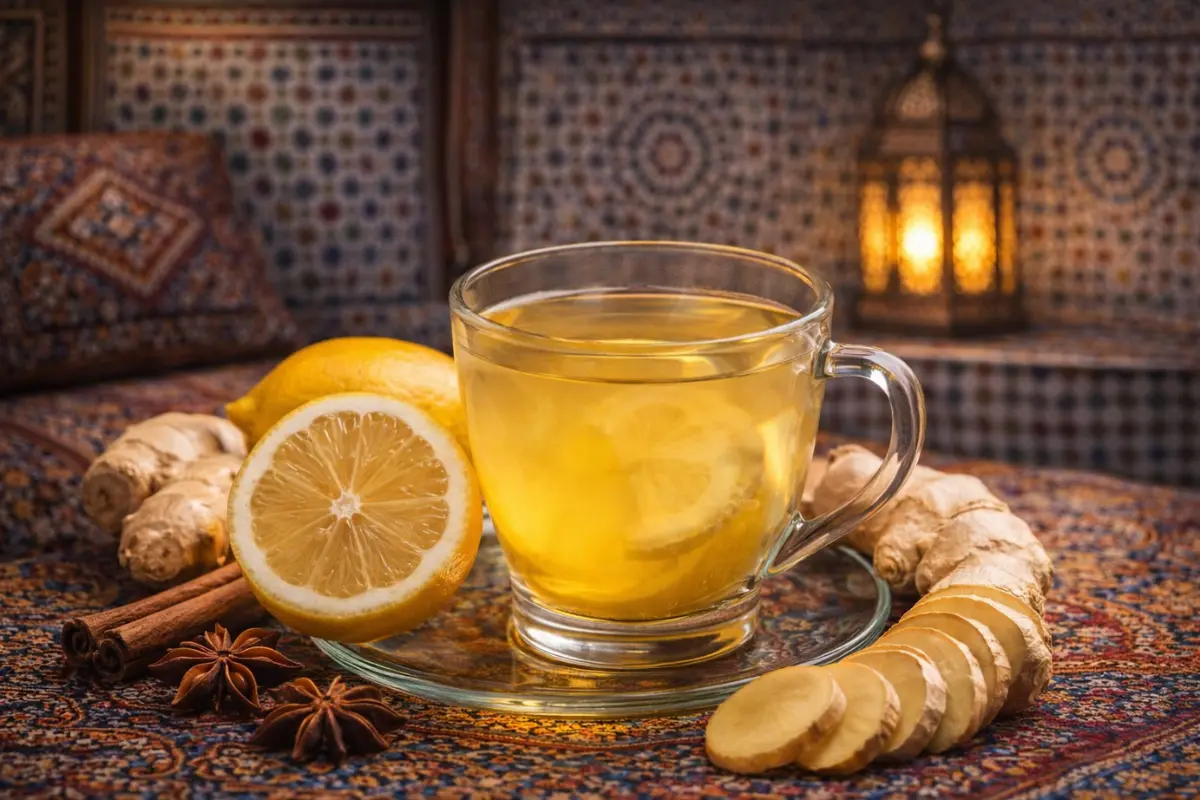
Ginger & Cinnamon Warming Tea is Morocco's answer to chilly days and sluggish mornings—a powerful, straightforward infusion that harnesses the thermogenic properties of two of nature's most warming spices. Unlike complex spice blends, this tea celebrates the perfect synergy between ginger's fiery pungency and cinnamon's sweet warmth, creating a beverage that feels like internal sunshine.
In Moroccan households from the Atlas Mountains to coastal cities, this tea serves multiple purposes: it's the morning pick-me-up for those who avoid caffeine, the after-meal digestive aid following rich tagines, the go-to remedy at the first sign of a chill or sore throat, and the comforting ritual on rainy winter afternoons. The preparation honors both spices' needs—ginger simmers to extract its deep heat, while cinnamon steeps gently to release its sweet complexity without bitterness.
What makes this tea distinctly Moroccan is the quality of ingredients and the understanding of their medicinal properties according to traditional wisdom. Moroccan ginger (often from the Souss region) is particularly pungent, while local cinnamon (typically Cassia) has robust warmth. Together they create a tea that's both simple and profound—each sip delivers immediate warmth that spreads through the body, stimulating circulation without caffeine's jittery effects. It's a testament to the Moroccan philosophy that food and drink should both nourish and heal, pleasure and purpose in one steaming cup.
About This Recipe
Ginger & Cinnamon Warming Tea embodies the practical, accessible side of Moroccan herbal tradition—a simple yet effective remedy that requires no rare ingredients or complex preparation. While Morocco has elaborate spice blends, this tea celebrates the power of two universally available spices. Ginger arrived in Morocco via ancient trade routes from Asia, quickly becoming valued both medicinally and culinarily. Cinnamon came through similar routes, with Cassia variety becoming preferred for its robust warmth. The combination likely emerged in common households rather than royal kitchens or apothecaries—a working person's remedy that required only ingredients most homes kept on hand. During Morocco's chilly winters, particularly in the unheated stone homes of mountain villages, this tea became essential daily medicine. It was—and remains—the first line of defense against chills, the preferred digestive after heavy meals, the morning energizer for those doing physical labor in cold conditions. Unlike mint tea which requires careful preparation and presentation, ginger-cinnamon tea is straightforward and forgiving, reflecting the practical wisdom of Moroccan home cooking. In recent decades, as scientific research has confirmed ginger's anti-inflammatory and digestive properties and cinnamon's blood sugar benefits, this traditional tea has gained new appreciation both within Morocco and internationally. Yet it remains essentially humble—a testament to how Moroccan cuisine finds profundity in simplicity, and how traditional knowledge often anticipates modern science. Today, it's equally at home in a Marrakech riad, a mountain village, or a Moroccan diaspora kitchen, always delivering the same reliable warmth that has comforted generations.
Nutrition / serving
Recipe Tags
Understanding the Ingredients
Fresh Ginger Root
The star of this tea, fresh ginger provides the primary heating effect and digestive benefits. Moroccan ginger from the Souss Valley is prized for its intense, spicy flavor and high gingerol content. The ginger should be firm, with smooth skin and a strong aroma when scratched. Older, fibrous ginger yields more complex flavor. Slicing thinly maximizes surface area for extraction. For stronger tea, grate the ginger—this releases more oils but may require straining. Never substitute dried ginger powder; it lacks the fresh, bright heat and can taste dusty.
Cinnamon (Cassia Bark)
Moroccan cinnamon is typically Cassia variety (Cinnamomum cassia), which has stronger, warmer characteristics than the more delicate Ceylon cinnamon. The bark should be broken into pieces rather than using ground cinnamon, which makes tea cloudy and can settle. Cassia provides sweet warmth that balances ginger's sharpness and adds blood-sugar stabilizing properties. A whole cinnamon stick also makes beautiful presentation. Some traditional versions include both bark pieces and a small amount of ground cinnamon for layered flavor.
Black Tea (Optional but Traditional)
While this can be made as purely herbal, many Moroccan households add a small amount of gunpowder green tea or Chinese black tea for depth and mild caffeine. The tea should be added after ginger has simmered, as it requires shorter steeping time. This addition transforms the drink from medicinal tea to daily beverage. If using, opt for high-quality loose leaf rather than tea bags.
Honey or Natural Sweetener
Ginger's natural spiciness benefits from sweetening, and honey provides its own warming properties. Orange blossom honey is particularly complementary. The honey should be added after brewing to preserve its enzymes and flavor. For those avoiding sugar, date syrup (rub) offers authentic Moroccan sweetness. The amount can vary based on ginger's heat—more pungent ginger may need more sweetener to balance.
Lemon or Orange
Citrus brightens the spices and adds vitamin C. Lemon is traditional for medicinal versions, while orange (especially blood orange in season) adds sweeter notes. The citrus can be added as juice after straining or as thin slices steeped with the spices. Some add both peel (for aroma) and juice (for brightness).
Step-by-Step Cooking Guide
Prepare Ginger and Cinnamon
5 minPeel a 3-inch piece of fresh ginger (about thumb-sized). Slice into thin rounds (approximately 20-25 slices) or grate coarsely for stronger tea. Break 2 cinnamon sticks into 1-inch pieces—you should hear a satisfying snap and release aroma. If using black tea, measure 1 tablespoon loose leaves or 2 tea bags. Prepare citrus: thinly slice half a lemon or orange, removing seeds.
Tip: Don't peel ginger too deeply—the skin just beneath contains flavor. Slicing against the grain exposes more fibers for better extraction. Breaking cinnamon rather than using powder ensures clear tea and controlled flavor release.
Simmer Ginger
10 minIn a saucepan, bring 4 cups (1 liter) of filtered water to a boil. Add sliced ginger and cinnamon pieces. Reduce heat to maintain a gentle simmer. Cook for 8-10 minutes, partially covered. The water will turn pale yellow and smell intensely of ginger. The longer you simmer, the stronger and spicier the tea will be.
Tip: Simmer, don't boil vigorously—gentle heat extracts flavors without driving off volatile compounds. Cover partially to prevent too much evaporation while allowing some steam to escape. Taste the liquid after 8 minutes to check strength.
Add Optional Black Tea
4 minIf using black tea, add it now. Remove saucepan from heat, add tea leaves or bags, cover completely, and let steep for 3-4 minutes only. Black tea becomes bitter if over-steeped or boiled. For purely herbal version, skip this step and proceed to next. The tea will deepen in color to amber-brown.
Tip: If using green tea instead of black, steep only 2 minutes as it's more delicate. The tea addition should be subtle—this isn't Moroccan mint tea but rather spice tea with tea background.
Strain and Add Citrus
2 minUsing a fine mesh strainer, strain the tea into a teapot or directly into cups. Press gently on ginger slices to extract remaining liquid. Discard solids (compost them). While tea is still hot, add lemon or orange slices to the pot or individual cups. If using citrus juice instead of slices, add now—about 1 tablespoon per cup.
Tip: Strain thoroughly—ginger fibers can continue releasing heat and become overpowering. The citrus will perfume the tea beautifully. For more citrus flavor, add some zest during the last minute of simmering.
Sweeten to Taste
2 minAdd honey to individual cups, starting with 1 teaspoon per cup, stirring until dissolved. Taste and adjust—the sweetener should balance the ginger's heat without masking it. For a festive touch, use honeycomb or flavored honey like ginger or cinnamon honey. Those preferring unsweetened can omit, though the spices are quite pungent without balancing sweetness.
Tip: Add honey when tea is drinkably hot but not scalding to preserve its beneficial properties. Let each person sweeten their own cup to preference. For diabetic-friendly version, use stevia or monk fruit.
Serve with Traditional Accompaniments
2 minPour into heatproof glasses or cups. The tea should be piping hot. Traditional Moroccan accompaniments include: dates (their sweetness complements the spices), plain almonds (protein balances the tea's stimulating effect), or a small piece of dark chocolate. Serve immediately, encouraging sipping rather than gulping to appreciate the evolving flavors.
Tip: Smaller servings (¾ cup) allow for refills and prevent the tea from cooling too much. Provide a small plate for ginger slices if anyone wants to nibble them—they're candied by the cooking and quite tasty.
Common Mistakes to Avoid
✗ Using Ground Ginger or Cinnamon
Fix: Ground spices create cloudy, gritty tea with unbalanced flavor release. They also settle at the bottom. Always use fresh ginger root and whole cinnamon sticks or broken pieces. The only exception is a pinch of ground cinnamon added at the end for aroma.
✗ Boiling Instead of Simmering
Fix: Vigorous boiling drives off ginger's volatile compounds and can make cinnamon bitter. After initial boil, reduce to gentlest simmer—just a few bubbles at the pot's edge. The ginger should dance gently in the water.
✗ Over-Steeping Black Tea
Fix: If adding black tea, steep only 3-4 minutes off heat. Over-steeping releases excessive tannins that overpower the spices and create bitterness. For green tea, only 2 minutes. Set a timer.
✗ Not Straining Thoroughly
Fix: Ginger fibers and cinnamon particles continue releasing flavor and can become overwhelming. Strain through fine mesh, and consider lining with cheesecloth for completely clear tea. Leftover particles also make the last sips unpleasantly strong.
✗ Adding Honey to Boiling Tea
Fix: High heat destroys honey's beneficial enzymes and delicate flavors. Let tea cool slightly (to about 60°C/140°F) before adding honey. Alternatively, add honey to the cup first, then pour tea over it.
Ingredient Substitutions
Instead of: Fresh Ginger
Use: 2 tablespoons grated frozen ginger (nearly as good) or 1 tablespoon dried ginger pieces (soak 10 minutes before using). Ginger powder (1.5 teaspoons) in a pinch but flavor is different.
Instead of: Cassia Cinnamon
Use: Ceylon cinnamon (softer flavor, use 3 sticks) or ½ teaspoon ground cinnamon added at end of steeping (will make tea cloudy).
Instead of: Black Tea
Use: Green tea (steep 2 minutes), rooibos (herbal, steep 5 minutes), or omit for purely herbal version. Chai tea blend changes character completely.
Instead of: Honey
Use: Date syrup (authentic Moroccan), maple syrup, coconut sugar, or stevia for sugar-free. Brown sugar works but lacks honey's floral notes.
Instead of: Lemon
Use: Orange (sweeter), lime (more tart), or 1 teaspoon apple cider vinegar (adds similar brightening effect). A strip of lemon verbena adds citrus notes.
Serving Suggestions
Serve first thing in morning as caffeine-free energy boost—the ginger stimulates circulation naturally.
After heavy meals like couscous or pastilla to aid digestion and prevent bloating.
During cold/flu season with extra lemon and honey as immune-supportive beverage.
Offer to guests arriving from cold weather as traditional Moroccan welcoming gesture.
Pair with Moroccan msemen (flatbread) with honey for comforting winter breakfast.
Serve in evening as warming nightcap—the spices promote circulation without disrupting sleep like caffeine.
Storage & Reheating
Storage
Ginger-cinnamon concentrate: simmer double-strength, strain, refrigerate up to 5 days. Add fresh citrus and sweetener when serving. Brewed tea: refrigerate up to 3 days.
Reheating
Reheat gently on stovetop until hot but not boiling. Microwave in short bursts. Do not reboil as it makes spices bitter. Add fresh citrus after reheating.
For daily use, keep ginger sliced in freezer—ready to use without thawing. Make ice cubes of the tea for iced ginger-cinnamon tea in summer. The concentrate mixed with sparkling water makes excellent spicy soda.
Frequently Asked Questions
Recipe by

Mohammed Benali
محمد بن علي
Beverage Specialist
View all recipes by Mohammed →
You May Also Like
Our Ebooks

The Moroccan Vegan
$12.56

Tables of Fez: A Royal Palace Legacy
$22.99

The Soul of Morocco
$20.00
YouTube
Watch step-by-step cooking videos and learn traditional Moroccan techniques.
450+
Subscribers
150+
Videos