
120
Prep (min)
25
Cook (min)
2
Servings
Medium
Level
Introduction
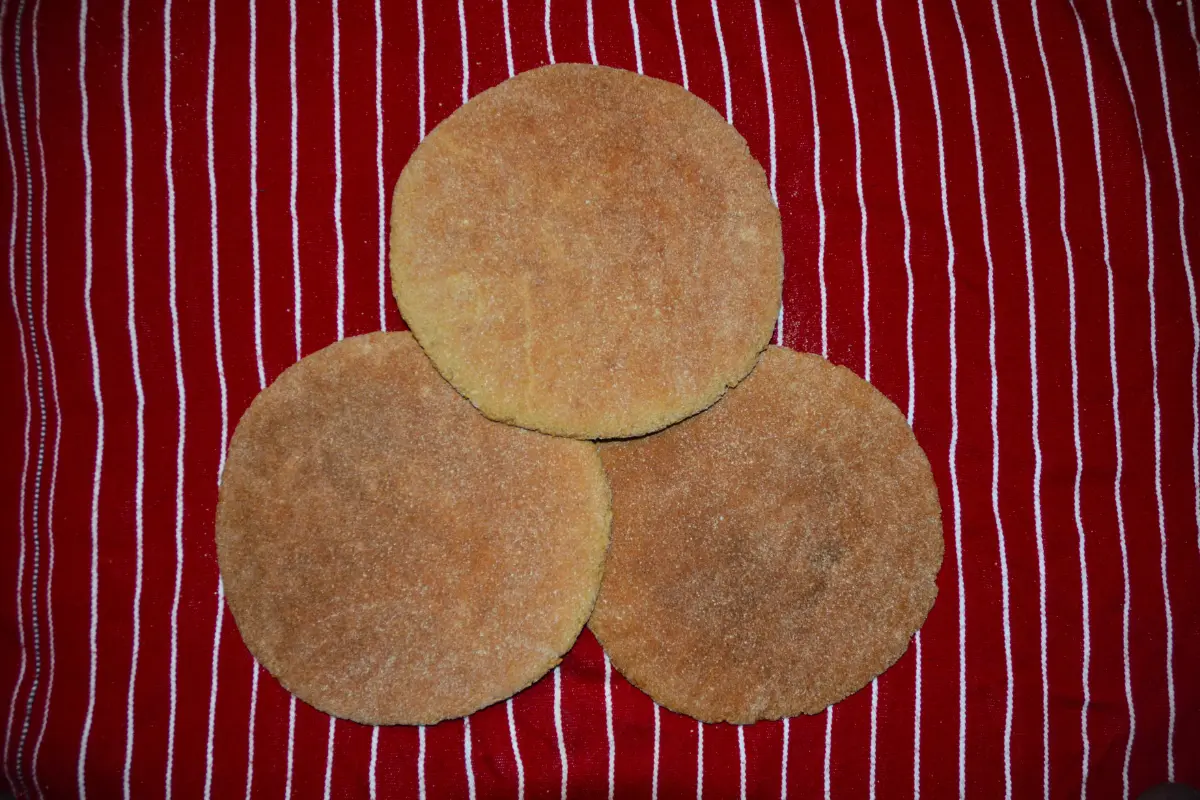
Khobz is not just bread in Morocco—it is utensil, plate, sustenance, and tradition all in one. This round, slightly dense loaf with its distinctive cross-hatched pattern is the heartbeat of Moroccan meals, present at breakfast, lunch, and dinner, on humble tables and festive spreads alike. The word 'khobz' simply means 'bread' in Arabic, but in Morocco it refers specifically to this style: a substantial, crusty yet tender round that serves as the primary eating implement for scooping tagines, sopping up sauces, wiping plates clean, and conveying food from communal dish to mouth. In a culture where eating with hands is not just accepted but preferred for many dishes, khobz is the perfect vehicle—sturdy enough to hold a chunk of meat and vegetables without disintegrating, yet soft enough to tear easily and absorb flavorful sauces. Making khobz at home connects you to centuries of Moroccan daily life: the rhythmic kneading that generations of Moroccan women have performed, the distinctive slashing pattern that allows steam to escape and creates that perfect crust, the anticipation as the kitchen fills with the incomparable aroma of baking bread. Unlike French baguettes or Italian ciabatta, khobz is not meant to be the star of the meal but the indispensable supporting actor—neutral in flavor to complement rather than compete, substantial enough to satisfy hunger, and versatile enough for any meal. The crust should be firm and crisp, yielding to a tender, slightly chewy interior with irregular air pockets from proper fermentation. While commercial bakeries produce khobz across Morocco, homemade versions carry a particular warmth and love, often slightly irregular in shape, with that homemade character that mass production cannot replicate. Baking khobz is a meditation in patience and technique, from the slow fermentation that develops flavor to the precise steam in the oven that creates the perfect crust. This bread embodies Moroccan values of hospitality and resourcefulness—nothing wasted, everything shared, simple ingredients transformed through skill into something essential.
About This Recipe
Khobz is the soul of Moroccan cuisine, a bread so fundamental that its story intertwines with the history of Morocco itself. Its origins trace back to ancient Berber communities who cultivated wheat in the fertile plains of North Africa thousands of years ago. The Berbers developed simple flatbreads cooked on hot stones, which evolved as new technologies and cultural influences arrived. With the Arab conquest in the 7th century came the Arabic word 'khubz' (خبز) for bread and new baking techniques, including the dome-shaped clay ovens that would become central to Moroccan bread culture. By the medieval period, khobz had taken its distinctive round form with cross-hatched scoring—a practical design that allowed even baking and easy tearing for communal eating. Throughout Moroccan history, khobz was more than food; it was economic indicator, social ritual, and cultural identifier. The quality and size of one's khobz reflected social status, with elaborate decorative scoring appearing on bread for special occasions. In cities, communal ovens ('ferran') became social hubs where women gathered not just to bake but to exchange news, arrange marriages, and maintain community bonds. The ferran keeper became a respected community member, knowing each family's preferred baking time and dough characteristics. During French colonization, European-style breads entered Moroccan cities, but khobz remained the people's bread, resistant to change in rural areas and traditional households. The distinctive cross-hatch scoring served practical purposes: it allowed steam escape for even rise, created more surface area for crispiness, and made tearing into portions easier. Each region developed variations: in the north, khobz might be flatter; in the Sahara, it might incorporate barley or millet; in the Atlas Mountains, it might be baked in ashes. The bread's role in Moroccan society was codified in customs: it was considered haram (forbidden) to waste bread or place it upside down; bread was used to seal promises; crumbs were carefully collected and returned to earth. During Ramadan, khobz consumption patterns changed but its importance increased—used to break the fast with dates and milk, or in hearty harira soup. As Morocco modernized in the 20th century, commercial bakeries proliferated, but many households maintained the tradition of Friday khobz-making, often the only day when time allowed for the slow process. The knowledge passed matrilineally: grandmothers teaching mothers teaching daughters the feel of properly hydrated dough, the sound of correctly fermented dough, the scent of perfectly baked bread. With urbanization and women entering the workforce, khobz-making declined in cities but saw revival as cultural heritage became valued. Today, khobz exists in dual reality: mass-produced uniform rounds in plastic bags at supermarkets, and artisanal loaves from neighborhood ferran where the baker still knows customers by name. It appears in diaspora communities worldwide, a taste of home that connects Moroccans abroad to their roots. UNESCO's recognition of Moroccan food culture includes bread-making traditions, acknowledging khobz as intangible cultural heritage. More than sustenance, khobz represents Moroccan identity: round like the family circle, scored like the intricate patterns in zellij tiles, shared like hospitality, enduring like tradition. In a rapidly changing world, the familiar weight of a khobz in hand, the sound of its crust cracking, the comfort of tearing a piece to scoop a flavorful tagine—these remain constants, connecting modern Moroccans to centuries of shared meals and memories.
Nutrition / serving
Recipe Tags
Understanding the Ingredients
Bread Flour or All-Purpose Flour
600g (about 5 cups) of bread flour or good quality all-purpose flour forms the base. Bread flour (with 12-14% protein) yields chewier texture and better oven spring, while all-purpose (10-12% protein) creates slightly tender crumb. Some traditional recipes combine white flour with fine semolina (smida) for distinctive texture and flavor. The flour should be fresh and unbleached for best results.
Active Dry Yeast
7g (2¼ teaspoons) of active dry yeast. Unlike instant yeast, this needs activation in warm water. Some Moroccan home bakers use fresh yeast (20g) for more complex flavor. The yeast should be foamy after activation—if not, it's dead and should be replaced. A pinch of sugar in the activation water feeds the yeast but isn't strictly necessary.
Warm Water
Approximately 360ml (1½ cups) of warm water (105-115°F / 40-46°C). Temperature is critical—too hot kills yeast, too cold slows fermentation. The exact amount varies with flour absorption and humidity. Some recipes replace a small portion with milk for softer crust, though not traditional. The water should feel warm to wrist, not hot.
Salt
10g (about 1¾ teaspoons) of fine sea salt or kosher salt. Salt controls yeast activity, strengthens gluten, and is essential for flavor. Add after initial mixing to avoid direct contact with yeast. Traditional Moroccan khobz is moderately salted—enough to enhance flavor without being salty.
Olive Oil (Optional)
2 tablespoons olive oil or vegetable oil enriches dough, makes it more pliable, and yields slightly softer crust. Some traditional recipes use no oil for more rustic texture. If using, add after initial mixing. A little oil brushed on risen loaves before baking enhances browning.
Semolina or Cornmeal for Dusting
Fine semolina (smida) or cornmeal for dusting baking surface prevents sticking and gives authentic bottom crust. Semolina is traditional and provides pleasant texture. Don't use flour for dusting baking surface—it burns at high oven temperature.
Step-by-Step Cooking Guide
Activate Yeast
10 minIn small bowl, combine ¼ cup warm water (105-115°F), 2¼ teaspoons active dry yeast, and pinch of sugar. Stir gently. Let stand 5-10 minutes until foamy and creamy. If mixture doesn't foam, yeast is dead—start over with fresh yeast. Meanwhile, measure flour and salt.
Tip: Water should feel warm to wrist, like baby bottle temperature. Sugar feeds yeast but can be omitted.
Mix Dough
5 minIn large mixing bowl, combine 600g flour and 1¾ teaspoons salt. Make well in center. Pour activated yeast mixture, remaining 1¼ cups warm water, and 2 tablespoons olive oil (if using) into well. Using wooden spoon or hands, mix until shaggy mass forms and no dry flour remains. Dough will be sticky.
Tip: Mix in bowl until no dry spots remain before kneading. Don't add extra flour yet—dough will become less sticky during kneading.
Knead Until Smooth and Elastic
20 minTurn dough onto lightly floured surface. Knead vigorously for 15-20 minutes: push dough away with heel of hand, fold back, rotate quarter turn, repeat. Alternatively, use stand mixer with dough hook 10-12 minutes on medium speed. Dough is ready when smooth, elastic, and passes windowpane test: stretch small piece thin enough to see light through without tearing. It should be slightly tacky but not sticky.
Tip: Full kneading time is essential for proper gluten development. Set timer—it's longer than many breads. Add minimal flour during kneading.
First Rise (Bulk Fermentation)
120 minShape kneaded dough into smooth ball. Lightly oil clean bowl, place dough in bowl, turn to coat with oil. Cover with damp kitchen towel or plastic wrap. Let rise in warm, draft-free place 1½-2 hours until doubled in size. Ideal temperature: 75-80°F (24-27°C). For slower fermentation and better flavor, refrigerate 8-24 hours, then bring to room temperature 1 hour before shaping.
Tip: Test readiness: finger pressed into dough leaves indentation that doesn't spring back. Longer, slower rise improves flavor.
Divide and Pre-shape
20 minPunch down risen dough gently to release air. Turn onto lightly floured surface. Divide into 2 equal pieces (about 500g each). Shape each into rough ball by pulling edges to center and pinching. Cover with damp towel, let rest 15 minutes—this relaxes gluten for final shaping.
Tip: Use kitchen scale for even loaves. Handle dough gently to preserve air bubbles for open crumb.
Final Shaping
10 minTake one dough ball. On unfloured surface, cup hands around dough and rotate in circular motion, tucking edges underneath to create surface tension. Place seam-side down. Repeat with second ball. The loaf should be round and taut but not tight. Place shaped loaves on baking sheet dusted with semolina, spaced apart. Cover with damp towel.
Tip: Surface tension creates better oven spring. Seam should be completely sealed on bottom. Handle gently.
Second Rise (Proofing)
60 minLet shaped loaves rise, covered, 45-60 minutes until puffy and about 1½ times original size. They should feel light and airy. Meanwhile, place pizza stone or inverted baking sheet on middle oven rack. Place empty roasting pan on bottom rack. Preheat oven to 450°F (230°C) for at least 30 minutes.
Tip: Don't overproof or loaves collapse in oven. They should spring back slowly when gently poked.
Score and Steam
5 minUsing sharp lame, razor blade, or very sharp knife, score loaves with traditional Moroccan pattern: make 3-4 parallel cuts about ½ inch deep, then 3-4 perpendicular cuts to create cross-hatch pattern. Brush loaves lightly with water. Just before baking, pour 1 cup hot water into preheated roasting pan (creates steam for crust). Immediately transfer loaves to hot pizza stone using semolina-dusted peel or inverted baking sheet.
Tip: Scoring must be decisive and quick. Steam is crucial for crisp crust. Be careful of steam when adding water to pan.
Bake
25 minBake at 450°F (230°C) for 20-25 minutes. After 15 minutes, rotate loaves for even browning. Loaves are done when deep golden brown, sound hollow when tapped on bottom, and internal temperature reaches 200-210°F (93-99°C). For extra crisp crust, turn off oven, prop door open slightly, and let loaves sit 5 minutes.
Tip: Oven thermometer ensures accurate temperature. Don't open oven door first 15 minutes. If browning too fast, tent with foil.
Cool and Store
120 minTransfer baked loaves to wire rack. Cool completely before slicing (at least 2 hours)—cutting warm bread makes it gummy. For soft crust, wrap in cloth while cooling. For crisp crust, cool uncovered. Store completely cooled loaves in paper bag at room temperature up to 2 days. For longer storage, freeze.
Tip: Cooling is essential for texture development. Resist temptation to cut while warm. Day-old khobz makes excellent toast.
Common Mistakes to Avoid
✗ Under-kneading Dough
Fix: Khobz requires thorough kneading (15-20 minutes by hand) for proper gluten development. Under-kneaded dough results in dense, flat bread without proper oven spring or airy crumb. Knead until smooth, elastic, and passing windowpane test.
✗ Incorrect Water Temperature for Yeast
Fix: Water too hot (over 120°F/49°C) kills yeast; too cold (under 100°F/38°C) slows activation dramatically. Use thermometer or wrist test: should feel warm like baby bottle, not hot. Ideal: 105-115°F (40-46°C).
✗ Overproofing Second Rise
Fix: Second rise should be 45-60 minutes until puffy, not doubled. Overproofed loaves collapse when scored and bake flat with dense texture. Watch closely—they should feel light but still hold shape when poked gently.
✗ Not Creating Steam in Oven
Fix: Steam during first 10 minutes of baking is essential for crisp, shiny crust and proper oven spring. Without steam, crust forms too early, limiting rise and creating pale, tough crust. Always use roasting pan with water or spray loaves with water.
✗ Cutting Bread While Warm
Fix: Cutting khobz before completely cooled (minimum 2 hours) releases steam prematurely, making crumb gummy and dense. The bread continues cooking and setting as it cools. Wait until completely cool to slice.
✗ Incorrect Oven Temperature
Fix: Oven must be fully preheated to 450°F (230°C) with baking stone/steel for proper heat transfer. Underheated oven yields pale, dense bread. Use oven thermometer to verify temperature, not just dial setting.
✗ Shallow or Hesitant Scoring
Fix: Scoring must be confident and deep enough (½ inch) to allow proper expansion. Shallow scores seal quickly, causing irregular bursting. Use sharp blade, cut quickly at 30-degree angle. Traditional cross-hatch pattern is both decorative and functional.
Ingredient Substitutions
Instead of: Bread Flour
Use: All-purpose flour works with slightly less chewy texture. For whole wheat version, replace up to 30% with whole wheat flour—add extra water as whole wheat absorbs more. Semolina flour can replace up to 20% for authentic Moroccan texture.
Instead of: Active Dry Yeast
Use: Instant yeast: same amount mixed directly with dry ingredients. Fresh yeast: 20g crumbled into warm water. Sourdough starter: 200g active starter, reduce water by 100g and flour by 100g, increase rise time.
Instead of: Olive Oil
Use: Any neutral oil, melted butter, or omitted entirely for more rustic texture. Traditional Moroccan khobz often uses no fat.
Instead of: Pizza Stone
Use: Upside-down heavy baking sheet, cast iron skillet, or unglazed quarry tiles. For no special equipment, bake directly on baking sheet but expect less crisp bottom crust.
Serving Suggestions
Tear pieces to scoop tagines, stews, and sauces—traditional Moroccan eating style.
Slice horizontally, fill with grilled meats, salads, or omelets for sandwiches.
Toast and serve with olive oil, honey, or amlou (almond-argan butter) for breakfast.
Use as base for pizza or topped breads with zaalouk, cheese, or meats.
Cut into chunks for fondue or cheese dipping.
Make breadcrumbs for coating or stuffing after drying.
Serve with Moroccan salads (takttouka, carrot salad) as part of mezze.
Use day-old khobz for fattoush-style bread salad with vegetables and dressing.
Dip in harira soup during Ramadan or cold weather.
Grill or toast, rub with garlic, and drizzle with olive oil for Moroccan bruschetta.
Storage & Reheating
Storage
Cool completely before storing. Room temperature: paper bag or bread box 1-2 days (best day 1). Never plastic bag at room temperature—creates soggy crust. Refrigerator: not recommended (accelerates staling). Freezer: wrap tightly in plastic, then foil, freeze up to 3 months. Slice before freezing for easy use.
Reheating
Room temperature: refresh in 350°F (175°C) oven 5-10 minutes until crisp. Frozen: thaw at room temperature 2-3 hours, then refresh as above. Microwave: wrap in damp paper towel, heat 15-20 seconds (can become rubbery). Toaster: works for sliced khobz.
Khobz stales quickly due to no preservatives. Freeze if not eating within 24 hours. Refresh just before serving. Stale khobz makes excellent bread pudding, croutons, or bread crumbs.
Frequently Asked Questions
Recipe by

Abdrahman Idrissi
عبد الرحمن الإدريسي
Pastry & Bread Chef
View all recipes by Abdrahman →
You May Also Like
Our Ebooks

The Moroccan Vegan
$12.56

Tables of Fez: A Royal Palace Legacy
$22.99

The Soul of Morocco
$20.00
YouTube
Watch step-by-step cooking videos and learn traditional Moroccan techniques.
450+
Subscribers
150+
Videos