
25
Prep (min)
90
Cook (min)
6
Servings
Medium
Level
Introduction
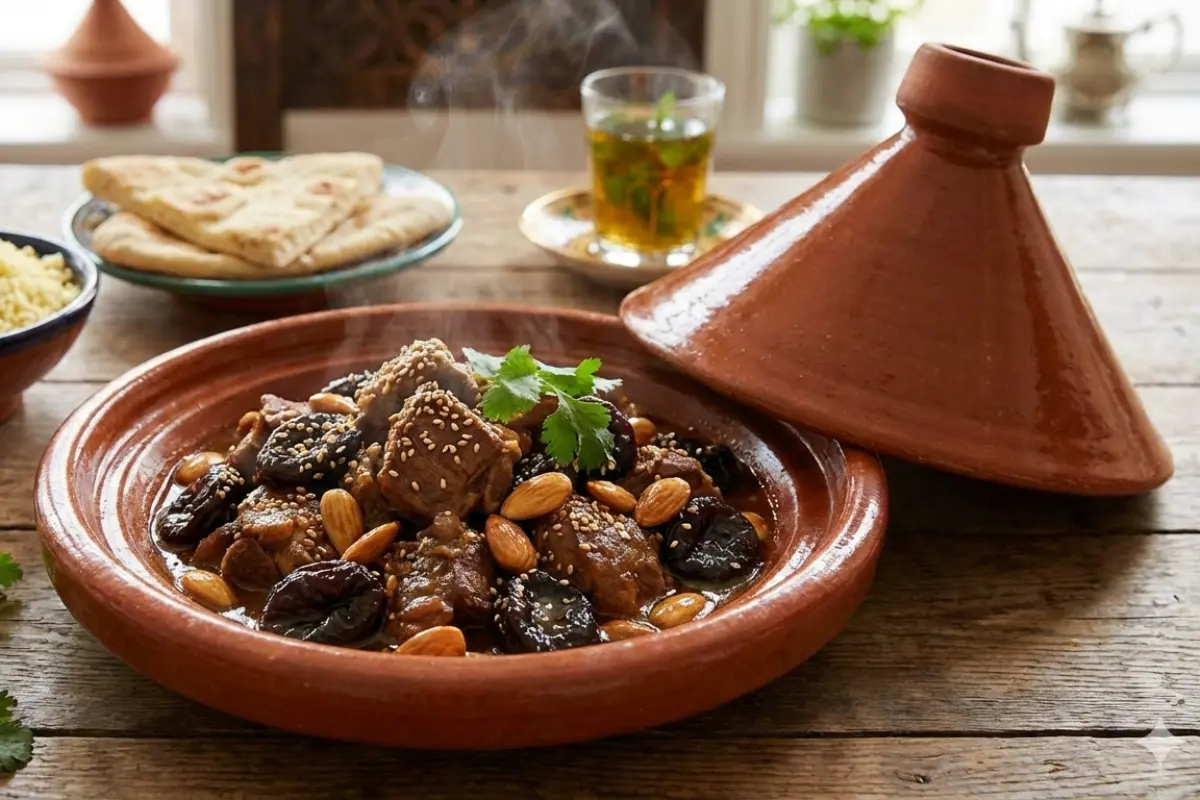
Lamb Tagine with Prunes and Almonds is the crown jewel of Moroccan festive cooking, a dish that perfectly embodies the Moroccan philosophy of balancing sweet with savory, richness with brightness. This tagine, with its origins in the royal kitchens of Marrakech, transforms humble ingredients into a luxurious feast through patient slow-cooking and masterful spice blending.
The magic of this dish lies in its harmonious contrasts: the deep, gamey richness of lamb shoulder marries with the honeyed sweetness of prunes, while warm spices like cinnamon and ginger bridge these flavors with aromatic complexity. Toasted almonds add crucial texture, and a hint of orange blossom water provides a delicate floral finish that lifts the entire dish. Traditionally served at weddings, religious holidays, and important family gatherings, this tagine represents more than just a meal—it is an expression of generosity, celebration, and culinary heritage.
Cooking this tagine is an exercise in patience and layering. The lamb must be given time to become fork-tender, the sauce must reduce to a glossy, syrupy consistency, and the spices must be given the respect to bloom fully. While the ingredient list may seem elaborate, each element plays a specific role in creating the final, unforgettable symphony of flavors. Whether you are observing a special occasion or simply wish to bring a taste of Moroccan celebration to your table, this tagine promises a deeply satisfying and memorable culinary experience.
About This Recipe
Lamb Tagine with Prunes and Almonds holds a place of honor in Moroccan culinary history, particularly associated with the city of Marrakech and its royal heritage. The dish reflects ancient Moroccan trade routes, combining locally raised lamb with dried fruits (prunes from the Fes region, almonds from the Atlas Mountains) and spices from across the Sahara. Historically served during Eid al-Adha (Festival of Sacrifice) and at wedding feasts, this tagine symbolizes prosperity, generosity, and celebration. The sweet-savory combination represents the Moroccan philosophy of balancing contrasting elements to create harmony—a principle found in both cuisine and architecture. Over centuries, each family has developed subtle variations, with some adding fried sesame seeds, others using caramelized onions, but the core elements remain constant, connecting modern tables to generations of Moroccan hospitality.
Nutrition / serving
Recipe Tags
Understanding the Ingredients
Lamb Shoulder
The ideal cut for tagine, lamb shoulder contains both meat and fat in perfect proportion. As it cooks slowly, the connective tissue breaks down into gelatin, resulting in exceptionally tender, flavorful meat that falls apart with minimal pressure. Choose shoulder cut into large 2-inch cubes, keeping some fat for flavor and moisture. The bone-in variety adds even more depth to the sauce, though boneless is perfectly acceptable. Avoid lean cuts like leg, which can dry out during long cooking.
Dried Prunes
Prunes are not merely dried plums here; they are the sweet counterpoint that defines the dish. Moroccan cuisine often uses prunes preserved with a hint of cinnamon or orange. Look for moist, plump prunes with a glossy sheen. Soaking them briefly in warm water or tea before use plumps them further and prevents them from absorbing too much sauce during cooking. Their natural sweetness balances the savory spices and rich lamb, while their texture provides a pleasant contrast to the tender meat.
Toasted Almonds
Blanched almonds, lightly fried or toasted until golden, provide essential crunch and nutty richness that contrasts with the soft textures of the lamb and prunes. In Moroccan tradition, the almonds are often fried in a small amount of oil or butter until lightly golden, then drained on paper towels. This step intensifies their flavor and gives them a satisfying crispness that holds up even when sprinkled on the hot tagine. Slivered almonds work beautifully, but whole blanched almonds make a more dramatic presentation.
Honey and Spices
This tagine uses a distinctive spice blend centered on cinnamon and ginger, with turmeric for color and depth. Saffron threads, though optional, add a regal touch and subtle fragrance. Honey is the sweetener of choice—preferably orange blossom honey if available—which integrates seamlessly into the sauce, adding shine and a floral note. The spices should be fresh and vibrant; their warmth should complement, not overwhelm, the natural flavors of the lamb and fruit. Blooming them in oil with onions awakens their full aromatic potential.
Onions and Aromatics
A generous amount of finely grated or chopped onions melts into the sauce, providing natural sweetness and body without needing flour or thickeners. The onion base, cooked slowly until golden and caramelized, forms the foundation of the sauce. Fresh ginger and garlic are indispensable, adding pungent warmth that cuts through the richness. Some traditional recipes also include a stick of cinnamon and a pinch of saffron soaked in warm water, added early to perfume the entire dish.
Orange Blossom Water
A few drops of orange blossom water (ma zhar) added at the end of cooking provide the signature Moroccan floral note that elevates this tagine from excellent to extraordinary. It should be used with discretion—too much can taste perfumy, but just the right amount (usually 1-2 teaspoons) adds an ethereal fragrance that ties all the flavors together. This ingredient is widely available in Middle Eastern markets and is a hallmark of authentic Moroccan sweet tagines.
Step-by-Step Cooking Guide
Prepare the Lamb and Aromatics
15 minPat the lamb shoulder cubes thoroughly dry with paper towels. Season generously on all sides with salt and black pepper. Allow to rest at room temperature for 20 minutes. Meanwhile, finely grate or chop the onions until they almost resemble a paste—this traditional technique helps them dissolve completely into the sauce. Mince the garlic and grate the fresh ginger. If using saffron, soak the threads in ¼ cup of warm water to release their color and aroma.
Tip: For extra depth, you can marinate the lamb with a tablespoon of olive oil, grated onion, and a pinch of the spices for 1-2 hours in the refrigerator. Bring back to room temperature before cooking.
Brown the Lamb in Batches
12 minHeat 2 tablespoons of olive oil or smen (clarified butter) in a heavy-bottomed tagine or Dutch oven over medium-high heat. Working in batches to avoid overcrowding, brown the lamb cubes on all sides, about 4-5 minutes per batch, developing a deep golden crust. Transfer browned lamb to a plate. Do not discard the flavorful fond at the bottom of the pot—this will become the base of your sauce.
Tip: Resist moving the lamb too soon. Let it form a proper sear before turning. If the fond starts to burn, reduce the heat slightly. The fond is flavor gold.
Build the Onion and Spice Base
12 minReduce heat to medium. Add the remaining tablespoon of oil or butter to the pot, then add the grated onions. Cook, stirring frequently, for 8-10 minutes until they soften, turn golden, and most of their moisture evaporates. Add the minced garlic and grated ginger, stirring for 1 minute until fragrant. Now add the ground cinnamon, ginger, turmeric, and optional black pepper. Stir constantly for 60 seconds to toast the spices and awaken their oils.
Tip: If the onions stick, add a splash of water to deglaze. The goal is golden, sweet onions, not crispy or burned ones.
Combine and Begin Slow Cooking
75 minReturn the browned lamb and any accumulated juices to the pot. Add the soaked saffron with its water (or plain warm water if not using saffron). Add enough water or light beef broth to come about halfway up the lamb pieces. Add the cinnamon stick if using. Bring to a bare simmer, then immediately reduce heat to the lowest possible setting. Cover tightly and simmer gently for 1 hour and 15 minutes, checking occasionally to ensure it's not boiling.
Tip: The liquid should barely shimmer with tiny bubbles. Vigorous boiling will toughen the meat. If using a clay tagine, use a heat diffuser to prevent cracking.
Prepare and Add the Prunes
25 minWhile the lamb simmers, place the prunes in a bowl and cover with hot water or warm tea. Let steep for 15 minutes to plump, then drain. After the lamb has cooked for 1 hour and 15 minutes, add the drained prunes and honey to the pot. Stir very gently to combine without breaking the prunes. Continue simmering uncovered for another 20-25 minutes, allowing the sauce to reduce and thicken to a glossy, syrupy consistency.
Tip: The sauce is ready when it coats the back of a spoon and leaves a clear trail when you run your finger through it. If it's too thin, increase heat slightly and reduce further.
Final Seasoning and Garnish
10 minOnce the sauce has reached the desired consistency, stir in the orange blossom water and toasted almonds, reserving a few almonds for garnish. Taste and adjust seasoning with salt if needed—remember the sauce is meant to be sweet-savory. The lamb should be extremely tender, almost shredding with a fork. Remove the cinnamon stick. Let the tagine rest off the heat for 5-10 minutes before serving to allow the flavors to settle.
Tip: Add the orange blossom water off the heat to preserve its delicate fragrance. Garnish with the reserved toasted almonds and a light dusting of cinnamon for presentation.
Common Mistakes to Avoid
✗ Rushing the Browning Process
Fix: Proper browning creates the Maillard reaction, essential for deep flavor. Brown in batches, pat meat dry first, and don't move it until a crust forms. This step cannot be hurried.
✗ Boiling Instead of Simmering
Fix: Lamb shoulder needs gentle, slow heat to break down connective tissue without toughening. After bringing to a simmer, reduce heat to the lowest setting where you see only occasional small bubbles.
✗ Adding Prunes Too Early
Fix: Prunes added at the beginning will disintegrate and make the sauce overly sweet and muddy. Add them only during the last 20-25 minutes to maintain their shape and balanced sweetness.
✗ Sauce Too Thin or Too Thick
Fix: If sauce is too thin after cooking, remove meat and prunes temporarily and reduce sauce over medium heat. If too thick, add warm water a tablespoon at a time. The ideal consistency is like warm honey.
✗ Overusing Orange Blossom Water
Fix: This potent floral water should be a background note, not the main flavor. Start with 1 teaspoon, taste, then add more if desired. It should enhance, not dominate.
Ingredient Substitutions
Instead of: Lamb Shoulder
Use: Beef chuck roast or short ribs can be used, though the flavor profile will change. Cooking time may need adjustment. For a quicker version, use lamb neck fillets or stew meat, but reduce cooking time to prevent drying.
Instead of: Prunes
Use: Dried apricots, figs, or a mix of dried fruits can be used, though each will change the character of the dish. Apricots will be tangier, figs earthier. Adjust sweetness (honey) accordingly.
Instead of: Orange Blossom Water
Use: Rose water can provide a different but equally Moroccan floral note. Use even more sparingly. If neither is available, a teaspoon of orange zest added at the end can provide a citrus lift.
Instead of: Honey
Use: Date syrup (rub) is a traditional Moroccan sweetener that adds deeper, caramel-like notes. Maple syrup or brown sugar can work in a pinch, but will taste less authentic.
Instead of: Saffron
Use: A pinch of turmeric will provide color but not the distinctive aroma. Alternatively, omit entirely. Do not use artificial saffron coloring.
Serving Suggestions
Serve the tagine over a mound of fluffy, buttery couscous steamed with a pinch of salt and a drizzle of olive oil. The couscous will absorb the glorious sauce perfectly.
Traditional Moroccan bread like khobz or msemen is essential for scooping up every last bit of sauce and meat from the tagine plate.
Accompany with a simple salad of orange slices, red onion, and olives dressed with olive oil and a pinch of cumin for a refreshing contrast to the rich tagine.
Garnish with extra toasted almonds and a sprinkle of sesame seeds for added texture and visual appeal.
Serve with glasses of sweet mint tea before and after the meal to cleanse the palate and enhance the dining experience.
Storage & Reheating
Storage
Cool the tagine completely, then transfer to an airtight container. Refrigerate for up to 3 days—the flavors improve remarkably overnight. For longer storage, freeze for up to 2 months. Thaw overnight in the refrigerator before reheating.
Reheating
Reheat gently on the stovetop over low heat, adding a tablespoon or two of water if the sauce has thickened too much. Stir occasionally until heated through. Alternatively, reheat covered in a 300°F (150°C) oven for 15-20 minutes. Microwave reheating is possible but may slightly alter the texture of the prunes.
The prunes will continue to absorb liquid in storage. When reheating, you may need to add more liquid than expected. Always taste and adjust seasoning after reheating, as flavors can mellow. Add a fresh sprinkle of toasted almonds and a drop of orange blossom water before serving leftovers to revive the aromas.
Frequently Asked Questions
Recipe by

Fatima El Amrani
فاطمة العمراني
Master Chef
View all recipes by Fatima →
You May Also Like
Our Ebooks

The Moroccan Vegan
$12.56

Tables of Fez: A Royal Palace Legacy
$22.99

The Soul of Morocco
$20.00
YouTube
Watch step-by-step cooking videos and learn traditional Moroccan techniques.
450+
Subscribers
150+
Videos