
20
Prep (min)
15
Cook (min)
6
Servings
Easy
Level
Introduction
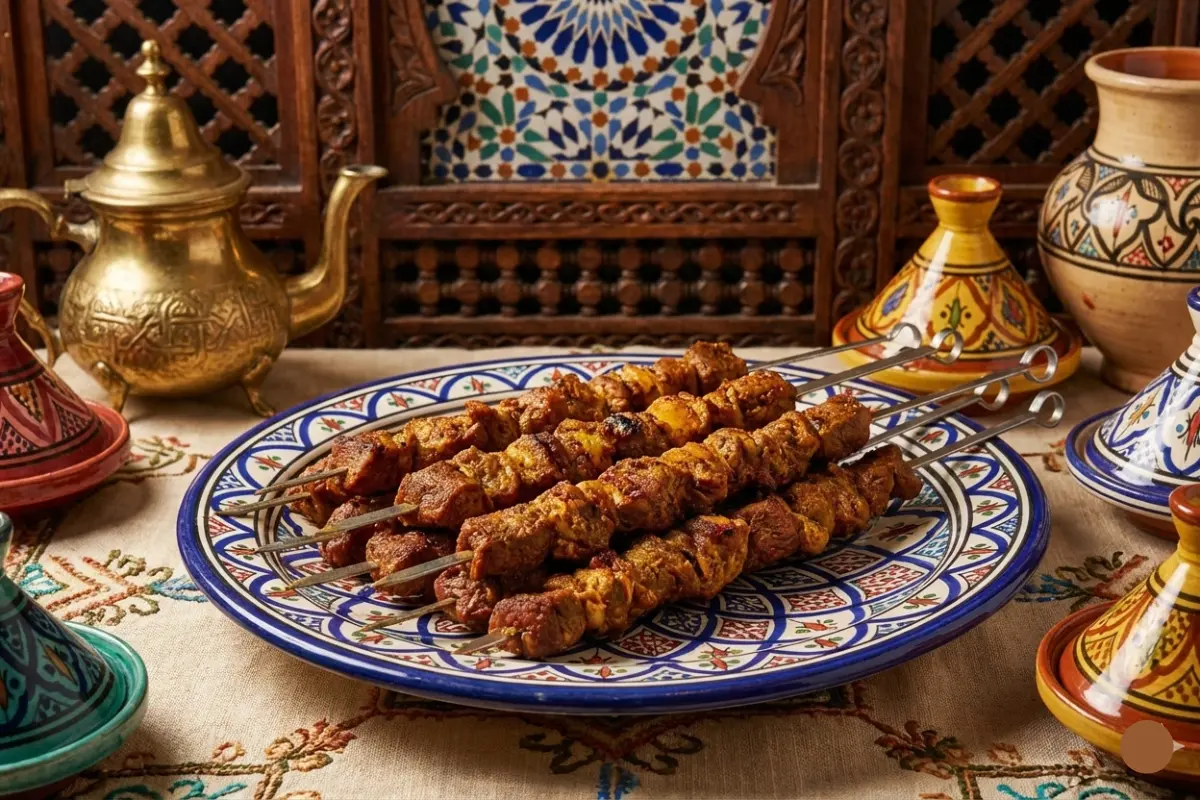
Moroccan brochettes (or qwadem/qodem as they're called in Moroccan Arabic) represent one of the country's most beloved and ubiquitous street foods - skewers of succulent, marinated beef grilled over charcoal until the exterior achieves a beautiful char while the interior remains juicy and tender, perfumed with cumin, paprika, garlic, and fresh herbs. Walk through any Moroccan medina, souk, or neighborhood on a summer evening and you'll encounter the irresistible sight and aroma of brochettes sizzling over glowing coals at street-side grills, with vendors expertly turning the skewers while calling out to passersby. The scent of charring meat mingled with cumin and smoke is one of Morocco's most evocative and hunger-inducing aromas, capable of stopping pedestrians in their tracks and drawing crowds around popular vendors whose reputations are built on their particular marinades and grilling techniques.
What makes Moroccan brochettes so appealing is their perfect balance of simplicity and flavor. Unlike elaborate tagines that simmer for hours or complex pastries that require specialized skill, brochettes are fundamentally straightforward - good quality beef, a well-balanced marinade of Moroccan spices and aromatics, proper threading on skewers, and hot, fast grilling over charcoal. Yet this simplicity is deceptive, as the difference between mediocre and exceptional brochettes lies in the details: the quality and cut of the beef, the proper balance of the marinade, sufficient marinating time for flavor penetration, and the crucial technique of grilling hot and fast to develop char while keeping the interior juicy. The marinade is characteristically Moroccan - cumin provides earthy depth, paprika adds color and mild sweetness, fresh cilantro and parsley provide brightness, garlic adds pungent depth, and olive oil carries these flavors while helping to tenderize and prevent sticking.
Brochettes occupy a unique place in Moroccan food culture - they bridge the gap between everyday street food and celebration cuisine. On any given evening, workers stopping for a quick dinner grab a few skewers with bread and harissa from street vendors. During weekends and holidays, families prepare brochettes at home for backyard barbecues and rooftop gatherings. At celebrations and parties, platters of brochettes appear alongside salads and bread as casual, festive fare that everyone loves. The communal, hands-on nature of eating brochettes - pulling tender meat off skewers, wrapping it in warm bread, dipping in cumin or harissa - creates an inherently social, convivial eating experience that embodies Moroccan hospitality and the joy of gathering over good food.
About This Recipe
Moroccan brochettes represent one of the country's most beloved and accessible culinary traditions - a preparation that bridges high and low cuisine, appearing equally at street vendor carts and elegant restaurant tables, at casual family gatherings and formal celebrations. The technique of threading meat on skewers and grilling over fire is ancient and universal, practiced across countless cultures from prehistoric times. In Morocco, this universal cooking method was refined and transformed through the application of distinctly Moroccan flavoring - the characteristic spice blend of cumin, paprika, and fresh herbs that immediately identifies these as Moroccan rather than merely grilled meat. The word 'brochette' comes from French (meaning small spit or skewer), a linguistic legacy of Morocco's colonial period, though the Arabic term 'qwadem' or 'qodem' is used interchangeably and perhaps more commonly in Moroccan Arabic. The tradition of grilled meat skewers in Morocco likely has multiple historical roots - Berber pastoral communities have long grilled fresh meat over open fires, Arab culinary influences brought sophisticated spicing and herb usage, and the Ottoman presence in North Africa may have contributed techniques and styles. What emerged was distinctly Moroccan - the specific spice proportions, the generous use of fresh cilantro and parsley, the traditional cumin-salt dipping mixture, and the communal, casual eating style. Brochettes occupy a unique place in Moroccan street food culture that developed significantly in the twentieth century as urbanization accelerated and workers needed quick, affordable, satisfying meals. Street vendors specializing in brochettes became fixtures of Moroccan cities and towns, with their charcoal braziers sending up aromatic smoke that announced their presence from blocks away. The best vendors developed loyal followings, with customers willing to wait in line for their particular marinade recipes and grilling techniques. The social ritual around brochette vendors became part of urban Moroccan life - workers gathering after their shifts, young people meeting friends, families stopping for quick dinners. Beyond street food, brochettes became essential barbecue and celebration food - during summer months, rooftops and courtyards throughout Morocco fill with families and friends gathered around grills, preparing brochettes alongside merguez sausages and vegetables. The dish's simplicity makes it accessible to home cooks while its potential for excellence through quality ingredients and proper technique gives it staying power across social classes and occasions. Regional variations exist but are more subtle than with complex dishes like tagines - coastal areas might emphasize preserved lemon or chermoula-style marinades, mountainous regions favor lamb over beef, and the spice balance varies by family preference. Today, brochettes remain one of Morocco's most popular and widely consumed dishes, appearing on restaurant menus worldwide as the accessible face of Moroccan cuisine - less intimidating than tagines, more approachable than couscous, but deeply authentic and delicious when properly prepared with quality ingredients and respect for tradition.
Nutrition / serving
Recipe Tags
Understanding the Ingredients
Beef
The choice of beef is paramount for exceptional brochettes. Beef sirloin, ribeye, or tenderloin work beautifully - these tender cuts don't require long marinating to become tender and remain juicy during the quick, hot grilling. You'll need about two and a half pounds of beef for six servings (assuming four to five skewers per person). The beef should be cut into one-inch to one and a half-inch cubes - large enough to remain juicy through grilling but not so large they can't cook through quickly. Consistent size is important for even cooking. Some Moroccans prefer beef liver or kidney for traditional brochettes - these organ meats are very popular in Morocco and create distinctive flavor, but muscle meat is more universally appealing. The beef should have some marbling for flavor and juiciness but shouldn't be overly fatty. Quality matters significantly - good beef is the foundation of great brochettes.
Aromatic Marinade Base
The marinade base includes onion (one large, grated or very finely minced - grating on a box grater is traditional and creates a pulp that adheres beautifully to the meat), garlic (six to eight cloves, crushed to a paste or very finely minced), fresh cilantro (one large bunch, very finely chopped), and fresh parsley (one bunch, very finely chopped). These aromatics should be chopped or processed very finely so they coat the meat evenly rather than remaining in large pieces. The onion adds sweetness and moisture, garlic provides pungent depth, and the herbs add fresh, bright flavor. Some traditional recipes add fresh mint for additional brightness.
Spice Blend
The spice blend for brochettes is characteristically Moroccan and relatively simple, allowing the beef flavor to shine. Ground cumin (two tablespoons) is the dominant and most characteristic spice - it provides the earthy, warm depth that defines Moroccan grilled meats. Paprika (two tablespoons, preferably sweet variety) adds color and mild pepper flavor. Black pepper (one teaspoon, freshly ground) provides warmth. Some cooks add cayenne pepper (quarter to half teaspoon) for heat. A pinch of ground coriander adds subtle citrusy warmth. Salt (one and a half to two teaspoons) is essential and generous. All spices should be fresh and aromatic - stale spices create flat, disappointing marinade.
Olive Oil and Lemon
Olive oil (half a cup) serves multiple crucial functions in the marinade - it carries the fat-soluble spice compounds, helps tenderize the meat slightly through enzymatic action, prevents the meat from sticking to the grill, and adds richness. Use good quality extra virgin olive oil for best flavor. Fresh lemon juice (from two lemons, about one-third cup) provides acidity that tenderizes the meat, brightens flavors, and balances the richness. The combination of oil and lemon creates an emulsified marinade that coats the beef evenly.
Fat for Basting (Optional but Traditional)
Traditional Moroccan brochette vendors often include small pieces of beef fat (suet) or lamb fat threaded between the meat cubes on the skewers. During grilling, this fat melts and bastes the lean meat, creating self-basting skewers that stay remarkably juicy. You'll need about half a pound of beef or lamb fat, cut into small cubes if using this traditional technique. The fat also creates delicious char and adds rich, meaty flavor. This step is optional - many home cooks skip it for leaner results - but it's authentically Moroccan and creates exceptional flavor.
Serving Accompaniments
Brochettes are traditionally served with specific accompaniments that are considered essential rather than optional. Ground cumin mixed with salt (two tablespoons cumin, one tablespoon flaky sea salt) in a small dish for dipping - this cumin-salt mixture is the classic accompaniment and transforms each bite. Fresh Moroccan khobz bread or baguette for wrapping the meat pulled from skewers. Fresh lemon wedges for squeezing. Harissa paste (hot chili paste) for those who enjoy heat. Simple tomato and onion salad dressed with olive oil, cumin, and salt. These accompaniments are integral to the brochette experience.
Step-by-Step Cooking Guide
Prepare the Beef
10 minStart with two and a half pounds of quality beef - sirloin, ribeye, or tenderloin are ideal cuts. Using a sharp knife, trim away any large pieces of external fat, silver skin, or connective tissue - a bit of marbling is fine and desirable, but large fat pieces or tough connective tissue should be removed. Cut the beef into uniform cubes of approximately one inch to one and a half inches - consistency in size is important for even cooking. The cubes should be substantial enough to stay juicy during grilling but not so large they can't cook through quickly over high heat. Place the cut beef cubes in a large bowl. If using the traditional technique of adding fat pieces, cut half a pound of beef or lamb fat into small half-inch cubes and set aside separately - these will be threaded between meat pieces later.
Tip: Use tender cuts - sirloin, ribeye, or tenderloin work best. Cut into uniform 1-1.5 inch cubes for even cooking. Trim large fat pieces but keep some marbling. Consistency in size is crucial for even grilling.
Prepare the Marinade
10 minIn a large bowl, prepare the aromatic marinade. Grate one large onion on the large holes of a box grater directly into the bowl - the pulpy consistency is traditional and adheres beautifully to the meat. Add six to eight garlic cloves that have been crushed to a smooth paste using a mortar and pestle, garlic press, or microplane grater. Add one large bunch of fresh cilantro and one bunch of fresh parsley, both very finely chopped - the herbs should be almost paste-like rather than in large pieces. Add your spice blend: two tablespoons of ground cumin (be generous - cumin is the signature flavor), two tablespoons of paprika, one teaspoon of black pepper, quarter teaspoon of cayenne if using, and one and a half to two teaspoons of salt. Squeeze in juice of two lemons (about one-third cup). Add half a cup of olive oil. Using your hands or a large spoon, mix everything together vigorously until completely combined into a thick, fragrant, aromatic paste-like marinade. Taste and adjust seasoning - it should be boldly flavored.
Tip: Grate onion for pulpy texture that coats meat well. Crush garlic to smooth paste for even distribution. Chop herbs very finely - almost to paste. Mix vigorously until completely unified. Taste marinade - should be boldly flavored.
Marinate the Beef
5 minAdd the beef cubes to the marinade. Using your hands (this is the best method), toss and massage the marinade into the beef thoroughly, ensuring every single piece is completely coated on all sides. Work the marinade into the meat - don't just toss superficially. Each cube should be thickly coated with the herb-spice mixture. Cover the bowl tightly with plastic wrap and refrigerate. Marinate for at least two hours, though four to six hours produces better results as the spices have more time to penetrate and the acid in the lemon has time to tenderize slightly. Overnight marinating (up to twelve hours) creates the deepest flavor. Turn the meat occasionally during marinating to ensure even coating. Remove from refrigerator thirty to forty-five minutes before grilling to bring to room temperature - room temperature meat cooks more evenly.
Tip: Use hands to massage marinade thoroughly into every piece. Coat completely and thickly. Minimum 2 hours, 4-6 hours better, overnight ideal. Bring to room temperature 30-45 min before grilling for even cooking.
Prepare Skewers and Thread Meat
15 minWhile preparing the grill, soak wooden or bamboo skewers in water for at least thirty minutes - this prevents them from burning during grilling. Metal skewers don't require soaking and conduct heat to cook meat from the inside, but wooden skewers are traditional and preferred by many. Thread the marinated beef cubes onto the skewers, leaving a small space between each piece for even heat circulation and cooking. Don't pack the pieces tightly together or they'll steam rather than grill. Leave about one inch of skewer exposed at each end for handling. If using the traditional fat-basting technique, alternate beef cubes with small cubes of fat - typically one piece of fat after every two or three pieces of beef. The fat will melt during grilling and baste the lean meat. Each skewer should hold about five to six beef cubes (plus fat pieces if using). Arrange prepared skewers on a large platter.
Tip: Soak wooden skewers 30 minutes to prevent burning. Leave small spaces between meat pieces - don't pack tightly. Traditional: alternate meat with small fat cubes for self-basting. Leave 1 inch exposed at each end for handling.
Prepare the Grill
30 minPrepare a very hot charcoal or gas grill - high heat is absolutely essential for proper brochettes. For charcoal (traditional and ideal): build a large pile of charcoal and light it, allowing it to burn until the coals are covered with white ash and glowing red-hot - this takes about twenty to thirty minutes. Spread the coals in an even layer and let them achieve maximum heat. The grill should be so hot you can hold your hand five inches above the grates for only two to three seconds. For gas grill: preheat on high for ten to fifteen minutes until the grates are very hot. Clean the grill grates thoroughly with a wire brush. Lightly oil the grates using tongs and an oil-soaked paper towel - this prevents sticking. The key to great brochettes is high, direct heat that creates char while keeping the interior juicy.
Tip: High heat is absolutely essential - coals should be glowing red-hot with white ash. Clean and oil grates well to prevent sticking. Charcoal is traditional and ideal for authentic smoky flavor. Gas grill works but lacks smoke character.
Grill the Brochettes
15 minWhen the grill is very hot, place the skewers directly over the heat, laying them perpendicular to the grill grates so they don't fall through. Don't crowd - leave space between skewers for air circulation and easy turning. Grill for two to three minutes on the first side without moving them - you should hear aggressive sizzling and see char developing. Using tongs, turn each skewer ninety degrees (quarter turn) and grill another two to three minutes. Continue turning every two to three minutes, grilling on all four sides, until the beef is beautifully charred on the exterior with visible caramelization and grill marks, and cooked to your desired doneness - about ten to twelve minutes total for medium-rare to medium (the most traditional doneness), twelve to fifteen minutes for more well-done. The beef should be crusty and charred outside while still juicy inside. If fat pieces are included, they should be mostly melted and crispy. Watch carefully and adjust heat if flare-ups occur - brief flare-ups add flavor, but sustained burning creates acrid taste.
Tip: Place skewers perpendicular to grates. Don't crowd - leave space between. Grill 2-3 minutes per side without moving initially. Turn every 2-3 min for even char on all sides. Target 10-12 min total for medium-rare to medium. Exterior should be beautifully charred, interior juicy.
Rest and Serve
5 minWhen the brochettes are done - beautifully charred outside, juicy inside - transfer them to a large serving platter. Let them rest for three to five minutes - this brief rest allows juices to redistribute throughout the meat. While resting, prepare your serving accompaniments: mix two tablespoons of ground cumin with one tablespoon of flaky sea salt in a small dish for the traditional dipping mixture. Set out warm Moroccan bread or baguette, lemon wedges, harissa paste in a small bowl, and fresh tomato-onion salad if serving. To eat in traditional Moroccan style, pull the beef off the skewers with your fingers or fork, dip in the cumin-salt mixture, wrap in warm bread with a bit of salad and harissa if desired, and enjoy. The combination of charred, spiced beef, fresh bread, bright lemon, and aromatic cumin-salt is extraordinary. Serve immediately while hot - brochettes are best fresh off the grill.
Tip: Rest 3-5 minutes for juices to redistribute. Cumin-salt dip is essential - don't skip. Serve with warm bread, lemon wedges, harissa. Eat by pulling meat off skewers, dipping in cumin-salt, wrapping in bread. Serve immediately while hot.
Common Mistakes to Avoid
✗ Insufficient Marinating Time
Fix: The most common mistake is not marinating long enough. A rushed thirty-minute marinade produces decent but not exceptional brochettes. Marinate for at least two hours minimum, four to six hours for better results, or overnight for the deepest flavor penetration. Plan ahead and always marinate for adequate time.
✗ Grill Not Hot Enough
Fix: Moderate heat creates steamed, gray meat instead of charred, caramelized brochettes. The grill must be very hot - glowing red coals with white ash, or gas grill preheated on high. The heat should be so intense you can barely hold your hand near it. High heat creates the essential char while keeping the interior juicy.
✗ Overcrowding the Skewers
Fix: Packing beef cubes tightly together on the skewers prevents proper air circulation and even cooking, creating steamed rather than grilled meat. Leave small spaces between pieces - they should touch lightly but not be compressed together. This allows heat to reach all surfaces for proper char development.
✗ Moving the Meat Too Often
Fix: Constantly flipping and moving the skewers prevents proper char development and causes sticking. Place the skewers on the hot grill and leave them for two to three minutes without moving - this allows the meat to develop crust and naturally release from the grates. Turn systematically every two to three minutes for even cooking.
✗ Overcooking the Beef
Fix: Brochettes are traditionally served medium-rare to medium - overcooking to well-done creates dry, tough meat that loses the juicy character that makes brochettes special. Watch timing carefully and remove from grill when beautifully charred outside but still juicy inside. Use touch test or instant thermometer if uncertain.
✗ Skipping the Cumin-Salt Dip
Fix: The cumin-salt mixture is not garnish but essential accompaniment that transforms each bite. Ground cumin mixed with flaky sea salt, served in a dish for dipping, is traditional and non-negotiable for authentic brochettes. Always prepare and serve this dipping mixture.
Ingredient Substitutions
Instead of: Beef Sirloin
Use: Ribeye creates richer, fattier brochettes. Tenderloin makes the most tender but least flavorful version. Chuck steak works but needs longer marinating (6-12 hours) to tenderize. Lamb shoulder or leg creates traditional Moroccan lamb brochettes. Chicken thighs work for poultry version (reduce cooking time to 8-10 minutes).
Instead of: Fresh Herbs
Use: Fresh cilantro and parsley are ideal and traditional. If cilantro is unavailable or disliked, use all parsley plus fresh mint for brightness. Never use dried herbs in the marinade - completely different character and unacceptable substitute.
Instead of: Charcoal Grill
Use: Gas grill works well though lacks the smoky character of charcoal. Broiler set to high can produce acceptable results - place skewers on a rack over a baking sheet, broil 4-5 inches from heat, turning every 3 minutes. Grill pan on stovetop works for small batches. None replicate charcoal's authentic flavor.
Instead of: Ground Cumin for Dipping
Use: Toast and freshly grind whole cumin seeds for more aromatic, complex flavor than pre-ground. Toast seeds in dry pan until fragrant, cool, then grind coarsely. The fresh-ground cumin is transformative.
Instead of: Beef Fat Pieces
Use: Lamb fat creates equally delicious results with different flavor. Bacon pieces add smoky, salty richness (non-traditional but delicious). For leaner version, omit fat entirely and brush skewers with olive oil during grilling to prevent drying.
Serving Suggestions
Serve brochettes as centerpiece of casual summer barbecue or outdoor gathering - perfect party food.
Present at Moroccan-themed dinner party alongside other grilled items, salads, and traditional accompaniments.
Include as part of mixed grill platter with merguez sausages, grilled vegetables, and kefta for variety.
Serve with traditional accompaniments: cumin-salt dip (essential), warm bread, lemon wedges, harissa paste.
Accompany with fresh Moroccan salads - zaalouk, taktouka, tomato-onion salad, cucumber salad.
For complete meal, serve with Moroccan fries (thick-cut, fried potatoes) - the traditional street food pairing.
Present on large platter family-style for communal eating - pull meat off skewers, wrap in bread, enjoy.
For authentic street food experience, serve in halved baguettes with harissa and cumin as brochette sandwiches.
Pair with cold Moroccan mint tea or beer for refreshing contrast to the rich, spiced meat.
Storage & Reheating
Storage
Uncooked marinated beef can be prepared up to twelve hours in advance - keep refrigerated in the marinade, covered. Thread onto skewers up to two hours before grilling and keep refrigerated. Cooked brochettes are best eaten immediately but can be refrigerated in airtight containers for up to three days. The meat will lose some of its charred exterior texture during storage but remains flavorful. Remove from refrigerator thirty minutes before serving to take off the chill. The marinade alone can be prepared up to two days ahead and refrigerated.
Reheating
Leftover cooked brochettes can be reheated, though they'll never match the just-grilled texture. Best method: heat in a 350°F oven for eight to ten minutes until warmed through, then finish briefly under the broiler (two to three minutes) to re-crisp the exterior. Microwave reheating works but creates soft, steamed texture. The meat can be pulled off skewers and reheated in a hot skillet with a bit of olive oil, stirring, for three to four minutes. Leftover beef is excellent chopped and used in sandwiches, wraps, salads, or mixed with eggs for breakfast.
Best eaten immediately off the grill - don't plan on leftovers. Can prep and marinate up to 12 hours ahead. Thread skewers up to 2 hours ahead. Leftover meat works well in sandwiches, salads, or eggs. Reheat briefly in oven then broiler to restore some char.
Frequently Asked Questions
Recipe by

Iman El Fassi
إيمان الفاسي
Main Dishes Chef
View all recipes by Iman →
You May Also Like
Our Ebooks

The Moroccan Vegan
$12.56

Tables of Fez: A Royal Palace Legacy
$22.99

The Soul of Morocco
$20.00
YouTube
Watch step-by-step cooking videos and learn traditional Moroccan techniques.
450+
Subscribers
150+
Videos