
20
Prep (min)
60
Cook (min)
6
Servings
Easy
Level
Introduction
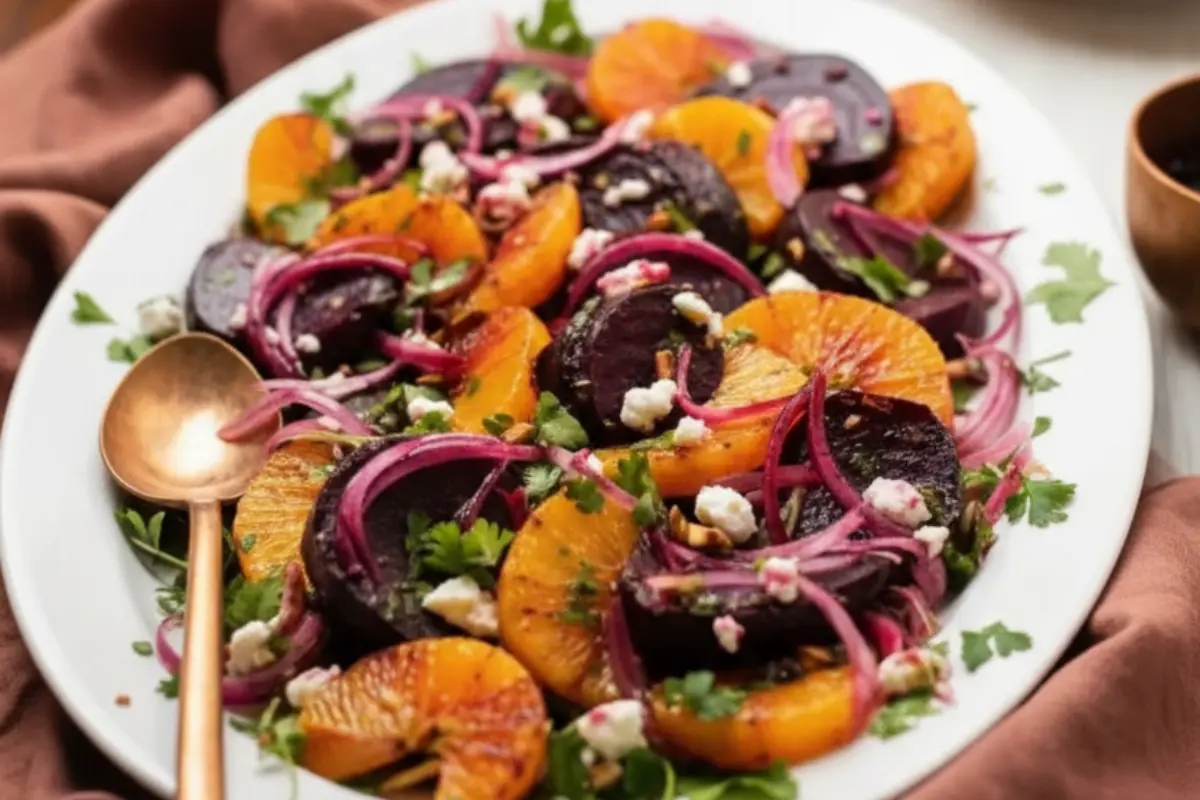
Moroccan Beetroot & Orange Salad, known locally as 'Salatat Shamandar' or 'Salatat Barba,' is a celebration of colors and flavors that graces Moroccan tables throughout the year. This stunning salad combines the deep, earthy sweetness of cooked beetroot with the bright, sunny juiciness of fresh oranges, creating a visual and culinary masterpiece that perfectly embodies the Moroccan talent for balancing contrasting elements [citation:2][citation:8].
This salad has ancient roots in Moroccan cuisine, reflecting the country's long history of culinary exchange. Beetroot, cultivated in Morocco for centuries, meets the orange—a fruit introduced by the Arabs and later perfected by Spanish and Portuguese traders—in a harmonious union that is both traditional and timeless [citation:4][citation:6]. It's a dish that appears in countless variations across the kingdom: in Fez with preserved lemon, in Marrakech with cumin and fresh mint, and in coastal cities with a hint of orange blossom water.
The magic of this salad lies in its simplicity and the quality of its components. When blood oranges are in season, their deep crimson flesh creates a spectacular visual contrast against the purple beetroot [citation:1]. Fresh herbs—parsley, mint, or cilantro—add aromatic freshness, while a simple dressing of olive oil, lemon juice, and a touch of Dijon mustard brings all the elements together. Ground cumin, that signature Moroccan spice, adds warm, earthy notes that tie everything together [citation:2][citation:6].
Served chilled as part of a Moroccan mezza spread, alongside tagines, or as a refreshing side for grilled meats, this salad brings the vibrant spirit of Moroccan markets directly to your table. It's a dish that proves that the most beautiful food often comes from the simplest ingredients, treated with care and respect.
About This Recipe
Moroccan Beetroot & Orange Salad has ancient roots in the country's agricultural traditions and its position at the crossroads of trade routes. Beetroot (shamandar) has been cultivated in Morocco for centuries, valued for its earthy sweetness and vibrant color. Oranges arrived later—bitter oranges were introduced by the Arabs during their expansion, while sweet oranges came through Portuguese and Spanish traders in the 16th century, finding a perfect home in Morocco's coastal climate [citation:4]. The combination of beets and oranges reflects the Moroccan genius for balancing contrasting elements—earthy with bright, sweet with tangy. Cumin, the signature spice, connects the dish to Morocco's position on ancient spice routes, where caravans brought exotic flavors from the Sahara and beyond [citation:6]. This salad appears in countless variations across Morocco. In Fez, it might include preserved lemon for added complexity. In Marrakech, fresh mint is often used alongside parsley. In coastal cities, a hint of orange blossom water might be added. Some versions include carrots, creating a colorful trio [citation:6]. Others add chickpeas for protein and heartiness [citation:8]. Traditionally served as part of a mezza spread—a selection of small salads and appetizers—this dish represents Moroccan hospitality at its most generous. Its stunning appearance makes it a favorite for celebrations and holiday tables, from family gatherings during Ramadan to summer feasts with grilled meats. Today, as global interest in Moroccan cuisine grows, this salad has found new audiences worldwide. Yet it remains, at its heart, a taste of Morocco's domestic kitchens—simple, vibrant, and made with love from ingredients that have graced Moroccan markets for centuries.
Nutrition / serving
Recipe Tags
Understanding the Ingredients
Fresh Beetroot
Beetroot is the soul of this salad, providing deep earthiness and stunning purple-red color. Fresh, firm beetroots without soft spots are essential. The traditional Moroccan method involves boiling or roasting the beets whole with their skins on, which preserves their sweet juices and prevents them from bleeding excessively [citation:1]. Once cooked, the skins slip off easily. Roasting concentrates the natural sugars, creating a deeper, caramelized flavor [citation:7], while boiling produces a more tender texture. The beets can be cooked a day in advance, making this salad perfect for entertaining [citation:1].
Fresh Oranges
Oranges provide bright, sunny sweetness that perfectly counterpoints the earthy beets. Blood oranges, when in season (late winter to early spring), are spectacular in this salad—their deep red flesh creates a beautiful visual contrast against the purple beetroot, and they are particularly sweet and juicy [citation:1][citation:2]. If blood oranges are unavailable, use any sweet, juicy variety like navel or Valencia. The oranges should be peeled with a knife, removing all bitter white pith, and then segmented or sliced thinly [citation:5]. This 'supreming' technique yields beautiful, membrane-free segments that are a pleasure to eat.
Red Onion or Shallot
Thinly sliced red onion adds a sharp, pungent bite that cuts through the sweetness of the beets and oranges. The onion should be sliced very thinly—a mandoline is ideal—so its flavor integrates without overwhelming [citation:5]. Some traditional preparations recommend soaking the sliced onion in cold water for 10-15 minutes to mellow its raw pungency, then draining and patting dry before adding to the salad.
Fresh Herbs
Fresh herbs are essential, providing aromatic brightness. Parsley (flat-leaf) is the most traditional choice, offering clean, grassy notes [citation:2][citation:8]. Fresh mint is also wonderful, adding cooling freshness that complements both beets and oranges beautifully [citation:2][citation:3][citation:5]. Some versions combine both. Cilantro can be used for a more pungent, citrusy note. The herbs should be coarsely chopped and added just before serving to preserve their vibrant color and flavor.
Dressing: Mustard, Olive Oil & Citrus
The dressing binds the salad together with bright, tangy flavors. Extra virgin olive oil provides richness and fruitiness. Fresh lemon juice adds necessary acidity that balances the sweetness of the beets and oranges [citation:3][citation:5][citation:6]. Dijon mustard is the key component here—it adds tangy complexity and acts as an emulsifier, helping the dressing coat the ingredients beautifully. Some versions include red wine vinegar instead of or alongside lemon juice [citation:5][citation:7]. A touch of honey or maple syrup can be added for extra sweetness if desired [citation:1][citation:7].
Signature Spices and Add-ins
Ground cumin is the signature Moroccan spice in this salad, adding warm, earthy notes that tie everything together [citation:2][citation:6]. Use it sparingly—it should enhance, not dominate. Optional but delightful additions include: toasted walnuts or almonds for crunch [citation:1], crumbled feta or goat cheese for creamy tang [citation:1][citation:2][citation:9], sumac for lemony brightness [citation:2][citation:5], or nigella seeds for subtle oniony flavor [citation:5].
Step-by-Step Cooking Guide
Cook the Beetroot
75 minChoose your preferred method. For roasting: Preheat oven to 200°C (400°F). Wash 6 large beetroots carefully without damaging the skin. Trim stems to about 5cm, leaving roots intact to prevent juices from bleeding out [citation:1]. Wrap each beetroot individually in foil or place them in a roasting dish with 4cm of water, cover tightly with foil, and roast for 60-90 minutes until a knife slides in easily [citation:1][citation:7]. For boiling: Place beetroots in a large saucepan, cover with water, add a dash of vinegar to preserve color, and simmer for 30-45 minutes until tender [citation:2][citation:8].
Tip: Cook times vary based on beet size. Check at 45 minutes for smaller beets. The roasted method yields sweeter, more concentrated flavor [citation:7]. Do not peel before cooking—the skins slip off easily afterward.
Peel and Prepare Beetroot
20 minWhen beets are tender enough to slide a knife into easily, remove from heat. For easier peeling, immediately transfer to a bowl and cover with a lid or plastic wrap, letting them steam for 10-15 minutes [citation:1]. Once cool enough to handle but still warm, use your fingers or a paper towel to rub off the skins—they should slip off easily. Trim off the stems and roots. Cut the peeled beets into wedges, slices, or 1-inch cubes, depending on your preference [citation:1][citation:7].
Tip: Wear disposable gloves to prevent staining your hands. The beets can be prepared a day ahead and refrigerated [citation:1][citation:2].
Prepare the Oranges and Onion
15 minUsing a sharp knife, peel the oranges, removing all of the bitter white pith. For segmenting (supremes): hold the peeled orange over a bowl to catch juice, cut along both sides of each membrane to release perfect, membrane-free segments [citation:5]. Alternatively, slice the peeled oranges into thin rounds. Thinly slice half a red onion—as thin as possible, ideally using a mandoline. If you find raw onion too pungent, soak the slices in cold water for 10-15 minutes, then drain and pat dry.
Tip: Work over a bowl to catch any orange juice—use this juice in the dressing. Catch any orange segments that fall and add them to the salad.
Make the Mustard Dressing
5 minIn a small bowl or jar, combine: 4 tablespoons extra virgin olive oil, 2 tablespoons fresh lemon juice (or 1 tablespoon each lemon juice and red wine vinegar [citation:5][citation:7]), 1-2 teaspoons Dijon mustard, 1 teaspoon honey or maple syrup (optional, adjust to taste), ½ teaspoon ground cumin, and salt and freshly ground black pepper to taste. Whisk vigorously or shake in a sealed jar until well emulsified. Taste and adjust seasoning—the dressing should be bright and well-balanced.
Tip: For the best cumin flavor, toast whole cumin seeds in a dry pan for 2 minutes until fragrant, then grind fresh [citation:5]. The dressing can be made ahead and refrigerated for up to 3 days.
Toast Nuts (Optional)
10 minIf using walnuts or almonds, spread ½ cup on a baking sheet. Toast in a 160°C (325°F) oven for 8-10 minutes until fragrant and lightly golden [citation:1]. Watch carefully—nuts burn quickly. For extra flavor, toss the warm nuts with 1 tablespoon maple syrup and a pinch of salt, then spread on parchment to cool [citation:1].
Tip: Toasting nuts is optional but adds wonderful crunch and depth. This step can be done while the beets are cooking.
Assemble the Salad
5 minIn a large bowl, gently combine the prepared beetroot pieces, orange segments, and thinly sliced red onion. Add half the chopped fresh herbs (parsley and/or mint). Pour the dressing over and toss very gently to coat all ingredients without breaking the orange segments. If time allows, let the salad sit at room temperature for 15-30 minutes to allow flavors to meld [citation:2][citation:5][citation:8].
Tip: Be very gentle when tossing to keep the orange segments intact. The salad benefits from brief marination—the beets absorb the dressing beautifully.
Garnish and Serve
5 minTransfer the salad to a serving platter. Garnish generously with the remaining fresh herbs. Sprinkle with toasted nuts if using, and optional additions like crumbled feta, sumac, or nigella seeds [citation:5]. For an elegant presentation, arrange the beetroot and oranges in alternating layers on a platter rather than tossing [citation:1]. Serve chilled or at room temperature.
Tip: The salad is best served the day it's made. If you've added cheese, add it just before serving to maintain its texture. A final drizzle of good olive oil before serving adds richness.
Common Mistakes to Avoid
✗ Not Peeling Oranges Properly
Fix: Leaving white pith on oranges adds bitterness. Always use a sharp knife to remove all peel and pith, then segment or slice thinly. The effort is worth it for the clean, sweet flavor [citation:5].
✗ Overcooking Beetroot
Fix: Beetroot that's cooked too long becomes mushy and loses its appealing texture. Test frequently with a knife—it should slide in easily but the beet should still hold its shape. Remove from heat immediately when tender [citation:1].
✗ Adding Dressing Too Early
Fix: While brief marination (15-30 minutes) is beneficial, adding dressing hours ahead makes the salad watery and the colors bleed together. Dress just before serving or up to 30 minutes ahead [citation:5].
✗ Skipping the Cumin
Fix: Cumin is what makes this salad distinctly Moroccan. Even a small amount adds warm, earthy notes that tie the other flavors together. Don't omit it [citation:2][citation:6].
✗ Not Draining Onions
Fix: If using the soaking method to mellow raw onion, failing to drain and pat dry thoroughly adds unwanted water to the salad, diluting the dressing. Always dry well.
Ingredient Substitutions
Instead of: Fresh Beetroot
Use: Pre-cooked vacuum-packed beetroot (available in many grocery stores) can be used in a pinch. Simply drain, rinse, and slice. The flavor won't be as deep as freshly roasted, but it's a convenient shortcut [citation:8].
Instead of: Blood Oranges
Use: Regular navel oranges, Valencia oranges, or even tangelos work beautifully. Cara Cara oranges, with their pinkish flesh, are also lovely. Grapefruit can be used for a more tart version [citation:1].
Instead of: Dijon Mustard
Use: Whole grain mustard adds a different texture but similar tang. 1 teaspoon dry mustard powder reconstituted with a little water can also work. In a pinch, increase the lemon juice and add a pinch of cayenne for complexity.
Instead of: Fresh Mint
Use: Fresh parsley (flat-leaf) is traditional and always works [citation:2][citation:8]. Fresh cilantro offers a different but complementary flavor. A combination of parsley and mint is particularly lovely [citation:5].
Instead of: Walnuts
Use: Toasted almonds [citation:1], pistachios [citation:2], pine nuts, or even pumpkin seeds (pepitas) [citation:9] all provide excellent crunch. For nut-free, use toasted sunflower seeds.
Instead of: Feta Cheese
Use: Goat cheese (chèvre) is delicious and traditional in some versions [citation:1][citation:9]. Ricotta salata or even a dollop of thick yogurt can provide creamy tang [citation:9].
Serving Suggestions
Serve chilled or at room temperature as part of a Moroccan mezza spread with hummus, baba ganoush, and zaalouk [citation:2].
Pair with any tagine—the salad's brightness cuts through the richness of slow-cooked meats beautifully.
Serve alongside grilled fish with chermoula or grilled kefta (spiced meatballs) for a complete meal [citation:2].
For a light lunch, top with crumbled feta or goat cheese and serve with crusty Moroccan bread (khobz) [citation:1][citation:2].
Include in a holiday or celebration spread—its vibrant colors make it a stunning centerpiece [citation:9].
The salad pairs wonderfully with couscous, providing a refreshing contrast to the warm, savory grains [citation:6].
Storage & Reheating
Storage
Store in an airtight container in the refrigerator for up to 2 days. The flavors will meld and may even improve, but the oranges will soften and the colors may bleed. If possible, store undressed components separately and dress just before serving.
Reheating
Do not reheat. This salad is meant to be served chilled or at room temperature.
If making ahead, cook and slice the beets, segment the oranges, and make the dressing separately. Combine and dress up to 30 minutes before serving for the best texture. Add fresh herbs and nuts just before serving to maintain their crunch and vibrancy.
Frequently Asked Questions
Recipe by

Samira Tazi
سميرة تازي
Salad & Meze Specialist
View all recipes by Samira →
You May Also Like
Our Ebooks

The Moroccan Vegan
$12.56

Tables of Fez: A Royal Palace Legacy
$22.99

The Soul of Morocco
$20.00
YouTube
Watch step-by-step cooking videos and learn traditional Moroccan techniques.
450+
Subscribers
150+
Videos