
45
Prep (min)
120
Cook (min)
8
Servings
Medium
Level
Introduction
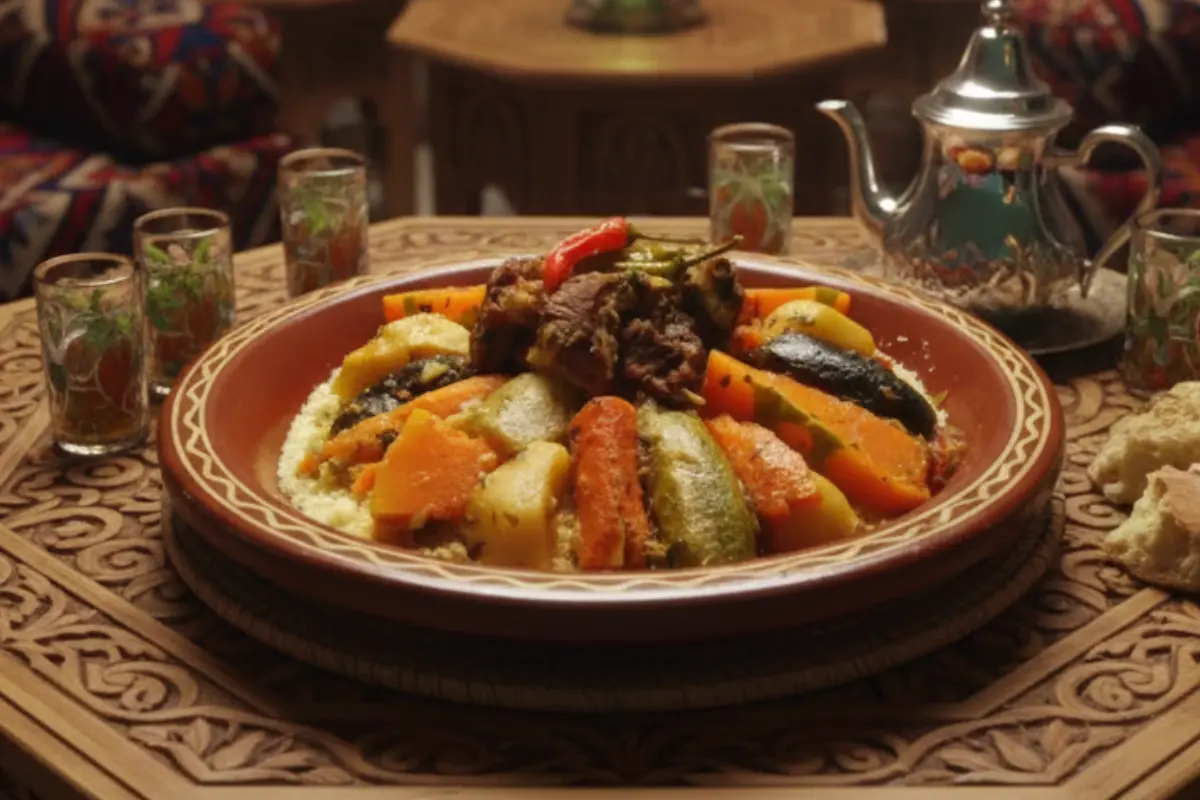
Moroccan couscous with lamb is not merely a dish - it is the very soul of Moroccan culinary identity, a UNESCO-recognized intangible cultural heritage, and the undisputed centerpiece of the most important meal of the Moroccan week: Friday lunch. Known as couscous bidaoui (Casablancan style) or simply 'couscous' as though no other dish deserves the name, this magnificent preparation has nourished Moroccan families, honored guests, and celebrated life's most significant moments for over a thousand years. The sight of a towering mound of golden, saffron-perfumed couscous crowned with fall-apart tender lamb and a rainbow of perfectly cooked vegetables, surrounded by family gathered around a communal table, is the quintessential image of Moroccan hospitality and culture.
What elevates this dish from simple grain and meat to sublime gastronomy is the extraordinary care and technique involved in its preparation. The couscous grains - made from durum wheat semolina - are steamed multiple times over a richly spiced broth, with each steaming making the grains lighter, fluffier, and more perfectly separate. Between steamings, the grains are carefully worked with hands, seasoned with olive oil, salted, and aerated until each grain is distinct, tender, and infused with the aromas rising from below. The lamb - traditionally bone-in shoulder, neck, or shank - is slow-cooked until it achieves that magical fall-apart tenderness that can only come from patient, low-and-slow braising in aromatic liquid. Seven vegetables is the traditional number - carrots, turnips, zucchini, cabbage, onions, tomatoes, and pumpkin or squash - each added at the right moment to achieve perfect, tender-without-mushy doneness. Saffron, Morocco's liquid gold from the fields of Taliouine, gives the broth its distinctive golden hue and incomparable aroma.
Friday couscous is a deeply sacred family ritual in Morocco. Families plan for it throughout the week, mothers and grandmothers begin preparation on Thursday evening or early Friday morning, and extended family members travel to gather around the communal dish. The preparation is a meditation, a labor of love, and an act of cultural transmission as grandmothers teach daughters and daughters teach granddaughters the secrets of perfect couscous - the right amount of water, the proper way to work the grain, the timing of vegetables, the seasoning of the broth. Beyond Friday, couscous with lamb appears at weddings where it feeds hundreds of guests, at Eid celebrations marking the end of Ramadan and Eid al-Adha where freshly slaughtered lamb is used, at family reunions, and at any gathering significant enough to deserve Morocco's highest culinary expression.
About This Recipe
Moroccan couscous with lamb stands as one of humanity's greatest culinary achievements - a dish so deeply embedded in North African culture that UNESCO inscribed couscous on its Representative List of the Intangible Cultural Heritage of Humanity in 2020. The origins of couscous preparation in Morocco and the broader Maghreb region extend back at least a thousand years, with some historians tracing its roots to ancient Berber populations who developed techniques for processing durum wheat into tiny steamed granules. The earliest written references to couscous appear in thirteenth-century manuscripts from North Africa and the Iberian Peninsula, but oral traditions and archaeological evidence suggest the dish predates these written records by centuries. Couscous with lamb developed as the most prestigious and celebratory version of this staple grain - lamb being the most valued meat in Moroccan culture, deeply connected to religious tradition through the annual sacrifice of Eid al-Adha (the Feast of the Sacrifice) when every family that can afford to does so slaughters a lamb in commemoration of Ibrahim's willingness to sacrifice his son. The Friday couscous tradition in Morocco is one of the most sacred and enduring food rituals in the Muslim world. Friday, the holy day of communal prayer in Islam, became associated with the most elaborate family meal of the week - a meal that brought extended families together after the midday prayer and celebrated community, gratitude, and abundance. The preparation began Thursday evening or early Friday morning, with the matriarchs of the family managing the complex, multi-stage process of steaming couscous and slow-cooking lamb with seasonal vegetables. The tfaya topping of caramelized onions and raisins speaks to the Moroccan culinary genius for combining sweet and savory - an influence from Andalusian cuisine brought by Muslim and Jewish refugees from Spain in the fifteenth century, who enriched Moroccan cooking with their refined culinary traditions. The use of saffron from Taliouine in Morocco's Anti-Atlas mountains connects this national dish to one of the country's most precious agricultural products - Moroccan saffron is among the world's finest, and its use in the national dish elevates everyday cooking to something approaching luxury. Regional variations of couscous with lamb reflect Morocco's extraordinary geographic and cultural diversity - coastal regions add preserved lemon and might incorporate seafood alongside lamb, Marrakech's version is famous for its abundant tfaya and sweet-savory balance, Fes produces an elaborate version with multiple meats and dried fruits, and the Berber mountain regions of the Atlas use simpler preparations with fewer spices but exceptional lamb quality from highland pastures. The role of couscous in Moroccan celebration culture is profound - no wedding, birth celebration, religious holiday, or significant gathering is complete without it. A Moroccan wedding feast without couscous would be inconceivable. The preparation of couscous for large gatherings is itself a community event, with neighbor women gathering to help the host family prepare the enormous quantities needed, working together in what Moroccans call a touiza - a tradition of communal labor and mutual aid. Today, Moroccan couscous with lamb continues to be the dish that connects modern Moroccans most deeply to their heritage, their families, and their cultural identity. In Moroccan diaspora communities throughout France, Belgium, Spain, and beyond, Friday couscous remains the most important weekly ritual linking immigrant families to their homeland. International recognition has grown as global food culture increasingly appreciates ancient grain traditions and slow food values, but for Moroccans, no external validation is needed - couscous with lamb is simply the greatest dish in the world, the taste of home, the smell of grandmother's kitchen, and the sound of family gathered together in love and abundance.
Nutrition / serving
Recipe Tags
Understanding the Ingredients
Lamb
The choice of lamb cut is crucial for this dish. Bone-in cuts with good fat marbling are essential - the bones add tremendous richness to the broth while the connective tissue in fatty cuts breaks down during long cooking to create silky, succulent meat. The best cuts are lamb shoulder (the most traditional and flavorful), bone-in lamb neck (exceptionally flavorful from marrow and connective tissue), lamb shanks (dramatic presentation, fall-apart tender), or a combination. You'll need about two and a half to three pounds of bone-in lamb for eight servings. The lamb should be cut into large serving pieces - not too small or they fall apart, not too large or they cook unevenly. Fresh lamb is always preferable to frozen for this dish. Ask your butcher to cut shoulder or neck into large chunks, or use whole shanks.
Couscous
Traditional Moroccan couscous is medium-grain durum wheat semolina couscous - not Israeli (pearl) couscous, not Lebanese couscous, but the fine-to-medium grain that is characteristic of Moroccan and North African cuisine. You'll need three to four cups of dry couscous for eight servings. Quality matters significantly - look for Moroccan or Algerian brands (Ferrero, Dari, or store-brand Moroccan couscous) which are produced specifically for the traditional steaming method. The couscous should be pale golden, uniform in size, and smell faintly of wheat. Traditional Moroccan couscous is always steamed - never simply soaked in boiling water or broth, which creates an entirely different, inferior texture. Three steamings is the traditional standard, each lasting fifteen to twenty minutes, with the grain worked and seasoned between each steaming.
The Seven Vegetables
Traditional Moroccan couscous uses seven vegetables - a number that carries cultural and symbolic significance. The classic seven are: onions (two large, sliced into thick wedges), tomatoes (two large, quartered), carrots (four medium, cut into large chunks), turnips (two medium, peeled and quartered), zucchini (three medium, cut into large chunks), cabbage (half a head, cut into thick wedges), and pumpkin or butternut squash (one pound, peeled and cut into large chunks). Some families substitute or add: sweet potato instead of pumpkin, green beans, celery (very traditional), fennel, or bell peppers. The vegetables must be cut into very large pieces - they cook for a long time and need to hold their shape. They are added to the broth in stages based on cooking time.
Aromatic Spice Blend
The spice blend for lamb couscous broth is warm, aromatic, and distinctly Moroccan. Saffron threads (a very generous pinch, about half a teaspoon, crushed and dissolved in warm water) are essential and non-negotiable for authentic couscous - they provide the golden color and incomparable floral aroma. Ground ginger (one and a half teaspoons) adds warming spice. Turmeric (one teaspoon) contributes color. Black pepper (one teaspoon) adds heat. Ground cinnamon (half a teaspoon) provides subtle sweet warmth. Some cooks add ras el hanout (the complex Moroccan spice blend) for additional depth. The spices are added early in the broth building so their flavors fully permeate the liquid.
Onions and Aromatics
The aromatic foundation requires generous quantities. Onions (three to four large, two sliced for the broth and one to two kept whole or in large wedges to cook with the lamb for flavor) provide sweetness and body. Garlic (a full head or eight to ten cloves, some added to the broth) provides depth. Fresh cilantro and parsley (large bunches, tied together with string to form an herb bundle that will be removed before serving) infuse the broth with their flavors throughout the long cooking. The herb bundle should be very generous - use entire bunches.
Butter for Finishing
Unsalted butter (three to four tablespoons) is the essential finishing ingredient for Moroccan couscous and must not be skipped. After the final steaming, hot, fluffy couscous is tossed with generous amounts of good butter until it coats every grain with rich, silky flavor. This step transforms good couscous into magnificent couscous - the butter adds richness, shine, and a flavor depth that olive oil alone cannot replicate. Some traditional cooks use smen (Moroccan preserved fermented butter) for even more complex, nutty flavor. The butter should be cold, cut into small pieces, and worked into the hot couscous with your hands.
Dried Fruits and Caramelized Onions (Tfaya)
Many traditional Moroccan couscous recipes include a separate preparation of caramelized onions with raisins called tfaya, served on top of or alongside the couscous. For tfaya: slice four large onions thinly and cook in butter and olive oil over very low heat for forty-five minutes to one hour until deeply caramelized and sweet. Add one cup of raisins or golden raisins (optionally plumped in warm water first), one teaspoon cinnamon, one tablespoon honey, and salt. Cook another fifteen minutes until onions are jammy and sweet. This sweet-savory topping is particularly traditional in Marrakech and central Morocco and adds another dimension of flavor.
Step-by-Step Cooking Guide
Brown the Lamb and Build the Broth
25 minIn the bottom pot of a large couscoussier or a heavy-bottomed pot (at least eight-quart capacity), heat three tablespoons of olive oil over medium-high heat. Pat the lamb pieces completely dry with paper towels - this is crucial for proper browning. Working in batches to avoid crowding, brown the lamb on all sides for three to four minutes per side until deeply caramelized and golden brown. Don't rush this step - proper browning creates tremendous flavor depth through the Maillard reaction. Transfer browned lamb to a plate. In the same pot, add two large sliced onions and cook for five to six minutes until softened and golden. Add eight to ten minced garlic cloves and cook one minute. Return the lamb to the pot. Add the spice blend: half a teaspoon of crushed saffron threads dissolved in two tablespoons warm water, one and a half teaspoons ground ginger, one teaspoon turmeric, one teaspoon black pepper, half a teaspoon cinnamon, and two teaspoons of salt. Stir well to coat. Add two quartered tomatoes and stir. Pour in ten to twelve cups of water to cover the lamb by several inches. Add the large tied herb bundle (entire bunches of cilantro and parsley tied with string). Bring to a rolling boil, then skim off any foam that rises to the surface. Reduce heat to maintain a gentle but steady simmer. Cover and cook for forty-five minutes.
Tip: Pat lamb very dry for proper browning. Don't rush browning - it creates essential flavor depth. Skim foam from broth for clarity. Saffron dissolved in warm water releases color and flavor better. The broth should simmer gently, not vigorously boil.
Add Root Vegetables and Begin Couscous Preparation
20 minAfter the lamb has simmered for forty-five minutes, add the root vegetables that require longest cooking: four medium carrots (peeled and cut into large chunks), two medium turnips (peeled and quartered), and if using celery, three stalks cut into large pieces. Stir gently. Check liquid level - broth should still generously cover lamb and vegetables. Add more hot water if needed. Meanwhile, prepare the couscous for its first steaming. Place four cups of dry couscous in a very large, shallow bowl or traditional gsaa. Sprinkle with one teaspoon of salt and three tablespoons of olive oil. Using both hands, rub the oil and salt into the grain thoroughly, working between palms for three to four minutes until every grain is lightly coated - the couscous should feel slightly oily and hold together slightly when squeezed. Add three-quarters cup of cold water gradually, mixing and working with hands after each addition, breaking up any lumps immediately. Work the couscous until no lumps remain. Let rest five minutes to absorb water.
Tip: Add root vegetables at this stage - they need 45-60 minutes to cook properly. Work oil into couscous thoroughly with both hands. Add water gradually and break up lumps immediately. Rest period allows semolina to hydrate.
First Steaming of Couscous
20 minWhen the broth is simmering and fragrant, it's time for the first steaming. If using a couscoussier, line the steamer basket with damp cheesecloth if you have it (optional but prevents small grains from falling through). Place the prepared couscous loosely in the basket - don't pack or compress it, steam needs to circulate freely through the grain. Set the steamer basket over the simmering broth, ensuring it doesn't touch the liquid surface. If gaps exist between pot and basket, wrap a damp kitchen towel around the junction to seal in steam. Steam the couscous uncovered - never cover - for fifteen to twenty minutes. The couscous is ready for the next step when you can see steam rising visibly through the entire surface of the grain, not just from the edges. The grains on top should look dry and beginning to look cooked. Remove the basket carefully.
Tip: Never cover couscous while steaming - lid traps moisture and creates gummy texture. Don't pack couscous - steam needs to circulate. Seal any gaps between basket and pot with a damp towel. Steam is ready when visible throughout entire grain surface.
Work the Couscous and Second Steaming
30 minCarefully transfer the hot steamed couscous back to your large bowl. Working quickly while still very hot, break up every single clump with your hands - spread the grain out, work through it systematically, ensuring no clumped sections remain. This step is crucial and must be done while hot. Sprinkle with half a teaspoon of salt and two tablespoons of olive oil (or one tablespoon of butter). Work the salt and oil into the grain thoroughly. Gradually add one cup of cold water, mixing and breaking up any new lumps as you add the water. The grain should absorb the water and become noticeably more tender. Let rest for eight minutes. Meanwhile, check the broth - the lamb should be becoming very tender at this stage. Add one pound of pumpkin or butternut squash (peeled and cut into large chunks) to the broth now. Return the couscous to the steamer basket and steam uncovered again for fifteen to twenty minutes. During this second steaming, continue monitoring the broth and checking the lamb for tenderness.
Tip: Work couscous while still hot - cool couscous clumps are very difficult to break up. Be thorough - every clump must be broken. The grain should feel noticeably softer and more hydrated after working. Add pumpkin to broth at this stage.
Add Remaining Vegetables
30 minAfter the second steaming, transfer the couscous back to your bowl and repeat the working process: break up all clumps thoroughly while hot, add half a teaspoon of salt and two tablespoons of olive oil, then gradually add three-quarters cup of cold water and work it in. Let rest while you add the remaining vegetables to the broth. Add three medium zucchini (cut into large chunks) and half a head of cabbage (cut into thick wedges) to the simmering broth. These vegetables need only twenty-five to thirty minutes of cooking. Check the lamb - it should be very tender by now, nearly fall-apart. Taste the broth and adjust seasoning - this is important, the broth should be flavorful, golden, and well-seasoned. Add more salt if needed and adjust spices. The broth should taste extraordinary. Return couscous to steamer for the third and final steaming, another fifteen to twenty minutes. The lamb should be completely fall-apart tender by the time this final steaming is complete.
Tip: Add zucchini and cabbage at this point - they need less cooking time. Taste broth now and adjust - this is your last chance before serving. Lamb should be nearly fall-apart tender. Third steaming creates the fluffiest, most perfect couscous.
Prepare Tfaya (Caramelized Onions with Raisins - Optional but Traditional)
45 minWhile the third steaming is underway, if making tfaya (highly recommended for the most authentic version), begin the caramelized onion preparation. Slice four large onions very thinly. In a medium saucepan or skillet, melt two tablespoons of butter with one tablespoon of olive oil over medium-low heat. Add the sliced onions and cook, stirring occasionally, for thirty to forty-five minutes over low to medium-low heat until deeply golden, caramelized, and sweet-smelling. The onions should reduce dramatically in volume and turn amber-golden. Add one cup of raisins or golden raisins, one teaspoon of ground cinnamon, one tablespoon of honey, and half a teaspoon of salt. Stir well and cook for another ten to fifteen minutes until onions are jammy, sweet, and the raisins are plumped. The tfaya should taste sweet, savory, and aromatic. Keep warm until serving. This sweet-savory topping is one of the most beloved elements of traditional Moroccan couscous.
Tip: Cook onions very slowly and patiently - don't rush caramelization. Low, slow heat is essential - high heat burns rather than caramelizes. The transformation from raw onions to jammy tfaya takes time but is transformative. Can be made a day ahead and reheated.
Final Couscous Finishing with Butter
10 minAfter the third steaming, transfer the hot couscous to your large bowl for the final time. This is the most important finishing step. Work quickly while the couscous is very hot. First, break up any remaining clumps thoroughly. Then add three to four tablespoons of cold unsalted butter cut into small pieces. Using your hands (protect them from the heat if needed), work the butter thoroughly into the hot couscous, rubbing and fluffing until every grain is coated and the butter has completely melted and been absorbed. The couscous should look slightly glossy and feel rich and silky. Add salt to taste - the couscous should be well-seasoned. If needed, add a final tablespoon of olive oil for additional richness. The couscous is ready when it's magnificently fluffy, each grain perfectly separate, richly flavored, and hot throughout. Working with butter while grain is very hot is essential - cold grain won't absorb the butter properly.
Tip: Work butter in while couscous is extremely hot - essential for proper absorption. Use hands to work butter in thoroughly. Couscous should be fluffy and each grain separate. Well-seasoned couscous makes enormous difference. The butter finish is what separates extraordinary couscous from ordinary.
Assemble the Magnificent Presentation
15 minNow for the theatrical, beautiful assembly that makes Moroccan couscous so impressive. Remove the herb bundle from the broth and discard. Taste the broth one final time and adjust seasoning - it should be golden, aromatic, and deeply flavorful. In a very large, deep serving platter or traditional communal gsaa, mound the buttered, fluffy couscous into a generous pyramid shape - pile it high and proud. Create a slight well in the center top where the lamb will sit. Carefully arrange the cooked lamb pieces in the center of the couscous, piling them high. Artfully arrange the vegetables around and over the lamb, grouping similar vegetables together for visual impact: bright orange carrots, golden turnips, green zucchini, amber pumpkin. If making tfaya, spoon the caramelized onions and raisins over the top of the meat, letting them cascade down the sides - this is the crowning glory. Ladle several ladlefuls of the golden saffron broth generously over the entire dish, soaking the couscous and creating glistening vegetables. Pour remaining broth into a large serving bowl or pitcher to bring to the table. Garnish with fresh cilantro and parsley. Serve immediately.
Tip: Assemble quickly and serve immediately - couscous and lamb don't wait. Arrange vegetables artfully by color. Tfaya on top is the visual and flavor crown. Broth over the couscous soaks in - be generous. Extra broth at table is essential - guests add to preference.
Common Mistakes to Avoid
✗ Not Browning the Lamb
Fix: Skipping the browning step creates pale, less flavorful broth and meat without the deep caramelized notes that browning provides. Always brown lamb in batches on all sides until deeply caramelized. This step creates the foundation of flavor for the entire dish. Work in batches so you don't steam the meat.
✗ Using Boiling Water Instead of Steaming Couscous
Fix: Simply pouring boiling water or broth over couscous and covering creates a completely different, inferior texture - soft, clumped, and gummy rather than light, fluffy, and distinct. Always steam couscous properly over the simmering broth for authentic results. The multiple steaming is what makes Moroccan couscous extraordinary.
✗ Not Breaking Up Clumps Between Steamings
Fix: This step is non-negotiable. After each steaming, couscous must be spread out and worked thoroughly to break every single clump while still hot. Cold clumps are nearly impossible to remove. Work systematically and thoroughly - every section of grain must be broken up. This is what creates perfectly separate, fluffy grains.
✗ Skipping the Butter Finish
Fix: The generous butter finish after the final steaming is what transforms couscous from good to magnificent. The butter coats each grain with richness, shine, and depth of flavor that olive oil alone cannot provide. Use generously, work in while couscous is very hot, and don't skip or reduce this step.
✗ Adding All Vegetables at Once
Fix: Different vegetables require different cooking times. Adding them all at once creates a mixture of overcooked mushy vegetables and undercooked raw ones. Add root vegetables (carrots, turnips) early, pumpkin in the middle stage, and quick-cooking vegetables (zucchini, cabbage) in the final stage. Timing is essential for perfect vegetables.
✗ Under-Seasoned Broth
Fix: The broth flavors both the couscous through steaming and serves as the sauce - it must be boldly seasoned and deeply flavorful. Taste frequently and season generously with salt. The saffron, ginger, and other spices should be clearly perceptible. Bland broth creates disappointing couscous no matter how well the grain is steamed.
Ingredient Substitutions
Instead of: Lamb Shoulder
Use: Bone-in lamb neck is equally traditional and more affordable. Lamb shanks make dramatic presentation. Beef short ribs or oxtail work beautifully with same technique. Whole chicken or chicken pieces create lighter but delicious version. Bone-in cuts are always preferred over boneless.
Instead of: Traditional Steamed Couscous
Use: Fine or medium-grain instant couscous can be used in time constraints - pour hot broth over grain, let absorb five minutes, fluff with fork and butter generously. Texture will be different but still good. Never use Israeli or Lebanese couscous which are completely different products.
Instead of: Pumpkin
Use: Butternut squash works identically. Acorn squash, delicata squash, or sweet potato all work well. Each creates slightly different flavor but holds shape during cooking. Pumpkin or any winter squash is traditional.
Instead of: Saffron
Use: Saffron is essential for authentic color and flavor. If absolutely necessary, increase turmeric slightly for golden color. The distinctive floral saffron aroma is irreplaceable but the dish is still delicious without it. Moroccan saffron from Taliouine is the finest.
Instead of: Raisins in Tfaya
Use: Golden raisins provide slightly sweeter, milder flavor. Dried apricots (chopped) create luxurious version. Dried figs or dates (chopped) add depth. All dried fruits should be soaked briefly in warm water before using if very dry.
Serving Suggestions
Serve couscous with lamb in the traditional Moroccan communal style - one large platter in the center of the table with family gathering around to share.
Bring extra broth to the table in a traditional Moroccan pitcher - each person adds desired amount to moisten their portion throughout the meal.
Serve tfaya (caramelized onions and raisins) in a separate bowl alongside, letting guests add as desired, or pile generously on top for dramatic presentation.
Include harissa paste and additional cumin on the side for those wanting extra heat or spice.
Accompany with traditional Moroccan salads as starter - zaalouk, taktouka, tomato salad, and carrot salad.
Serve with crusty Moroccan khobz bread for soaking up extra broth.
Present as Friday family lunch centerpiece - the most sacred and celebrated meal of the Moroccan week.
For Eid al-Adha, use freshly slaughtered lamb in traditional celebration of the holiday.
Finish the meal with Moroccan mint tea and sellou or other traditional sweets.
Storage & Reheating
Storage
Store components separately for best results. Transfer leftover couscous to an airtight container and refrigerate for up to three days - the grain absorbs moisture during storage but reheats well. Store lamb and vegetables with broth in a separate airtight container for up to four days. Broth alone keeps for five days refrigerated and freezes for up to three months. Tfaya keeps for up to five days refrigerated. The lamb actually improves in flavor after a day in the broth. For advance preparation: make the broth, lamb, and vegetables a day ahead and reheat gently. Steam couscous on the day of serving. This approach is common for large gatherings.
Reheating
To reheat couscous, place in a heatproof bowl over a pot of simmering water and steam for ten to fifteen minutes, breaking up any clumps that formed during refrigeration. Alternatively, sprinkle with a few tablespoons of water, cover with damp paper towel, and microwave in one-minute intervals, stirring between. After reheating, always add a generous knob of butter and work in while hot - this restores the richness and separates any clumped grains. Reheat lamb and vegetables gently in the broth over medium-low heat for fifteen to twenty minutes. Reheat tfaya in a small saucepan over low heat with a splash of water to loosen.
Always reheat couscous with additional butter - essential for restoring texture and flavor. Store lamb in broth - it keeps meat moist and flavorful. Broth can be frozen separately for future use. The lamb is excellent in sandwiches or mixed with couscous for next-day meal. Tfaya lasts well and is wonderful on toast or with eggs.
Frequently Asked Questions
Recipe by

Fatima El Amrani
فاطمة العمراني
Master Chef
View all recipes by Fatima →
You May Also Like
Our Ebooks

The Moroccan Vegan
$12.56

Tables of Fez: A Royal Palace Legacy
$22.99

The Soul of Morocco
$20.00
YouTube
Watch step-by-step cooking videos and learn traditional Moroccan techniques.
450+
Subscribers
150+
Videos