
5
Prep (min)
10
Cook (min)
6
Servings
Easy
Level
Introduction
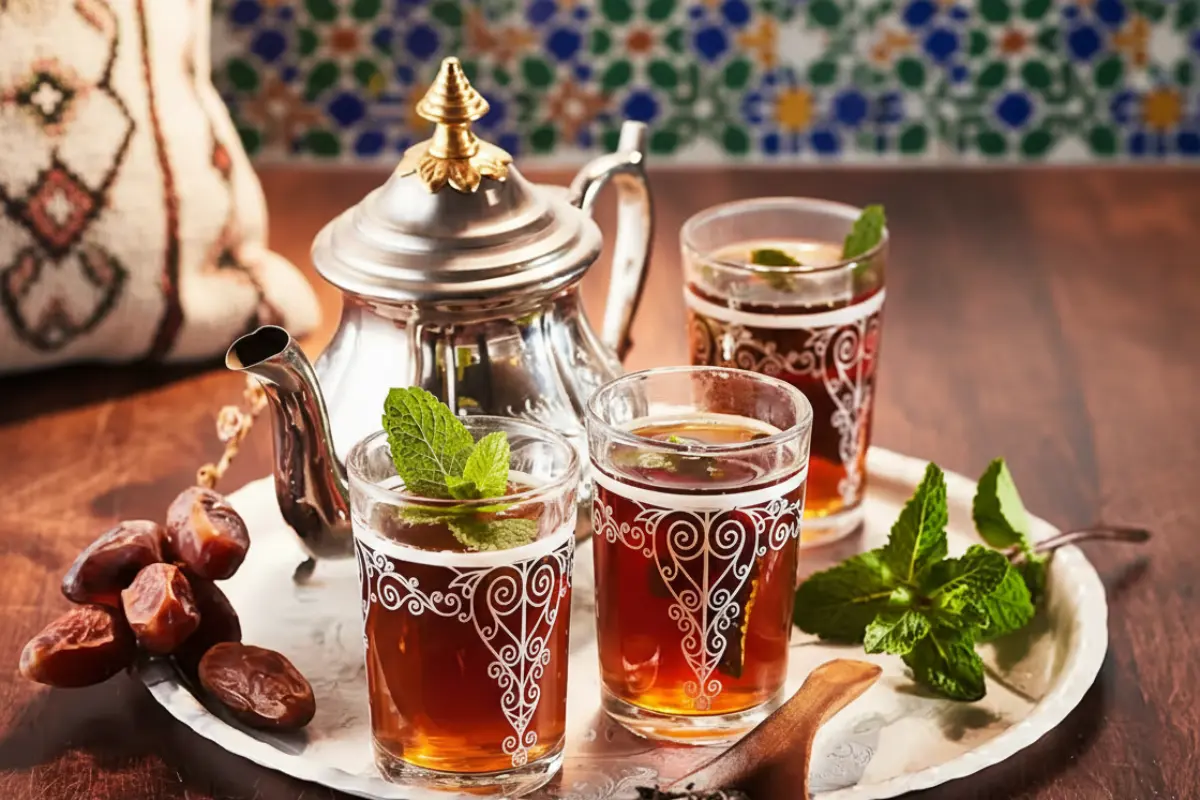
Atay b'naana - Moroccan mint tea - is far more than a simple beverage. It is the soul of Moroccan hospitality, a sacred ritual that punctuates every moment of daily life, and an art form that has been perfected over centuries. From the bustling souks of Marrakech to the quiet kasbahs of the Atlas Mountains, the preparation and serving of mint tea represents one of Morocco's most cherished traditions. To refuse a glass of tea offered by a Moroccan host is considered deeply impolite, as the tea ceremony embodies welcome, friendship, and the generous spirit that defines Moroccan culture.
The origins of this beloved tradition are relatively recent in Morocco's long history. Tea was introduced to North Africa in the mid-eighteenth century through trade with Britain and China. Moroccan merchants, particularly those trading through the port of Essaouira, began importing Chinese gunpowder green tea - so named for its tightly rolled pearls that resemble gunpowder pellets. The Moroccans ingeniously combined this robust green tea with their abundant native spearmint, creating a distinctive drink that became deeply embedded in the national identity within just a few generations.
What makes Moroccan mint tea unique is not just the ingredients but the elaborate preparation ritual and the symbolic importance of the serving ceremony. The tea is traditionally prepared by the male head of household or the eldest son, using a special silver or stainless steel teapot called a barrad. The tea must be poured from a significant height - often a foot or more above the glass - to aerate the tea, cool it slightly, and create the characteristic foamy crown that tops each serving. This dramatic pouring technique requires practice and skill, and the height from which one can successfully pour without spilling is a point of pride. The tea is typically served three times, each steeping producing different characteristics, leading to the famous Moroccan saying: 'The first glass is as gentle as life, the second is as strong as love, and the third is as bitter as death.' This poetic description captures how the flavor intensifies with each successive steeping, from delicately sweet to increasingly robust and bitter.
About This Recipe
Moroccan mint tea, known as 'atay b'naana' in Arabic or simply 'Moroccan whisky' in jest, is a relatively recent addition to Morocco's ancient culture, yet it has become so deeply embedded in national identity that life without it seems unimaginable. Tea first arrived in Morocco in the mid-eighteenth century through British and Chinese trade routes. British merchants, seeking new markets for Chinese tea during conflicts that disrupted their European trade, found eager customers in Moroccan ports like Essaouira and Tangier. The Moroccans, particularly the merchant class, quickly embraced this exotic import. The real genius came when Moroccan tea masters combined Chinese gunpowder green tea with their native spearmint, abundant throughout North Africa. This fusion created something entirely new - a drink that was neither purely Chinese nor purely Moroccan but uniquely North African. The addition of generous amounts of sugar, affordable after sugar production expanded in the nineteenth century, completed the trinity of flavors. By the mid-nineteenth century, tea drinking had spread from wealthy merchants to all levels of Moroccan society, evolving from a luxury to an essential daily ritual. The elaborate preparation ceremony developed over generations, with families passing down techniques and preferences. The high pour became not just functional but ceremonial, a demonstration of skill and a performance of hospitality. The saying about the three glasses of tea - gentle as life, strong as love, bitter as death - emerged from this tradition of multiple servings from a single pot. Today, mint tea is present at every significant moment in Moroccan life: welcoming strangers, negotiating in souks, celebrating weddings, mourning at funerals, breaking the Ramadan fast, and simply gathering family at day's end. The preparation and sharing of tea transcends mere refreshment to become a meditation on hospitality, patience, and the art of making others feel welcome. UNESCO has recognized traditional tea culture in Morocco as part of the Intangible Cultural Heritage worthy of preservation. For Moroccans, tea is not just a drink but a way of life, a moment of pause in a busy world, and the liquid embodiment of welcome.
Nutrition / serving
Recipe Tags
Understanding the Ingredients
Chinese Gunpowder Green Tea
The foundation of authentic Moroccan mint tea must be Chinese gunpowder green tea - there are no acceptable substitutes that will produce the genuine flavor. This tea consists of young tea leaves that are withered, steamed, rolled into tight pellets, and dried, creating small spheres that unfurl dramatically when steeped. The tight rolling preserves the tea's freshness and creates a bold, slightly smoky, robust flavor that stands up to the sweetness and mint. Look for high-quality gunpowder tea at specialty tea shops, Middle Eastern markets, or online. The tea should be dark green to grayish-green with tightly formed, uniform pellets. Quality matters tremendously - cheap gunpowder tea can be harsh and bitter, while premium tea provides smooth, complex flavor with a hint of natural sweetness. One tablespoon of the tightly rolled tea pellets (about one heaping teaspoon when measured) is sufficient for a full pot serving six glasses.
Fresh Spearmint
Fresh spearmint (Mentha spicata) is absolutely essential - this is not a dish where dried mint can substitute. Moroccan mint, also called Nana mint, is a variety of spearmint with pointed leaves, bright green color, and a sweet, refreshing flavor without the harsh menthol notes of peppermint. If you cannot find Moroccan Nana mint specifically, regular spearmint is an excellent substitute - just avoid peppermint, which is too strong and medicinal for this application. You will need a very generous amount - at least one large bunch or about one to two cups of loosely packed mint leaves and tender stems. The mint should be vibrant green, aromatic, and free from any browning or wilting. Wash the mint thoroughly but gently, and shake dry rather than crushing the leaves, which would release too much of the essential oils before steeping. Many Moroccan families grow mint in pots specifically for tea, ensuring a constant supply of fresh leaves.
Sugar
Traditional Moroccan mint tea is very sweet - much sweeter than Western palates might expect. White granulated sugar is standard, and the amount is substantial: typically three to five tablespoons for a full pot, though this can be adjusted to taste. The sugar is not merely for sweetness but is considered essential to the flavor profile and helps balance the bitterness of the green tea and the intensity of the mint. The sugar also creates the syrupy consistency that characterizes properly made Moroccan tea. In Morocco, sugar cubes are often used, and some traditional recipes call for a full cone of sugar (pilón de azúcar). While you can reduce the sugar for health reasons or personal preference, understand that authentically prepared Moroccan tea is decidedly sweet - some might even say syrupy. The sweetness is part of the cultural identity of the drink.
Water
Fresh, cold water is essential for making tea, as the quality of water directly impacts the final flavor. If your tap water has strong mineral content, chlorine taste, or other off-flavors, use filtered or bottled water. You will need approximately four to five cups of water total - some for an initial rinse of the tea leaves (which is discarded) and the remainder for the actual brewing. The water should be brought to a rolling boil, then allowed to cool for just a moment before pouring over the tea and mint. Boiling water extracts maximum flavor from both the tea and mint, though some modern practitioners prefer slightly cooler water (around 175-185°F) to reduce bitterness from the green tea.
Step-by-Step Cooking Guide
Prepare Your Equipment and Ingredients
5 minGather your traditional Moroccan teapot (barrad) or any teapot with a capacity of about four to five cups, preferably one with a built-in strainer or fine mesh. You will also need small Moroccan tea glasses - tall, decorated glasses that hold about three to four ounces each. If you do not have traditional glasses, small heat-resistant glasses or even shot glasses work. Measure one heaping tablespoon of gunpowder green tea. Thoroughly wash your fresh mint bunch under cold running water, gently shaking to remove any dirt or debris. Pat dry gently or shake off excess water. Keep the mint in larger sprigs rather than picking individual leaves - the stems add flavor and the large pieces are easier to strain. Have your sugar measured and ready - start with three tablespoons if you are uncertain, as you can always adjust. Fill your kettle with fresh, cold water and bring it to a rolling boil.
Tip: Having everything prepared before you begin ensures a smooth process. The tea ceremony should be performed with care and attention, not rushed.
Rinse the Tea Leaves
1 minThis step is crucial and non-negotiable for authentic Moroccan tea. Place your measured tablespoon of gunpowder tea in the teapot. Once the water reaches a rolling boil, pour about half a cup of boiling water over the tea leaves in the pot. Immediately swirl gently, then pour out and discard this water through the spout into your sink. This rinse serves multiple purposes: it removes any dust or impurities from the tea, it begins to open the tightly rolled tea pearls, and most importantly, it reduces the bitterness that gunpowder tea can have when steeped directly without rinsing. This technique is essential to achieving the smooth, balanced flavor that characterizes good Moroccan tea. Do not skip this step or your tea may be unpleasantly bitter.
Tip: Pour out the rinse water quickly - this should take no more than five to ten seconds total. You are not steeping the tea yet, merely rinsing it. The water should be discarded while still very hot.
Add Mint and Sugar, Then Steep
5 minWith the rinsed tea leaves still in the pot, add your prepared mint sprigs. You want a generous amount - the mint should fill much of the pot's volume. Add your sugar directly to the pot - start with three tablespoons for a moderately sweet tea, or up to five tablespoons for traditional very sweet tea. Pour four cups of freshly boiled water over the tea, mint, and sugar. The boiling water should cover everything completely. Place the lid on the teapot and let steep for three to five minutes. The steeping time affects the strength: three minutes produces lighter, more delicate tea; five minutes creates stronger, more robust tea. Most Moroccans prefer a fairly strong brew, so four to five minutes is typical. During steeping, the tea pearls will unfurl completely, the mint will release its essential oils, and the sugar will dissolve.
Tip: The mint should be submerged but do not pack it down - let it float naturally. If using a glass teapot, you can watch the beautiful unfurling of the tea leaves and the color developing.
Test and Adjust
2 minAfter steeping, remove the lid and stir gently with a long spoon to ensure the sugar is fully dissolved and the flavors are well combined. Now comes the traditional tasting: pour a small amount of tea into one of your serving glasses. Taste it carefully - the tea should be hot! Evaluate the balance of tea strength, mint freshness, and sweetness. If the tea is too weak, let it steep another minute. If it is too bitter, you may have steeped too long or not rinsed the leaves adequately - adding a bit more sugar can help balance bitterness. If it is not sweet enough, add more sugar directly to the pot, stir, and let dissolve for a moment. If it is not minty enough, this is difficult to fix at this stage, but you can add a few more fresh mint leaves. The goal is a harmonious balance where you taste all three elements - the green tea's slight astringency, the mint's refreshing coolness, and the sugar's sweetness - without any single element overwhelming the others.
Tip: The test pour is traditional and important. The person preparing tea tastes first to ensure it is perfect before serving to guests. This is considered part of being a good host.
Pour with Style and Serve
2 minNow comes the most dramatic and iconic part of Moroccan tea preparation - the high pour. Hold the teapot in your dominant hand. Hold a tea glass in your other hand or place it on a tray or table. Raise the teapot high - traditionally about twelve inches or more above the glass - and pour in a steady stream. The height serves multiple purposes: it aerates the tea, slightly cools it, and creates the distinctive foam or 'crown' (rghwa) on top of the tea that is the sign of properly poured Moroccan tea. Start with a lower height until you are confident, then gradually increase as you gain skill. Fill each glass about two-thirds to three-quarters full. The foam should be visible on top - this is essential for authentic presentation. If you do not achieve good foam, pour the tea back into the pot and try again from a greater height. Serve immediately while the tea is hot, presenting the glasses on a decorative tray if possible. In traditional service, three rounds of tea are poured from the same pot, with each successive glass being stronger and slightly more bitter.
Tip: Practice the high pour over a sink first! It takes skill to pour from height without splashing. The dramatic presentation is part of the experience - embrace the theater of it.
Common Mistakes to Avoid
✗ Using the Wrong Type of Tea
Fix: Only Chinese gunpowder green tea produces authentic Moroccan tea flavor. Regular green tea, black tea, or other varieties will not taste right. Invest in proper gunpowder tea from a specialty shop.
✗ Skipping the Tea Rinse
Fix: The initial rinse of the tea leaves is essential to remove bitterness and impurities. Without this step, the tea will taste harsh and overly bitter. Always rinse the tea first with a small amount of boiling water.
✗ Using Dried Mint or Mint Tea Bags
Fix: Fresh spearmint is absolutely non-negotiable for authentic Moroccan tea. Dried mint lacks the bright, fresh flavor and aromatic oils that define this drink. Mint tea bags are even worse. Only fresh spearmint works.
✗ Not Using Enough Mint
Fix: Moroccans use generous quantities of fresh mint - much more than seems reasonable. The mint should be abundant, nearly filling the pot. Skimping on mint produces weak, tea-flavored water rather than properly balanced mint tea.
✗ Making Tea That Is Not Sweet Enough
Fix: While you can adjust to your preference, authentic Moroccan tea is quite sweet. If serving to Moroccan guests or seeking authentic flavor, use at least three tablespoons of sugar per pot. The sweetness is not optional but integral to the flavor profile.
✗ Pouring from No Height
Fix: The high pour is not just for show - it aerates the tea and creates the essential foam crown. Pouring directly from the spout into the glass produces flat tea without the characteristic froth. Practice pouring from at least eight to twelve inches above the glass.
✗ Over-Steeping the Tea
Fix: Green tea becomes unpleasantly bitter if steeped too long. Three to five minutes is ideal. If you want stronger tea, use more tea leaves rather than steeping longer.
Ingredient Substitutions
Instead of: Gunpowder Green Tea
Use: There is no perfect substitute, but in an emergency, a high-quality Chinese green tea can work, though the flavor will differ. Avoid Japanese green teas like sencha or matcha, which have completely different flavor profiles.
Instead of: Fresh Spearmint
Use: Fresh peppermint can substitute but will be more intensely minty and slightly medicinal. A combination of spearmint and peppermint (mostly spearmint) can work. Dried mint is not acceptable except in dire emergencies, and even then, the result will be disappointing.
Instead of: White Sugar
Use: Rock sugar or sugar cubes are traditional. Honey can substitute for a different flavor profile, though it is not traditional. Artificial sweeteners are not recommended as they do not provide the same syrupy consistency.
Serving Suggestions
Serve Moroccan mint tea as a welcoming gesture when guests arrive, as a refreshing drink throughout the day, and after every meal to aid digestion.
Accompany the tea with Moroccan pastries such as chebakia (sesame cookies), ghriba (almond cookies), kaab el ghazal (gazelle horn pastries), or simple dates and nuts.
Traditionally, three glasses of tea are served to each guest from the same pot, with each glass becoming progressively stronger and slightly more bitter.
Present the tea on a decorative silver or brass tray with matching tea glasses for an authentic ceremonial presentation.
In summer, fresh mint tea can be served over ice for a refreshing cold beverage, though this is more modern and not traditional.
Tea is served throughout social gatherings, business meetings, and family meals - refusing tea can be considered rude, so always accept at least one glass.
The host typically prepares and pours the tea as a sign of hospitality and respect for guests.
Storage & Reheating
Storage
Moroccan mint tea is always best served fresh and hot immediately after preparation. It does not store well, as the mint loses its fresh flavor and the tea becomes bitter if left sitting. If you must store leftover tea, it can be refrigerated in a covered container for up to twenty-four hours, but the flavor will deteriorate significantly. The mint will oxidize and turn brown, and the tea will become more astringent. Some Moroccans prepare a large pot in the morning and drink from it throughout the day, adding boiling water to the same leaves and mint for multiple rounds.
Reheating
Leftover tea can be gently reheated on the stovetop in a small pot over low heat, but it will never taste as good as freshly made tea. Do not microwave, as this can create bitter flavors. For best results, if you have leftover tea, consider serving it cold over ice rather than reheating - cold mint tea is refreshing, though not traditional. Ideally, make only as much tea as you will drink immediately and prepare fresh pots as needed.
The same tea leaves and mint can be used for two or three successive pots by adding fresh boiling water. This is traditional - the first steeping is gentle, the second is strongest, and the third is mellow and slightly bitter. Add a bit of fresh mint to the second and third pots to maintain freshness.
Frequently Asked Questions
Recipe by

Mohammed Benali
محمد بن علي
Beverage Specialist
View all recipes by Mohammed →
You May Also Like
Our Ebooks

The Moroccan Vegan
$12.56

Tables of Fez: A Royal Palace Legacy
$22.99
The Soul of Morocco
$20.00
YouTube
Watch step-by-step cooking videos and learn traditional Moroccan techniques.
450+
Subscribers
150+
Videos