
15
Prep (min)
10
Cook (min)
6
Servings
Easy
Level
Introduction
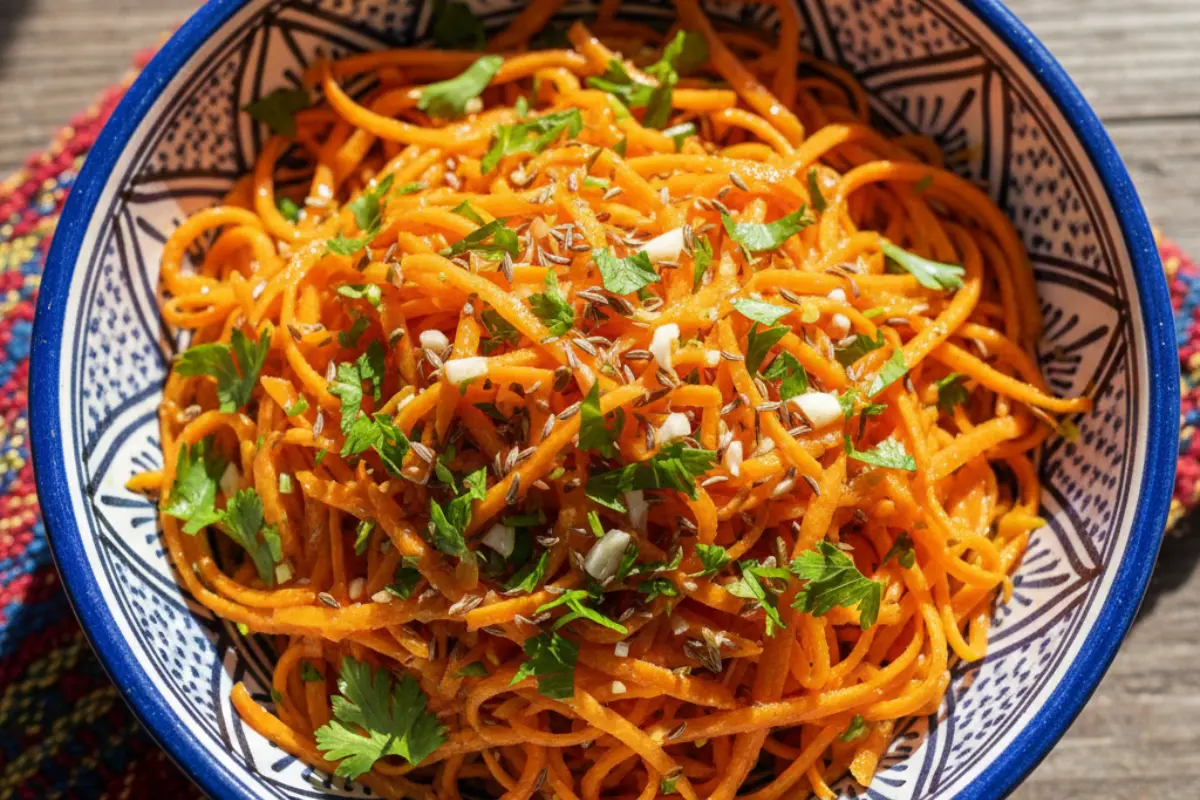
Moroccan shredded carrot salad - shlada dial zrodiya in Moroccan Arabic - represents one of the most beloved, ubiquitous, and essential dishes in Moroccan cuisine. This simple yet extraordinary salad appears at virtually every Moroccan meal from the humblest family dinner to the most elaborate celebration feast, served alongside other salads as part of the traditional mezze spread that begins every lunch and dinner. What makes this humble carrot salad so special and so universally loved is how it transforms an everyday vegetable into something bright, refreshing, aromatic, and deeply satisfying through the perfect balance of sweet carrots, tangy lemon, warming cumin, pungent garlic, and fresh parsley. The carrots are shredded rather than sliced, creating a tender, almost melting texture that allows the dressing to penetrate thoroughly, and they're briefly cooked until just tender before dressing, which intensifies their natural sweetness while maintaining pleasant bite.
The beauty of Moroccan carrot salad lies in its perfect simplicity and the way a few exceptional ingredients create something far greater than the sum of their parts. The dressing is characteristically Moroccan - lemon juice provides bright acidity, olive oil adds richness, cumin contributes earthy warmth, garlic adds pungent depth, and fresh parsley provides herbaceous freshness. Sugar or honey is often added to balance the acidity and enhance the carrots' natural sweetness. The result is a salad that tastes simultaneously sweet, tangy, savory, and aromatic - a flavor profile that cleanses the palate, awakens the appetite, and complements rich tagines, grilled meats, and couscous beautifully. The salad can be served warm, at room temperature, or chilled, making it extraordinarily versatile and practical.
In Moroccan food culture, no meal is complete without salads, and carrot salad holds a particularly cherished place as perhaps the most universally loved of all Moroccan salads. Children who won't eat cooked carrots happily devour carrot salad. It appears at everyday family dinners, elaborate wedding feasts, Ramadan iftars, and casual gatherings. The salad is also remarkably healthy - packed with beta-carotene, fiber, and vitamins while being naturally vegan and low in calories. Its bright orange color adds visual appeal to any table, and its refreshing quality makes it perfect for hot summer days and as a palate cleanser between rich courses.
About This Recipe
Moroccan shredded carrot salad represents one of the most fundamental and universally beloved elements of Moroccan cuisine - a dish so essential to the Moroccan table that no meal feels complete without it. The salad embodies the Moroccan genius for transforming humble, everyday vegetables into something extraordinary through perfect technique and the judicious use of aromatic spices and bright acidic dressing. Carrots arrived in Morocco through multiple historical routes - the vegetable originated in Central Asia and spread through Arab trade routes, with orange carrots (the modern variety we know today) becoming widespread in Europe and North Africa by the 17th century. In Morocco's favorable agricultural climate and rich soil, carrots thrived and became a dietary staple accessible to all social classes, making them ideal for everyday cooking. The specific preparation of shredding carrots, cooking them briefly, and dressing them with lemon, olive oil, garlic, and cumin likely evolved from ancient North African and Arab culinary traditions that emphasized fresh vegetables, abundant spices, and the balance of sweet and sour flavors. The technique of cooking vegetables until tender then dressing them while hot appears throughout Mediterranean and Middle Eastern cuisines, but the distinctly Moroccan combination of cumin with lemon, generous garlic, and the addition of sweetness creates a flavor profile that is unmistakably and beautifully Moroccan. The practice of serving multiple salads at the beginning of every meal - known as the salad course or mezze - is central to Moroccan food culture and distinguishes Moroccan dining from many other cuisines. This tradition likely has roots in medieval Arab culinary practices where elaborate mezze spreads demonstrated hospitality and abundance, with influences from Andalusian cuisine brought by Muslim and Jewish refugees from Spain in the 15th century who enriched Moroccan cooking with refined techniques and presentation. Carrot salad became one of the most popular and enduring members of this salad repertoire because it combines several universally appealing qualities: bright, refreshing flavors that cleanse the palate and awaken appetite, natural sweetness that appeals to children and adults alike, beautiful bright orange color that adds visual appeal to any table, nutritional value with high beta-carotene and fiber content, economical preparation from an affordable, available vegetable, and remarkable keeping quality that makes it perfect for advance preparation. Regional and family variations of carrot salad exist throughout Morocco - some families prefer very tangy versions with abundant lemon, others emphasize sweetness with generous honey or sugar, coastal areas might add a touch of preserved lemon or harissa for complexity, some include cilantro while others use only parsley, and the level of cumin varies from subtle to pronounced. Yet the essential character remains constant - tender shredded carrots in bright, aromatic, sweet-tangy dressing creating that distinctive Moroccan flavor balance. Today, Moroccan carrot salad appears at every type of meal from the humblest family dinner to elaborate wedding feasts, from everyday lunches to Ramadan iftars, from street food stalls to elegant restaurants. The salad has gained international recognition as Moroccan cuisine has become globally appreciated, appearing in Moroccan restaurants worldwide and featured in countless cookbooks as an accessible, delicious introduction to Moroccan flavors. For Moroccans everywhere, this simple carrot salad represents home, family, tradition, and the essential flavors of Moroccan cooking - proof that extraordinary food doesn't require expensive ingredients or complex techniques, just quality ingredients, proper technique, and the wisdom of generations.
Nutrition / serving
Recipe Tags
Understanding the Ingredients
Carrots
Fresh, good quality carrots are the foundation of this salad and their quality matters significantly. You'll need about one and a half pounds of carrots (approximately six to eight medium carrots) for six servings. Choose carrots that are firm, bright orange, and sweet - avoid woody, pale, or limp carrots. The carrots should be peeled and shredded using the large holes of a box grater or the shredding disk of a food processor. Shredding creates the perfect texture - thin enough to absorb the dressing thoroughly but substantial enough to provide pleasant bite. Some cooks prefer very fine shredding for almost melting texture, while others like slightly coarser shreds for more texture - both approaches are authentic. Baby carrots can be used but tend to be less sweet and flavorful than regular carrots.
Lemon Juice
Fresh lemon juice (from two to three lemons, about one-third to half a cup) provides the essential bright acidity that defines this salad. The lemon juice should be freshly squeezed - bottled lemon juice has completely different flavor and creates inferior results. The amount of lemon can be adjusted based on preference - some families prefer very tangy carrot salad with generous lemon, others prefer a more balanced approach. The lemon juice not only provides flavor but also helps preserve the carrots' bright orange color and acts as a light preservative. Never skip or drastically reduce the lemon - it's essential to the salad's character.
Olive Oil
Good quality extra virgin olive oil (quarter to half cup) adds richness, carries the flavors, and creates a silky coating on the carrots. The olive oil should be fruity and flavorful - this is a place where quality olive oil makes a noticeable difference. The amount of oil can be adjusted based on preference - more oil creates a richer, more dressed salad, less oil creates a lighter result. Some traditional recipes use a combination of olive oil and vegetable oil for milder flavor, but extra virgin olive oil alone is most common and provides the best flavor.
Garlic
Garlic (three to four cloves, very finely minced or crushed to a paste) provides essential pungent depth. Moroccan salads are notably generous with garlic - it adds character and complexity. The garlic should be very finely minced or crushed to a smooth paste so it distributes evenly throughout the salad rather than creating large pieces. Some cooks use a garlic press for the finest consistency. The garlic can be used raw for maximum punch, or briefly cooked with the carrots for mellower, sweeter flavor - both approaches are authentic.
Ground Cumin
Ground cumin (one to one and a half teaspoons) is the signature spice that makes this distinctly Moroccan. Cumin provides earthy, warm depth that complements the carrots' sweetness beautifully. The cumin should be fresh and aromatic - stale cumin creates flat, dusty flavor. Some traditional cooks toast whole cumin seeds and grind them fresh for more aromatic, complex flavor, though pre-ground cumin works well if fresh. The amount can be adjusted to taste - cumin lovers might use up to two teaspoons, while those preferring subtler spicing might use just half a teaspoon.
Fresh Parsley
Fresh parsley (half to three-quarters cup, finely chopped) adds essential brightness, color, and herbaceous freshness. Flat-leaf parsley is preferred for better flavor than curly parsley. The parsley should be fresh and vibrant - never use dried parsley which has completely different character. Some recipes also include fresh cilantro (quarter cup) alongside or instead of some parsley for additional brightness. The herbs should be finely chopped and stirred in just before serving or shortly before for maximum fresh impact.
Sugar or Honey
A small amount of sugar (one to two tablespoons) or honey (one tablespoon) is traditionally added to balance the lemon's acidity and enhance the carrots' natural sweetness. This sweet element is important to the salad's characteristic sweet-tangy balance. The amount can be adjusted based on the carrots' natural sweetness and personal preference. Some cooks omit sweetener entirely for a more savory result, while others are generous with it for a sweeter salad - both approaches are authentic and represent regional and family variations.
Additional Seasonings
Salt (one teaspoon or to taste) is essential for proper seasoning and should be generous - carrots need bold seasoning to taste good. Black pepper (quarter teaspoon) adds subtle warmth. Some regional variations include cayenne pepper or paprika (quarter teaspoon) for color and mild heat, ground cinnamon (just a pinch) for subtle sweet warmth, or orange blossom water (one teaspoon) for floral notes. These additions are optional but reflect the diversity of Moroccan carrot salad preparations across different families and regions.
Step-by-Step Cooking Guide
Prepare the Carrots
10 minPeel one and a half pounds of carrots (approximately six to eight medium carrots) using a vegetable peeler, removing all the skin. Rinse under cold water. Using the large holes of a box grater or the shredding disk of a food processor, shred the carrots into thin, uniform strips. The shreds should be thin enough to cook quickly and absorb dressing thoroughly but substantial enough to provide texture. If using a food processor, pulse carefully to avoid over-processing into mush. Place the shredded carrots in a large bowl. If you notice any very long shreds (longer than three to four inches), you can roughly chop them once or twice for easier eating - though this is optional.
Tip: Use firm, fresh, bright orange carrots for best flavor. Peel completely - skin can be bitter. Shred using large holes for proper texture - not too fine, not too coarse. Food processor makes quick work but watch to avoid over-processing. Long shreds can be roughly chopped if desired.
Cook the Carrots
10 minBring a large pot of salted water to a rolling boil over high heat - use about six to eight cups of water with one tablespoon of salt. Add all the shredded carrots to the boiling water. Cook for eight to ten minutes, stirring occasionally, until the carrots are tender but still have a slight bite - they should not be mushy or falling apart but should be tender enough to easily bite through. The exact timing depends on how finely you shredded the carrots and how tender you prefer them. Some cooks prefer them quite soft and tender (ten to twelve minutes), while others prefer more bite (six to eight minutes) - both are authentic. Drain the carrots thoroughly in a colander, shaking to remove excess water. For best flavor, return the hot drained carrots to the pot or transfer to a serving bowl while still hot so they can absorb the dressing most effectively.
Tip: Use plenty of salted boiling water for even cooking. Cook until tender but not mushy - taste to test. Timing varies based on shred thickness - adjust accordingly. Drain thoroughly but use hot for dressing - absorbs better. Some prefer very tender, others prefer more bite - both authentic.
Prepare the Dressing
5 minWhile the carrots are cooking or immediately after draining them, prepare the aromatic dressing. In a small bowl, whisk together: juice of two to three lemons (about one-third to half cup - adjust to taste), quarter to half cup of extra virgin olive oil, three to four cloves of garlic (very finely minced or crushed to paste), one to one and a half teaspoons of ground cumin, one to two tablespoons of sugar or one tablespoon of honey, one teaspoon of salt, and quarter teaspoon of black pepper. Whisk vigorously until the dressing is well combined and slightly emulsified. Taste the dressing - it should be bright with lemon, aromatic with cumin and garlic, balanced with sweetness, and well-seasoned with salt. Adjust any element to your preference - more lemon for tangier salad, more sugar for sweeter, more cumin for earthier. The dressing should taste quite bold and intensely flavored as it will be mellowed by the mild carrots.
Tip: Fresh lemon juice is non-negotiable - never bottled. Whisk well to emulsify dressing slightly. Taste and adjust balance - should be bright, aromatic, sweet-tangy. Dressing should taste bold - will be mellowed by carrots. Can prepare dressing while carrots cook.
Dress the Carrots
3 minPour the prepared dressing over the hot, drained carrots immediately while they're still warm. Using a large spoon or tongs, toss the carrots thoroughly with the dressing, ensuring every shred is completely coated. The hot carrots will absorb the dressing beautifully, and the flavors will penetrate throughout. Toss well for one to two minutes, making sure the dressing is evenly distributed. The carrots should look glossy and completely coated with the dressing. Taste a piece and adjust seasoning if needed - add more salt, lemon juice, cumin, or sugar to achieve the perfect balance for your taste. Remember that the flavors will develop and mellow as the salad sits, so it should taste quite bold when first dressed.
Tip: Dress carrots while hot - they absorb flavors much better. Toss thoroughly for complete, even coating. Carrots should look glossy and completely dressed. Taste and adjust seasoning - should be boldly flavored initially. Flavors mellow and develop as salad sits.
Add Fresh Herbs and Rest
2 minAdd half to three-quarters cup of finely chopped fresh parsley (and quarter cup of chopped cilantro if using) to the dressed carrots. Toss again to distribute the herbs throughout. The fresh herbs add essential brightness and color. Let the salad rest and cool to room temperature for at least thirty minutes before serving - this resting time is important as it allows the flavors to meld together, the carrots to fully absorb the dressing, and the salad to develop its final, balanced character. The salad actually tastes better after sitting for an hour or two, and many Moroccan cooks prepare it several hours ahead or even the day before, as the flavors improve significantly with time. During resting, give the salad an occasional stir to redistribute the dressing.
Tip: Fresh herbs are essential - never use dried. Add just before serving or shortly before for maximum freshness. Rest minimum 30 minutes for flavors to meld - 1-2 hours even better. Salad improves significantly with time - make ahead. Stir occasionally during resting.
Final Adjustment and Serve
2 minBefore serving, taste the salad one final time and make any necessary adjustments. The flavors will have mellowed and integrated during the resting period. You might need to add a bit more lemon juice for brightness, a pinch more salt for seasoning, or a drizzle of olive oil for richness. Give the salad a final toss. Transfer to a serving bowl or keep in the bowl it's been resting in. The salad can be served at room temperature (traditional), chilled (refreshing in summer), or slightly warm (if serving soon after preparation). Garnish with additional fresh parsley if desired. Serve as part of a traditional Moroccan salad spread alongside other salads, or as a side dish to tagines, grilled meats, couscous, or any main course. The salad keeps well refrigerated for three to four days and actually improves in flavor, making it perfect for meal prep and advance preparation.
Tip: Taste and adjust before serving - flavors mellow during rest. Serve at room temperature, chilled, or slightly warm - all authentic. Garnish with fresh parsley for color. Serve as part of salad spread or as side dish. Keeps 3-4 days refrigerated - improves with time.
Common Mistakes to Avoid
✗ Overcooking the Carrots
Fix: Carrots that are cooked too long become mushy and fall apart, creating an unpleasant texture. They should be tender but still have slight bite - not mushy or disintegrating. Taste test at eight minutes and adjust timing based on your preference. Drain immediately when done to stop cooking.
✗ Not Dressing While Hot
Fix: Dressing cold carrots results in superficial flavoring rather than deep penetration. The hot carrots absorb the dressing much more effectively, creating more flavorful, better integrated results. Always dress the carrots immediately while they're still hot from draining.
✗ Insufficient Seasoning
Fix: The most common failure with carrot salad is bland, under-seasoned results. Carrots are mild and need bold seasoning - generous salt, sufficient lemon, and enough cumin to be noticeable. The dressing should taste quite intense before adding to carrots. Always taste and adjust multiple times.
✗ Using Bottled Lemon Juice
Fix: Bottled lemon juice has completely different flavor from fresh - it tastes flat, artificial, and bitter. Always use freshly squeezed lemon juice from real lemons for bright, authentic flavor. This is non-negotiable for good carrot salad.
✗ Skipping the Resting Time
Fix: Serving the salad immediately after dressing produces good but not great results. The thirty-minute to two-hour resting period is when the magic happens - flavors meld, carrots fully absorb dressing, and the final balance develops. Always allow adequate resting time for best results.
✗ Using Dried Herbs
Fix: Dried parsley or cilantro cannot substitute for fresh in this salad - they taste completely different and create inferior results. Fresh herbs provide essential brightness and fresh flavor that dried herbs lack entirely. Always use fresh herbs or omit them rather than substituting dried.
Ingredient Substitutions
Instead of: Regular Carrots
Use: Rainbow carrots (purple, yellow, white) create beautiful, colorful variation with slightly different flavors. Baby carrots can be used but shred them or cut into matchsticks - they're less sweet than regular carrots. Organic carrots often have better, sweeter flavor.
Instead of: Sugar
Use: Honey creates more complex sweetness with floral notes. Agave nectar works for vegan version. Date syrup adds interesting caramelized notes. Omit entirely for completely savory version - adjust lemon accordingly. Each creates slightly different but delicious result.
Instead of: Fresh Parsley
Use: Fresh cilantro can replace some or all of the parsley for different but authentic variation - many Moroccan families prefer cilantro. Fresh mint (small amount - it's strong) adds interesting brightness. Never use dried herbs - completely unacceptable substitute.
Instead of: Boiling/Cooking Method
Use: Steam the shredded carrots for 8-10 minutes for slightly different but excellent texture. Microwave in covered bowl with splash of water for 5-6 minutes works in a pinch. Raw shredded carrots create different, crunchier salad - less traditional but some prefer it.
Instead of: Ground Cumin
Use: Toast and freshly grind whole cumin seeds for more aromatic, complex flavor - significant improvement over pre-ground. Ground coriander can partially replace cumin for different but interesting flavor. Caraway seeds (ground) create traditional North African variation.
Serving Suggestions
Serve as part of traditional Moroccan salad spread - alongside zaalouk, taktouka, tomato salad, cucumber salad, and olives.
Include as essential side dish with tagines, couscous, grilled meats, or any Moroccan main course.
Present at Ramadan iftar as part of the traditional mezze that breaks the fast.
Serve at room temperature or chilled as refreshing summer side dish or light lunch.
Include in Moroccan-themed dinner party alongside other salads and main courses.
Pack in lunch boxes - travels well and tastes great cold or at room temperature.
Serve with grilled fish or chicken as bright, refreshing accompaniment.
Use as condiment-like side dish - small portions that cleanse palate between bites of rich food.
Present in beautiful bowl garnished with fresh parsley for attractive table presentation.
Storage & Reheating
Storage
Moroccan carrot salad stores excellently and actually improves in flavor after a day or two as the flavors continue to develop and meld. Store in an airtight container in the refrigerator for up to four to five days. The salad will release some liquid during storage - this is normal. Before serving, drain excess liquid if desired, or stir it back in as it contains flavor. The carrots may soften slightly during storage but this is acceptable and some even prefer the softer texture. Always bring to room temperature before serving for best flavor - remove from refrigerator thirty to sixty minutes ahead. The salad is excellent for meal prep and can be made up to three days ahead.
Reheating
Carrot salad is traditionally served at room temperature or chilled and does not require reheating. Simply remove from refrigerator and let sit at room temperature for thirty to sixty minutes before serving. Give it a good stir to redistribute the dressing. If the salad seems dry from refrigeration, add a drizzle of olive oil and a squeeze of fresh lemon juice, toss well, and let rest for fifteen to twenty minutes. Add fresh herbs just before serving to restore brightness.
Flavor improves after 1-2 days - make ahead for best results. Stores 4-5 days refrigerated. May release liquid - drain or stir back in. Bring to room temperature before serving for best flavor. Add fresh lemon and herbs before serving if made ahead. Perfect for meal prep and advance preparation.
Frequently Asked Questions
Recipe by

Samira Tazi
سميرة تازي
Salad & Meze Specialist
View all recipes by Samira →
You May Also Like
Our Ebooks

The Moroccan Vegan
$12.56

Tables of Fez: A Royal Palace Legacy
$22.99

The Soul of Morocco
$20.00
YouTube
Watch step-by-step cooking videos and learn traditional Moroccan techniques.
450+
Subscribers
150+
Videos