
20
Prep (min)
0
Cook (min)
6
Servings
Very Easy
Level
Introduction
Moroccan Tomato & Cucumber Salad, known locally as 'Shlada Arobiya' (literally 'Arabic Salad'), is the cornerstone of Moroccan mealtime, a simple yet essential dish found in almost every household, from the bustling medinas of Fez to the coastal homes of Essaouira [citation:1][citation:5]. It is cool, refreshing, and healthy, served as a side dish with practically any savory meal, from tagines and couscous to grilled meats and fish [citation:1][citation:7][citation:8].
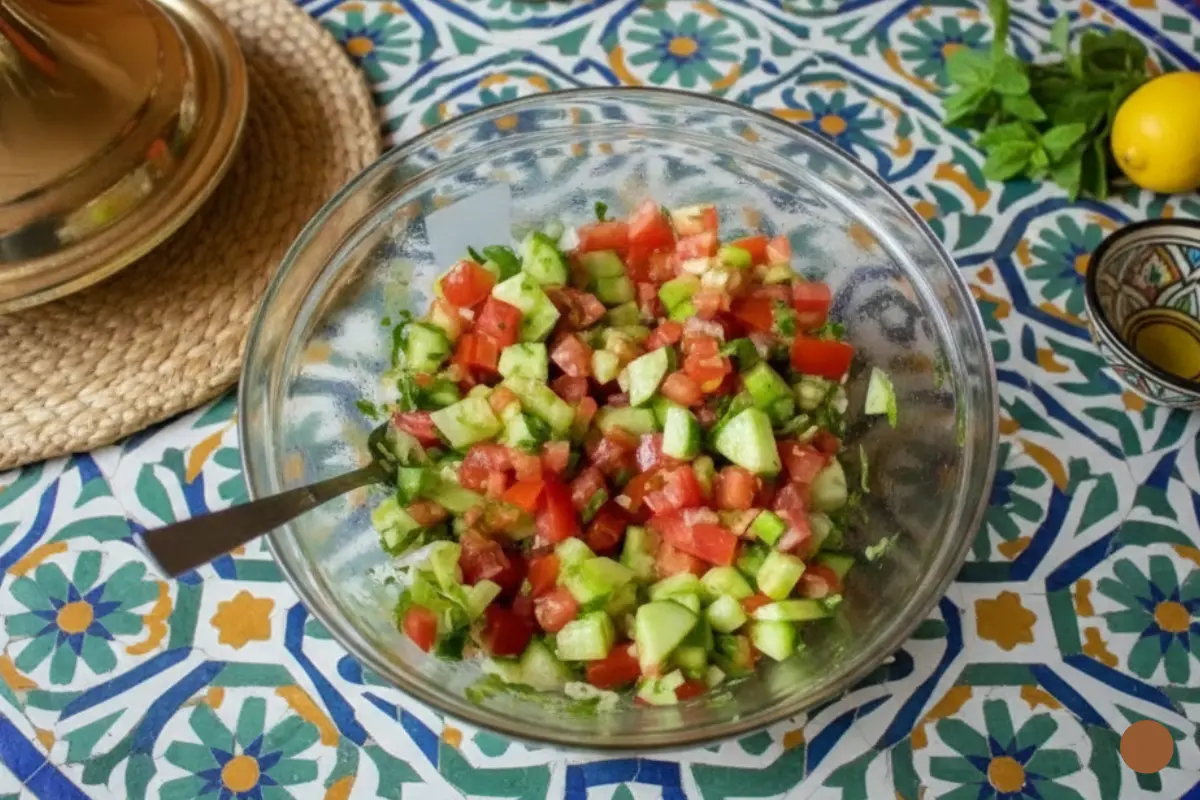
While it may appear similar to Mediterranean chopped salads, the Moroccan version has a distinctive character. The vegetables are typically chopped very finely, almost to the point of a relish [citation:6][citation:10]. The dressing is a simple but bright combination of olive oil and fresh lemon juice. However, what truly sets it apart is the frequent addition of ground cumin—its warm, earthy notes providing an unmistakable Moroccan touch that elevates this salad from simple to sublime [citation:6][citation:8][citation:9].
This salad is incredibly versatile and comes in many variations. Some families add bell peppers for extra crunch [citation:8][citation:9][citation:10]. Others incorporate fresh mint alongside parsley for a burst of coolness [citation:2][citation:5]. A more luxurious version features preserved lemon, whose salty, tangy rind adds an intense depth of flavor [citation:5]. It's often prepared in advance, allowing the vegetables to marinate in the dressing for up to an hour, melding the flavors into a perfect harmony [citation:3][citation:4][citation:5]. Quick to prepare and bursting with freshness, this salad brings the vibrant essence of Moroccan cuisine to any table.
About This Recipe
This simple yet iconic salad, 'Shlada Arobiya,' has ancient roots in the agricultural traditions of the Maghreb. For centuries, Moroccan farmers and home cooks have relied on the fresh, abundant produce of their land—tomatoes introduced from the New World via trade routes, and cucumbers cultivated since antiquity. Its genius lies in its simplicity, transforming a handful of fresh ingredients into a dish that is far greater than the sum of its parts. The inclusion of cumin reflects the profound influence of the spice trade on Moroccan cuisine. As caravans traversed the Sahara, they brought back exotic spices that became integrated into everyday cooking [citation:8][citation:9]. Cumin's warm, earthy notes became a defining feature, elevating this simple vegetable salad to something uniquely Moroccan. Historically, this salad was not just a side dish but a way to make a little food go further. The finely chopped vegetables could be stretched to feed more people and were a refreshing counterpoint to rich, slow-cooked tagines. Families in Fez might add the luxury of preserved lemon [citation:5], while those in coastal areas might use more mint. Its presence on the table, whether for a simple family meal or a grand celebration, is a testament to the Moroccan value of hospitality and the belief that even the most humble ingredients can be transformed into something beautiful and nourishing [citation:1][citation:5].
Nutrition / serving
Recipe Tags
Understanding the Ingredients
Tomatoes
Use ripe, flavorful tomatoes, as they are the heart of the salad. Roma (plum) tomatoes are a good choice for their firm flesh [citation:8][citation:9]. The traditional method often calls for peeling and seeding the tomatoes to achieve a more refined texture, especially if serving to guests [citation:3][citation:4]. Peeling removes the tough skin, while seeding prevents the salad from becoming watery. The flesh is then finely diced.
Cucumbers
In Morocco, a variety of cucumber called 'feggous' is often used, which is similar to an Armenian cucumber [citation:2][citation:3][citation:4]. If using regular cucumbers, they should be peeled (or lightly peeled, leaving some green for color [citation:3][citation:7]), and importantly, seeded before chopping [citation:3][citation:4][citation:8]. The seeds contain excess water that would dilute the dressing. Salting the chopped cucumber and letting it drain for 30 minutes is another effective way to remove excess moisture [citation:1].
Onion
A small red onion is traditional, finely chopped for a sharp, colorful bite [citation:1][citation:5][citation:10]. Some recipes call for marinating the chopped onion briefly in the lemon juice and salt before adding the other ingredients; this tames its raw pungency and infuses it with flavor [citation:10].
Fresh Herbs
Fresh parsley (flat-leaf) is the most common herb, providing a clean, grassy note [citation:2][citation:8][citation:9]. Mint is a frequent and delightful addition, adding a layer of refreshing coolness that pairs beautifully with the other ingredients [citation:2][citation:5]. Cilantro can also be used for a different, more pungent zing [citation:5][citation:6].
Dressing
The dressing is a simple vinaigrette of extra virgin olive oil and fresh lemon juice [citation:1][citation:2][citation:5]. The quality of both ingredients is paramount. Some families use Moroccan vinegar instead of lemon for a slightly different tang [citation:1]. Salt and freshly ground black pepper are essential seasonings.
Signature Spices & Add-ins
Ground cumin is the signature spice that gives this salad its Moroccan identity [citation:6][citation:8][citation:9]. For the best flavor, toast whole cumin seeds in a dry pan for 2 minutes, then grind them fresh [citation:8][citation:9]. Optional but highly recommended add-ins include finely diced bell pepper (green or red) for sweetness and crunch [citation:8][citation:9][citation:10], or finely chopped preserved lemon peel for an intense, briny-citrus flavor that is quintessentially Moroccan [citation:5].
Step-by-Step Cooking Guide
Prepare the Vegetables (The 'Degorging' Method)
35 minWash the cucumbers and tomatoes. Peel the cucumbers and remove the seeds. Finely dice the cucumber flesh. Wash and finely dice the tomatoes; for a more refined salad, peel and seed them first. Finely chop the red onion. Place the chopped cucumber in a colander, sprinkle with a teaspoon of salt, and let it sit for 30 minutes to draw out excess water. After 30 minutes, rinse the cucumber briefly and pat it completely dry with a clean kitchen towel [citation:1].
Tip: This degorging step ensures your salad stays crisp and the dressing doesn't become watery. Pat the cucumber very dry before adding to the bowl.
Prepare the Vegetables (The 'Seeding' Method)
15 minIf you prefer to skip the long draining step, a quicker method is to simply remove the seeds. Lightly peel the cucumbers (leaving some green strips for color). Cut them in half lengthwise and use a small spoon to scoop out the seeds, then dice the flesh. For the tomatoes, peel them (optional) and cut into quarters. Remove the seeds and chop the flesh into small pieces [citation:3][citation:4][citation:7].
Tip: Removing the seeds from both the cucumbers and tomatoes is key to preventing a watery salad. The pieces should be small and uniform.
Combine Vegetables and Herbs
5 minIn a large mixing bowl, combine the prepared cucumbers, tomatoes, and finely chopped red onion. If using bell pepper, add it now. Add your chosen fresh herbs: a generous handful of chopped fresh parsley, and optionally, some fresh mint or cilantro [citation:2][citation:5][citation:8].
Tip: Use the ratio of herbs you prefer. A combination of parsley and mint is particularly refreshing [citation:2][citation:5].
Make the Dressing
5 minIn a small bowl, whisk together the extra virgin olive oil and fresh lemon juice. Add the ground cumin, salt, and pepper to taste. For a more intense cumin flavor, toast 1 teaspoon of cumin seeds in a dry pan over medium heat for 2 minutes until fragrant, then grind them using a mortar and pestle [citation:8][citation:9]. If using preserved lemon, finely chop the rind and add it to the dressing or directly to the salad [citation:5].
Tip: Whisk the dressing well to emulsify it slightly. Taste and adjust the seasoning—the salad should be bright and well-balanced.
Toss and Marinate
5 minPour the dressing over the vegetables and herbs. Toss everything together gently but thoroughly until all ingredients are well coated. If time allows, cover the salad and let it sit at room temperature for 15-30 minutes, or even up to an hour. This marinating time allows the flavors to meld and develop beautifully [citation:3][citation:5][citation:7].
Tip: Don't let it marinate for much longer than an hour, or the vegetables may start to soften too much. If you're in a hurry, it's delicious served immediately as well [citation:5].
Serve
5 minGive the salad a final stir. Transfer it to a serving dish or individual plates. Serve chilled or at room temperature as a refreshing side dish to tagines, couscous, grilled meats, or fish [citation:1][citation:7][citation:8]. It's also wonderful simply with crusty bread for a light snack [citation:1].
Tip: This salad is best served the day it's made. If you have leftovers, store them in an airtight container in the refrigerator for up to a day, but note that the texture will soften.
Common Mistakes to Avoid
✗ A Watery Salad
Fix: This is the most common pitfall. Always remove the seeds from the tomatoes and cucumbers. For extra insurance, you can salt the chopped cucumbers and let them drain for 20-30 minutes, then pat them dry [citation:1].
✗ Using Dried Herbs
Fix: Fresh herbs are non-negotiable. Dried herbs cannot provide the same vibrant freshness and will make the salad taste flat and dusty. Use fresh parsley, mint, or cilantro [citation:5].
✗ Oversalting
Fix: This is especially important if using preserved lemon, which is quite salty. Add salt gradually and taste as you go [citation:5]. Remember that the salt will also draw moisture from the vegetables.
✗ Over-Marinating
Fix: While letting the salad sit for 30-60 minutes is beneficial, leaving it for several hours will cause the vegetables to become limp and soggy. The herbs will also wilt and darken.
✗ Chunky Vegetables
Fix: Moroccan salad is characterized by its very fine dice. Large, chunky pieces won't allow the flavors to meld properly and provide a less pleasant texture. Take the time to chop everything uniformly small [citation:6][citation:10].
Ingredient Substitutions
Instead of: Lemon Juice
Use: Moroccan vinegar or white wine vinegar can be used for a different kind of acidity [citation:1][citation:2][citation:4].
Instead of: Cumin Seeds (ground fresh)
Use: High-quality pre-ground cumin. However, toasting and grinding your own seeds provides a far superior, more aromatic flavor [citation:8][citation:9].
Instead of: Red Onion
Use: Finely chopped shallots or green onions (scallions) for a milder flavor [citation:5].
Instead of: Fresh Parsley
Use: Fresh mint, fresh cilantro, or a combination of all three [citation:2][citation:5].
Instead of: Preserved Lemon
Use: The zest of ½ a fresh lemon can provide a hint of citrus, but it will lack the complex, salty, fermented depth of the real thing [citation:5].
Serving Suggestions
Serve as a refreshing side dish with any tagine, especially lamb or chicken with olives [citation:1].
It is the classic accompaniment to a couscous feast, providing a cool, crunchy contrast to the warm, savory grains [citation:8][citation:9].
Pair it with grilled fish, such as chermoula fish, or grilled meats like kefta (spiced meatballs) [citation:7][citation:8][citation:10].
Use it as a topping for Moroccan flatbreads (khobz) or stuff it into sandwiches for added freshness.
Serve it as part of a 'mezza' spread with hummus, baba ganoush, and other small dishes [citation:8].
For a light lunch, enjoy it on its own with some good crusty bread to soak up the flavorful juices [citation:1].
Storage & Reheating
Storage
This salad is best enjoyed fresh. Store leftovers in an airtight container in the refrigerator for up to 24 hours. The vegetables will release more water and lose their crunch, and the herbs will wilt.
Reheating
Do not reheat. This salad is meant to be served cold or at room temperature.
If you must prepare it in advance, you can chop all the vegetables and store them dry in the fridge. Make the dressing separately, and combine and marinate just before serving for the best texture [citation:5].
Frequently Asked Questions
Recipe by

Samira Tazi
سميرة تازي
Salad & Meze Specialist
View all recipes by Samira →
You May Also Like
Our Ebooks

The Moroccan Vegan
$12.56

Tables of Fez: A Royal Palace Legacy
$22.99

The Soul of Morocco
$20.00
YouTube
Watch step-by-step cooking videos and learn traditional Moroccan techniques.
450+
Subscribers
150+
Videos