
25
Prep (min)
50
Cook (min)
6
Servings
Easy
Level
Introduction
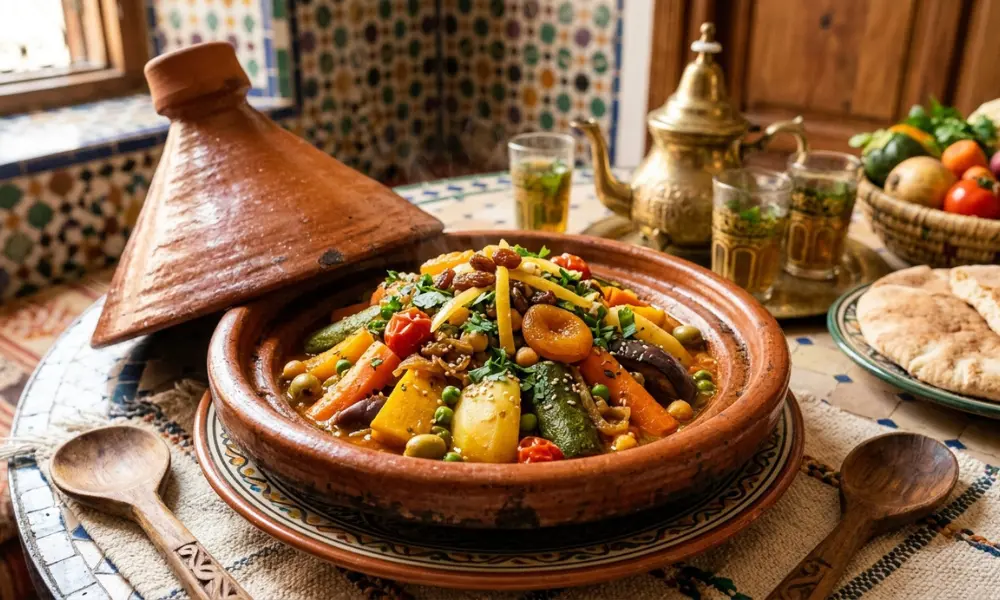
In the heart of Moroccan cuisine, where meat often takes center stage, the Vegetable Tagine stands as a brilliant testament to the country's mastery of plant-based cooking. This is not a mere 'vegetarian option' but a celebrated dish in its own right—a vibrant mosaic of colors, textures, and flavors that showcases Morocco's agricultural bounty. Picture a conical clay tagine filled with a rainbow of vegetables: orange carrots, golden squash, green zucchini, purple eggplant, all simmering gently in a spiced tomato broth that perfumes the kitchen with the warmth of cumin, ginger, and saffron. The magic of this dish lies in its layering—not just of ingredients but of culinary principles. Sweetness from dried apricots or raisins balances earthy vegetables; acidity from tomatoes brightens the richness; spices add complexity without overwhelming; and slow, gentle cooking transforms simple produce into something extraordinary. In Moroccan homes, vegetable tagine represents both practicality and celebration: practical because it makes the most of seasonal, affordable ingredients; celebratory because its beautiful presentation and complex flavors make any meal feel special. The tagine pot itself—with its distinctive conical lid—creates a unique cooking environment where steam circulates, condenses, and trickles back down, bathing the vegetables in their own seasoned juices. This method preserves nutrients while concentrating flavors, resulting in vegetables that are perfectly tender yet retain their individual character. Whether served as a hearty main course during Ramadan, a colorful side dish for festive gatherings, or a comforting family meal on cooler evenings, vegetable tagine embodies Moroccan hospitality at its most generous. Each bite tells a story of Morocco's culinary landscape: the sweetness of Saharan dates, the earthiness of Atlas Mountain root vegetables, the brightness of Mediterranean herbs, all united by spices that traveled ancient trade routes. More than just food, this dish is an edible expression of Moroccan terroir and tradition.
About This Recipe
Vegetable Tagine tells a story of resourcefulness, seasonality, and the deep connection between Moroccan people and their land. While meat-based tagines often receive more attention in international circles, vegetable tagines have sustained Moroccan families for centuries, particularly in regions where meat was a luxury reserved for special occasions. The dish's origins lie in the agricultural rhythms of Morocco, where each season brings different produce to the tagine pot. Spring might feature artichokes and fava beans; summer brings tomatoes, zucchini, and peppers; autumn offers pumpkins and root vegetables; winter provides cabbage, turnips, and stored legumes. This seasonal adaptability made vegetable tagine a cornerstone of Moroccan home cooking. The concept of slow-cooking vegetables in a sealed clay pot predates Islam in North Africa, with Berber communities using similar earthenware vessels for millennia. The distinctive conical lid design—which may have originated in Carthage or been influenced by Roman cooking vessels—creates a unique microclimate where steam condenses and trickles back down, allowing vegetables to cook in their own juices with minimal added liquid. This was particularly valuable in arid regions where water conservation mattered. With the Arab introduction of new spices via trans-Saharan trade routes, simple vegetable stews transformed into complex, aromatic dishes. The sweet-savory combination—likely influenced by Persian culinary traditions—became characteristic, with dried fruits balancing earthy vegetables. In Moroccan Jewish communities, vegetable tagines became Sabbath specialties, slowly cooked overnight to avoid Sabbath cooking restrictions. During French colonization, European vegetables like potatoes and tomatoes became incorporated, though the cooking method remained distinctly Moroccan. In the 20th century, as vegetarianism gained global attention, Moroccan vegetable tagine emerged as a celebrated example of plant-based cuisine that was never 'alternative' but always central. UNESCO's recognition of Moroccan culinary practices includes tagine cooking as intangible cultural heritage, noting its role in social cohesion and cultural identity. Today, vegetable tagine represents multiple strands of Moroccan culture: the respect for seasonal produce, the ingenuity of making much from little, the importance of shared meals, and the artistry of balancing flavors. It's served in humble homes and luxury restaurants, at street stalls and wedding feasts. Each family has their version—some with more spices, some with specific vegetable combinations, some with secret ingredients like a pinch of sugar or a particular herb blend. The dish has traveled globally with Moroccan diaspora and through the Mediterranean diet movement, appreciated for its healthfulness, sustainability, and deliciousness. Yet in Morocco, it remains everyday magic—the transformation of simple vegetables through time, spice, and traditional technique into a meal that nourishes both body and soul. As climate consciousness grows worldwide, vegetable tagine's emphasis on seasonal, local produce and meatless meals feels increasingly relevant, connecting ancient wisdom to modern values. More than a recipe, it's a culinary philosophy: that the humblest ingredients, treated with respect and skill, can become something extraordinary.
Nutrition / serving
Recipe Tags
Understanding the Ingredients
Seasonal Vegetables
The vegetable selection follows seasonality and creates color variety: carrots (2-3, sliced into coins) provide sweetness; zucchini (2 medium, cut into chunks) add green freshness; eggplant (1 medium, cubed) offers meaty texture; potatoes (2 medium, cubed) make it hearty; bell peppers (1-2, sliced) contribute sweetness and color; tomatoes (4 medium, grated) form the sauce base. Winter versions might include turnips, pumpkin, or cabbage. All vegetables should be cut into substantial pieces that hold their shape during cooking.
Chickpeas or Beans
2 cups cooked chickpeas (canned or soaked and cooked) add protein and substance. Chickpeas are traditional, but white beans, fava beans, or lentils work well. If using canned, drain and rinse thoroughly. The legumes absorb the spiced broth beautifully while contributing creamy texture.
Dried Fruits for Sweetness
½ cup mixed dried fruits—typically apricots, raisins, or prunes—provide the sweet counterpoint essential to Moroccan tagines. The fruits plump during cooking, releasing their sweetness into the sauce. Some versions include dates or dried figs. This sweet-savory balance is a signature of Moroccan cuisine.
Moroccan Spice Blend
The aromatic foundation: ground cumin (2 tsp) for earthiness, sweet paprika (1 tbsp) for color and mild sweetness, ground ginger (1 tsp) for warmth, turmeric (1 tsp) for golden color and health benefits, cinnamon (½ tsp) for complexity, and optionally saffron threads (pinch) for luxury. Ras el hanout (1 tbsp) can substitute for individual spices. The spices should be fresh for maximum flavor.
Aromatics & Herbs
Onions (2 medium, thinly sliced) form the flavor base, cooking down into sweet softness. Garlic (4 cloves, minced) adds depth. Fresh cilantro and parsley (½ cup combined, chopped) provide brightness—some cooked with the tagine, some added fresh at the end. Preserved lemon (2 tbsp chopped rind) is traditional but optional.
Cooking Liquid & Thickening
Vegetable broth (3 cups) or water forms the cooking liquid. Tomato paste (2 tbsp) adds depth and body to the sauce. Olive oil (3 tbsp) is used for cooking aromatics and enriches the final dish. The sauce should be substantial enough to coat vegetables but not soupy.
Step-by-Step Cooking Guide
Prepare All Vegetables
20 minWash and cut vegetables: slice carrots into ½-inch coins; cut zucchini into 1-inch chunks; cube eggplant into 1-inch pieces (salt if bitter, rinse after 15 minutes); cube potatoes; slice bell peppers into strips; grate tomatoes (cut in half, grate on box grater, discard skins). Drain and rinse chickpeas if using canned. Slice onions thinly, mince garlic, chop herbs. Measure spices into small bowl. Soak dried fruits in warm water 10 minutes if very dry.
Tip: Keep vegetables separate—added at different times. Uniform cutting ensures even cooking. Grated tomatoes create smooth sauce without peeling.
Build Flavor Base
15 minHeat tagine base or Dutch oven over medium heat. Add 3 tbsp olive oil. Add sliced onions with pinch of salt, cook 8-10 minutes until soft and golden, stirring occasionally. Add minced garlic, cook 1 minute until fragrant. Add tomato paste, cook 1 minute until darkened. Add all spices: cumin, paprika, ginger, turmeric, cinnamon, saffron if using. Stir constantly 30 seconds until very fragrant—blooming spices.
Tip: Onions should be cooked until sweet, not just translucent. Blooming spices in oil releases essential oils for maximum flavor.
Create Sauce and Add Long-Cooking Vegetables
10 minAdd grated tomatoes with their juice to the pot. Stir well, scraping any browned bits. Add vegetable broth. Bring to simmer. Add carrots, potatoes, and drained chickpeas (if using dried, pre-cooked). These need longest cooking. Season with 1 tsp salt (adjust later). Stir gently to submerge. If using tagine pot, place conical lid. If using regular pot, cover with tight-fitting lid.
Tip: Liquid should just cover vegetables. Don't over-season initially—flavors concentrate during cooking.
Simmer Gently
20 minReduce heat to low-medium—maintain gentle simmer with occasional bubbles. Cook covered 20 minutes. Check occasionally—liquid should bubble gently, not boil vigorously. Stir once halfway through if needed, but minimal stirring preserves vegetable shape. After 20 minutes, carrots and potatoes should be starting to soften but not fully cooked.
Tip: Gentle cooking is key—hard boiling breaks vegetables. Use diffuser if cooking on direct heat with clay tagine.
Add Medium-Cooking Vegetables
15 minAdd zucchini, eggplant, and bell peppers. Add drained dried fruits. Stir gently to submerge in sauce. If sauce seems too thick, add ½ cup broth or water. Replace lid, continue simmering 15 minutes. Vegetables should be nearly tender but still hold shape.
Tip: Add delicate vegetables later to prevent mushiness. Dried fruits plump beautifully in the savory broth.
Final Seasoning and Herbs
10 minUncover, check doneness—all vegetables should be tender but not disintegrating. Sauce should have reduced to thick, glossy consistency that coats vegetables. Add preserved lemon if using. Stir in half the chopped fresh herbs. Taste and adjust seasoning: likely needs more salt (start with ½ tsp), black pepper, maybe pinch of sugar if tomatoes are acidic. Simmer uncovered 5 minutes to meld flavors.
Tip: Taste carefully—seasoning makes the dish. The sauce should be flavorful enough to enjoy on its own.
Rest and Garnish
10 minRemove from heat. Let rest covered 10 minutes—this allows flavors to deepen and vegetables to absorb more sauce. Meanwhile, toast almond slivers or pine nuts in dry skillet if using for garnish. Just before serving, sprinkle with remaining fresh herbs and optional toasted nuts.
Tip: Resting time improves flavor distribution. Garnish adds texture contrast and visual appeal.
Serve Traditionally
5 minBring tagine directly to table if using traditional pot (use trivet). Serve family-style with Moroccan bread (khobz) for scooping, or over fluffy couscous. Provide harissa or chili oil for those who want heat. Traditionally, diners eat directly from the communal tagine using bread to scoop vegetables and sauce.
Tip: The presentation is part of the experience. Extra bread is essential for soaking up flavorful sauce.
Common Mistakes to Avoid
✗ Adding All Vegetables at Once
Fix: Different vegetables have vastly different cooking times. Root vegetables (carrots, potatoes) need 30-40 minutes; medium vegetables (zucchini, eggplant) need 15-20; delicate vegetables (tomatoes, greens) need 5-10. Adding all together results in either undercooked carrots or mushy zucchini. Add in stages based on required cooking time.
✗ Overcrowding the Pot
Fix: Too many vegetables packed tightly steam rather than simmer properly, resulting in watery, bland tagine. Vegetables should be in single layer or slightly layered with space for sauce circulation. If pot is too small, cook in batches or use larger pot.
✗ Boiling Instead of Simmering
Fix: Vigorous boiling breaks vegetables into mush and evaporates sauce too quickly. Tagine should cook at gentlest simmer—small bubbles occasionally breaking surface. After initial simmer, reduce heat to lowest setting that maintains gentle cooking.
✗ Underseasoning
Fix: Vegetables and legumes need generous seasoning as they absorb flavors. The broth should taste slightly over-seasoned when tasting during cooking, as flavors dilute when absorbed by vegetables. Taste and adjust at multiple stages.
✗ Stirring Too Frequently
Fix: Constant stirring breaks vegetables and clouds the sauce. Stir only when necessary to prevent sticking or to incorporate new ingredients. The gentle heat of tagine cooking should not require frequent stirring.
✗ Skipping the Onion Caramelization
Fix: Onions should be cooked until golden and sweet, not just translucent. This caramelization forms the flavor foundation. Don't rush—cook onions 8-10 minutes over medium heat until they release sweetness.
✗ Not Blooming Spices
Fix: Adding spices directly to liquid without first cooking in oil results in raw, dusty flavor. Always bloom spices in oil for 30 seconds after onions are cooked to release essential oils and deepen flavor.
Ingredient Substitutions
Instead of: Specific Vegetables
Use: Use seasonal availability: sweet potatoes for regular potatoes, cauliflower for zucchini, green beans for bell peppers, pumpkin or butternut squash for carrots. The principle is variety of color, texture, and flavor.
Instead of: Chickpeas
Use: White beans (cannellini, navy), fava beans, or brown lentils. Lentils will break down more, naturally thickening sauce. For protein boost, add cubed firm tofu or tempeh in last 10 minutes.
Instead of: Dried Fruits
Use: Any combination of raisins, apricots, prunes, dates, or dried figs. For less sweet version, reduce quantity or omit. For sugar-free, use chopped fresh apple or pear added in last 10 minutes.
Instead of: Preserved Lemon
Use: Zest of 1 lemon plus 1 tbsp lemon juice added at end. Or 1 tbsp capers for briny note (different flavor but interesting).
Instead of: Tagine Pot
Use: Dutch oven, heavy-bottomed pot with tight lid, or slow cooker. For slow cooker: cook on low 6-8 hours, add delicate vegetables last hour. For pressure cooker: cook 8 minutes high pressure, quick release.
Serving Suggestions
Traditional: Serve directly from tagine with Moroccan bread for scooping.
Over grains: Ladle over fluffy couscous, quinoa, rice, or bulgur.
With protein: Add hard-boiled eggs, fried halloumi, or grilled tofu on top.
As side: Serve alongside grilled meats or fish as vegetable component.
Mezze style: As part of spread with hummus, baba ganoush, salads, olives.
Bread bowl: Serve in hollowed round bread for dramatic presentation.
With sauces: Offer harissa, yogurt-tahini sauce, or chermoula on side.
For breakfast: Top with poached or fried egg for hearty morning meal.
Stuffed: Use as filling for bell peppers or tomatoes, bake until tender.
Leftover transformation: Blend with broth for hearty vegetable soup.
Storage & Reheating
Storage
Cool completely before storing. Refrigerate in airtight container up to 5 days—flavors improve over 2-3 days. Freeze up to 3 months, though some vegetables may become softer upon thawing. Store without fresh herb garnish.
Reheating
Stovetop: Reheat gently over medium-low heat, adding splash of water or broth if sauce thickened too much. Microwave: Cover, heat at medium power 2-3 minutes, stirring halfway. Oven: 350°F (175°C) covered dish 15-20 minutes. Always add fresh herbs after reheating.
Tagines often taste better next day as flavors meld. If freezing, slightly undercook vegetables so they don't become mushy upon reheating. Sauce may separate when refrigerated—stir well before reheating.
Frequently Asked Questions
Recipe by

Fatima El Amrani
فاطمة العمراني
Master Chef
View all recipes by Fatima →
You May Also Like
Our Ebooks

The Moroccan Vegan
$12.56

Tables of Fez: A Royal Palace Legacy
$22.99

The Soul of Morocco
$20.00
YouTube
Watch step-by-step cooking videos and learn traditional Moroccan techniques.
450+
Subscribers
150+
Videos