
45
Prep (min)
35
Cook (min)
6
Servings
Medium
Level
Introduction
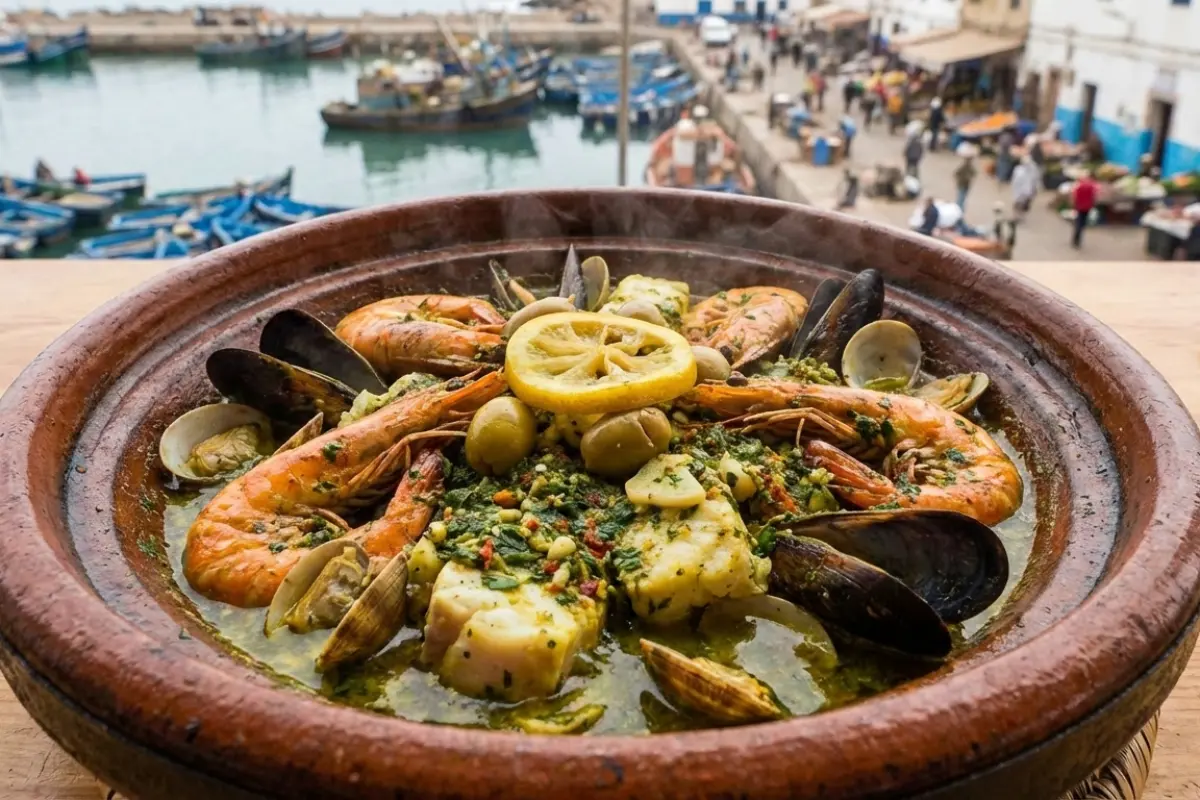
Seafood Tagine with Chermoula is the crown jewel of Morocco's coastal cuisine, a celebration of the ocean's bounty that reflects centuries of fishing traditions along the Atlantic and Mediterranean shores. Originating from the port city of Essaouira—where blue fishing boats return daily with fresh catches—this dish embodies the vibrant, sun-drenched flavors of Moroccan coastal life.
Unlike meat-based tagines that slow-cook for hours, seafood tagine is a delicate dance of precise timing and layering. The star is chermoula, Morocco's iconic marinade and sauce: a vibrant blend of fresh herbs, garlic, citrus, and warm spices that sings with freshness. This emerald-green sauce permeates every element, from firm white fish to tender squid, while vegetables steam to perfection in the tagine's unique conical environment.
The cooking technique is crucial—seafood is added in stages according to cooking time, creating a mosaic of textures: flaky fish, plump shrimp, tender calamari, and briny mussels, all unified by the fragrant chermoula. Served dramatically with the tagine lid lifted to release aromatic steam, this dish is as much a visual spectacle as a culinary one. It represents Morocco's gift for transforming simple ingredients into something extraordinary through masterful spicing and time-honored techniques.
About This Recipe
Seafood Tagine with Chermoula embodies Morocco's rich coastal heritage, particularly from the Atlantic port cities of Essaouira, Safi, and El Jadida, where Portuguese, Berber, and Arab culinary traditions converge. The dish likely evolved from simple fisherman's meals—fresh catch cooked with wild herbs on beach fires—refined over centuries into the sophisticated presentation we know today. Chermoula itself has ancient roots, possibly originating with the indigenous Berbers as a preservation method for fish. During the Andalusian period (8th-15th centuries), Moorish cooks incorporated saffron and citrus techniques. The Portuguese, who occupied coastal cities in the 15th-16th centuries, introduced tomatoes and peppers. What emerged is uniquely Moroccan: the tagine cooking vessel (traditionally for meat) adapted for seafood, creating a steam-braising method perfect for delicate ocean fare. Each coastal town has its variation: Essaouira adds argan oil, Tangier includes more Mediterranean herbs, Dakhla emphasizes fiery chilies. Today, it's a celebration dish for coastal families during Eid and summer gatherings, symbolizing both abundance from the sea and Morocco's culinary ingenuity.
Nutrition / serving
Recipe Tags
Understanding the Ingredients
Mixed Seafood Selection
A variety of seafood ensures textural and flavor interest. Firm white fish (sea bass, monkfish, or halibut) provides substantial pieces that hold shape. Shrimp (preferably with shells for flavor) offer sweetness. Squid rings or whole small squid contribute chewiness. Mussels or clams add briny depth and dramatic presentation. The seafood should be impeccably fresh—this dish showcases, not hides, the quality of ingredients. All seafood is patted dry before cooking to ensure proper searing and sauce adherence.
Chermoula Sauce
Chermoula is the soul of this dish—a vibrant North African marinade/sauce made from fresh cilantro, parsley, garlic, lemon, paprika, cumin, and olive oil. There are two preparations: a chunkier version for marinating the fish, and a smoother one for the sauce base. Quality olive oil is essential for emulsion. Preserved lemon rind adds authentic Moroccan complexity. The balance of herbs to spices is crucial—it should be herb-forward with spices as supporting notes. Chermoula can be made ahead; flavors deepen overnight.
Aromatic Vegetables
A soffritto of onions, peppers, and tomatoes forms the vegetable base that steams under the seafood. Bell peppers (mixed colors for visual appeal) provide sweetness. Tomatoes (fresh and paste) create necessary acidity and liquid. Fennel bulb, though optional, adds wonderful anise notes that complement seafood. The vegetables are cut into similar-sized pieces for even cooking and arranged in the tagine base to create a flavorful 'bed' for the seafood.
Preserved Lemon and Olives
Preserved lemon (just the rind, rinsed) provides the distinctive Moroccan citrus note that cuts through the richness. Green or purple olives (not black) add briny counterpoints. Both are added toward the end to maintain their distinct textures and flavors. In coastal regions, caper berries might also be included. These elements connect this seafood dish to broader Moroccan culinary traditions while complementing the ocean flavors.
Harissa and Spices
A touch of harissa provides gentle warmth—enough to notice but not overwhelm the seafood. Sweet paprika contributes color and subtle smoke. Cumin and coriander ground the herbaceous chermoula with earthy notes. Saffron threads (soaked in warm water) lend luxury, color, and distinct aroma. The spice blend should be balanced—present but never masking the fresh seafood flavors.
Fresh Herbs and Citrus
Beyond the chermoula, additional fresh cilantro and parsley are used for garnish, providing brightness against the cooked herbs in the sauce. Lemon wedges are essential for serving—their fresh juice brightens each bite. Some coastal versions include fresh dill or fennel fronds, which pair beautifully with seafood. The herbs should be vibrant and added just before serving to maintain their fresh character.
Step-by-Step Cooking Guide
Prepare Chermoula and Marinate Seafood
30 minPrepare two batches of chermoula: For marinade (chunky): Pulse 1 cup cilantro, ½ cup parsley, 3 garlic cloves, 1 tsp each paprika, cumin, ½ preserved lemon rind, ¼ cup olive oil, 2 tbsp lemon juice, salt, pepper in food processor until coarsely chopped. For sauce (smooth): Blend remaining herbs with more oil until smooth. Pat seafood dry. Place firm fish in bowl, coat with chunky chermoula. Shrimp and squid in separate bowl with some chermoula. Cover and marinate 20-30 minutes (no longer, as acid 'cooks' seafood). Scrub mussels/clams, debeard if needed.
Tip: Don't over-marinate seafood—30 minutes maximum. The acid in lemon begins to denature proteins. Keep mussels/clams refrigerated in bowl covered with damp cloth until ready.
Prepare Vegetable Base
15 minHeat 3 tbsp olive oil in tagine base or wide shallow pan over medium heat. Add sliced onions, pinch salt. Cook 5 minutes until softened. Add sliced bell peppers, cook 3 minutes. Add minced garlic, grated ginger, chopped tomatoes, tomato paste, and spices (paprika, cumin, pinch saffron). Cook 5-7 minutes until tomatoes break down and mixture thickens. Stir in smooth chermoula sauce. If using fennel, add now. This forms the flavorful bed for seafood.
Tip: The vegetable base should be flavorful but not watery—cook until excess liquid evaporates. Spread evenly in tagine to create uniform cooking surface.
Layer Firm Seafood
5 minArrange marinated fish pieces (shaking off excess marinade) on top of vegetable bed in single layer. Nestle them slightly into vegetables but keep them visible. Drizzle with a little olive oil. Place squid rings/tubes around fish. If using whole small squid, score interiors in crosshatch pattern for even cooking and attractive curl. Cover tagine with lid.
Tip: Leave small spaces between pieces for even cooking and steam circulation. The conical tagine lid will condense steam and drip back onto seafood, keeping it moist.
Initial Steaming Phase
10 minPlace covered tagine over medium-low heat. Cook for 8-10 minutes until fish is about halfway cooked (opaque on bottom but still translucent on top) and squid begins to curl. Do not open lid frequently—the steam environment is crucial. If using traditional clay tagine, use heat diffuser to prevent cracking. The vegetables will release additional liquid creating a flavorful steam.
Tip: Listen for gentle simmering—you should hear soft bubbling. If no sound, increase heat slightly; if vigorous boiling, reduce heat. The tagine creates its own sealed environment.
Add Delicate Seafood and Aromatics
8 minCarefully remove lid (steam will release). Arrange shrimp and mussels/clams (hinge side down so they open upward) around partially cooked fish and squid. Tuck preserved lemon slices and olives into gaps. Drizzle with a little more chermoula sauce. Replace lid immediately. Continue cooking for 6-8 minutes until shrimp turn pink and opaque, mussels/clams open, and fish is cooked through (flakes easily). Discard any unopened shellfish.
Tip: Work quickly when adding seafood to minimize heat loss. The residual heat and steam will continue cooking everything. Don't stir—the layered presentation is part of the dish's beauty.
Final Garnish and Serving
5 minRemove tagine from heat. Let rest covered for 2-3 minutes—seafood will finish cooking and flavors meld. Uncover and sprinkle with fresh chopped herbs (cilantro, parsley). Drizzle with extra virgin olive oil and a squeeze of fresh lemon juice. Serve immediately directly from the tagine, with lemon wedges on the side. The dramatic unveiling of perfectly cooked, aromatic seafood is part of the experience.
Tip: Resting allows juices to redistribute and flavors to settle. Serve with crusty bread to soak up the incredible sauce. Don't let sit too long—seafood continues cooking from residual heat.
Common Mistakes to Avoid
✗ Over-marinating the Seafood
Fix: The acid in chermoula's lemon juice begins to 'cook' seafood (ceviche-style). Marinate firm fish 30 minutes maximum, shrimp/squid 20 minutes. Any longer and texture becomes mushy.
✗ Overcrowding the Tagine
Fix: Seafood needs space to steam properly. Arrange in single layer with small gaps. If tagine is small, cook in batches or use wider base. Crowding creates uneven cooking and steamed rather than seared texture.
✗ Opening Lid Frequently
Fix: The tagine's magic is its sealed steam environment. Each time you open it, heat and steam escape dramatically. Check only once during cooking unless you suspect problems. Listen instead of look.
✗ Overcooking Seafood
Fix: Seafood cooks quickly and becomes tough when overdone. Fish is ready when it flakes easily but is still moist. Shrimp turn from translucent to opaque pink. Remove from heat just before fully done—it continues cooking.
✗ Insufficient Vegetable Base Liquid
Fix: The vegetables must release enough liquid to create steam. If tomatoes aren't juicy, add ¼ cup water or fish stock. Too dry = burned bottom; too wet = boiled seafood. Aim for saucy but not soupy.
Ingredient Substitutions
Instead of: Mixed Seafood
Use: Use what's freshest locally. Monkfish can replace firm white fish. Scallops work beautifully. No squid? Use extra shrimp. No shellfish? Increase fish. For simpler version, use just one type of fish and shrimp.
Instead of: Fresh Chermoula Herbs
Use: If cilantro isn't liked, use all parsley with mint. For different profile, try basil-cilantro mix. In winter, use ½ cup each dried cilantro and parsley rehydrated in warm water, but fresh is vastly superior.
Instead of: Preserved Lemon
Use: Zest of 1 lemon plus 1 tsp lemon juice and pinch of salt. Or use 2 tbsp chopped lemon confit. The fermented quality is unique but fresh lemon works in a pinch.
Instead of: Mussels/Clams
Use: Additional shrimp or scallops. Or omit entirely—the dish is still fantastic. For briny note without shellfish, add capers or chopped green olives.
Instead of: Saffron
Use: Pinch of turmeric for color (but different flavor) or omit. A few threads are worth it for special occasions. Never use artificial coloring.
Serving Suggestions
Serve directly from the tagine at the table for dramatic presentation—the unveiling of steaming, aromatic seafood is part of the experience.
Crusty bread is essential for soaking up the incredible chermoula-infused juices—baguette or Moroccan khobz.
A simple citrus salad (orange, red onion, olives) cleanses the palate between rich bites.
Steamed couscous lightly dressed with olive oil and parsley makes a perfect bed if you want a more substantial meal.
Dry Moroccan rosé or crisp Sauvignon Blanc pairs beautifully with the herbal, citrusy flavors.
Finish with mint tea and orange slices dusted with cinnamon for authentic Moroccan conclusion.
Storage & Reheating
Storage
Best served immediately. If storing, remove seafood from sauce and refrigerate separately up to 24 hours. The seafood texture suffers upon reheating. Sauce keeps 3 days.
Reheating
Gently reheat sauce on stovetop. Briefly warm seafood in sauce just until heated through—do not boil or it will toughen. Microwave seafood briefly (30 seconds) then combine with hot sauce.
Seafood tagine doesn't freeze well—texture becomes rubbery. If you must store, undercook seafood slightly. Add fresh herbs and lemon juice after reheating to revive flavors. Consider making chermoula sauce ahead and cooking seafood fresh.
Frequently Asked Questions
Recipe by

Fatima El Amrani
فاطمة العمراني
Master Chef
View all recipes by Fatima →
You May Also Like
Our Ebooks

The Moroccan Vegan
$12.56

Tables of Fez: A Royal Palace Legacy
$22.99

The Soul of Morocco
$20.00
YouTube
Watch step-by-step cooking videos and learn traditional Moroccan techniques.
450+
Subscribers
150+
Videos