
30
Prep (min)
60
Cook (min)
20
Servings
Medium
Level
Introduction
Sellou, also known as sfouf in some regions, stands as one of Morocco's most unique and traditional confections - a dense, crumbly, intensely nutty mixture that is neither cookie nor candy but something entirely its own. This ancient preparation holds profound cultural significance in Moroccan life, appearing at the most important moments: during Ramadan as energy-dense food to break the fast, for new mothers in the postpartum period to restore strength, at births and circumcisions to celebrate new life, and at weddings and special occasions. The name 'sellou' may derive from Arabic words meaning 'to grind' or 'to powder,' referring to the fine grinding of ingredients that characterizes this sweet.
What makes sellou extraordinary is both its ingredients and its preparation. Unlike most sweets that involve baking or cooking wet ingredients, sellou is made entirely from dry, toasted components that are ground and mixed - toasted flour forms the base, providing nutty flavor and substantial texture; toasted almonds and sesame seeds add richness and protein; warm spices like cinnamon, anise, and sometimes mace create aromatic complexity; melted butter and honey bind everything into a cohesive mixture. The result is something remarkably rich, crumbly, and satisfying - a spoonful provides sustained energy and nutrition, which explains its traditional association with times when the body needs extra nourishment.
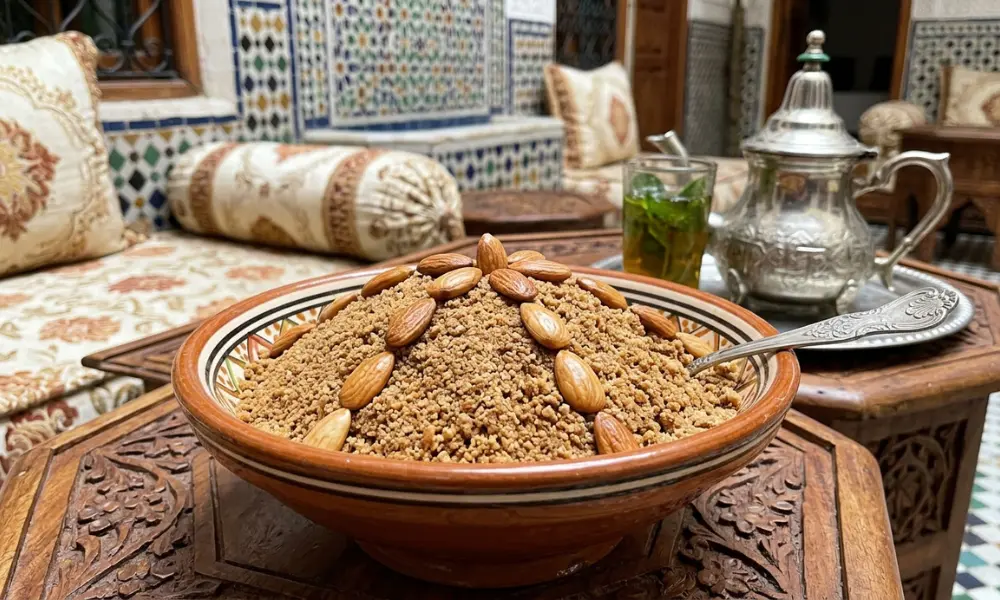
The preparation of sellou is labor-intensive and requires patience, but every Moroccan family considers it worthwhile. The flour must be toasted slowly and carefully until it develops deep, nutty flavor without burning. The almonds and sesame must be toasted until golden and fragrant, then ground. The spices must be fresh and aromatic. Everything is mixed together with melted butter and honey in precise proportions to create a mixture that holds together when pressed but crumbles pleasantly when eaten. Traditionally, sellou is served in shallow bowls or molded into decorative shapes, often garnished with whole almonds. It is eaten with a spoon, accompanied by mint tea, and provides instant energy and satisfaction. This is food with soul - ancient, nourishing, deeply connected to Moroccan identity and tradition.
About This Recipe
Sellou (also known as sfouf or slilou in different regions) represents one of Morocco's most ancient and culturally significant confections, with roots stretching back centuries into Berber culinary traditions that predate Arab influence in North Africa. This unique preparation - neither cookie, candy, nor cake, but something entirely its own - developed as a way to create energy-dense, long-lasting food that could sustain people through physically demanding times. The practice of toasting flour, grinding nuts, and binding with butter and honey created a product that was portable, shelf-stable without refrigeration, nutritious, and deeply satisfying in small quantities. Sellou became intimately associated with the most important moments of Moroccan life, particularly times when the body needed extra nourishment and strength. During Ramadan, when Muslims fast from dawn to sunset, sellou provides ideal food for breaking the fast - it delivers immediate energy from honey and sustained energy from nuts and toasted grains, while its rich, satisfying nature means a small portion provides deep satisfaction. The tradition of preparing sellou during Ramadan became so ingrained that many Moroccan families would not consider the holy month complete without it. Even more significant is sellou's role in postpartum care - for centuries, Moroccan women preparing to give birth would have family members prepare large quantities of sellou to sustain them through the traditional forty-day postpartum recovery period. The combination of easily digestible toasted flour, protein-rich nuts, energy-providing butter and honey, and warming spices was considered ideal for helping new mothers regain strength, promote healing, and support milk production. This tradition reflects ancient nutritional wisdom - modern analysis confirms that sellou provides excellent nutrition for postpartum recovery, with its high calorie density, protein, healthy fats, and easily digestible carbohydrates. The preparation of sellou was traditionally women's work, passed down from mothers to daughters with each family guarding their own proportions and spice combinations. The labor-intensive process - toasting flour for nearly an hour with constant stirring, toasting and grinding nuts and sesame, carefully mixing everything by hand - became a ritual that brought women together. Extended families would gather to make large batches, with different women taking responsibility for different steps, sharing stories and techniques while they worked. This communal preparation reinforced family bonds and ensured traditional knowledge passed to the next generation. The name 'sellou' likely derives from Arabic words related to grinding or powdering, reflecting the fine grinding of ingredients that characterizes the sweet. Regional variations developed throughout Morocco - some areas prefer more sesame, others emphasize almonds; northern regions might use more anise, southern areas favor different spice blends; some families include fenugreek or Arabic gum for binding and nutrition. Despite variations, the essential character remains constant: toasted flour and ground nuts bound with butter and honey, aromatic with warm spices, crumbly yet cohesive. Today, while modern Morocco offers countless sweet options, sellou maintains its special cultural status. It remains the sweet of choice for Ramadan, births, circumcisions, and weddings - occasions where tradition matters most. Moroccan bakeries sell sellou during Ramadan, though most families still prefer homemade versions prepared according to treasured family recipes. In diaspora communities, sellou becomes powerful edible memory, connecting people to their heritage and reminding them of home. The act of making sellou - toasting flour, grinding nuts, mixing by hand - becomes meditation on tradition and family, transforming simple ingredients into something that nourishes not just the body but the soul and cultural identity.
Nutrition / serving
Recipe Tags
Understanding the Ingredients
All-Purpose Flour
The foundation of sellou requires approximately four cups of all-purpose flour that must be carefully toasted until it develops deep, nutty, almost caramelized flavor without burning. This toasting process is crucial and transforms bland raw flour into something aromatic and delicious. The flour should be toasted slowly in a large, wide pan over medium-low heat, stirring almost constantly for thirty to forty minutes until it turns golden beige and smells wonderfully nutty. Some families toast the flour in the oven at 350°F, spreading it on baking sheets and stirring every ten minutes, though stovetop gives more control. The flour must be completely cool before mixing with other ingredients. This toasted flour provides the distinctive flavor and substantial texture that defines sellou. Some traditional recipes use a combination of wheat flour and barley flour for more complex flavor.
Almonds
Blanched almonds (skins removed) provide essential richness, protein, and nutty flavor. You need about two to three cups of whole blanched almonds. The almonds must be toasted until golden and fragrant - spread on a baking sheet and toast at 350°F for eight to ten minutes, stirring once, until aromatic and lightly golden. Watch carefully to prevent burning. Once toasted and cooled, the almonds are ground to a fine powder using a food processor or spice grinder. The ground almonds add richness and help bind the mixture while contributing substantial nutritional value. Some families use a combination of almonds and walnuts or hazelnuts for variation. The nuts should be finely ground but not turned into paste - process in short pulses to maintain powder consistency.
Sesame Seeds
Toasted sesame seeds add distinctive nutty flavor, pleasant crunch, and nutritional value. You need about one cup of raw sesame seeds (white or unhulled). The sesame must be toasted until golden and fragrant - toast in a dry skillet over medium heat, stirring constantly, for three to five minutes until they smell nutty and turn golden. Like the almonds, the toasted sesame is ground to a powder, though some cooks leave half the sesame seeds whole for textural interest. Sesame provides calcium, healthy fats, and distinctive flavor that complements the almonds. Some traditional recipes also include a small amount of toasted flaxseed for additional nutrition and binding properties.
Aromatic Spices
The spice blend in sellou is warm, aromatic, and distinctive. Ground cinnamon is prominent - you need about two to three tablespoons, providing warming sweetness. Ground anise seed (or fennel seed) adds licorice-like notes - about one tablespoon. Some recipes include ground mace or nutmeg (one teaspoon) for additional warmth and complexity. A small amount of ground ginger (one teaspoon) contributes spicy heat. The spices should be very fresh and aromatic - stale spices produce flat-tasting sellou. Some families guard secret spice combinations passed down through generations, including ingredients like cardamom, cloves, or even a pinch of black pepper. The spices provide the aromatic complexity that makes sellou more than just ground nuts and flour.
Butter
Butter is essential for binding the dry ingredients and adding richness. You need about one to one and a half cups (two to three sticks) of unsalted butter, melted and cooled slightly. Traditional Moroccan sellou uses smen (preserved butter) for its distinctive, slightly funky flavor that adds depth and authenticity. If you have access to smen, use it - the difference is remarkable. Regular butter works perfectly well for those without smen. The melted butter is mixed into the toasted flour and nut mixture gradually, coating all the particles and helping them cohere into a crumbly but cohesive mixture. The amount of butter can be adjusted slightly based on the absorbency of your flour and nuts - the mixture should hold together when pressed but remain crumbly.
Honey
Honey provides essential sweetness and additional binding. You need about three-quarters to one cup of good quality honey. Orange blossom honey is traditional and ideal, providing floral notes that complement the spices beautifully. The honey should be warmed slightly so it flows easily and mixes thoroughly into the dry mixture. The amount can be adjusted to taste - traditional sellou is quite sweet, providing quick energy, but modern versions sometimes reduce the honey slightly. The honey combines with the butter to coat all the toasted particles and create the characteristic texture. Some recipes also include a small amount of powdered sugar (about half a cup) for additional sweetness and to help the mixture hold together.
Optional Enrichments
Traditional sellou sometimes includes additional ingredients for enhanced nutrition and flavor. Ground Arabic gum (gum acacia) - about two tablespoons - can be added for its binding properties and traditional postpartum nourishing qualities. Nigella seeds (black cumin) add distinctive flavor and are believed to have health benefits. Some families add a small amount of ground fenugreek seeds. Orange blossom water or rose water (one to two tablespoons) can be mixed in for floral notes. These optional elements reflect regional and family variations.
Step-by-Step Cooking Guide
Toast the Flour
40 minThis is the most crucial and time-consuming step that determines sellou's final flavor. Place four cups of all-purpose flour in a very large, wide, heavy-bottomed pan or skillet. Heat over medium-low heat. Using a wooden spoon or heat-proof spatula, stir the flour almost constantly, scraping the bottom and sides to ensure even toasting. The flour will gradually change color from white to cream to pale beige to golden beige, and the aroma will transform from raw and bland to nutty and caramelized. This process takes thirty to forty minutes of patient stirring. Do not rush by increasing the heat, as this will cause uneven toasting and burnt spots. The flour is ready when it is uniformly golden beige (like peanut butter color), smells wonderfully nutty and toasted, and no raw flour smell remains. Immediately transfer to a large bowl to stop the cooking and let cool completely - hot flour will continue darkening and can burn.
Tip: Patience is essential - do not rush the toasting. Stir constantly near the end as flour darkens quickly. The flour must smell nutty and toasted, not burnt. Cool completely before proceeding.
Toast and Grind the Almonds
15 minPreheat your oven to 350°F. Spread two to three cups of whole blanched almonds on a baking sheet in a single layer. Toast in the oven for eight to ten minutes, stirring once halfway through, until the almonds are golden and very fragrant. Watch carefully, especially toward the end, as nuts go from perfect to burnt quickly. The almonds should smell amazing and be lightly golden. Remove from oven and let cool completely on the baking sheet. Once completely cool, transfer the almonds to a food processor. Pulse in short bursts, scraping down the sides occasionally, until the almonds are ground to a fine powder similar to almond flour. Do not over-process or the nuts will release oils and turn into paste - you want dry powder. If necessary, grind in batches. Transfer the ground almonds to the bowl with the cooled flour.
Tip: Toast almonds until fragrant but not dark brown. Cool completely before grinding. Pulse in short bursts to avoid making almond butter. The powder should be fine but dry.
Toast and Grind the Sesame Seeds
10 minPlace one cup of raw sesame seeds in a dry skillet over medium heat. Stir constantly for three to five minutes until the sesame seeds turn golden and smell nutty and toasted. They will begin to pop slightly when ready. Immediately transfer to a plate to cool - sesame can burn quickly if left in the hot pan. Once completely cool, transfer the toasted sesame to a clean spice grinder or small food processor. Grind to a fine powder. If your spice grinder is small, work in batches. Some traditional recipes leave half the sesame seeds whole for textural interest - if you prefer this, grind only half and mix the whole seeds in later. Add the ground sesame to the bowl with the flour and almonds.
Tip: Stir sesame constantly as it toasts - it can burn in seconds. The sesame should smell nutty and aromatic. Grinding sesame releases its oils, which helps bind the sellou.
Mix All Dry Ingredients and Spices
5 minTo the large bowl containing the cooled toasted flour, ground almonds, and ground sesame, add all your spices: two to three tablespoons of ground cinnamon, one tablespoon of ground anise seed, one teaspoon of ground mace or nutmeg if using, one teaspoon of ground ginger, and any other spices you are including. If using powdered sugar, add about half a cup now. If using ground Arabic gum or other optional dry ingredients, add them as well. Using a large spoon or your hands, mix everything together very thoroughly, breaking up any clumps and ensuring the spices are evenly distributed throughout. The mixture should be uniform in color and aroma, with no pockets of concentrated spice or unmixed flour. This dry mixture can be made ahead and stored in an airtight container for several days if needed.
Tip: Mix very thoroughly to ensure even spice distribution. Break up any lumps in the flour or ground nuts. The dry mixture should smell aromatic and inviting, with balanced spice notes.
Prepare and Add the Butter
10 minMelt one to one and a half cups of unsalted butter (or smen if using) in a small saucepan over low heat. Let the melted butter cool slightly - it should be warm and liquid but not hot. Pour about three-quarters of the melted butter over the dry mixture. Using a large spoon or your clean hands, mix and work the butter into the dry ingredients thoroughly. The mixture will begin to clump together slightly as the butter coats all the particles. Keep mixing until the butter is completely incorporated and the mixture has a sandy, clumpy texture. Add more of the remaining butter gradually if needed - the mixture should hold together when you squeeze a handful but remain crumbly and not paste-like. Different flours absorb liquid differently, so adjust the butter amount as needed.
Tip: Cool the butter slightly before adding to prevent cooking the mixture. Mix thoroughly to ensure every particle is coated with butter. The mixture should clump when pressed but crumble easily.
Add Honey and Final Mixing
10 minWarm three-quarters to one cup of honey in a small saucepan or microwave until it flows easily but is not hot. If using orange blossom water or rose water, mix one to two tablespoons into the warmed honey. Drizzle the honey over the butter-coated mixture. Using your hands (the best tool for this job), work the honey thoroughly into the mixture, squeezing and mixing to distribute it evenly. The mixture will become more cohesive and slightly sticky. Keep working it with your hands for several minutes until the honey is completely incorporated and the mixture has a uniform, crumbly texture that holds together when pressed but falls apart easily when crumbled. Taste at this point and adjust sweetness if needed by adding more honey or a bit more powdered sugar. The sellou should taste rich, nutty, aromatic with spices, and pleasantly sweet.
Tip: Warm honey mixes more easily than cold. Using your hands is most effective for even distribution. The final texture should be cohesive but crumbly - like wet sand that holds its shape.
Shape, Garnish, and Store
10 minOnce the sellou is thoroughly mixed and reaches the proper consistency, you can serve or store it in several traditional ways. For immediate serving, transfer the mixture to shallow serving bowls or decorative platters, packing it down slightly and smoothing the top. Using the back of a spoon or your fingers, create decorative patterns or furrows on the surface. Garnish with whole blanched almonds arranged in attractive patterns - circles, stars, or geometric designs. Alternatively, you can pack the sellou firmly into small decorative molds, then unmold onto a serving platter. Some families shape it into pyramid mounds or other forms. For storage, pack the sellou into airtight containers, pressing it down firmly. It will continue to firm up and develop flavor over the next day or two. Sellou keeps at room temperature for weeks or refrigerated for months due to its low moisture content. Serve in small portions with a spoon, accompanied by Moroccan mint tea.
Tip: Pack sellou firmly for neat presentation but remember it should remain crumbly, not compressed into solid mass. The decorative almond garnish is traditional and attractive. Let flavors meld for at least a day before serving.
Common Mistakes to Avoid
✗ Not Toasting Flour Long Enough
Fix: Undercooked flour tastes raw and bland, ruining sellou's distinctive flavor. Toast patiently for thirty to forty minutes, stirring constantly, until the flour is golden beige and smells deeply nutty. There are no shortcuts.
✗ Burning the Flour or Nuts
Fix: Burnt ingredients create bitter, acrid sellou. Use medium-low heat and stir constantly, especially near the end of toasting. Watch nuts carefully as they burn quickly. If anything burns, start over with fresh ingredients.
✗ Adding Butter or Honey While Ingredients Are Hot
Fix: Hot flour or nuts will cook or seize when fat is added, creating clumpy, uneven texture. Always cool toasted ingredients completely before adding butter or honey for smooth, even mixing.
✗ Making the Mixture Too Wet or Too Dry
Fix: Too much butter/honey creates paste-like sellou; too little makes it powdery and won't hold together. The mixture should clump when pressed but crumble easily. Adjust gradually - you can always add more butter or honey.
✗ Not Grinding Nuts Finely Enough
Fix: Coarsely ground nuts create grainy texture instead of the smooth, cohesive mixture sellou should have. Grind almonds and sesame to fine powder for proper texture, but do not over-process into paste.
✗ Using Stale or Old Spices
Fix: Stale spices produce flat, lifeless sellou. Use fresh, aromatic spices, especially cinnamon and anise, which are prominent. Check dates and smell spices before using - they should be fragrant and potent.
✗ Not Mixing Thoroughly
Fix: Uneven mixing creates pockets of concentrated spice or unincorporated flour. Mix the dry ingredients very thoroughly first, then work the butter and honey in completely with your hands for even distribution.
Ingredient Substitutions
Instead of: All-Purpose Flour
Use: A combination of wheat flour and barley flour is traditional. Whole wheat flour can substitute for nuttier flavor. For gluten-free, use rice flour or a gluten-free flour blend, though texture will differ slightly.
Instead of: Blanched Almonds
Use: Walnuts, hazelnuts, or a combination of nuts work beautifully for different flavor profiles. Peanuts can substitute for more affordable sellou, though less traditional. Toast and grind any nuts you use.
Instead of: Butter or Smen
Use: Ghee (clarified butter) works similarly to butter. For dairy-free, use melted coconut oil, though the flavor will differ. Smen is ideal but hard to find outside Morocco - regular butter is a good substitute.
Instead of: Honey
Use: Date syrup or pomegranate molasses create different but delicious flavor profiles. Maple syrup works but is not traditional. Powdered sugar alone can sweeten, but honey provides binding and moisture.
Instead of: Anise
Use: Fennel seed can substitute for similar licorice notes. Caraway provides different but pleasant flavor. If you dislike anise/licorice flavors, omit and increase cinnamon and add cardamom.
Serving Suggestions
Serve sellou traditionally in shallow bowls or decorative platters, garnished with whole almonds arranged in attractive patterns.
Accompany with Moroccan mint tea - the tea's refreshing qualities balance sellou's richness perfectly.
During Ramadan, serve sellou as part of the iftar spread for breaking the fast - it provides instant energy and satisfaction.
For new mothers, serve sellou daily during the postpartum period as nourishing, energy-dense food to restore strength.
Present sellou at births, circumcisions, and weddings as traditional celebratory food symbolizing prosperity and blessing.
Serve small portions - sellou is very rich and filling. One or two spoonfuls with tea is traditional and satisfying.
Pack sellou into decorative molds or shape into small pyramids for elegant presentation at special occasions.
Provide small spoons for eating - sellou is traditionally eaten with a spoon, taking small bites with tea between.
For modern serving, roll sellou into small balls or press into bars for portion-controlled, portable treats.
Sellou makes an excellent homemade gift during Ramadan or special occasions, packed in decorative containers.
Storage & Reheating
Storage
Sellou's low moisture content makes it incredibly shelf-stable. Store in airtight containers at room temperature for up to one month, or refrigerate for up to three months. Some families store sellou for even longer periods. The flavors actually improve and meld during the first few days of storage, so making sellou several days before serving is ideal. Pack the sellou firmly into containers to prevent excessive air exposure. If storing for extended periods, layer parchment paper between sellou portions. Sellou can also be frozen for up to six months - thaw at room temperature before serving.
Reheating
Sellou is never reheated as it is meant to be served at room temperature or cool. If refrigerated, bring to room temperature thirty minutes before serving for best flavor and texture. If the mixture has become too firm or dry during storage, you can work in a small amount of melted butter or honey to restore proper consistency.
Sellou keeps excellently due to low moisture and high fat content from nuts and butter. The texture may firm up during storage, which is normal. If it becomes crumbly or dry, mix in a bit more butter. Store in cool, dry place away from humidity for longest shelf life.
Frequently Asked Questions
Recipe by

Abdrahman Idrissi
عبد الرحمن الإدريسي
Pastry & Bread Chef
View all recipes by Abdrahman →
You May Also Like
Our Ebooks

The Moroccan Vegan
$12.56

Tables of Fez: A Royal Palace Legacy
$22.99

The Soul of Morocco
$20.00
YouTube
Watch step-by-step cooking videos and learn traditional Moroccan techniques.
450+
Subscribers
150+
Videos