
25
Prep (min)
90
Cook (min)
8
Servings
Medium
Level
Introduction
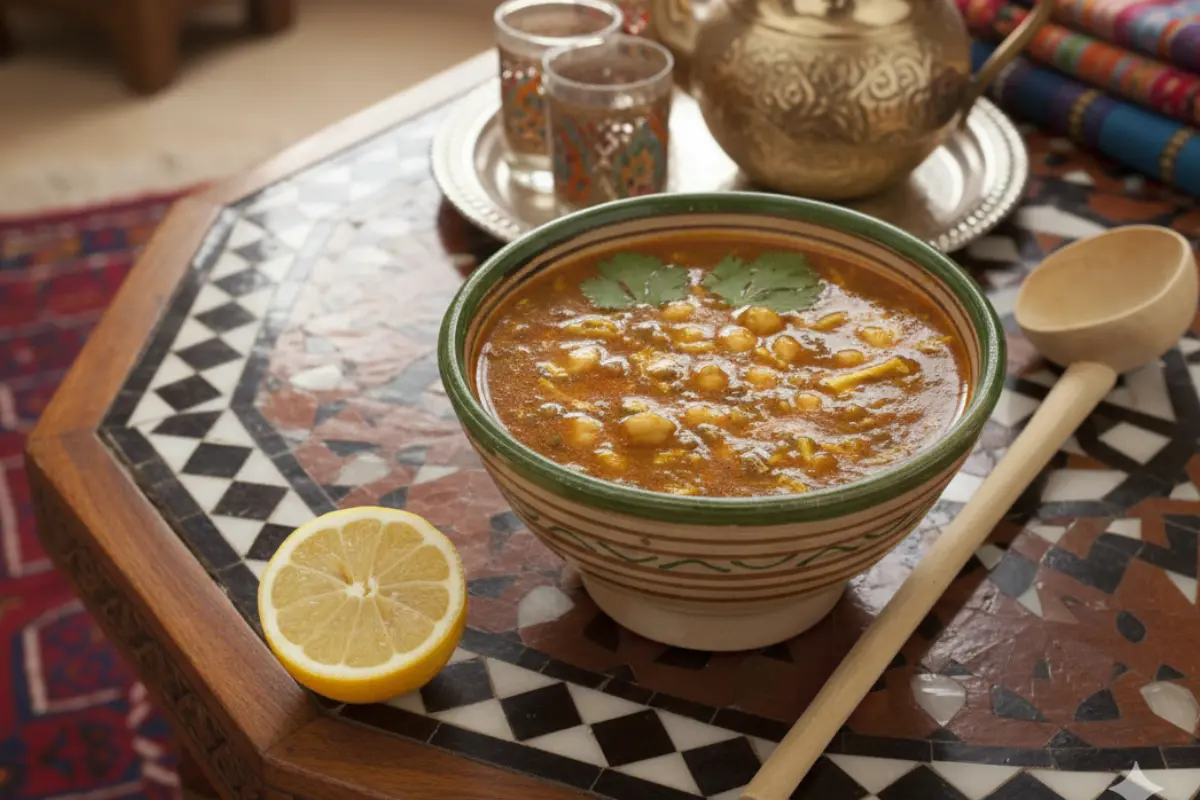
Harira stands as the soul of Moroccan culinary tradition, a soup so deeply woven into the fabric of Moroccan culture that it transcends mere sustenance to become a symbol of family, faith, and heritage. While enjoyed year-round, harira achieves its most sacred status during Ramadan, when the call to prayer signals the breaking of the fast and families gather around steaming bowls of this nourishing, aromatic soup.
The name 'harira' comes from the Arabic word 'harir,' meaning silk, a reference to the soup's luxuriously smooth, velvety texture achieved through a traditional thickening technique called 'tedouira.' This method involves whisking flour with water to create a silky liaison that transforms the broth into something truly special. Every Moroccan family has their own closely guarded harira recipe, passed down through generations, with subtle variations that reflect regional preferences and family traditions.
What makes harira extraordinary is its perfect nutritional balance and deeply satisfying nature. The combination of protein-rich lamb and legumes, energy-providing grains, and vitamin-packed vegetables creates a complete meal in a bowl. The warming spices not only add incredible depth of flavor but also aid digestion, making this soup ideal for breaking a day-long fast. Whether you are observing Ramadan, seeking comfort on a cold evening, or simply exploring the rich tapestry of Moroccan cuisine, this authentic harira recipe will transport you straight to a Moroccan family table.
About This Recipe
Harira soup represents the heart and soul of Moroccan culinary tradition, with roots stretching back centuries. While enjoyed throughout the year, harira holds special significance during Ramadan as the traditional soup served at iftar to break the daily fast. The practice of breaking the fast with harira is so deeply ingrained in Moroccan culture that the evening call to prayer is sometimes colloquially referred to as 'harira time.' Every Moroccan family treasures their own harira recipe, passed down through generations of mothers and grandmothers, with each region and household adding their own distinctive touches. The soup's perfect nutritional balance of protein, carbohydrates, and vegetables makes it ideal for gently nourishing the body after a day of fasting. Beyond Ramadan, harira appears at celebrations, family gatherings, and as comfort food during cold winter evenings. The name 'harira' itself derives from 'harir,' the Arabic word for silk, referring to the soup's luxuriously smooth texture achieved through the traditional tedouira technique. This beloved soup embodies Moroccan hospitality, warmth, and the timeless tradition of gathering family around a shared meal.
Nutrition / serving
Recipe Tags
Understanding the Ingredients
Lamb or Beef
Traditional harira uses lamb shoulder or shank, cut into small chunks. The meat should include some bone for added richness and depth of flavor. Lamb provides an authentic, slightly gamey taste that defines classic harira, though beef chuck works wonderfully as a substitute. The key is choosing cuts with enough fat and connective tissue to remain tender and flavorful during the long cooking process. The meat will break down beautifully, becoming melt-in-your-mouth tender while infusing the broth with incredible richness. For a lighter version, you can use boneless cuts, but bone-in meat contributes significantly to the soup's body and traditional character.
Chickpeas and Lentils
The combination of chickpeas and lentils creates harira's signature hearty texture and provides substantial protein and fiber. Dried chickpeas that have been soaked overnight are traditional and offer the best texture and flavor, though canned chickpeas work in a pinch. Brown or green lentils are preferred as they hold their shape during cooking, unlike red lentils which break down completely. These legumes not only thicken the soup naturally but also make it incredibly filling and nutritious. The earthy, nutty flavor of the legumes complements the meat beautifully while making the soup satisfying enough to be a complete meal.
Tomatoes
Fresh ripe tomatoes form the flavorful base of harira's broth, providing acidity, sweetness, and a beautiful russet color. Moroccan cooks traditionally grate fresh tomatoes to create a thick, pulpy puree that integrates seamlessly into the soup. If fresh tomatoes are not at their peak, high-quality canned crushed tomatoes or tomato puree work excellently. Some recipes also include a few tablespoons of tomato paste for concentrated tomato flavor and deeper color. The tomatoes balance the richness of the meat and provide the characteristic tangy undertone that makes harira so refreshing despite its heartiness.
Fresh Herbs
A generous amount of fresh cilantro and parsley is absolutely essential to authentic harira. These herbs are not merely garnishes but fundamental flavor components added in two stages during cooking and as a fresh finish. The herbs provide a bright, green freshness that cuts through the richness and adds complexity. Celery leaves are also traditional, contributing a subtle, aromatic quality. Always use fresh herbs rather than dried, as their vibrant flavor is irreplaceable. The abundance of fresh herbs is one of the elements that makes harira feel light and refreshing despite being a substantial, filling soup.
Onions and Aromatics
Finely diced onions create the aromatic foundation of harira, breaking down during cooking to add natural sweetness and body to the broth. Fresh garlic and ginger provide warming, pungent notes that are hallmarks of Moroccan cuisine. The aromatics should be chopped very fine so they integrate completely into the soup rather than remaining as distinct pieces. These ingredients create the flavor base that supports and enhances the spices, meat, and legumes.
Spice Blend
Harira's spice profile is warm, complex, and unmistakably Moroccan. Ground ginger and turmeric provide earthy warmth and a golden hue. Black pepper adds gentle heat. Cinnamon contributes subtle sweetness without making the soup taste dessert-like. A pinch of saffron threads, while optional, adds luxurious floral notes and deepens the color beautifully. The spices work together to create layers of flavor that develop and intensify during the long cooking process. Freshly ground spices provide the most vibrant flavor and are worth the extra effort.
Flour for Tedouira
The tedouira is harira's signature finishing technique that sets it apart from other soups. All-purpose flour is whisked with cold water until completely smooth, then stirred into the hot soup during the final minutes of cooking. This creates a silky, slightly thickened consistency that coats your spoon and gives harira its characteristic velvety texture. The tedouira also helps bind all the ingredients together, creating a harmonious whole. Some modern cooks skip this step, but it is traditional and transforms the soup from good to exceptional.
Vermicelli or Rice
Small pasta such as broken vermicelli noodles, orzo, or langues d'oiseau (bird's tongue pasta) adds body and makes the soup more substantial. Alternatively, rice can be used for a gluten-free version. The pasta or rice is added toward the end of cooking and absorbs some of the flavorful broth while contributing pleasant texture. This starch component makes harira satisfying enough to be the main course rather than just a starter.
Step-by-Step Cooking Guide
Prepare and Soak the Legumes
10 minIf using dried chickpeas, place them in a large bowl and cover with plenty of cold water, at least three inches above the chickpeas. Add a pinch of baking soda to help soften them. Let soak overnight or for at least eight hours. Before cooking, drain and rinse the chickpeas thoroughly. Sort through the lentils to remove any debris or stones, then rinse them in a fine-mesh strainer under cold running water. The lentils do not require soaking. This advance preparation is crucial for achieving the proper texture in your finished soup. If you are short on time, canned chickpeas can substitute, but rinse them very well to remove excess sodium.
Tip: Plan ahead for the chickpea soaking. If you forget to soak overnight, use the quick-soak method by boiling them for two minutes, then letting them sit covered for one hour before draining.
Prepare All Ingredients
15 minDice the onions very finely into small, uniform pieces. Mince the garlic cloves and grate or finely mince the fresh ginger. If using fresh tomatoes, grate them on the large holes of a box grater, discarding the skins, to create a thick puree. Alternatively, crush canned tomatoes by hand. Finely chop the fresh cilantro, parsley, and celery leaves if using, keeping them separate. Cut the lamb or beef into bite-sized chunks, roughly one-inch pieces, trimming excess fat but leaving some for flavor. Having everything prepared before you start cooking makes the process smooth and ensures nothing burns while you are chopping.
Tip: Mise en place is especially important for harira because once you start cooking, you will be adding ingredients at specific times. Set out all your spices in small bowls for easy access.
Brown the Meat and Build the Base
12 minHeat two tablespoons of olive oil in a large, heavy-bottomed pot or Dutch oven over medium-high heat. Add the meat pieces in a single layer without crowding, working in batches if necessary. Brown the meat on all sides for about six to eight minutes total, developing a deep golden crust. Do not rush this step as the caramelization creates the foundation of flavor. Transfer browned meat to a plate. Reduce heat to medium, add another tablespoon of oil if needed, then add the diced onions. Sauté for five minutes until softened and translucent. Add the garlic and fresh ginger, stirring constantly for one minute until fragrant. Add all the ground spices and saffron if using, stirring for 30 seconds to bloom the spices and release their essential oils.
Tip: The fond left on the bottom of the pot from browning the meat is flavor gold. Make sure to scrape it up as you sauté the onions. If anything starts to burn, add a splash of water and scrape with a wooden spoon.
Add Tomatoes and Begin the Simmer
8 minAdd the grated fresh tomatoes or crushed canned tomatoes to the pot, along with tomato paste if using. Stir well to combine with the aromatics and spices. Cook for about five minutes, stirring occasionally, until the tomatoes break down and the mixture thickens slightly. Return the browned meat to the pot along with any accumulated juices. Add the drained chickpeas and lentils. Pour in eight cups of water or enough to cover everything by about two inches. Add half of your chopped fresh herbs, reserving the rest for later. Season with salt and pepper. Bring the mixture to a boil over high heat, then immediately reduce to low heat to maintain a gentle simmer. Cover the pot with the lid slightly ajar to allow steam to escape.
Tip: Do not add too much water initially as the ingredients will release moisture as they cook. You can always add more liquid later if needed, but reducing excess liquid takes time and can overcook the ingredients.
Simmer Until Tender
70 minAllow the soup to simmer gently for 60 to 75 minutes, stirring occasionally to prevent anything from sticking to the bottom. The meat should become very tender and almost falling apart, and the chickpeas should be completely soft and creamy inside. The lentils will have broken down partially, helping to naturally thicken the soup. Check the liquid level periodically. If the soup becomes too thick or the liquid level drops significantly, add more water or stock a cup at a time. The consistency should be thick and hearty but still soupy, not stew-like. Taste and adjust salt and pepper as needed.
Tip: Maintain a gentle simmer throughout cooking. If the soup boils too vigorously, the meat will toughen and the chickpeas may burst. Low and slow is the key to tender, flavorful results.
Add Pasta and Prepare Tedouira
12 minOnce the meat and chickpeas are completely tender, add your vermicelli, broken into small pieces, or rice to the pot. Stir well and simmer for eight to ten minutes until the pasta is cooked al dente or the rice is tender. While the pasta cooks, prepare the tedouira by whisking three tablespoons of all-purpose flour with half a cup of cold water in a small bowl until completely smooth with no lumps. Gradually pour this mixture into the simmering soup while stirring constantly with a wooden spoon or whisk. Continue stirring for two to three minutes as the soup thickens to a silky, velvety consistency. Add the remaining fresh herbs and stir to combine.
Tip: The tedouira must be added slowly while stirring constantly to prevent lumps. If lumps form, use an immersion blender briefly to smooth them out. The soup should coat the back of a spoon but remain pourable.
Final Adjustments and Rest
8 minTaste the soup and adjust seasoning with additional salt, pepper, or a squeeze of fresh lemon juice if needed to brighten the flavors. The soup should be well-seasoned and balanced, with the richness of the meat and legumes complemented by the brightness of herbs and tomatoes. Turn off the heat and let the harira rest for five to ten minutes before serving. This resting period allows the flavors to settle and the tedouira to fully integrate, creating the signature silky texture. The soup will thicken slightly as it sits.
Tip: Harira tastes even better the next day after the flavors have had time to meld. If reheating, you may need to add a bit more water as the pasta or rice will continue to absorb liquid.
Common Mistakes to Avoid
✗ Adding Chickpeas Without Soaking
Fix: Unsoaked chickpeas will never soften properly and will remain hard and chalky even after hours of cooking. Always soak dried chickpeas overnight or use the quick-soak method. Canned chickpeas are an acceptable shortcut when time is limited.
✗ Skipping the Browning Step
Fix: Browning the meat is essential for developing deep, complex flavors and creating fond on the bottom of the pot. This step cannot be skipped without significantly compromising the final flavor. Take the time to properly brown the meat in batches if necessary.
✗ Using Dried Herbs Instead of Fresh
Fix: Fresh herbs are absolutely crucial to authentic harira. Dried herbs cannot replicate the bright, vibrant flavor that fresh cilantro and parsley provide. This is one ingredient where substitution drastically affects the final result.
✗ Boiling Too Vigorously
Fix: Harira requires gentle, patient simmering. Boiling too hard will make the meat tough, cause chickpeas to burst, and evaporate too much liquid. Maintain a low, gentle simmer throughout the cooking process.
✗ Making Lumpy Tedouira
Fix: Lumps form when the flour mixture is not whisked smooth enough or is added too quickly without constant stirring. Always whisk the flour and water until completely smooth, then add gradually to the hot soup while stirring constantly.
✗ Adding Too Much Liquid
Fix: Harira should be thick and hearty, not thin and watery. Start with less liquid than you think you need. You can always add more during cooking, but reducing excess liquid is difficult without overcooking the ingredients.
Ingredient Substitutions
Instead of: Lamb
Use: Beef chuck or shank works excellently and is more widely available. For a lighter version, use chicken thighs, though this is less traditional. Vegetarian versions can omit meat entirely and increase the legumes, adding vegetable stock for depth.
Instead of: Dried Chickpeas
Use: Two 15-ounce cans of chickpeas, drained and rinsed very well. Add them during the last 30 minutes of cooking rather than at the beginning since they are already tender.
Instead of: Fresh Tomatoes
Use: One 28-ounce can of crushed tomatoes or tomato puree. You can also use diced canned tomatoes crushed by hand. Add two tablespoons of tomato paste for concentrated flavor and deeper color.
Instead of: Vermicelli
Use: Short rice, orzo, ditalini, or any small pasta shape. For gluten-free, use rice or gluten-free pasta. Each will add slightly different texture but all work well.
Instead of: Saffron
Use: While saffron adds authentic flavor and color, it can be omitted without drastically affecting the soup. An extra pinch of turmeric can provide color but not the distinctive taste.
Instead of: Fresh Ginger
Use: One-half teaspoon of ground ginger, though fresh is strongly preferred for its clean, bright flavor. Add ground ginger with the other spices rather than at the beginning.
Serving Suggestions
Serve harira traditionally with dates on the side for breaking the fast during Ramadan. The natural sweetness of dates perfectly complements the savory soup.
Accompany with fresh lemon wedges and allow each person to squeeze lemon juice into their bowl according to taste. The acidity brightens the rich flavors beautifully.
Offer shabakia (Moroccan sesame cookies) or chebakia alongside for a traditional Ramadan iftar experience. The sweet, honeyed cookies provide a delightful contrast.
Serve with crusty Moroccan bread or khobz for dipping and soaking up the delicious broth. Bread is considered essential for a complete harira experience.
Garnish each bowl with extra fresh cilantro and parsley, and provide additional ground cinnamon at the table for those who enjoy extra warmth and sweetness.
For a complete meal, follow harira with Moroccan mint tea and assorted pastries. This traditional progression aids digestion and provides a satisfying conclusion.
Storage & Reheating
Storage
Allow harira to cool completely before transferring to airtight containers. Store in the refrigerator for up to five days. Harira is actually one of those magical dishes that tastes better the next day as the flavors continue to develop and meld. The soup will thicken considerably in the refrigerator as the pasta or rice absorbs more liquid and the tedouira sets. For longer storage, freeze in portion-sized containers for up to three months. Freeze without the pasta or rice if possible, adding fresh pasta when reheating for better texture.
Reheating
Reheat gently on the stovetop over medium-low heat, adding water or stock as needed to reach your desired consistency. The soup will have thickened significantly during storage. Stir frequently and heat until completely warmed through, about fifteen minutes from refrigerated. If reheating from frozen, thaw overnight in the refrigerator first. Avoid using high heat, which can cause the bottom to burn while the top remains cold. You can also reheat individual portions in the microwave, covered, stirring every minute until hot throughout.
Add fresh herbs just before serving rather than storing them in the soup, as they lose their vibrant color and flavor over time. If the soup becomes too thick after storage, thin it with water or stock rather than trying to cook it longer. Taste and adjust seasoning after reheating, as flavors can mellow with storage.
Frequently Asked Questions
Recipe by

Nora Alaoui
نورة العلوي
Soup & Stew Expert
View all recipes by Nora →
You May Also Like
Our Ebooks

The Moroccan Vegan
$12.56

Tables of Fez: A Royal Palace Legacy
$22.99

The Soul of Morocco
$20.00
YouTube
Watch step-by-step cooking videos and learn traditional Moroccan techniques.
450+
Subscribers
150+
Videos