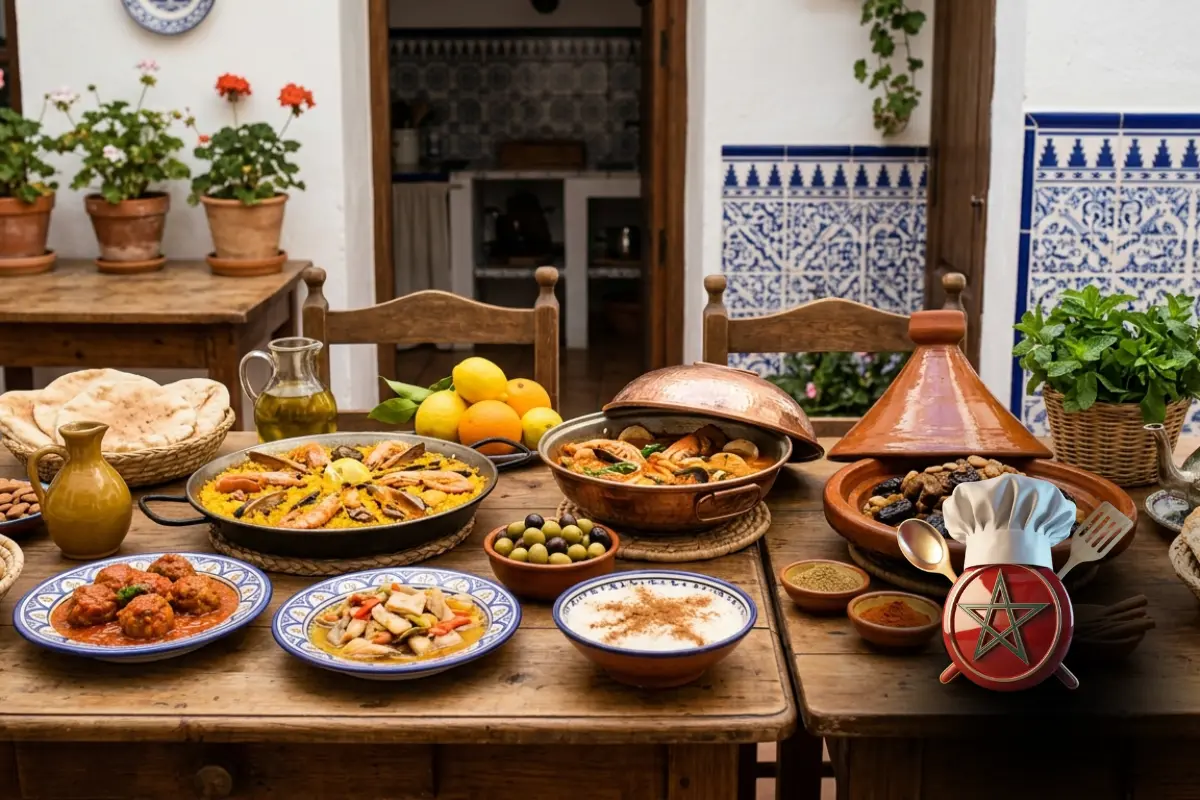
The aromatic spices wafting from a Spanish paella pan or the complex flavors of a Portuguese pastéis de nata tell a story that stretches far beyond the Iberian Peninsula. These beloved dishes carry the DNA of North African cuisine, particularly Moroccan culinary traditions that crossed the Strait of Gibraltar centuries ago and forever changed the gastronomic landscape of Spain and Portugal.
When the Moors conquered the Iberian Peninsula in 711 CE, they brought with them more than just political and architectural influences—they carried a treasure trove of culinary knowledge, spices, and cooking techniques that would fundamentally transform European cuisine. This cultural exchange created a unique fusion that continues to define Spanish and Portuguese cooking today, making it distinctly different from other European culinary traditions.
Understanding this culinary connection helps us appreciate why Spanish and Portuguese cuisines are so rich in flavor, why certain spices are essential to their cooking, and how the Mediterranean diet we celebrate today was shaped by North African wisdom. From the saffron in paella to the cinnamon in Portuguese desserts, the Moroccan influence runs deep through every layer of Iberian gastronomy.
The Historical Foundation of Culinary Exchange
The Moorish conquest of the Iberian Peninsula in the 8th century marked the beginning of nearly eight centuries of Islamic rule in various parts of Spain and Portugal. This period, known as Al-Andalus, became one of history's most significant examples of cultural and culinary fusion. The Moors, primarily from Morocco and other parts of North Africa, established sophisticated urban centers in cities like Córdoba, Seville, and Granada, creating melting pots where culinary traditions merged and evolved.
During this extended period, Moroccan merchants, artisans, and scholars didn't just bring their knowledge of mathematics, astronomy, and architecture—they brought their mothers' recipes, their understanding of spice combinations, and their sophisticated agricultural techniques. The introduction of advanced irrigation systems allowed for the cultivation of new crops, while the establishment of spice trade routes brought exotic ingredients that were previously unknown in medieval Europe.
The culinary exchange wasn't one-sided. As Moroccan settlers adapted to their new homeland, they incorporated local Iberian ingredients and techniques into their cooking, creating hybrid dishes that satisfied both nostalgic memories and practical necessities. This fusion process was gradual and organic, spanning generations of families who called Al-Andalus home.
Even after the Reconquista gradually pushed Moorish influence out of the Iberian Peninsula, culminating with the fall of Granada in 1492, the culinary impact remained deeply embedded in the food culture. Spanish and Portuguese cooks had spent centuries learning and adapting these techniques, and many families of Moorish descent continued to live in the region, preserving and passing down their culinary knowledge through generations.
The influence extended beyond just recipes and ingredients. Moroccan culinary philosophy, which emphasized the harmony of flavors, the importance of hospitality, and the use of food as medicine, became integral to Iberian food culture. This holistic approach to cooking and eating continues to characterize Spanish and Portuguese cuisine today, setting it apart from the more straightforward cooking styles found in other parts of Europe.
Spices and Seasonings: The Aromatic Revolution
Perhaps nowhere is the Moroccan influence more evident than in the spice cabinets of Spanish and Portuguese kitchens. Before the Moorish conquest, European cooking was relatively bland by today's standards, relying heavily on salt and local herbs for flavor. The arrival of North African cooks introduced a rainbow of spices that transformed the Iberian palate forever.
Saffron stands as the crown jewel of this spice revolution. While this precious spice originated in Greece, it was the Moors who perfected its cultivation in the Spanish regions of La Mancha and other areas. Today, Spanish saffron is considered among the world's finest, and it's impossible to imagine authentic paella, many rice dishes, or traditional Spanish desserts without its distinctive golden color and complex flavor profile.
Cumin found its way into Spanish chorizo, Portuguese linguiça, and countless stews and meat preparations. This earthy spice, so fundamental to Moroccan cuisine, became equally essential to Iberian cooking, particularly in the preparation of preserved meats and robust winter dishes.
The introduction of coriander seeds and fresh cilantro added bright, citrusy notes to Portuguese cuisine especially. Portuguese coriander-based dishes like coentrada showcase this influence directly, while the liberal use of fresh cilantro in Portuguese cooking contrasts sharply with other European cuisines where this herb is rarely used.
Cinnamon and other sweet spices revolutionized Iberian dessert-making. Portuguese pastéis de nata, Spanish torrijas, and countless other sweets rely heavily on cinnamon—a spice that was exotic and expensive in medieval Europe but common in North African cooking. The Moroccan technique of using cinnamon in both sweet and savory applications also crossed over, appearing in Spanish and Portuguese meat dishes and rice preparations.
Paprika, while derived from New World peppers, was transformed into its distinctive Spanish form through Moorish-influenced processing techniques. The Spanish method of smoke-drying peppers to create pimentón reflects North African preservation methods, and the resulting spice became so integral to Spanish cuisine that it's hard to imagine Spanish cooking without it.
The concept of spice blends also traveled from Morocco to Iberia. While Portuguese and Spanish cooks didn't adopt complex mixtures like ras el hanout directly, they learned the principle of combining multiple spices for depth of flavor. This knowledge influenced the development of distinctly Iberian spice combinations that remain popular today.
Cooking Techniques and Methods
Beyond ingredients, Moroccan cooks brought sophisticated cooking techniques that revolutionized food preparation in medieval Spain and Portugal. These methods were often more advanced than existing European techniques and produced superior results in terms of both flavor and food preservation.
The tagine cooking method, while not directly adopted with its distinctive conical pot, influenced the development of slow-cooking techniques throughout Iberia. Spanish guisos and Portuguese ensopados reflect this influence—dishes that combine meat, vegetables, and aromatic spices in a single pot, cooking slowly to develop complex, layered flavors. The principle of sealing in moisture while concentrating flavors became fundamental to Iberian cuisine.
Rice cooking techniques represent perhaps the most significant technical transfer from Morocco to Spain. The Moors introduced sophisticated methods for cooking rice that went far beyond simply boiling it in water. They understood how to toast rice to develop nutty flavors, how to build layers of taste through the sofrito (sauce base), and how to achieve the perfect texture through careful liquid management. These techniques became the foundation for paella, risotto-style Spanish rice dishes, and Portuguese arroz preparations.
The development of the sofrito—a base sauce of slowly cooked onions, garlic, tomatoes, and spices—directly reflects Moroccan cooking philosophy. This technique of building flavor layers from the beginning of the cooking process, rather than simply seasoning at the end, became fundamental to both Spanish and Portuguese cuisine. Every region developed its own sofrito variations, but the underlying principle came from North African cooking.
Preservation techniques for meat and fish also crossed the cultural divide. The Moroccan methods of using spice combinations to preserve meat influenced the development of Spanish chorizo, Portuguese chouriço, and other cured meats. The understanding of how certain spices could extend shelf life while adding flavor was crucial in an era before refrigeration.
Sweet and savory combinations in cooking, so characteristic of Moroccan cuisine, found their way into Iberian dishes. Spanish dishes that combine meat with dried fruits, Portuguese preparations that include cinnamon in meat dishes, and the general comfort with mixing sweet and savory elements reflect this North African influence.
The tea culture introduced by the Moors also influenced beverage preparation throughout Iberia, though it was eventually largely replaced by coffee culture brought from the Americas. However, the appreciation for aromatic, spiced beverages and the ritual of hospitality around drink service remained embedded in Iberian culture.
Iconic Dishes Born from Cultural Fusion
The most compelling evidence of Moroccan influence on Iberian cuisine lies in the iconic dishes that emerged from this cultural fusion. These preparations represent the successful marriage of North African techniques with local ingredients and European sensibilities.
Paella, Spain's most internationally recognized dish, tells the story of this fusion beautifully. While the dish evolved in the Valencia region using local ingredients like rabbit, beans, and rice, the cooking technique, the use of saffron, and the understanding of how to properly prepare rice all derive from Moorish culinary knowledge. The wide, flat paella pan itself reflects the North African tradition of communal cooking and serving.
The Spanish gazpacho represents another fascinating fusion. While the cold soup format existed in ancient times, the complex flavor profiles of modern gazpacho—incorporating garlic, olive oil, vinegar, and various spices in perfect harmony—reflect Moorish influence. The understanding of how to balance acidity, richness, and aromatic elements comes directly from North African culinary philosophy.
Migas, found throughout both Spain and Portugal, demonstrates how Moorish cooks transformed simple, peasant ingredients into sophisticated dishes. The technique of slowly cooking breadcrumbs with garlic, olive oil, and spices until they achieve the perfect texture and flavor reflects the North African ability to create something special from humble ingredients.
Portuguese cataplana dishes showcase another clear example of Moorish influence. Cooked in a distinctive hinged copper pot that seals in flavors and moisture, these seafood and meat preparations use spice combinations and cooking techniques that directly parallel Moroccan tagine cooking. The emphasis on preserving and concentrating flavors while maintaining moisture reflects centuries-old North African wisdom.
Spanish and Portuguese rice dishes beyond paella also show this influence. Dishes like arroz con pollo, arroz de marisco, and various Portuguese rice preparations all use the fundamental technique of building flavor through sofrito, toasting rice, and carefully managing cooking liquids—all techniques introduced by Moorish cooks.
The development of Spanish tortilla, while seemingly simple, reflects Moorish influence in its cooking technique. The method of slowly cooking potatoes in abundant olive oil until they reach the perfect texture, then combining them with eggs in a specific way, demonstrates the North African understanding of how heat, fat, and timing work together to create superior results.
Portuguese bifana and similar marinated meat preparations show the influence of Moroccan spice use and meat preparation techniques. The marinades used, the spice combinations chosen, and the cooking methods employed all reflect the North African understanding of how to tenderize and flavor meat through strategic use of aromatics and acids.
Sweet Traditions and Dessert Evolution
The influence of Moroccan cuisine on Iberian desserts and sweets represents one of the most delicious aspects of this cultural exchange. North African confectionery traditions, with their sophisticated use of nuts, honey, spices, and delicate pastries, revolutionized sweet-making throughout Spain and Portugal.
Almond-based desserts flourished under Moorish influence. The Moors introduced advanced techniques for working with almonds, including blanching, grinding into fine powders, and combining with honey and spices to create complex sweets. Spanish marzipan, particularly the famous varieties from Toledo, directly descends from these North African techniques. Portuguese desserts like bolo de amêndoa similarly reflect this almond mastery.
The use of honey as a primary sweetener, combined with spices like cinnamon and anise, became characteristic of Iberian desserts. Portuguese mel e pão and various Spanish honey-based sweets demonstrate how Moorish confectioners understood the interplay between different types of sweetness and aromatic spices.
Pastry techniques for creating delicate, layered desserts crossed from North Africa to Iberia. While Portuguese pastéis de nata evolved into their own unique form, the underlying techniques for creating flaky, buttery pastries filled with custard reflect the influence of North African pastry-making. The understanding of how to work with delicate doughs and create multiple layers comes from this tradition.
Rice desserts like Spanish arroz con leche and Portuguese arroz doce show clear Moroccan influence in their use of cinnamon, their cooking techniques, and their understanding of how to achieve the perfect creamy texture while maintaining individual grain integrity. These desserts represent the sweet side of the rice-cooking expertise brought by Moorish cooks.
The tradition of fried desserts also crossed cultural boundaries. Spanish churros, Portuguese filhóses, and similar fried sweets reflect North African techniques for creating light, crispy textures through proper oil temperature control and dough preparation. The accompanying sauces and dusting powders often include spices introduced by Moorish confectioners.
Egg-based desserts in Portugal, particularly the famous conventual sweets created in monasteries, show interesting fusion patterns. While the abundant use of egg yolks developed partially due to practical considerations (the whites were used for other purposes), the flavor combinations, cooking techniques, and presentation styles reflect Moorish influence adapted to Christian contexts.
| Moroccan Original | Spanish/Portuguese Evolution | Key Shared Elements |
|---|---|---|
| Chebakia (honey cookies) | Rosquillas, Filhóses | Fried dough, honey coating, aromatic spices |
| Almond-honey confections | Marzipan, Bolo de amêndoa | Ground almonds, honey, delicate spicing |
| Rice pudding with cinnamon | Arroz con leche, Arroz doce | Slow-cooked rice, milk, cinnamon, sugar balance |
| Layered pastries | Pastéis de nata, Hojaldre | Multiple pastry layers, custard fillings |
| Sesame seed sweets | Polvorones, Alfajores | Nutty flavors, crumbly textures, spice accents |
Agricultural and Ingredient Introductions
The Moroccan influence on Spanish and Portuguese cuisine extended far beyond cooking techniques and spice usage—it fundamentally changed what ingredients were available to Iberian cooks. The Moors introduced new crops, improved agricultural techniques, and established trade networks that brought previously unknown ingredients to the Peninsula.
Rice cultivation represents the most significant agricultural introduction. While rice existed in small quantities in Europe before the Moorish conquest, it was the North Africans who brought the knowledge of how to successfully cultivate rice in the Mediterranean climate. They established rice paddies in the Valencia region, the Ebro Delta, and parts of Portugal, creating the foundation for what would become some of the most important ingredients in Iberian cuisine.
The Moors significantly expanded citrus cultivation throughout Iberia. While some citrus fruits existed in the region, the North Africans introduced new varieties of oranges, lemons, and limes, along with advanced techniques for growing and maintaining citrus groves. The abundance of citrus fruits that characterizes Spanish and Portuguese cuisine today—from the orange groves of Seville to the lemon-heavy Portuguese seafood preparations—stems from this agricultural revolution.
Saffron cultivation became one of Spain's most valuable agricultural exports under Moorish influence. The techniques for growing, harvesting, and processing saffron that the Moors brought from North Africa established Spain as a major saffron producer, a position it maintains today. The Spanish regions of La Mancha became particularly renowned for their high-quality saffron.
Advanced olive cultivation and oil production techniques also arrived with the Moors. While olives existed in Iberia since Roman times, North African methods for producing higher quality olive oil, managing olive groves, and using olive oil in cooking elevated the ingredient from a basic commodity to a cornerstone of cuisine. The Moorish understanding of different olive oil qualities and their appropriate uses in cooking became embedded in Iberian culinary culture.
The introduction of new vegetable varieties and improved growing techniques expanded the Iberian pantry significantly. Artichokes, eggplants, and various herbs became common ingredients through Moorish agricultural knowledge. The sophisticated irrigation systems they built, including the famous acequias, allowed for more diverse and productive vegetable cultivation.
Sugar cane cultivation in southern Spain and Portugal introduced refined sugar to European diets centuries before it became common elsewhere. This early access to sugar, combined with North African confectionery techniques, gave Spanish and Portuguese dessert traditions a significant head start over other European sweet-making.
Modern Legacy and Contemporary Connections
The influence of Moroccan cuisine on Spanish and Portuguese food didn't end with the historical period of Al-Andalus—it continues to evolve and manifest in contemporary cooking throughout Iberia. Modern chefs, food historians, and culinary enthusiasts are rediscovering and celebrating these connections, leading to a renaissance of interest in the North African roots of Iberian cuisine.
Contemporary Spanish and Portuguese restaurants increasingly acknowledge their Moorish heritage, with many establishments featuring dishes that explicitly celebrate this fusion. High-end restaurants in Madrid, Lisbon, Barcelona, and Porto offer modern interpretations of traditional fusion dishes, often using contemporary techniques to highlight the North African elements that have always been present in their cuisine.
The rise of fusion cuisine has created new opportunities for exploring Moroccan-Iberian connections. Modern chefs are experimenting with dishes that bridge the gap between traditional Moroccan preparations and contemporary Spanish or Portuguese techniques. These explorations often reveal surprising similarities and natural flavor combinations that demonstrate how deeply connected these culinary traditions remain.
Food tourism increasingly focuses on these cultural connections. Culinary tours that explore the Moorish heritage of Spanish and Portuguese cuisine are becoming popular, taking visitors to markets, restaurants, and historical sites that tell the story of this cultural exchange. These experiences help international visitors understand why Iberian cuisine tastes different from other European food traditions.
The growing interest in Mediterranean diet research often highlights elements that originated in North African cuisine. The emphasis on olive oil, the abundant use of vegetables and legumes, the sophisticated spice usage, and the balance of flavors that characterize the Mediterranean diet all reflect the influence of Moroccan culinary philosophy on Iberian eating patterns.
Modern spice markets in Spanish and Portuguese cities continue to reflect this North African heritage. Markets in cities like Seville, Granada, and Lisbon feature spice vendors whose selections and presentations clearly echo Moroccan souks. The spices that are considered essential to Spanish and Portuguese cooking—saffron, cumin, coriander, cinnamon, and paprika—remain remarkably consistent with North African spice preferences.
Contemporary cookbook authors and food writers increasingly explore these connections in their work. Cookbooks focusing on Iberian cuisine often include sections on Moorish influence, and some authors have created entire books exploring the culinary connections between Morocco and Iberia. This academic and popular interest helps preserve and promote understanding of these important cultural exchanges.
| Traditional Element | Spanish Application | Portuguese Application | Moroccan Origin |
|---|---|---|---|
| Slow-cooked rice techniques | Paella, Arroz con pollo | Arroz de marisco, Arroz de cabidela | Pilaf-style cooking methods |
| Sweet-savory combinations | Moorish chicken, Lamb with fruit | Carne de porco à alentejana | Tagine flavor profiles |
| Almond and honey sweets | Toledo marzipan, Turrón | Bolo de amêndoa, Morgado | Traditional North African confections |
| Spice-cured meats | Chorizo, Lomo embuchado | Chouriço, Linguiça | Preserved meat techniques |
| Cold vegetable soups | Gazpacho, Salmorejo | Gazpacho alentejano | Refreshing summer preparations |
| Tea and hospitality culture | Afternoon merienda customs | Traditional coffee service rituals | Mint tea traditions |
Frequently Asked Questions
What specific Moroccan dishes directly influenced Spanish cuisine?
While most influence was through techniques and ingredients rather than direct dish adoption, several connections are clear. Moroccan rice pilaf techniques directly influenced paella development. Moroccan preserved lemon and olive combinations influenced Spanish olive preparations. North African tagine cooking methods influenced Spanish guisos and one-pot meals. The Moroccan tradition of combining meat with dried fruits appears in Spanish dishes like Moorish chicken. Cold soup preparations from North Africa influenced gazpacho development.
How did Portuguese cuisine differ from Spanish in adopting Moroccan influences?
Portuguese cuisine adopted more seafood-focused applications of Moroccan techniques, reflecting Portugal's maritime culture. Portuguese desserts show stronger North African influence, particularly in conventual sweets using almonds, honey, and eggs. Portuguese use of cilantro is more extensive than Spanish, reflecting deeper Moroccan herb traditions. Portuguese preserved meat techniques (linguiça, chouriço) show distinct North African spicing patterns. Portuguese cataplana cooking directly parallels Moroccan tagine methods more closely than Spanish equivalents.
Are there modern restaurants that specifically celebrate this Moroccan-Iberian fusion?
Yes, many contemporary restaurants explore this heritage. In Spain, restaurants in Andalusia particularly celebrate Moorish influences, offering modern interpretations of Al-Andalus cuisine. Portuguese restaurants, especially in the Algarve and Lisbon, feature dishes that highlight North African connections. Many high-end establishments throughout Iberia now include menu sections dedicated to Moorish-influenced dishes. Food festivals in cities like Granada, Córdoba, and Évora celebrate this culinary heritage annually.
What ingredients introduced by Moroccans are still essential to Spanish and Portuguese cooking today?
Saffron remains absolutely essential to Spanish cuisine, particularly for paella and rice dishes. Cumin is crucial for chorizo and other preserved meats in both countries. Cinnamon is fundamental to Portuguese and Spanish desserts. Coriander (both seed and fresh) is essential to Portuguese cuisine. Almonds are vital for traditional sweets in both countries. Advanced olive oil usage techniques influence all contemporary Iberian cooking. Rice itself, while not introduced, became central through Moroccan cultivation techniques.
How can home cooks incorporate these Moroccan influences into Spanish or Portuguese dishes?
Start with proper sofrito technique—slowly building flavor bases with onions, garlic, and spices. Use saffron correctly by blooming it in warm liquid before adding to rice dishes. Incorporate sweet-savory combinations like adding dried fruits to meat dishes. Learn to toast rice before adding liquid for better flavor development. Use cinnamon in both sweet and savory applications. Create spice blends combining cumin, coriander, and cinnamon for meat preparations. Practice slow-cooking techniques that develop deep, layered flavors rather than quick preparations.
Conclusion: A Living Culinary Heritage
The influence of Moroccan cuisine on Spanish and Portuguese food represents one of history's most successful and enduring examples of cultural fusion. This isn't simply a story of historical conquest and cultural exchange—it's a living heritage that continues to shape how millions of people eat, cook, and think about food today.
From the golden threads of saffron in a perfect paella to the warm spices in a Portuguese custard tart, from the slow-cooked depth of a Spanish guiso to the complex sweetness of Portuguese conventual desserts, the DNA of Moroccan culinary wisdom runs through every aspect of Iberian cuisine. This influence transformed European cooking in ways that extend far beyond Spain and Portugal, as these techniques and flavor profiles spread throughout the continent and eventually to the Americas.
Understanding these connections helps us appreciate why Spanish and Portuguese cuisines taste so distinctive, why they emphasize certain ingredients and techniques, and why they've been so successful in adapting to new environments around the world. The Moroccan emphasis on hospitality, on creating harmony between sweet and savory elements, on building complex flavors through patient technique, and on using food as both sustenance and celebration became integral to Iberian food culture.
For contemporary cooks and food lovers, exploring these connections offers a pathway to deeper understanding and better cooking. When we understand why saffron is so important to Spanish cuisine, why Portuguese desserts are so sophisticated, or why certain spice combinations work so well in Iberian dishes, we can cook with greater confidence and appreciation.
This culinary heritage also demonstrates food's power as a bridge between cultures. Despite periods of conflict and separation, the flavors and techniques that crossed from Morocco to Iberia created lasting bonds that continue to connect these regions today. In an increasingly globalized world, these historical examples of successful culinary fusion offer lessons about how different food traditions can enrich each other while maintaining their distinct identities.
The story of Moroccan influence on Spanish and Portuguese cuisine reminds us that the best cooking often emerges from cultural exchange, adaptation, and the creative fusion of different traditions. It encourages us to be open to new flavors, techniques, and approaches while respecting the history and culture behind them. Most importantly, it shows us that great cuisine isn't just about recipes—it's about the stories, traditions, and cultural wisdom that make each dish meaningful and delicious.