Understanding Eid al-Adha: The Festival of Sacrifice in Moroccan Culture
Eid al-Adha, known in Morocco as Eid al-Kabir (The Great Festival), represents one of the most significant religious and cultural celebrations in Moroccan society. This sacred holiday commemorates Prophet Ibrahim's willingness to sacrifice his son as an act of obedience to Allah, and the divine intervention that provided a ram as substitute. For Moroccan families, this four-day celebration transcends mere religious observance, becoming a profound expression of community solidarity, family bonding, and culinary excellence that has been passed down through generations.
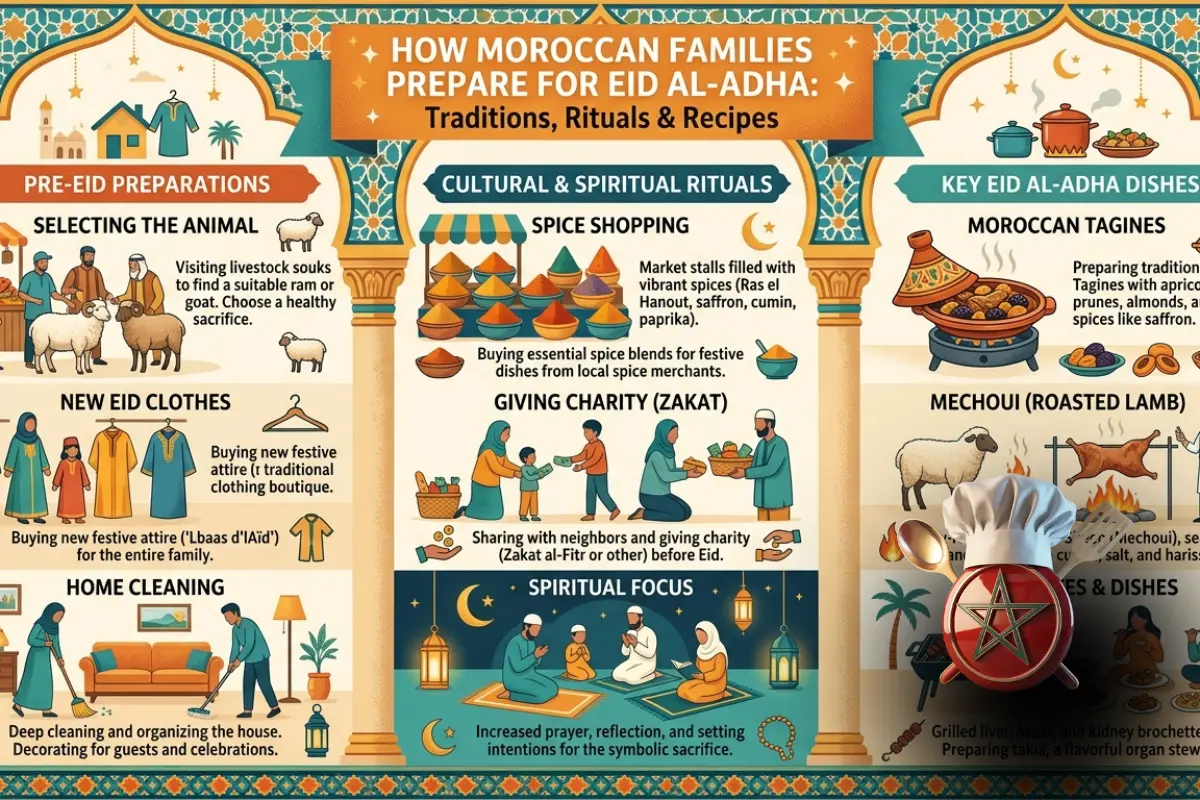
The preparation for Eid al-Adha in Morocco begins weeks in advance, involving every member of the household in a carefully orchestrated series of traditions that blend spiritual devotion with practical preparations. Unlike Western holiday celebrations, Moroccan Eid preparations encompass not only cooking and gift-giving but also complex logistical arrangements including the selection and care of sacrificial animals, extensive deep-cleaning rituals, and the coordination of extended family gatherings that can include dozens of relatives.
What makes Moroccan Eid al-Adha particularly fascinating for Western audiences is how seamlessly it integrates ancient Berber customs with Islamic traditions and contemporary family life. The holiday serves as a cultural bridge, connecting Morocco's rich pre-Islamic heritage with its deep Islamic roots, all while adapting to modern urban realities. This unique cultural synthesis creates celebration practices that are distinctly Moroccan, differing significantly from Eid celebrations in other Muslim countries.
The Sacred Timeline: Weeks of Preparation Leading to Eid
The preparation timeline for Eid al-Adha in Moroccan households follows a precise schedule that reflects both practical necessities and spiritual significance. Understanding this timeline provides insight into the depth of commitment Moroccan families invest in this celebration, transforming their homes and daily routines in anticipation of the sacred days ahead.
Three Weeks Before Eid: Initial Planning and Shopping
The preparation cycle typically begins three weeks before Eid, starting with what Moroccans call "takhzin al-eid" (Eid storage preparation). During this phase, mothers and grandmothers begin stockpiling non-perishable ingredients essential for the elaborate feasts ahead. This includes purchasing large quantities of premium spices such as ras el hanout, saffron, ginger, and cinnamon, often buying directly from trusted spice merchants in traditional markets.
Families also begin the process of selecting their sacrificial animal, a task that requires considerable expertise and cultural knowledge. In rural areas, this might involve visiting local farms and examining animals weeks in advance, while urban families often place orders with trusted butchers or livestock dealers. The selection criteria are rigorous, following both Islamic guidelines and Moroccan cultural preferences for healthy, well-fed animals that will provide the best meat for the celebration.
Two Weeks Before: Deep Cleaning and Home Preparation
The second phase involves the intensive household preparation known as "tandhif al-bait" (house cleaning), which goes far beyond typical cleaning routines. Moroccan families engage in comprehensive home renovation activities, including repainting walls, deep-cleaning carpets and textiles, and often purchasing new household items. This cleaning ritual carries spiritual significance, symbolizing the purification of the home environment to welcome the sacred celebration.
During this period, women begin preparing preserved foods and condiments that will be used throughout Eid week. This includes making large batches of harissa paste, pickling vegetables, and preparing spice mixtures. The kitchen becomes a center of intense activity as families test recipes, adjust spice combinations, and begin the slow-cooking processes for certain dishes that benefit from extended preparation time.
One Week Before: Final Preparations and Animal Care
The final week before Eid marks the arrival of the sacrificial animals in many households, particularly in suburban and rural areas where families have space to house them temporarily. This period involves daily care routines, feeding the animals premium fodder and ensuring their health and comfort. Children often become attached to these animals, creating an important educational opportunity for parents to discuss the spiritual significance of sacrifice and gratitude.
Simultaneously, the pace of food preparation intensifies dramatically. Families begin making traditional sweets, baking special breads, and preparing marinades for the various meat dishes that will be cooked during Eid. Social networks activate as neighbors coordinate their preparation schedules, sharing ovens, exchanging ingredients, and organizing collective shopping trips to handle the massive quantities of food required.
Traditional Rituals and Family Customs
The ritual aspects of Moroccan Eid al-Adha preparation reflect a complex interweaving of Islamic religious practices with distinctly Moroccan cultural traditions. These customs serve multiple functions: reinforcing religious devotion, strengthening family bonds, maintaining cultural continuity, and creating shared experiences that define Moroccan identity.
The Morning of Eid: Sacred Rituals and Community Prayer
The day of Eid begins before dawn with special prayers and ritual preparations that set the spiritual tone for the entire celebration. Family members wake early for "ghusl al-eid" (Eid ablution), a comprehensive purification ritual that goes beyond daily washing routines. Everyone dresses in their finest clothing, often featuring new garments purchased specifically for the occasion, with particular attention paid to traditional Moroccan elements such as djellabas, caftans, or jabadors.
The community aspect of Eid morning is particularly striking for Western observers. Entire neighborhoods mobilize for the special Eid prayer, with men gathering at mosques or large outdoor prayer grounds while women often pray at home or in designated women's sections. This communal prayer creates a powerful sense of unity and shared purpose that transcends individual family celebrations.
The Sacrifice Ceremony: Spiritual Significance and Practical Traditions
The central ritual of Eid al-Adha involves the sacrifice of an animal, typically a sheep, goat, or cow, depending on the family's economic circumstances and size. In Morocco, this ritual maintains profound spiritual and cultural significance that extends beyond its religious requirements. The process involves specific protocols regarding who performs the sacrifice, how the meat is distributed, and the prayers and invocations that accompany each step.
Moroccan families approach this ritual with deep reverence and careful attention to Islamic guidelines. The animal must be treated with kindness and respect, fed well before the sacrifice, and the act itself must be performed by a knowledgeable adult male family member or a qualified religious authority. The entire family typically observes the ceremony, creating an important educational moment for children to understand the concepts of sacrifice, gratitude, and the cycle of life.
Meat Distribution: Community Solidarity and Social Responsibility
Following the sacrifice, Moroccan families engage in a traditional distribution system that reflects the holiday's emphasis on community welfare and social justice. Islamic tradition requires that the meat be divided into three parts: one-third for the family's own consumption, one-third for friends and neighbors, and one-third for the poor and needy.
In Moroccan communities, this distribution system has evolved into sophisticated networks of reciprocity and social support. Families maintain mental inventories of neighbors' needs, elderly community members who might require assistance, and families facing economic difficulties. The distribution process often involves elaborate packaging, with special cuts of meat prepared as gifts and delivered personally to recipients.
Essential Ingredients and Preparation Techniques
The culinary preparations for Eid al-Adha in Morocco involve a sophisticated understanding of ingredients, spice combinations, and cooking techniques that transform the sacrificial meat and accompanying dishes into memorable feasts. These preparations showcase the full range of Moroccan culinary expertise, from simple grilled meats to complex tagines and celebratory desserts.
Spice Blends and Flavor Profiles
Moroccan Eid cooking relies heavily on complex spice blends that are often prepared specifically for the holiday. The most important of these is ras el hanout, a blend that can contain up to thirty different spices including cardamom, cinnamon, cloves, coriander, cumin, ginger, nutmeg, and rose petals. For Eid preparations, many families create special versions of this blend, adjusting proportions and adding premium ingredients like saffron or long pepper.
Another crucial spice mixture is baharat al-eid (Eid spices), a blend specifically designed for meat preparations during the holiday. This typically includes black pepper, allspice, cardamom, cinnamon, and cloves, ground fresh and mixed in proportions that each family guards as culinary secrets passed down through generations.
| Spice Blend | Primary Ingredients | Best Used For | Preparation Time |
|---|---|---|---|
| Ras el Hanout | Cardamom, cinnamon, cloves, coriander, cumin, ginger, nutmeg | Tagines, rice dishes, meat marinades | 30 minutes |
| Baharat al-Eid | Black pepper, allspice, cardamom, cinnamon, cloves | Grilled meats, roasts, stuffing | 15 minutes |
| Dukkah Maghribi | Hazelnuts, sesame seeds, coriander, cumin, salt | Bread accompaniment, meat coating | 20 minutes |
| Tabil | Coriander seeds, caraway, garlic, chili | Meat marinades, vegetable dishes | 10 minutes |
Meat Preparation and Preservation Techniques
The large quantity of meat resulting from the Eid sacrifice requires sophisticated preparation and preservation techniques that Moroccan families have perfected over centuries. These methods ensure that nothing is wasted while creating a variety of dishes that will be enjoyed throughout the four-day celebration and often for weeks afterward.
Fresh cuts destined for immediate consumption receive special treatment with marinades that typically include olive oil, lemon juice, garlic, ginger, and various spice blends. The meat is often scored in specific patterns that allow the marinades to penetrate deeply while also creating attractive presentations when cooked. Different cuts require different marination times, from thirty minutes for tender pieces destined for grilling to overnight marination for tougher cuts that will be slow-cooked in tagines.
For preservation, Moroccan families employ several traditional techniques. Qadid involves cutting meat into strips and air-drying it with salt and spices, creating a jerky-like product that can be stored for months. Khlii is a confited meat preparation where meat is slow-cooked in its own fat with spices until it reaches a paste-like consistency that can be preserved in sealed jars and used throughout the year.
Vegetable and Grain Preparations
While meat takes center stage during Eid al-Adha, Moroccan families also prepare elaborate vegetable and grain dishes that complement the rich meat courses and provide nutritional balance to the celebration meals. These preparations often require as much attention and skill as the meat dishes themselves.
Traditional Eid vegetables include stuffed preparations such as dolma (stuffed vegetables) using cabbage, zucchini, or grape leaves filled with rice, ground meat, herbs, and spices. These dishes require precise technique in preparing the filling, properly blanching the vegetables, and achieving the right balance of flavors in the cooking liquid.
Grain dishes for Eid often feature premium ingredients and elaborate preparations. Roz bukhari (Bukhari rice) includes basmati rice cooked with saffron, almonds, raisins, and aromatic spices, while couscous al-eid might feature hand-rolled couscous grains steamed with lamb broth and garnished with caramelized onions, almonds, and cinnamon.
Traditional Eid al-Adha Recipes
The recipes prepared during Eid al-Adha represent the pinnacle of Moroccan home cooking, showcasing techniques and ingredient combinations that transform simple materials into extraordinary culinary experiences. These dishes are not merely meals but cultural expressions that carry deep meaning and connect families to their heritage.
Mechoui: Traditional Roasted Lamb
Mechoui represents perhaps the most iconic dish of Moroccan Eid al-Adha celebrations. This whole roasted lamb preparation requires significant planning, equipment, and technique, making it a centerpiece dish that demonstrates the family's commitment to traditional celebration methods.
The preparation begins with selecting an appropriate cut of lamb, typically a leg or shoulder weighing between 4-6 kilograms. The meat undergoes an elaborate marination process using a paste made from garlic, ginger, olive oil, butter, salt, black pepper, and a special blend of spices including cumin, coriander, and paprika. This marinade is massaged into cuts made throughout the meat, allowing the flavors to penetrate deeply.
Traditional cooking involves slow roasting in a special underground oven called a tandir, though modern families often adapt the technique for conventional ovens or outdoor grills. The cooking process can take 4-6 hours at low temperature, with regular basting using the accumulated juices and additional marinade. The result is incredibly tender meat with a flavorful, aromatic crust that falls off the bone.
The presentation of mechoui is as important as its preparation. The roasted lamb is typically placed on large platters surrounded by roasted vegetables such as potatoes, carrots, and onions that have absorbed the meat's flavors during cooking. Fresh herbs, particularly cilantro and parsley, provide color and freshness to balance the rich meat.
Tagine Lahm bil Barqouq: Lamb and Prune Tagine
This sophisticated tagine represents the perfect marriage of sweet and savory flavors that characterizes much of Moroccan cuisine. The dish combines tender lamb with dried prunes, almonds, and aromatic spices, creating a complex flavor profile that exemplifies the refinement of Eid cooking.
The preparation begins with browning cubes of lamb shoulder or leg in olive oil until they develop a rich, caramelized exterior. The meat is then removed while onions are sautéed until golden, creating the flavor base for the tagine. Garlic, ginger, and a blend of spices including cinnamon, ginger, saffron, and ras el hanout are added to create the aromatic foundation.
The lamb returns to the pot along with dried prunes that have been soaked in warm water to rehydrate them. The cooking liquid typically includes beef or lamb stock, honey, and orange blossom water, creating a complex sauce that reduces during the slow cooking process. The tagine simmers for approximately two hours until the meat is fork-tender and the sauce has achieved the proper consistency.
Garnishes play a crucial role in this dish's presentation and flavor profile. Blanched almonds are often fried until golden and scattered over the finished tagine, while fresh cilantro provides color and herbaceous notes. Some families also include hard-boiled eggs as a traditional garnish, adding richness and visual appeal.
Couscous Royal: The Ultimate Celebration Couscous
Couscous Royal represents the most elaborate version of Morocco's national dish, reserved for special occasions like Eid al-Adha. This preparation typically includes multiple types of meat, a variety of vegetables, and complex spice combinations that create a dish worthy of the most important celebrations.
The couscous grains themselves receive special attention during Eid preparations. Many families still prepare couscous by hand, rolling semolina flour with salted water to create perfectly sized grains. These are then steamed multiple times in a couscoussier, with each steaming followed by a process of breaking up lumps and adding olive oil or butter to ensure light, fluffy results.
The meat component typically includes lamb, chicken, and sometimes beef, each cut into appropriate sizes and browned separately to develop deep flavors. The vegetables follow a careful choreography of cooking times, with root vegetables like carrots, turnips, and potatoes added early, while more delicate vegetables like zucchini and cabbage are introduced later in the cooking process.
The broth that binds everything together represents perhaps the most complex element of the dish. It begins with the fond created by browning the meats, then builds through the addition of onions, garlic, tomatoes, and a carefully balanced selection of spices. Saffron provides both color and distinctive flavor, while preserved lemons add the characteristic Moroccan tang that brightens the rich broth.
Chebakia: Traditional Eid Pastries
While not exclusively associated with Eid al-Adha, chebakia represents one of the most beloved traditional sweets prepared during Moroccan celebrations. These intricate flower-shaped pastries require considerable skill to prepare properly and demonstrate the baker's expertise in traditional Moroccan pastry arts.
The dough preparation involves creating a mixture of flour, eggs, butter, orange blossom water, and a small amount of vinegar that helps achieve the proper texture. The dough must be kneaded extensively to develop elasticity, then allowed to rest before the shaping process begins. This resting period is crucial for achieving the right consistency for the complex shaping technique.
Shaping chebakia requires a specific technique that creates the characteristic flower-like appearance. The dough is rolled thin and cut into rectangles, then shaped using a series of cuts and folds that create loops and petals. This process requires practice and patience, as the shapes must be consistent to ensure even cooking.
The cooking process involves deep frying the shaped pastries in oil heated to precisely the right temperature. Too hot, and the exterior burns before the interior cooks; too cool, and the pastries absorb excess oil and become greasy. Properly fried chebakia should be golden brown and crispy throughout.
The final step involves coating the hot pastries in honey that has been infused with orange blossom water and sometimes rose water. The pastries are then rolled in sesame seeds, which adhere to the honey coating and provide textural contrast and nutty flavor. The finished chebakia should be crispy, sweet, and aromatic with the distinctive floral notes that characterize Moroccan pastries.
Regional Variations Across Morocco
Morocco's diverse geography, from the Atlantic coast to the Saharan oases, from the Atlas Mountains to the Mediterranean shores, has created distinct regional variations in Eid al-Adha celebrations and culinary traditions. These differences reflect local ingredients, historical influences, and cultural exchanges that have shaped each region's unique approach to this sacred holiday.
Northern Morocco: Mediterranean and Andalusian Influences
The northern regions of Morocco, including cities like Fez, Meknes, and Tetouan, show strong influences from centuries of cultural exchange with Andalusian Spain. These areas were heavily settled by Muslims and Jews fleeing the Spanish Reconquista, bringing sophisticated culinary traditions that merged with existing Moroccan practices.
In northern Morocco, Eid al-Adha preparations often include dishes that reflect this Andalusian heritage. Pastilla, the famous sweet-savory pastry typically made with pigeon or chicken, becomes even more elaborate during Eid, sometimes incorporating lamb and more complex spice combinations. The preparation of rfissa, a dish combining chicken with broken msemen bread and fenugreek-spiced sauce, takes on special significance as families prepare larger quantities to feed extended family gatherings.
Northern Moroccan families also maintain traditions of elaborate bread baking for Eid. Khubz al-dar (house bread) involves preparing multiple varieties of bread, each with specific purposes during the celebration. Rghaif and msemen are prepared in large quantities, while special occasion breads like fekkas (twice-baked biscuits with anise and almonds) are made specifically for Eid entertaining.
Atlantic Coast: Seafood Integration and Urban Adaptations
Morocco's Atlantic coastal cities, including Casablanca, Rabat, and Essaouira, have developed unique Eid traditions that incorporate the region's abundant seafood alongside traditional meat preparations. These urban centers have also adapted traditional celebrations to accommodate modern lifestyles and smaller living spaces.
Coastal families often prepare tagine samak (fish tagine) as a lighter alternative to heavy meat dishes during the four-day Eid celebration. These preparations typically feature firm fish like sea bream or grouper, cooked with preserved lemons, olives, and aromatic herbs like cilantro and parsley. The cooking techniques mirror those used for meat tagines but require adjusted timing and temperature control to prevent overcooking the delicate fish.
Urban adaptations in coastal cities include the development of community-based solutions for families living in apartments without space for animal sacrifice. Neighborhood cooperatives often organize collective purchases and processing, with professional butchers handling the sacrifice while families maintain the traditional distribution and cooking responsibilities.
| Region | Signature Eid Dish | Key Ingredients | Cultural Influence |
|---|---|---|---|
| Northern Morocco | Pastilla al-Eid | Lamb, almonds, warqa pastry, cinnamon | Andalusian |
| Atlantic Coast | Tagine Samak | Sea bream, preserved lemons, olives | Maritime |
| Atlas Mountains | Tandir Mechoui | Whole lamb, mountain herbs, argan oil | Berber |
| Saharan Regions | Couscous Bidawi | Dates, dried fruits, camel meat (historical) | Desert nomadic |
Atlas Mountains: Berber Traditions and High-Altitude Cooking
The Atlas Mountain regions maintain some of Morocco's most ancient Eid traditions, reflecting centuries of Berber cultural practices that predate Islamic arrival in North Africa. These highland communities have adapted their celebrations to harsh mountain climates and limited access to certain ingredients while developing unique preparation techniques suited to their environment.
Mountain families often employ traditional earth ovens for their Eid cooking, digging pits lined with stones that are heated with wood fires, then used to slow-cook whole animals buried in the coals. This technique, called tandir cooking, produces incredibly tender meat with distinctive smoky flavors that cannot be replicated with conventional cooking methods.
Berber influence appears strongly in the use of indigenous ingredients like argan oil, which replaces olive oil in many preparations, and wild herbs gathered from mountain slopes. Zaatar al-jabal (mountain thyme), wild mint, and other aromatic plants create unique flavor profiles that distinguish Atlas Mountain Eid cooking from other regions.
High-altitude cooking requirements have led to innovative techniques for dealing with reduced atmospheric pressure and lower boiling points. Mountain cooks have developed methods for adjusting cooking times and temperatures that ensure proper preparation despite these challenges, knowledge that has been passed down through generations of highland families.
Saharan Oases: Desert Adaptations and Date-Based Traditions
The oasis communities of southern Morocco, including areas around Ouarzazate, Zagora, and Merzouga, have developed Eid traditions adapted to desert climates and the ingredient availability of these isolated communities. These celebrations showcase remarkable creativity in food preservation and preparation under challenging environmental conditions.
Date palms play a central role in Saharan Eid celebrations, with families preparing elaborate dishes that incorporate fresh dates, date syrup, and date paste. Couscous bidawi includes dates and dried fruits as integral ingredients rather than simple garnishes, creating sweet-savory combinations that reflect the oasis environment.
Water scarcity in these regions has led to highly efficient cooking techniques that minimize water usage while maximizing flavor development. Steam-cooking methods using minimal liquid, and the extensive use of dried spices and preserved ingredients, create intensely flavored dishes that make the most of available resources.
Historical influences from trans-Saharan trade routes appear in the use of spices and techniques that originated in sub-Saharan Africa. These communities maintain knowledge of ingredients and preparation methods that have largely disappeared from other parts of Morocco, making their Eid celebrations unique repositories of culinary history.
Modern Adaptations and Contemporary Celebrations
Contemporary Moroccan families, particularly those living in urban areas or abroad, have developed innovative approaches to maintaining traditional Eid al-Adha celebrations while adapting to modern lifestyle constraints, smaller living spaces, and changing social dynamics. These adaptations demonstrate the resilience and flexibility of Moroccan cultural traditions while preserving their essential spiritual and social significance.
Urban Adaptations and Community Solutions
Modern Moroccan cities present unique challenges for traditional Eid celebrations, particularly regarding the sacrifice ritual and meat processing that historically took place within family compounds. Contemporary urban families have developed creative solutions that maintain religious and cultural authenticity while accommodating apartment living and urban regulations.
Community-based approaches have emerged as the primary solution for urban families. Neighborhood associations, mosque communities, and extended family networks coordinate collective sacrifices, often taking place in designated areas outside city centers. Professional butchers and religious authorities ensure proper ritual observance while handling the practical aspects that individual families cannot manage in urban settings.
These community solutions have actually strengthened certain aspects of Eid celebration by increasing inter-family cooperation and creating new forms of social bonding. Families who might have celebrated individually in rural settings now participate in larger community events that enhance the holiday's social and educational dimensions, particularly for children who learn from observing multiple family traditions simultaneously.
Urban families have also adapted their food preparation strategies to smaller kitchen spaces and modern appliances. Traditional tagine cooking has been modified for gas stoves and conventional ovens, while some families invest in specialized equipment like large capacity slow cookers or commercial-grade pressure cookers to handle the quantities required for Eid entertaining.
International Moroccan Communities
Moroccan diaspora communities in Europe, North America, and other parts of the world face additional challenges in maintaining authentic Eid al-Adha celebrations while navigating different cultural contexts, legal frameworks, and ingredient availability. These communities have developed innovative approaches that preserve essential traditions while adapting to international environments.
Religious and cultural organizations in diaspora communities often coordinate collective celebrations that address practical challenges while strengthening community bonds. These organizations work with local halal butchers and Islamic centers to ensure proper sacrifice procedures, often arranging for professional handling of the ritual aspects while families focus on the subsequent cooking and distribution traditions.
Ingredient sourcing represents a significant challenge for international Moroccan communities, leading to the development of substitute ingredients and adapted recipes that maintain authentic flavor profiles while using locally available products. Spice blends are often prepared in large quantities and shared among community members, while specialty ingredients like preserved lemons or argan oil are imported through community purchasing cooperatives.
These international adaptations have created interesting fusion elements in Eid celebrations, as families incorporate local ingredients and techniques into traditional recipes. Second and third-generation Moroccan immigrants often develop unique family traditions that blend Moroccan authenticity with local influences, creating new cultural expressions that maintain essential spiritual and social elements while reflecting their multicultural experiences.
Technology Integration and Modern Tools
Contemporary Moroccan families increasingly integrate modern technology and kitchen appliances into their Eid preparations, finding ways to maintain traditional flavors and techniques while improving efficiency and convenience. This technological integration demonstrates how culinary traditions can evolve without losing their essential character.
Social media platforms have become important tools for sharing Eid preparation tips, recipe variations, and celebration documentation among extended families and communities. WhatsApp groups dedicated to family Eid planning coordinate logistics, share shopping lists, and provide platforms for younger family members to ask questions about traditional techniques.
Modern kitchen appliances like food processors, stand mixers, and high-powered blenders have revolutionized certain aspects of Eid preparation, particularly in spice grinding and paste preparation. Tasks that previously required hours of manual work, such as preparing large quantities of harissa or grinding spice blends, can now be completed efficiently while maintaining quality and authenticity.
However, many families maintain a careful balance between modern convenience and traditional methods, recognizing that certain techniques produce superior results when done by hand. Hand-rolled couscous, traditionally mixed spice blends, and certain pastry preparations continue to be done using ancestral methods, even in thoroughly modern kitchens.
Frequently Asked Questions
What is the difference between Eid al-Adha and Eid al-Fitr in Moroccan culture?
In Morocco, Eid al-Adha (called Eid al-Kabir, meaning "the great celebration") and Eid al-Fitr (called Eid as-Saghir, meaning "the small celebration") serve different purposes and involve distinct traditions. Eid al-Fitr marks the end of Ramadan and focuses on communal joy, gift-giving, and sweet treats, lasting typically one day. Eid al-Adha commemorates Ibrahim's sacrifice and lasts four days, involving animal sacrifice, meat distribution, and more elaborate family gatherings. The food preparations for Eid al-Adha are significantly more extensive, focusing on meat-based dishes and preservation techniques, while Eid al-Fitr emphasizes lighter meals and pastries after the month-long fast.
How do Moroccan families ensure nothing is wasted from the sacrificial animal?
Moroccan families have developed sophisticated systems over centuries to utilize every part of the sacrificial animal, reflecting both economic necessity and religious principles against waste. The meat is divided into fresh consumption, preserved preparations like qadid (dried meat) and khlii (meat confit), and distribution to neighbors and the poor. Organs are prepared into traditional dishes such as boulfaf (grilled liver) and various tagines. The hide is often donated to local artisans for leather production or charitable organizations. Bones are used for making rich stocks and broths, while fat is rendered for cooking and preservation purposes. This comprehensive utilization system ensures that virtually nothing from the animal is discarded.
Can non-Muslims participate in Moroccan Eid al-Adha celebrations?
Moroccan culture is notably welcoming to non-Muslim guests during Eid al-Adha celebrations, reflecting the country's traditions of hospitality and interfaith respect. Non-Muslim friends, neighbors, and colleagues are often invited to join family meals and celebrations, though they typically would not participate in religious rituals like prayers or the sacrifice ceremony. Many Moroccan families view sharing their Eid feast with non-Muslim friends as an opportunity for cultural exchange and community building. Guests are expected to show respect for the religious significance of the holiday while being welcomed to enjoy the food, fellowship, and cultural aspects of the celebration. This inclusivity has become particularly important in urban areas and international communities where diverse populations interact regularly.
How long do Moroccan Eid al-Adha food preparations typically last?
The complete cycle of Moroccan Eid al-Adha food preparation typically spans about three weeks, beginning with initial shopping and planning, intensifying during the final week, and continuing throughout the four-day holiday period. Active cooking and preparation usually occupy 7-10 days, starting with preserved foods and spice preparations a week before Eid, reaching peak intensity during the 2-3 days immediately following the sacrifice, and continuing with leftover transformation and continued entertaining throughout the holiday period. However, some preparation elements, such as shopping for non-perishable ingredients and household items, may begin even earlier. The preservation activities, including making qadid and khlii, extend the food-related activities for another week or two after the main celebration concludes.
What are the essential spices every family needs for authentic Moroccan Eid al-Adha cooking?
The essential spice collection for authentic Moroccan Eid al-Adha cooking includes both individual spices and traditional blends that are fundamental to the cuisine's flavor profiles. Core individual spices include saffron (for rice dishes and tagines), ginger (fresh and dried), cinnamon (stick and ground), black pepper, cumin, coriander seeds, and paprika. The most important spice blend is ras el hanout, which should contain at least fifteen different spices including cardamom, cloves, nutmeg, and rose petals. Families also need baharat (all-spice blend), preserved lemons, and high-quality olive oil or argan oil. Many families prepare special Eid versions of these blends, adding premium ingredients like long pepper, grains of paradise, or additional saffron. Having these spices freshly ground and properly proportioned is crucial for achieving the complex, layered flavors that characterize authentic Moroccan Eid cuisine.
The celebration of Eid al-Adha in Moroccan culture represents far more than a religious observance or culinary event; it embodies a comprehensive cultural system that strengthens family bonds, reinforces community solidarity, and preserves ancient traditions while adapting to contemporary realities. For Western audiences seeking to understand this rich celebration, the key lies in appreciating how seamlessly Moroccan families integrate spiritual devotion, culinary artistry, and social responsibility into a unified expression of cultural identity.
The elaborate preparations, from the careful selection of spices to the precise timing of cooking processes, demonstrate the depth of knowledge and commitment that Moroccan families invest in this sacred time. These traditions serve as living connections to centuries of cultural development, religious practice, and culinary evolution that continue to thrive in modern Morocco and throughout the global Moroccan diaspora, ensuring that future generations will inherit not just recipes and techniques, but a complete cultural framework for celebrating one of Islam's most significant holidays.