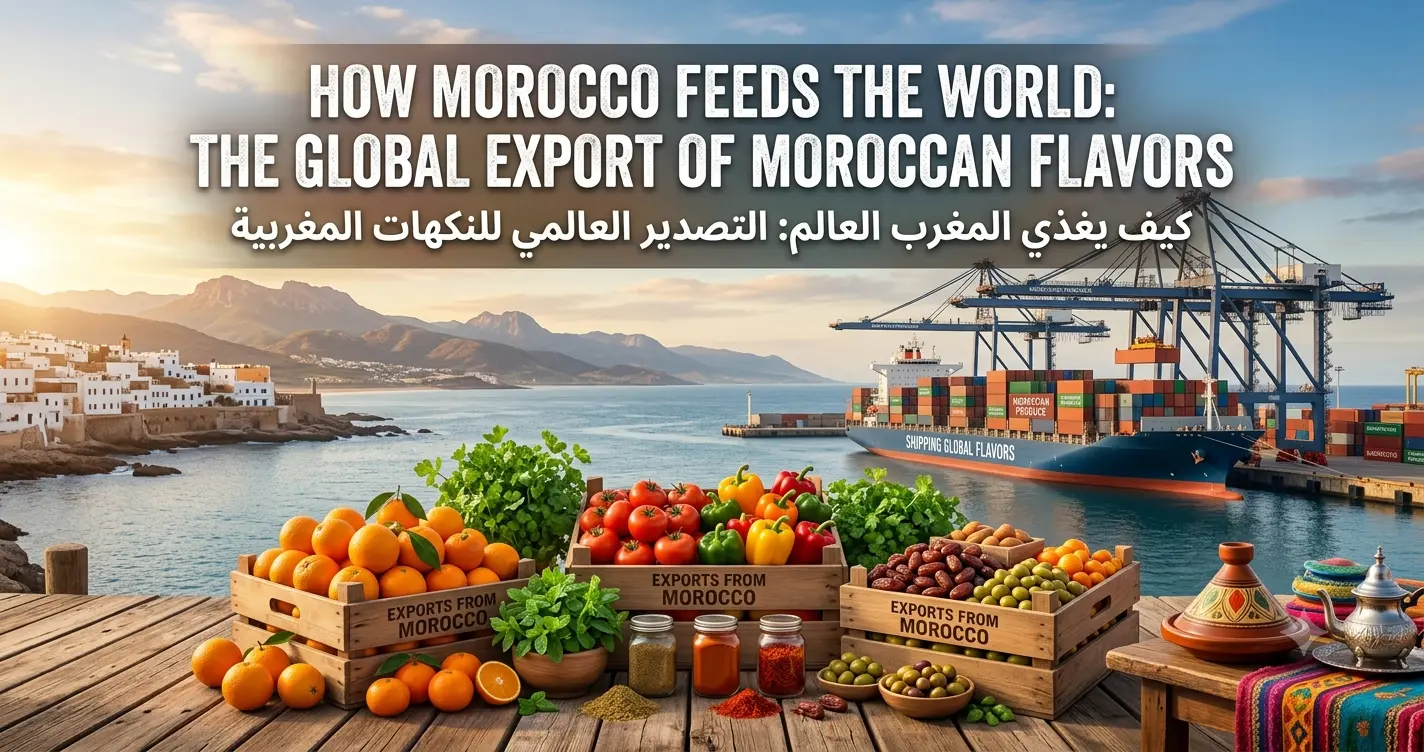
There is a moment — and if you have experienced it, you know exactly what I mean — when you lift the conical lid of a tagine and a cloud of steam rises carrying cumin, saffron, preserved lemon, and something else altogether, something ancient and warm and impossible to name precisely. That moment does not happen only in Marrakech or Fes anymore. It happens in Brooklyn lofts, London supper clubs, Melbourne restaurants, Toronto food markets, and Parisian bistros that have quietly placed a tagine on the menu alongside the steak frites. Moroccan cuisine has made one of the most remarkable journeys in modern culinary history — from the winding alleyways of the medina to the center of the global food conversation — and it has done so not through aggressive marketing or celebrity chef stunts, but through the simple, irresistible power of extraordinary flavor. This is the story of how Morocco feeds the world.
1. The Ancient Crossroads: Why Moroccan Cuisine Was Always Destined to Travel
To understand why Moroccan food exports so powerfully to the rest of the world, you first have to understand what Morocco itself is: a country that has always been a crossroads. Sitting at the northwestern tip of Africa, with the Atlantic Ocean on one side, the Mediterranean on another, the Sahara to the south, and Andalusia just fourteen kilometers across the Strait of Gibraltar, Morocco has spent several thousand years absorbing, transforming, and perfecting culinary influences from virtually every direction.
The Amazigh (Berber) people, the original inhabitants of the Maghreb, gave Moroccan cuisine its deep, earth-bound soul — slow-cooked meats, grain-based dishes, the genius of the tagine vessel itself. Then came the Phoenicians and Romans along the coast, the Arab conquests of the seventh and eighth centuries bringing new spice trade connections, the Andalusian refugees of the fifteenth and sixteenth centuries carrying the refined, sweet-and-savory sophistication of Moorish Spain, and the Ottoman influence filtering through the eastern Maghreb. Sub-Saharan Africa contributed through trans-Saharan trade routes, bringing dates, certain spice combinations, and preserved techniques. The French protectorate of the twentieth century layered on European culinary sensibility without erasing what came before.
The result is a cuisine of extraordinary complexity — but complexity that is warm and welcoming, not alienating. This is crucial to understanding its global appeal. Moroccan food does not demand that you abandon your palate; it seduces it gradually, introducing familiar ingredients in unfamiliar combinations, comfortable techniques delivering unexpected depths of flavor.
"Moroccan cuisine is not one tradition. It is twenty traditions in conversation with each other across a thousand years. That is why it speaks to everyone."
— Chef Jamal, MaCooking culinary director
At MaCooking, we have spent years documenting these layered traditions precisely because understanding the history is what separates someone who can follow a Moroccan recipe from someone who can truly cook Moroccan food. The difference matters enormously when a dish travels.
2. The Spice Routes Redrawn: How Moroccan Ingredients Conquered Global Supermarkets
Walk through any well-stocked supermarket in London, New York, Sydney, or Toronto today and you will find something that would have seemed remarkable just twenty-five years ago: a dedicated Moroccan or North African section. Preserved lemons sit next to harissa paste. Ras el hanout spice blends occupy prime shelf space. Medjool dates from Moroccan growers compete with their international rivals. This commercial reality represents a genuine shift in Western food culture, and it did not happen by accident.
The Rise of Ras El Hanout
No single Moroccan ingredient better illustrates the global journey of Moroccan flavor than ras el hanout. The name means "head of the shop" in Arabic — the spice merchant's finest blend, the one he was proudest of. Traditionally, a good ras el hanout might contain anywhere from twelve to thirty-five individual spices, blended according to each merchant's closely guarded formula. Common components include cinnamon, cumin, coriander, ginger, turmeric, black pepper, cardamom, allspice, nutmeg, mace, rose petals, and in some historic formulations, ingredients like Spanish fly or ash berries that are now rarely used.
Twenty years ago, ras el hanout was essentially unknown outside Morocco and the Moroccan diaspora. Today, major spice companies in the United States, United Kingdom, and Australia produce their own commercial versions. Michelin-starred chefs rub it on lamb before roasting. Food bloggers use it in roasted vegetable bowls. It appears in meal kit delivery boxes. The blend has achieved something remarkable: global name recognition for an ingredient that barely registered in Western food culture a generation ago.
Preserved Lemons: From Pantry Staple to Chef Obsession
Preserved lemons — lemons salt-cured for weeks or months until their flesh dissolves and the rind becomes intensely flavored, complex, slightly funky, and impossible to replicate with fresh lemon — were a Moroccan pantry staple long before any Western chef discovered them. Now they appear on menus from Noma-inspired restaurants in Copenhagen to neighborhood Italian places in Chicago that have added a "North African-inspired" option to their seasonal menu.
The appeal is easy to understand once you taste them. Preserved lemons add an umami-adjacent depth, a citrus presence that is simultaneously bright and rounded, that fresh lemon juice simply cannot achieve. They are intensely practical too — a jar of properly made preserved lemons lasts for a year in the refrigerator and transforms everything from a simple grain salad to a roasted chicken into something more interesting.
Harissa: Morocco's Gift to the Global Hot Sauce Revolution
While harissa has roots across the Maghreb and is perhaps most strongly associated with Tunisia in its origin, Morocco has its own distinct harissa tradition, and Moroccan harissa has ridden the extraordinary global wave of interest in fermented and complex hot condiments. The global hot sauce market, valued at over three billion dollars annually, has made room enthusiastically for the smoky, complex heat of harissa — so much so that major food brands now produce dozens of harissa variants and food writers routinely call it "the condiment of the decade."
| Moroccan Ingredient | Global Market Presence (2025) | Key Western Markets | Primary Use Cases Abroad |
|---|---|---|---|
| Ras El Hanout | Available in 40+ countries | US, UK, France, Australia | Meat rubs, grain dishes, roasted vegetables |
| Preserved Lemons | Major supermarket chains globally | UK, US, Canada, Germany | Pasta, salad dressings, chicken dishes, grain bowls |
| Harissa | Multi-billion dollar category | US, UK, Australia, Netherlands | Condiment, marinade, pizza topping, sandwich spread |
| Argan Oil | Premium specialty food segment | US, France, Japan, UK | Salad dressing, bread dipping, finishing oil |
| Medjool Dates | Mainstream supermarket staple | US, UK, Canada, Australia | Snacking, baking, smoothies, energy balls |
| Saffron (Moroccan) | Premium spice market globally | Spain, France, US, Japan | Rice dishes, soups, desserts, tea |
3. The Tagine Goes Global: How Moroccan Cooking Vessels Became Kitchen Icons
There are not many cooking vessels that have become genuine cultural phenomena outside their country of origin. The wok did it. The Dutch oven did it. And the tagine — the conical clay pot that gives its name to the entire category of slow-cooked Moroccan stews — has done it with particular elegance.
The genius of the tagine as a vessel is simultaneously ancient and perfectly suited to modern Western sensibilities. The conical lid creates a self-basting environment: steam rises from the cooking food, condenses on the cooler cone, and drips back down over the ingredients. This means you need very little liquid to braise meat to extraordinary tenderness. The results are deeply flavored, economical with fuel, and nutritionally concentrated. For a generation of Western home cooks concerned about both flavor and simplicity, the tagine is essentially a slow cooker with ten times more cultural cachet and significantly better results.
Major cookware brands including Le Creuset, Emile Henry, and Staub now produce high-end tagine vessels marketed aggressively to Western audiences. Williams-Sonoma and similar retailers stock them prominently. Moroccan craft tagines — unglazed clay vessels from places like Marrakech's pottery district — have become popular purchase items for culinary tourists and are now imported and sold through specialty stores across Europe and North America.
What the West Gets Wrong (And Right) About the Tagine
As someone who has spent years studying authentic Moroccan techniques, I have complicated feelings about how the tagine has traveled. The enthusiasm is genuine and the dishes that result are often genuinely delicious. But certain things get lost in translation, and I think it is worth naming them honestly.
- The vessel matters more than most Western cooks realize: An authentic unglazed clay tagine, properly seasoned and used over a diffuser on low heat, produces results that a Le Creuset — wonderful as that piece of equipment is — simply cannot replicate. The clay breathes. It imparts something to the food.
- The spice layering is a technique, not a shortcut: Many Western recipes simplify the spice additions, adding everything at once. Traditional Moroccan tagine cooking involves adding spices at different stages, blooming some in oil at the beginning, adding others midway, finishing with fresh herbs. This sequential approach creates depth that one-step recipes cannot achieve.
- Low and slow is non-negotiable: The tagine is not a pressure cooker. The magic happens over two to three hours of gentle heat. Western recipes that suggest you can rush this process with higher heat are compromising the outcome significantly.
- The social dimension is real: In Morocco, the tagine arrives at the table and everyone eats from the communal vessel, bread used as utensil. This is not just a charming custom — it changes how the food tastes and is experienced. The sharing is part of the dish.
For anyone who wants to understand what authentic tagine cooking actually involves, the recipes and technique guides available at MaCooking go deeper than any other English-language resource I know of, precisely because they are built on genuine Moroccan culinary knowledge rather than Western adaptations.
4. Couscous: The Grain That United Continents
In December 2020, couscous was added to UNESCO's Intangible Cultural Heritage list — jointly nominated by Morocco, Algeria, Tunisia, and Mauritania in a rare moment of Maghrebi cultural consensus. The inscription was a formal acknowledgment of something that food lovers had understood for decades: couscous is one of humanity's great culinary achievements, and it deserves to be treated as such.
But couscous had already achieved its own kind of international recognition long before UNESCO weighed in. It is the third most consumed grain-based food in France, after bread and pasta — a remarkable statistic that reflects both the size of France's Maghrebi diaspora and the mainstream adoption of the dish by French people with no North African heritage. In the United Kingdom, couscous is a supermarket staple found in virtually every household pantry. In the United States, it has moved from specialty stores to mainstream grocery chains, and its quick preparation time — boiling water poured over the grain, five minutes of steaming — has made it a weeknight staple for time-pressed home cooks.
What Real Couscous Actually Is
Here is where I need to say something important, because the couscous most Western consumers know is not quite what couscous is in Morocco. The instant couscous available in Western supermarkets — pour boiling water over it, wait five minutes, fluff with a fork — is pre-cooked and dried. It is convenient and not without culinary merit. But it is a pale approximation of what happens in a Moroccan kitchen on a Friday afternoon when a family is preparing for the traditional couscous meal that is essentially a religious and cultural institution.
Authentic Moroccan couscous is a labor of love: raw semolina granules are worked by hand with water and olive oil, rolled into perfect spheres, then steamed in a couscoussier over a broth of meat and vegetables — not once, but two or three times, with hand-rolling between each steaming to keep the grains separate and light. The final result is something so different from instant couscous that calling them by the same name feels almost dishonest. The grains are light, separate, fluffy beyond belief, tasting of the steam they absorbed from the cooking broth below. It takes skill and practice that is passed from mother to daughter across generations.
This is not to say that instant couscous cannot be good — it absolutely can be, particularly when treated properly and seasoned well. But understanding what the authentic preparation looks and tastes like gives you an aspiration to work toward, and that aspiration makes you a better cook even with the accessible version.
The Friday Couscous Tradition
In Morocco, couscous on Friday is not simply a food preference — it is a cultural practice rooted in Islamic tradition. Friday is the day of congregational prayer, and the midday meal that follows Jumu'ah prayer is traditionally couscous shared with family and often with guests, neighbors, and people in need. The dish carries deep spiritual and social meaning: it is an act of hospitality, community, and gratitude.
This cultural context is largely invisible when couscous appears as a "healthy grain option" on a Western cafe menu, but it matters. Understanding it gives the food a dimension and a weight that changes how you approach cooking it and sharing it. This is the kind of context that distinguishes genuine cultural exchange from mere culinary tourism.
5. The Moroccan Diaspora: Living Ambassadors of Flavor
No discussion of how Moroccan cuisine has traveled globally can ignore the role of the Moroccan diaspora — the millions of Moroccan people who have settled across Europe, North America, and beyond, carrying their culinary traditions with them and sharing them with their adopted communities.
Morocco has one of the largest diasporas in the world relative to its population. Approximately five million Moroccans live outside the country, with the largest communities in France (approximately 1.5 million), Spain, Italy, the Netherlands, Belgium, Germany, the United States, and Canada. These communities have been, in a very real sense, Morocco's most effective culinary ambassadors.
The Moroccan Restaurant Scene Abroad
Moroccan restaurants have existed in European cities since the mid-twentieth century, but for a long time they occupied a specific niche: atmospheric, decorated with lanterns and zellige tilework and cushioned banquettes, serving a fairly standardized menu of bastilla, tagine, and couscous to tourists and adventurous diners. That model still exists and there is nothing wrong with it — those restaurants have introduced millions of people to Moroccan food for the first time.
But what has happened in the last decade is more interesting. A new generation of Moroccan chefs — many of them born or raised in France, the UK, or the US, trained in European culinary traditions, but deeply connected to their Moroccan heritage — have begun opening restaurants that treat Moroccan cuisine with the same seriousness and creative ambition that French or Japanese cuisine has long received. These chefs are not simply reproducing grandmother's tagine (though they respect it deeply). They are interrogating it, deconstructing it, honoring it in new forms.
| City | Moroccan Food Scene Strength | Notable Presence | Diaspora Population Influence |
|---|---|---|---|
| Paris, France | Very Strong | Hundreds of Moroccan restaurants; mainstream supermarket Moroccan sections; dedicated souk-style markets | Extremely high — largest Moroccan diaspora globally |
| London, UK | Strong and Growing | Notting Hill, Brixton, and East London clusters; Moroccan ingredients in major supermarkets | High — significant Moroccan and broader Maghrebi community |
| New York, USA | Growing | Specialty restaurants in Manhattan and Brooklyn; Moroccan ingredients in Whole Foods and specialty stores | Moderate but influential food media presence |
| Montreal, Canada | Strong | Large Moroccan restaurant community; Moroccan bakeries and patisseries | High — significant French-speaking Moroccan community |
| Amsterdam, Netherlands | Very Strong | Moroccan food deeply embedded in Dutch food culture; mainstream supermarket availability | Very high — one of largest Moroccan communities in Europe |
| Sydney & Melbourne, Australia | Moderate and Growing | Moroccan restaurants in food-forward neighborhoods; ingredients available in specialty and Middle Eastern grocers | Moderate but growing community |
Home Cooks as Cultural Carriers
Beyond restaurants, the real transmission of Moroccan culinary culture happens in homes. Moroccan immigrants who arrived in Europe and North America in the 1960s, 70s, and 80s faced a significant challenge: how do you feed your family the food of home when the ingredients are simply not available? The answer was creativity, adaptation, and persistent advocacy.
These home cooks — often women, often largely invisible in public food discourse — taught their neighbors, their children's school friends' parents, their colleagues. They brought dishes to potlucks and office parties. They shared recipes. They slowly, persistently, and without any particular agenda, introduced Moroccan flavors into communities that had never encountered them before. This grassroots transmission is ultimately more powerful and lasting than any restaurant trend or cookbook moment.
6. Moroccan Cuisine and the Global Wellness Movement
One of the most interesting chapters in the story of Moroccan cuisine's global journey is how perfectly it aligns with the dominant Western food values of the early twenty-first century. Moroccan food, eaten in its traditional form, is extraordinarily healthy by any reasonable nutritional standard — and this has not gone unnoticed by the wellness-oriented food media that now shapes so much of Western eating culture.
The Mediterranean Diet Connection
Moroccan cuisine shares many of its fundamental characteristics with what nutritionists call the Mediterranean diet: abundant vegetables, legumes, whole grains, olive oil as the primary cooking fat, moderate amounts of fish and meat, strong use of herbs and spices that provide both flavor and phytonutrients, and very little processed food or refined sugar in traditional preparations. Studies consistently link this dietary pattern to reduced rates of cardiovascular disease, diabetes, cognitive decline, and certain cancers.
Specific Moroccan dietary elements that have attracted Western health interest include:
- Argan oil: Pressed from the fruit of the argan tree found only in Morocco, this oil is exceptionally rich in oleic acid, tocopherols, and plant sterols. It has attracted significant scientific interest and commands premium prices in health food markets globally.
- Preserved lemons: The fermentation process that creates preserved lemons produces beneficial compounds and makes the lemon's nutrients more bioavailable. They are also naturally probiotic.
- The spice combinations in Moroccan cooking: Cumin, coriander, turmeric, ginger, cinnamon — all heavily used in Moroccan cuisine — are each individually associated with anti-inflammatory and other health benefits in scientific literature. Using them together, as Moroccan cuisine does, may amplify these effects.
- Legume-heavy dishes: Harira soup, bissara (fava bean puree), lentil tagines — Moroccan cuisine makes extensive use of legumes, one of the most nutritionally dense and environmentally sustainable food categories available.
- Herb-forward cooking: Fresh cilantro, parsley, and mint are used in quantities that go well beyond garnish in Moroccan cooking, providing significant phytonutrient content.
The "Bowl Culture" Adoption of Moroccan Elements
The grain bowl — that defining food trend of the 2010s and 2020s, where various components are arranged attractively in a bowl over a grain base — has adopted Moroccan elements with particular enthusiasm. Couscous bowls with roasted vegetables and harissa dressing appear on cafe menus globally. Chickpea tagines are marketed as meal prep options for health-conscious consumers. Moroccan-spiced cauliflower has become one of the default ways to present that versatile vegetable in vegetarian cooking worldwide.
This is Moroccan cuisine doing what it has always done: adapting to context while maintaining its essential character. The flavors remain authentic even when the presentation format is thoroughly contemporary. And this adaptability — the ability to be genuine without being rigid — is one of the deepest reasons Moroccan food travels so successfully.
7. Moroccan Tea Culture: The Ceremony That Travels With the Cuisine
It would be incomplete to discuss Moroccan culinary exports without mentioning what is arguably Morocco's most universally recognized ritual: the preparation and serving of Moroccan mint tea. Known colloquially as "Moroccan whiskey" (a joke that lands with particular irony given Morocco's officially Islamic context), this sweet, intensely minty green tea poured from a significant height to create a froth has become one of the most recognizable images associated with Moroccan culture worldwide.
The tea ritual — gunpowder green tea brewed with fresh spearmint and sweetened generously with sugar, served in small decorated glasses and poured three times (each glass said to represent life, love, and death in Amazigh tradition) — has been adopted and adapted in tea shops, Moroccan restaurants, and even mainstream cafes globally. Moroccan mint tea blends are now sold in supermarkets in Europe and North America. The ritual of elaborate pouring has become something of a spectacle element at Moroccan-themed events.
What is notable is that unlike many food exports that get stripped of their cultural meaning in transit, the Moroccan tea ritual often carries its context with it. People who serve Moroccan tea tend to explain where it comes from and what it means. The ceremony is legible and communicable across cultural boundaries in a way that is genuinely remarkable.
8. The Digital Revolution: How the Internet Amplified Morocco's Culinary Voice
The story of how Moroccan cuisine has traveled the world cannot be told without acknowledging the role of digital media — recipe websites, YouTube cooking channels, food photography on Instagram, and dedicated culinary platforms that have made authentic Moroccan recipes accessible to anyone on earth with an internet connection.
A generation ago, if you wanted to learn to make authentic Moroccan bastilla or understand the proper technique for hand-rolling couscous, you needed either a Moroccan grandmother in your life or access to specialist cookbooks that were genuinely difficult to find outside major metropolitan areas. Today, that knowledge is available instantly and often for free.
This democratization of culinary knowledge has been transformative for Moroccan cuisine specifically. Because Moroccan cooking relies so heavily on technique — the way spices are bloomed, the specific motion of hand-rolling couscous, the particular doneness of preserved lemons — video content has been especially valuable. You can read a description of how to properly season a clay tagine, but watching someone do it makes the knowledge stick.
Platforms like MaCooking have played a crucial role in this digital education, providing English-language content about Moroccan cuisine that is genuinely authoritative — built on real culinary knowledge rather than simplified adaptations — and accessible to Western audiences who might otherwise never encounter authentic Moroccan technique. When someone in Ohio decides they want to make a proper chicken tagine with preserved lemons and olives, having access to a recipe that is actually rooted in Moroccan tradition rather than an American food magazine's approximation makes an enormous difference in the result they get and the appreciation they develop for the cuisine.
Social Media and the Moroccan Food Aesthetic
It is impossible to overstate the role that visual aesthetics have played in Moroccan cuisine's global appeal in the age of Instagram. Moroccan food is extraordinarily photogenic: the jewel-like colors of a chicken tagine with green olives and gold preserved lemon, the geometric precision of a bastilla dusted with powdered sugar and cinnamon, the deep amber of a properly made harira, the intricate patterns of zellige tilework providing the perfect backdrop for a spread of Moroccan dishes.
Moroccan food content consistently performs exceptionally well on visual platforms, and this has driven genuine curiosity and actual cooking attempts among audiences who discover it through their feeds. The aesthetic quality of the cuisine is not superficial — it reflects the deep Moroccan cultural tradition of beauty in craft and presentation — but in the social media age, it has functioned as a remarkably effective invitation into the cuisine.
Expert Tips: Bringing Authentic Moroccan Flavors Into Your Kitchen
After years of studying and cooking Moroccan food, here are the practical insights I consistently share with Western home cooks who want to go beyond surface-level engagement with this extraordinary cuisine:
- Build your pantry strategically: You do not need to stock every Moroccan spice on day one. Start with the essentials: cumin, coriander, cinnamon, ginger, turmeric, and sweet paprika. Add ras el hanout and saffron next. This base gets you a very long way.
- Invest in preserved lemons — or make your own: Preserved lemons transform dishes in a way nothing else can replicate. Making your own requires only lemons, salt, time, and a jar. The process takes about four weeks. Start a jar now and thank yourself next month.
- Learn the concept of chermoula: This Moroccan herb and spice marinade — typically built from cilantro, parsley, garlic, cumin, paprika, lemon, and olive oil — is one of the most useful flavor tools in Moroccan cooking. It works on fish, chicken, vegetables, and as a sauce. Master it and you have a Moroccan flavor foundation for dozens of dishes.
- Respect the cooking time: Moroccan food, particularly tagines, cannot be rushed. The extended cooking time is not inefficiency — it is the technique. Plan ahead and resist the urge to turn up the heat.
- Embrace the sweet-savory combination: Moroccan cuisine uses fruit (prunes, apricots, preserved lemon, raisins) and sweetness alongside savory and spiced elements in ways that can initially surprise Western palates. Lean into it rather than adjusting it away. This is where some of the most interesting flavors live.
- Learn to eat with bread: Khobz, the round Moroccan bread, is not just an accompaniment in Moroccan cuisine — it is the primary utensil for many dishes. Tearing bread and using it to scoop food from a communal dish changes the relationship you have with what you are eating in ways that are genuinely worth experiencing.
- Source quality saffron: Moroccan saffron from the Taliouine region is among the finest in the world and is worth seeking out specifically. The difference between good saffron and commodity saffron in a dish is not subtle.
Frequently Asked Questions About Moroccan Cuisine and Its Global Reach
FAQ 1: What makes Moroccan cuisine distinct from other North African and Middle Eastern cuisines?
This is one of the most common questions I receive, and it deserves a nuanced answer. Moroccan cuisine shares certain broad elements with other North African and Levantine cuisines — the use of spices, the prominence of lamb, the importance of communal eating — but it is genuinely distinct in its flavor profile, technique, and cultural context. The combination of sweet and savory elements (particularly the use of fruit in meat dishes) is more pronounced in Moroccan cooking than in most other regional cuisines. The Amazigh culinary foundation gives Moroccan food a particular character rooted in slow cooking and grain-based preparation. The Andalusian influence — particularly pronounced in the cities of Fes and Tetouan — adds a refinement and a sweet-almond sensibility that you do not find in Egyptian or Levantine cooking. The extensive use of preserved lemons is distinctively Moroccan. And the tagine as a primary cooking vessel creates a flavor profile that is genuinely unique. Moroccan cuisine is recognizable to itself in a way that is clear to anyone who eats it seriously and comparatively.
FAQ 2: Is it possible to make authentic Moroccan food without specialist ingredients?
More possible than it used to be, but some things are genuinely irreplaceable. The core Moroccan spices are now widely available in most Western supermarkets and very easily sourced online. Preserved lemons are in most upscale grocery stores and trivially easy to make at home. Harissa is mainstream. Where you will struggle is with truly specialist items like smen (the aged, pungent clarified butter used in some traditional preparations), specific regional spice variants, or fresh ingredients like certain Moroccan herbs that do not travel well. My honest advice: source what you can authentically, make sensible substitutions where necessary, and do not be deterred by imperfection. A tagine made with good intentions and reasonable ingredients is infinitely better than no tagine at all. The recipes at macooking.com are specifically designed to indicate where authenticity is non-negotiable and where flexibility is acceptable — which I think is the most useful kind of recipe guidance you can get.
FAQ 3: How has Morocco's own food culture responded to its growing global popularity?
With a mixture of pride, amusement, and occasionally some frustration at misrepresentation. Moroccans are, in my experience, genuinely delighted when foreigners engage seriously and respectfully with their cuisine — when someone has clearly put effort into learning to cook Moroccan food properly, that is received as genuine appreciation. The frustration arises when the cuisine is simplified beyond recognition, when cultural context is stripped away entirely, or when Moroccan dishes are appropriated without acknowledgment of their origin. There is also a lively internal conversation in Morocco itself about how the food culture should evolve — whether to embrace fusion and global influences, or to prioritize preservation of traditional techniques that are at risk of being lost even within Morocco as younger generations urbanize and adopt faster food cultures. Both instincts are valid and the tension between them is generative.
FAQ 4: Which Moroccan dishes are most likely to convert someone who has never eaten Moroccan food before?
Based on years of watching people encounter Moroccan food for the first time, I would suggest starting with chicken tagine with preserved lemons and green olives — it is simultaneously familiar (chicken, slow-cooked, savory) and revelatory (the flavor profile is unlike anything most Western palates have encountered). Harira soup is another excellent entry point: warming, complex, deeply satisfying, with elements of tomato and lemon that are comfortingly familiar alongside the spice combinations that are distinctly Moroccan. Bastilla — the incredible pigeon or chicken pie with almonds and cinnamon encased in warqa pastry and dusted with powdered sugar — is more challenging for the first encounter precisely because the sweet-savory combination is so radical, but those who lean into it are invariably converted. For vegetarians, Moroccan vegetable tagines and grain dishes are extraordinary entry points because they demonstrate that Moroccan cuisine does not require meat to be fully itself.
FAQ 5: How do I learn Moroccan cuisine to a genuinely deep level if I cannot travel to Morocco?
This is the question closest to my heart, and I will be direct: you learn from authoritative sources, you cook consistently, and you seek out Moroccan community where it exists in your city. On the source side, there is an enormous quality difference between content created by people with genuine Moroccan culinary knowledge and content created by Western food writers who have visited Morocco once or consulted existing Western-published Moroccan cookbooks. Seek out the former relentlessly. MaCooking exists precisely to provide that kind of authoritative content in English, with real depth and genuine cultural grounding. Beyond that, find Moroccan communities in your city — attend cultural events, shop at Moroccan grocers, eat at restaurants run by Moroccan families rather than themed establishments. Read deeply: Paula Wolfert's "Couscous and Other Good Food from Morocco" remains one of the great English-language explorations of the cuisine despite its age. And cook. Cook constantly. Nothing substitutes for the practice of actually working with these ingredients, making mistakes, adjusting, and gradually developing the intuition that is the real mark of someone who truly knows a cuisine.
Conclusion: The Endless Journey of Moroccan Flavor
There is something deeply fitting about the fact that Moroccan cuisine — born at a crossroads, shaped by centuries of cultural exchange, refined by every influence it encountered and absorbed — has itself become a cuisine that travels and shapes the food culture of the world. Morocco has always been a place that synthesizes. Now it exports the results of that synthesis to kitchens on every continent, and those kitchens are richer for it.
The journey is not finished. It will never be finished, because living food cultures do not have endpoints. The next chapter might involve Moroccan pastry techniques influencing the global patisserie world. It might involve Moroccan fermentation traditions connecting with the global fermentation revival. It might involve the extraordinary Moroccan street food culture — the sfenj doughnut vendors, the snail soup stalls, the mechoui pit-roasted lamb of Djemaa el-Fna — finding new expressions in global food markets. Whatever the next chapter looks like, it will be built on the extraordinary foundation that Moroccan cooks — Amazigh grandmothers, Fes cooking school graduates, diaspora home cooks in Amsterdam and Montreal, innovative young chefs in Casablanca and London — have collectively built over many centuries.
What I hope you take from this article is not just information but invitation. Moroccan cuisine is not intimidating. It is generous. It wants to be cooked and shared and enjoyed. The spices are available. The techniques are learnable. The rewards are extraordinary. And the cultural knowledge that makes the difference between cooking Moroccan food and truly understanding it is more accessible than it has ever been — not least because platforms like MaCooking are dedicated to making that knowledge available in full to everyone who wants it.
Go find a clay tagine. Buy some preserved lemons. Toast some cumin seeds in a dry pan and smell what happens. That smell — warm, ancient, complex, immediately inviting — is the smell of a cuisine that has been feeding and delighting people for a thousand years and is only now beginning to feed the whole world. Welcome to the table.