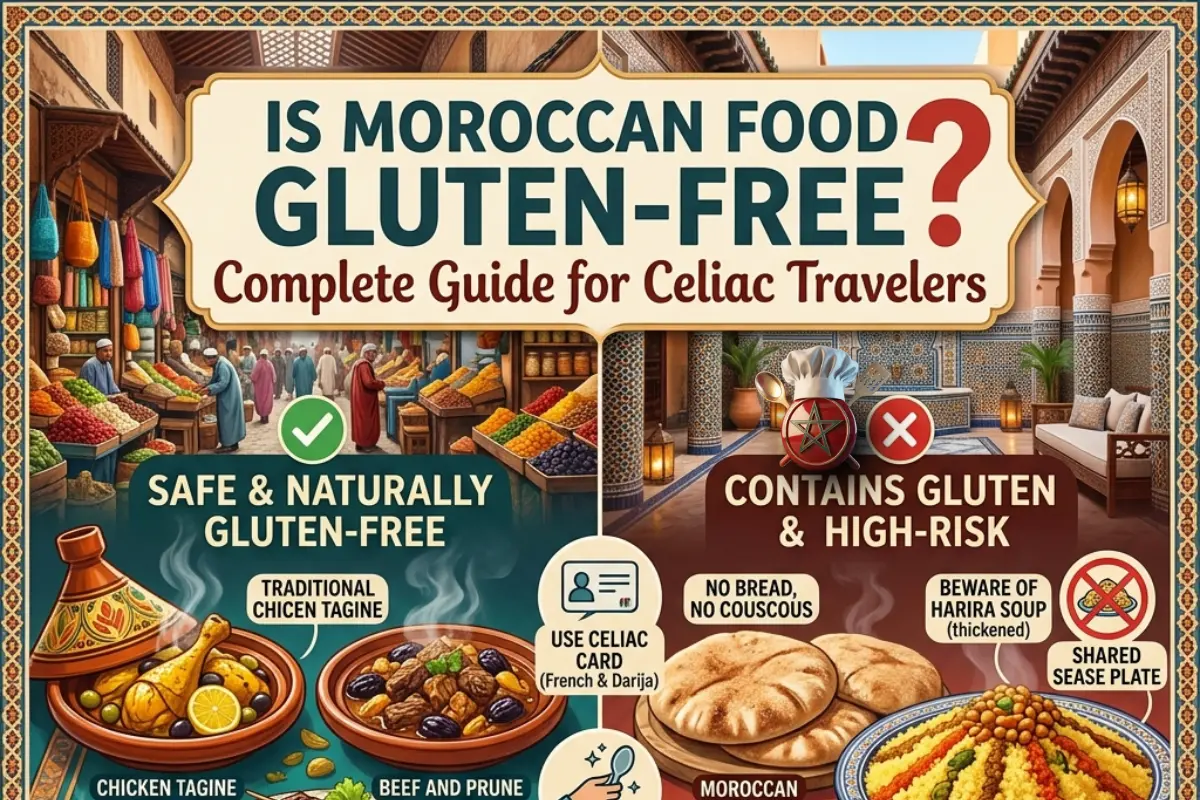
Introduction: Morocco Through Gluten-Free Eyes
Morocco's vibrant culinary landscape beckons travelers from around the world with its aromatic spices, rich flavors, and centuries-old traditions. However, for those living with celiac disease or gluten sensitivity, the question "Is Moroccan food gluten-free?" becomes paramount when planning their North African adventure. The short answer is nuanced: while Morocco offers numerous naturally gluten-free dishes, the cuisine also heavily features wheat-based staples that require careful navigation.
This comprehensive guide will equip you with the knowledge needed to safely explore Moroccan cuisine while managing celiac disease or gluten intolerance. From understanding traditional cooking methods to identifying safe dishes and communicating dietary needs in Arabic and French, we'll cover everything you need to know for a worry-free culinary journey through Morocco.
Morocco's food culture centers around communal dining, generous hospitality, and time-honored recipes passed down through generations. While this creates an incredibly rich gastronomic experience, it also means that cross-contamination and wheat-based ingredients are common considerations. Understanding which dishes are naturally gluten-free, which can be modified, and which to avoid entirely will empower you to fully embrace Morocco's culinary heritage without compromising your health.
Understanding Gluten in Moroccan Cuisine
The Wheat Reality in North African Cooking
Wheat has been a cornerstone of North African cuisine for millennia, and Morocco is no exception. The country's agricultural landscape produces significant quantities of durum wheat, which forms the basis for several iconic Moroccan dishes. Understanding the prevalence of wheat in traditional Moroccan cooking is crucial for celiac travelers to make informed dining decisions.
The primary gluten-containing grains found in Moroccan cuisine include wheat, barley, and occasionally rye. These grains appear in various forms throughout the culinary landscape, from the obvious bread and couscous to less apparent ingredients like certain spice blends and thickening agents used in stews and soups.
Common Sources of Hidden Gluten
Beyond the obvious wheat-based dishes, gluten can hide in unexpected places within Moroccan cuisine. Spice mixtures, particularly commercial ras el hanout blends, may contain wheat flour as an anti-caking agent. Traditional fermented beverages might use barley, and some preserved foods employ wheat-based stabilizers.
Cross-contamination presents another significant concern, especially in traditional kitchens where the same utensils, cutting boards, and cooking surfaces are used for both gluten-containing and naturally gluten-free ingredients. Many traditional Moroccan kitchens aren't equipped with the separate preparation areas that celiac-safe cooking requires.
The Couscous Conundrum
Perhaps the most challenging aspect of navigating Moroccan cuisine with celiac disease is the central role of couscous. This semolina-based grain product appears in countless dishes and is often considered Morocco's national dish. Traditional couscous is made from durum wheat semolina, making it completely off-limits for those with celiac disease.
However, the growing awareness of gluten sensitivity has led to the availability of alternative couscous made from corn, rice, or other gluten-free grains in some upscale restaurants and health-conscious establishments, particularly in tourist areas of major cities like Marrakech, Casablanca, and Fez.
Naturally Gluten-Free Moroccan Dishes
Tagines: Morocco's Gluten-Free Crown Jewel
Tagines represent the heart of Moroccan cuisine and, fortunately for celiac travelers, are typically naturally gluten-free. These slow-cooked stews, named after the distinctive cone-shaped clay pot in which they're prepared, rely on fresh ingredients, aromatic spices, and long cooking times to develop their complex flavors.
Traditional tagine recipes combine meat or poultry with vegetables, fruits, and an array of spices including ginger, cinnamon, saffron, and cumin. The cooking method involves layering ingredients in the tagine pot and allowing them to steam in their own juices, creating tender, flavorful dishes without the need for wheat-based thickeners.
Popular gluten-free tagine varieties include chicken with preserved lemons and olives, lamb with apricots and almonds, and vegetarian options featuring seasonal vegetables. The key is ensuring that the spice blends used are pure and haven't been contaminated with wheat flour during processing or storage.
Grilled Meats and Kebabs
Moroccan grilled meats, known as "meshwi," offer another safe haven for gluten-free diners. These dishes typically involve marinating meat in olive oil, lemon juice, and spices before grilling over open flames. Popular options include kefta (spiced ground meat), lamb chops, and chicken skewers.
The marinades used in Moroccan grilling traditionally rely on fresh herbs like cilantro and parsley, along with spices such as paprika, cumin, and black pepper. However, it's important to verify that pre-made marinades don't contain soy sauce or other gluten-containing ingredients that might be added in modern preparations.
Fresh Salads and Vegetable Dishes
Morocco's climate produces an abundance of fresh vegetables, which form the basis for numerous gluten-free salad options. Traditional Moroccan salads often feature tomatoes, cucumbers, peppers, and onions dressed with olive oil, lemon juice, and fresh herbs.
Taktouka, a cooked salad of tomatoes and peppers, represents a perfect gluten-free option that's widely available across Morocco. Similarly, zaalouk, made from eggplant and tomatoes, provides a flavorful and safe choice for celiac diners. These dishes are typically prepared fresh daily and don't involve any wheat-based ingredients.
Moroccan Soups: A Mixed Bag
While not all Moroccan soups are gluten-free, several traditional varieties can be safely enjoyed by celiac travelers. Chorba, a tomato-based soup with vegetables and sometimes meat, is typically gluten-free when prepared traditionally. However, harira, Morocco's famous lentil soup, traditionally contains wheat flour as a thickener and small pasta shapes, making it unsuitable for those with celiac disease.
Some restaurants now offer gluten-free versions of harira using alternative thickeners like cornstarch or rice flour, but this requires specific inquiry and isn't standard practice. When in doubt, stick to clear broths and vegetable-based soups that don't require thickening agents.
Moroccan Foods to Avoid with Celiac Disease
Bread and Baked Goods
Moroccan bread culture presents the most obvious challenge for celiac travelers. Khubz, the traditional round flatbread, is a staple at every meal and is made from wheat flour. This bread is so central to Moroccan dining that it's often used as an eating utensil, making cross-contamination a constant concern even when avoiding the bread itself.
Other baked goods to avoid include rghaif (flaky layered bread), msemen (square-shaped flatbread), and harcha (semolina flatbread). These items are ubiquitous in Moroccan bakeries and cafes, making it essential to have alternative snack options readily available during travel.
Moroccan pastries, including the honey-soaked chebakia and various filled pastries found in patisseries, are also wheat-based and should be avoided. While some establishments in tourist areas may offer gluten-free alternatives, this is far from standard practice.
Couscous-Based Dishes
As previously mentioned, traditional couscous is made from wheat semolina and forms the base for numerous Moroccan dishes. Beyond plain couscous, travelers must avoid dishes like couscous tfaya (with caramelized onions and raisins), couscous bidaoui (Casablanca-style), and the elaborate couscous royale served at many restaurants.
The challenge with couscous extends beyond the grain itself, as many vegetable and meat preparations served alongside couscous may also be cross-contaminated through shared cooking equipment and serving utensils.
Traditional Pastries and Sweets
Morocco's sweet traditions heavily rely on wheat flour, phyllo dough, and other gluten-containing ingredients. Popular desserts like pastilla (a savory-sweet pastry with meat or seafood), gazelle horns filled with almond paste, and various honey-soaked pastries are off-limits for celiac travelers.
Even seemingly simple sweets may contain wheat flour as a binding agent or be prepared in facilities with significant cross-contamination risks. When craving something sweet, opt for fresh fruits, which are abundant and delicious in Morocco, or simple preparations like dates stuffed with nuts.
Dining Out Safely in Morocco
Restaurant Communication Strategies
Successfully dining out in Morocco with celiac disease requires proactive communication and cultural sensitivity. Learning key phrases in Arabic and French can significantly improve your ability to convey dietary restrictions and understand menu options.
Essential phrases include "Ana la akul al-qamh" (I don't eat wheat) in Arabic, or "Je ne peux pas manger de blé" (I cannot eat wheat) in French. However, the concept of celiac disease may not be widely understood, so focusing on specific ingredients to avoid often proves more effective than explaining the medical condition.
Many upscale restaurants in major tourist areas have staff who speak English and may be familiar with gluten-free requirements. However, in smaller establishments and rural areas, patience and clear communication become essential. Consider carrying a translated card explaining your dietary restrictions in both Arabic and French.
Choosing the Right Establishments
Not all restaurants in Morocco are equally equipped to handle gluten-free requirements. International hotels and restaurants catering to Western tourists are more likely to understand celiac disease and have protocols in place to prevent cross-contamination.
Riads (traditional Moroccan houses converted to restaurants or hotels) often offer more personalized service and may be willing to accommodate special dietary requests with advance notice. Speaking directly with the chef or kitchen staff can help ensure your needs are understood and met.
Avoid buffet-style restaurants where cross-contamination risks are highest, and be particularly cautious with street food, which, while authentic and delicious, may not allow for the control needed to ensure gluten-free preparation.
Kitchen Safety and Cross-Contamination
Even when ordering naturally gluten-free dishes, cross-contamination remains a significant concern in traditional Moroccan kitchens. Shared cooking surfaces, utensils, and oil used for frying both wheat-based and gluten-free items can compromise otherwise safe meals.
When possible, request that your meal be prepared with clean utensils and cookware. While this may not always be feasible in busy kitchens, many restaurants will make an effort to accommodate such requests, especially when the health implications are clearly explained.
Consider timing your meals during less busy periods when kitchen staff can dedicate more attention to special preparation requirements. Lunch and early dinner services are often less hectic than peak dinner hours.
Gluten-Free Alternatives and Substitutions
Alternative Grains and Starches
While traditional Moroccan cuisine relies heavily on wheat, several naturally gluten-free grains and starches can serve as substitutes. Rice, though not traditionally Moroccan, is widely available and can replace couscous as a base for tagines and other sauced dishes.
Quinoa has begun appearing in health-conscious restaurants and can provide a protein-rich alternative to traditional grains. Some establishments now offer quinoa tabbouleh or use quinoa as a couscous substitute, though this is more common in upscale, internationally-influenced restaurants.
Potatoes, while not traditional in many Moroccan dishes, can serve as a satisfying starch component and are naturally gluten-free. Some tagine preparations include potatoes, making them more filling without relying on bread or couscous.
Gluten-Free Couscous Options
The growing demand for gluten-free options has led to the development of couscous alternatives made from corn, rice, and other gluten-free grains. While these products may not have the exact texture and flavor of traditional wheat couscous, they can provide a familiar dining experience for those missing this Moroccan staple.
Some specialty food stores in major Moroccan cities now carry gluten-free couscous, and a few progressive restaurants have begun offering it as an alternative. However, availability remains limited, so travelers shouldn't rely on finding these options consistently throughout their journey.
Rice-based couscous alternatives tend to work best with traditional Moroccan preparations, as they absorb flavors well and provide a similar textural experience to wheat-based varieties.
Bread Alternatives
While traditional Moroccan bread is off-limits for celiac travelers, some alternatives can help maintain the social and practical aspects of bread consumption during meals. Corn tortillas, while not Moroccan, are sometimes available in international markets and can serve as a vehicle for scooping up tagines and other sauced dishes.
Some health food stores in major cities carry gluten-free bread options, though these are typically expensive and may not be readily available outside urban centers. Planning ahead and bringing gluten-free crackers or other portable bread alternatives can help ensure you always have safe options available.
Shopping for Gluten-Free Ingredients in Morocco
Modern Supermarkets and Health Food Stores
Morocco's major cities now feature modern supermarkets that stock international products, including some gluten-free options. Chains like Marjane, Label'Vie, and Carrefour in cities like Casablanca, Rabat, and Marrakech carry imported gluten-free products, though selection may be limited and prices can be high.
These stores often have dedicated health food sections where gluten-free pasta, crackers, and other specialty items can be found. However, product availability can be inconsistent, so stock up when you find suitable options.
Reading labels carefully becomes even more important when shopping in Morocco, as products may be labeled in Arabic, French, or both. Familiarizing yourself with ingredient names in these languages can help you make safer choices.
Traditional Markets and Ingredient Safety
Morocco's traditional souks and markets offer an abundance of naturally gluten-free ingredients, including fresh fruits, vegetables, nuts, and spices. However, purchasing spices from bulk bins carries cross-contamination risks, as the same scoops may be used for wheat flour and pure spices.
When buying spices, opt for pre-packaged options when available, or purchase from vendors who can provide dedicated scoops for each spice. Single-ingredient spices are generally safer than complex blends, which may contain wheat-based anti-caking agents.
Fresh produce from traditional markets is typically safe and offers an excellent way to prepare your own gluten-free meals when staying in accommodations with kitchen facilities.
Cooking Your Own Meals
Preparing some of your own meals provides the ultimate control over ingredients and cross-contamination risks. Many riads and vacation rentals offer kitchen access, allowing you to combine fresh local ingredients with safe preparation methods.
Simple dishes like grilled meats with vegetables, fresh salads with local olive oil and lemon, and fruit-based desserts can provide satisfying meals that capture Moroccan flavors without gluten-related risks. Local markets offer excellent ingredients at reasonable prices, making self-catering both practical and economical.
Consider packing essential items like gluten-free pasta, crackers, and your preferred seasonings to ensure you always have safe backup meal options available.
Regional Variations and Local Specialties
Coastal Cities: Seafood Opportunities
Morocco's Atlantic and Mediterranean coastlines offer excellent opportunities for gluten-free dining through fresh seafood preparations. Cities like Essaouira, Agadir, and Tangier feature restaurants specializing in grilled fish and seafood tagines that are typically naturally gluten-free.
Fresh fish grilled with olive oil, lemon, and local herbs provides both a safe and authentically Moroccan dining experience. However, be cautious of breaded fish preparations and ensure that marinades don't contain soy sauce or other gluten-containing ingredients.
Seafood pastilla, while delicious, uses phyllo dough and should be avoided. Instead, opt for simple grilled preparations that highlight the quality of Morocco's excellent seafood.
Atlas Mountains: Traditional Berber Cuisine
The Berber communities of Morocco's Atlas Mountains maintain traditional cooking methods that often rely on naturally gluten-free ingredients. Dishes featuring lamb, goat, and local vegetables prepared in tagines offer safe dining options in mountain regions.
Traditional Berber bread is still wheat-based, but the emphasis on grilled meats, dairy products like fresh cheese, and seasonal vegetables provides numerous gluten-free options for adventurous travelers exploring Morocco's mountainous regions.
Be particularly careful with barley-based dishes, which are more common in mountain regions and can be easily mistaken for other grains by unfamiliar travelers.
Desert Regions: Nomadic Culinary Traditions
Morocco's desert regions, particularly around Merzouga and the Sahara, offer unique culinary experiences rooted in nomadic traditions. These often center around grilled meats, dates, nuts, and dairy products – many of which are naturally gluten-free.
Traditional desert camping experiences may present challenges for celiac travelers, as communal cooking and limited ingredient variety can increase cross-contamination risks. Communicating dietary needs in advance and bringing safe backup foods becomes especially important in these remote areas.
Travel Tips for Celiac Travelers
Packing Essentials
Successful gluten-free travel to Morocco requires thoughtful packing of essential items that may be difficult to find locally. Consider bringing gluten-free crackers, pasta, energy bars, and other non-perishable staples that can serve as meal replacements when safe options aren't available.
Pack more than you think you'll need, as finding suitable replacements can be challenging, especially outside major cities. Portable snacks become particularly important during long travel days between cities or when exploring remote areas.
Include a basic first aid kit with medications for accidental gluten exposure, and ensure you have adequate travel insurance that covers celiac-related health issues.
Accommodation Considerations
Choosing accommodations with kitchen facilities provides maximum control over meal preparation and ingredient safety. Many riads and vacation rentals offer kitchenettes or full kitchens, allowing you to prepare safe meals using fresh local ingredients.
When booking hotels, inquire about gluten-free breakfast options and whether the restaurant staff is trained to handle dietary restrictions. International hotel chains are more likely to have established protocols for managing celiac requirements.
Consider staying in accommodations near modern supermarkets where you can purchase gluten-free products and fresh ingredients for meal preparation.
Emergency Preparedness
Despite careful planning, accidental gluten exposure can occur while traveling. Prepare by learning the locations of medical facilities in areas you'll be visiting and ensuring you have access to any medications needed to manage symptoms.
Carry a translated medical card explaining your condition and dietary requirements in Arabic and French. This can be crucial in emergency situations where clear communication about your condition is essential.
Maintain a list of safe restaurants and food sources in each city you plan to visit, providing backup options when your first choices aren't available or suitable.
Frequently Asked Questions
Is traditional Moroccan couscous gluten-free?
No, traditional Moroccan couscous is made from wheat semolina and contains gluten. However, some restaurants in tourist areas now offer gluten-free couscous alternatives made from corn or rice. These substitutes aren't traditional but can provide a similar dining experience for those with celiac disease. Always verify the ingredients and preparation methods before ordering.
Can I eat tagines safely with celiac disease?
Most traditional tagines are naturally gluten-free, as they consist of meat or vegetables slow-cooked with spices and don't typically contain wheat-based thickeners. However, cross-contamination is possible through shared cooking equipment, and some modern preparations might include wheat flour. Always confirm ingredients and preparation methods with restaurant staff, and choose establishments that understand gluten-free requirements.
What Moroccan bread alternatives are available for celiacs?
Traditional Moroccan bread (khubz) contains wheat and isn't safe for celiacs. Gluten-free bread options are limited in Morocco, though some upscale hotels and international supermarkets in major cities may carry imported alternatives. Consider bringing gluten-free crackers or flatbreads from home, or focus on dishes that don't require bread as an accompaniment.
Are Moroccan spice blends safe for people with celiac disease?
Pure, single-ingredient spices are typically safe, but pre-mixed blends like ras el hanout may contain wheat flour as an anti-caking agent. Cross-contamination can also occur in facilities that process both spices and wheat products. When possible, purchase pre-packaged spices from reputable sources, or buy from spice vendors who can guarantee their products are pure and uncontaminated.
How do I communicate my dietary restrictions in Morocco?
Learn key phrases in Arabic ("Ana la akul al-qamh" - I don't eat wheat) and French ("Je ne peux pas manger de blé" - I cannot eat wheat). Many people may not understand "celiac disease," so focus on specific ingredients to avoid. Carry a translated card explaining your dietary restrictions, and consider working with restaurants that cater to international tourists and are more likely to understand gluten-free requirements.
Can I find gluten-free products in Moroccan supermarkets?
Modern supermarket chains in major cities like Casablanca, Marrakech, and Rabat carry some imported gluten-free products, though selection is limited and prices are typically high. Availability can be inconsistent, so stock up when you find suitable options. Traditional markets offer naturally gluten-free ingredients like fresh produce, nuts, and pure spices, but require careful attention to avoid cross-contamination.
What should I do if I accidentally consume gluten while traveling in Morocco?
Prepare for potential accidental exposure by packing appropriate medications and knowing the locations of medical facilities in areas you're visiting. Carry a translated medical card explaining your condition in Arabic and French. Stay hydrated, rest, and seek medical attention if symptoms are severe. Having comprehensive travel insurance that covers celiac-related health issues is also recommended.
Conclusion: Embracing Moroccan Cuisine Safely
Traveling to Morocco with celiac disease requires careful planning, cultural sensitivity, and a proactive approach to dining, but it certainly doesn't mean missing out on the country's incredible culinary heritage. By understanding which dishes are naturally gluten-free, learning to communicate effectively about dietary restrictions, and choosing appropriate restaurants and accommodations, celiac travelers can safely explore Morocco's rich food culture.
The key to successful gluten-free travel in Morocco lies in preparation, flexibility, and maintaining realistic expectations. While you may not be able to experience every traditional dish, the naturally gluten-free options – from aromatic tagines to fresh grilled seafood to vibrant salads – offer more than enough variety to create memorable culinary experiences.
Morocco's growing tourism industry and increasing awareness of dietary restrictions mean that gluten-free options continue to improve, particularly in major cities and tourist destinations. By supporting restaurants and establishments that accommodate celiac requirements, travelers help create demand for safer dining options that benefit future visitors with similar needs.
Remember that successful gluten-free travel is about more than just the food – it's about experiencing Morocco's warm hospitality, rich culture, and stunning landscapes while maintaining your health and well-being. With proper preparation and the right approach, your Moroccan adventure can be both safe and unforgettable, offering a unique perspective on one of the world's most fascinating culinary traditions.
The journey of exploring Moroccan cuisine with celiac disease may require extra effort, but the rewards – from the perfect tagine shared with new friends to the discovery of a hidden gem restaurant that truly understands your needs – make every precaution worthwhile. Morocco awaits, and with the right knowledge and preparation, its culinary treasures can be safely yours to discover and enjoy.