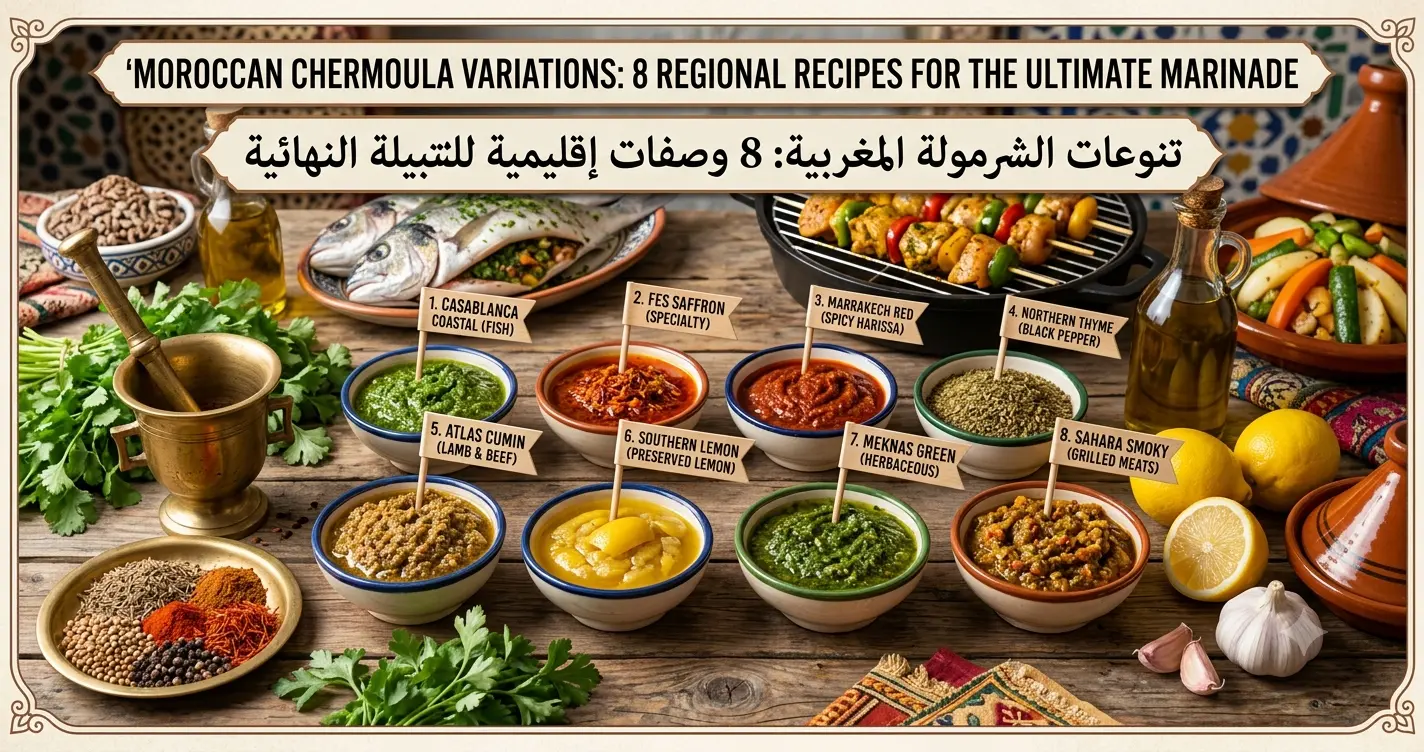
There is a moment in every serious cook’s life when they encounter a preparation so elemental, so layered with meaning and history, that it permanently reframes how they think about flavor. For me, that moment happened in a small riad kitchen in Essaouira, watching a fisherman’s wife named Fatima massage a gleaming fillet of sea bass with a dark green paste so fragrant that it made the whole courtyard smell like a coastal garden after rain. That paste was chermoula — and nothing I had learned in any Western kitchen had prepared me for it. Chermoula is not simply a marinade. It is Morocco’s culinary fingerprint, a living archive of Berber, Arab, Andalusian, and sub-Saharan influences pressed into a mortar and pounded into something extraordinary. In this comprehensive guide, crafted exclusively for the readers of MaCooking, I will take you through eight distinct regional chermoula recipes, each one a window into a different Moroccan landscape, kitchen tradition, and cultural identity. Whether you are cooking for a weeknight dinner in London or a weekend feast in Los Angeles, these recipes will elevate your table in ways you never imagined possible.
What Is Chermoula? A Deep Dive Into Morocco’s Most Iconic Condiment
Before we get into regional variations, it is worth establishing a clear picture of what chermoula actually is — because the word gets thrown around loosely in Western food media, often stripped of its complexity and reduced to a generic “Moroccan herb sauce.” Let me be direct: that description barely scratches the surface.
Chermoula (also spelled charmoula, chermoullah, or sometimes simply “charmila” in older Moroccan households) is a marinade-cum-condiment-cum-finishing sauce that occupies a uniquely versatile position in Moroccan cooking. At its most fundamental, it is a wet paste or sauce built on a backbone of fresh herbs — almost always cilantro and flat-leaf parsley — combined with garlic, cumin, paprika, olive oil, and lemon juice or preserved lemon. But within that framework, there is extraordinary latitude for variation, and that is precisely where chermoula becomes fascinating.
The word itself is thought to derive from the Amazigh (Berber) linguistic tradition, and its roots speak to the pre-Arab culinary history of the Maghreb. Long before the Arab conquests of the 7th and 8th centuries brought saffron, rose water, and the tradition of combining sweet with savory, Berber cooks along the Atlantic coast were already building flavor pastes from wild herbs, preserved citrus, and coastal salt. What we now call chermoula is, in many ways, the direct descendant of those ancient preparations.
Over the centuries, as waves of Andalusian refugees arrived in cities like Fès and Tetouan following the Reconquista, as sub-Saharan trade routes brought dried chilies and exotic spices northward, and as Ottoman culinary influences filtered in from the east, chermoula absorbed and adapted. The result is a preparation that is simultaneously ancient and dynamic — one that every Moroccan cook makes slightly differently and every Moroccan family considers their version to be the definitive one.
The Primary Role of Chermoula in Moroccan Cuisine
Understanding how chermoula is used will help you make better decisions when applying it in your own kitchen:
- As a marinade: Fish, seafood, and poultry are marinated in chermoula for anywhere from 30 minutes to overnight before grilling, roasting, or braising. This is its most iconic application.
- As a stuffing: Chermoula is often packed inside whole fish, sardines, or vegetables before they are cooked, infusing the interior with herb and spice.
- As a cooking base: Added to tagines or pan sauces, chermoula dissolves into the braising liquid and forms the aromatic foundation of the dish.
- As a finishing condiment: Spooned over grilled meats, roasted vegetables, or warm bread at the table, chermoula acts as a bright, acidic counterpoint to rich, fatty dishes.
- As a dipping sauce: Especially in coastal towns, a looser chermoula is served alongside fried fish, crusty bread, and olives as a casual dipping accompaniment.
The Anatomy of Chermoula: Ingredients That Matter
Every component in chermoula pulls its weight. There is no filler here, no ingredient that is merely decorative. Understanding the role of each element will make you a significantly better chermoula maker.
The Herb Base
Fresh cilantro and flat-leaf parsley are the standard duo, used in roughly equal proportions in most recipes, though coastal recipes often lean heavier on cilantro while inland versions may favor parsley. The herbs must be fresh — dried herbs produce an entirely different (and significantly inferior) result. Use the stems of the cilantro freely; they carry tremendous flavor. With parsley, the leaves are the priority.
Garlic
Garlic is non-negotiable. It should be raw and pounded — not minced with a knife, which produces a sharper, more acrid result, but crushed and ground in a mortar, which releases the oils more gently and integrates them into the paste more fully. Most chermoula recipes call for two to six cloves per batch, depending on intensity preference.
Cumin
This is the spice that most definitively marks chermoula as Moroccan rather than, say, Lebanese or Yemeni. Ground cumin brings an earthy warmth that anchors the bright herbs and acid. Always use freshly ground cumin if possible — the difference is significant.
Paprika
Sweet paprika adds color and a gentle, rounded pepper note. Smoked paprika (pimentón) is not traditional but has found its way into some contemporary Moroccan kitchens, particularly those influenced by the Spanish presence in northern Morocco.
Preserved Lemon vs. Fresh Lemon
This is one of the most important variables in chermoula, and one that produces dramatically different results. Preserved lemon — lemon cured in salt for weeks or months until the rind becomes soft, fragrant, and intensely flavored — adds a fermented depth and umami quality that fresh lemon simply cannot replicate. Fresh lemon juice, by contrast, delivers brightness and sharpness. Many of the finest chermoula recipes use both: preserved lemon for complexity and fresh lemon juice for acidity.
Olive Oil
Use a good extra-virgin olive oil. Morocco produces extraordinary olive oils, particularly from the Meknès region, and the oil you choose will significantly affect the final flavor of the chermoula. The oil acts as the emulsifying medium that carries all the fat-soluble flavor compounds from the spices and holds the paste together.
The Optional Elements
Depending on the regional tradition, chermoula may also include: saffron, cayenne pepper or dried red chili, turmeric, ginger, cinnamon (in small quantities), ras el hanout, fermented preserved garlic, argan oil (in southwestern recipes), and various dried or fresh herbs like mint, oregano, or even dried rose petals in very particular Fez-style preparations.
Comparing Core Chermoula Styles: A Regional Overview
| Region | Dominant Character | Key Distinctive Ingredient | Primary Application | Texture |
|---|---|---|---|---|
| Essaouira / Atlantic Coast | Bright, herby, citrus-forward | Heavy cilantro, preserved lemon | Fish and seafood | Loose paste |
| Fès | Complex, slightly sweet, aromatic | Saffron, ras el hanout | Poultry, stuffed vegetables | Smooth, refined |
| Marrakech | Bold, spiced, earthy | Cumin-heavy, cayenne | Lamb, merguez, grilled meats | Thick paste |
| Tetouan / Chefchaouen | Herby, Andalusian-influenced | Flat-leaf parsley dominant, mint | Goat, rabbit, vegetables | Chunky, rustic |
| Agadir / Souss Valley | Nutty, rich, warm | Argan oil, ginger | Fish, chicken, root vegetables | Emulsified, rich |
| Casablanca | Urban, balanced, versatile | Balanced herbs, smoked paprika | All-purpose | Variable |
| Saharan South (Zagora/Erfoud) | Warm, desert-spiced, deep | Turmeric, dried chilies, dates | Slow-cooked meats, camel | Thick, concentrated |
| Mediterranean North (Al Hoceima) | Fresh, lighter, Mediterranean | Oregano, lemon zest, white pepper | Grilled fish, shellfish | Light, herb-forward |
The 8 Regional Chermoula Recipes
Recipe 1: Essaouira Atlantic Chermoula — The Coastal Classic
If there is a “mother recipe” for chermoula, this is arguably it. Essaouira, the windswept blue-and-white port city on Morocco’s Atlantic coast, is where chermoula and fish have been inseparable companions for centuries. The local blue boats that rock in the harbor each morning deliver sardines, sea bass, red mullet, and mackerel that are almost immediately cloaked in this vivid green paste before hitting the grills along the port.
Ingredients:
- 1 large bunch fresh cilantro (approximately 60g), roughly chopped
- 1 small bunch flat-leaf parsley (approximately 30g), roughly chopped
- 4 large cloves garlic, peeled
- 1 teaspoon ground cumin
- 1 teaspoon sweet paprika
- ½ teaspoon cayenne pepper
- 1 whole preserved lemon (rind only, pith discarded), finely chopped
- Juice of 1 fresh lemon
- 4 tablespoons extra-virgin olive oil
- 1 teaspoon fine sea salt
Method: Begin by pounding the garlic with the salt in a mortar until a smooth paste forms. Add the herbs in batches, pounding after each addition. Incorporate the spices, then the preserved lemon rind. Stir in the olive oil and fresh lemon juice with a spoon rather than pounding further — you want a wet paste, not an emulsion. Adjust seasoning. Use immediately or refrigerate for up to 5 days.
Best used for: Whole grilled fish, sardines, and as a table condiment alongside seafood tagines.
Recipe 2: Fès Imperial Chermoula — The Aristocratic Version
Fès is Morocco’s culinary heartland, the city where cooking was elevated to an art form during the medieval period, and where the great Andalusian families who settled here after 1492 brought with them a tradition of refined, complex seasoning. The chermoula that emerges from Fèsi kitchens is noticeably different from the Atlantic version — more perfumed, more nuanced, with saffron adding a golden hue and a honeyed depth that is utterly distinctive.
Ingredients:
- 40g fresh cilantro, finely chopped
- 40g flat-leaf parsley, finely chopped
- 3 cloves garlic, pounded to a paste
- 1 teaspoon ground cumin
- ½ teaspoon sweet paprika
- ¼ teaspoon ground ginger
- A generous pinch of high-quality saffron threads, steeped in 2 tablespoons warm water for 15 minutes
- ½ preserved lemon, rind only, finely minced
- 3 tablespoons olive oil
- 1 tablespoon lemon juice
- Salt to taste
Method: Combine all ingredients including the saffron water in a bowl and mix thoroughly. The saffron water will tint the entire chermoula a beautiful golden-green. This recipe works best when made by hand rather than in a food processor — the texture should have visible herb pieces rather than being completely smooth.
Best used for: Chicken tagines, stuffed pigeon (bastilla), and braised lamb with olives.
Recipe 3: Marrakech Red Chermoula — The Bold Inland Version
Marrakech is a city of intense flavors — the smoky, loud, riotous energy of Djemaa el-Fna square permeates even its cooking. Marrakchi chermoula leans heavily red rather than green, with paprika and dried chilies taking the lead over herbs. This is the chermoula of the mechoui pits and the brochette stands, built for bold, grilled meats.
Ingredients:
- 30g flat-leaf parsley, chopped
- 20g fresh cilantro, chopped
- 4 cloves garlic, pounded
- 2 teaspoons sweet paprika
- 1 teaspoon hot paprika or ½ teaspoon cayenne
- 1½ teaspoons ground cumin
- ½ teaspoon ground coriander
- ¼ teaspoon cinnamon
- Juice of 1 lemon
- 4 tablespoons olive oil
- 1 tablespoon red wine vinegar
- Salt and black pepper to taste
Method: This recipe works beautifully in a food processor — process the herbs and garlic first, then add the dry spices and pulse to combine. Stream in the oil and liquids with the machine running until a thick, slightly chunky paste forms. The vinegar is a Marrakchi touch that adds brightness without the citrus note.
Best used for: Lamb kebabs, merguez sausages, grilled chicken thighs, and as a marinade for roasted leg of lamb.
Recipe 4: Tetouan Andalusian Chermoula — The Northern Herb Garden
Tetouan and the surrounding Rif mountain towns carry the most visible traces of Andalusian culinary heritage anywhere in Morocco. The families who fled Granada and Cordoba brought with them a love of fresh herbs, white pepper, and restrained spicing that you can still taste in this chermoula today. Mint makes a surprising but entirely successful appearance here.
Ingredients:
- 50g flat-leaf parsley (dominant herb here), chopped
- 20g fresh cilantro, chopped
- 10g fresh mint leaves, finely chopped
- 3 cloves garlic
- 1 teaspoon ground cumin
- ½ teaspoon white pepper
- ½ teaspoon sweet paprika
- Zest and juice of 1 lemon
- 3 tablespoons olive oil
- 1 teaspoon white wine vinegar
- Salt to taste
Method: Pound the garlic with salt, then incorporate herbs and spices by hand. The mint should be added last to preserve its delicate volatile oils. Do not over-process — this chermoula should retain a rustic, textured quality. The white wine vinegar is a distinctly Andalusian touch.
Best used for: Roasted goat, rabbit tagines, grilled vegetables, and as a dressing for warm chickpea salads.
Recipe 5: Agadir Argan Chermoula — The Souss Valley Specialty
The Souss Valley and the Agadir region are home to the argan tree, one of the most remarkable plants in the world, producing an oil so nutty, so complex, and so specific to this part of Morocco that UNESCO recognizes the argan ecosystem as a Biosphere Reserve. When argan oil replaces or supplements olive oil in chermoula, the results are transformative. This is one of the recipes I first documented on MaCooking after a trip to Taroudant, and reader response was overwhelming.
Ingredients:
- 50g fresh cilantro, chopped
- 30g flat-leaf parsley, chopped
- 4 cloves garlic
- 1 teaspoon ground ginger
- 1 teaspoon ground cumin
- ½ teaspoon turmeric
- ½ teaspoon sweet paprika
- 2 tablespoons culinary argan oil
- 2 tablespoons extra-virgin olive oil
- Juice of 1 lemon
- ½ preserved lemon rind, finely minced
- Salt to taste
Method: Pound garlic and herbs, stir in spices, then whisk in both oils and lemon juice. The argan oil has a strong, distinctive roasted-nut flavor — use culinary argan oil (as opposed to cosmetic grade) and treat it with respect. Do not heat it directly; add it off the heat to preserve its character.
Best used for: Fish couscous, roasted chicken with vegetables, sweet potato tagines.
“Chermoula is not a recipe you follow. It is a conversation you have with the ingredients available to you, the season you are in, and the dish you are building toward. Every Moroccan cook I have ever learned from has told me something different about it — and every version has been correct.”
Recipe 6: Casablanca Modern Chermoula — The Urban All-Rounder
Casablanca is Morocco’s most cosmopolitan city, a place where tradition and modernity negotiate constantly. The chermoula that has evolved in Casa kitchens reflects this — it is balanced, accessible, and remarkably versatile, designed to work across a wide range of dishes. Many Moroccan restaurants in the West use something close to this version because of its crowd-pleasing nature.
Ingredients:
- 40g fresh cilantro
- 40g flat-leaf parsley
- 4 cloves garlic
- 1 teaspoon ground cumin
- 1 teaspoon sweet paprika
- ½ teaspoon smoked paprika
- ½ teaspoon cayenne
- ½ teaspoon ground coriander
- Juice of 1½ lemons
- 5 tablespoons extra-virgin olive oil
- 1 tablespoon apple cider vinegar
- Salt and black pepper to taste
- Optional: 1 small shallot, finely grated
Method: This one lends itself beautifully to a blender or small food processor — process herbs, garlic, and shallot first, then add spices and liquids. Blend to a smooth, pourable consistency. The smoked paprika is a modern addition that adds another dimension without being inauthentic.
Best used for: Virtually anything — especially grilled chicken, roasted vegetables, grain bowls, and as a sandwich spread.
Recipe 7: Saharan South Chermoula — The Desert Spice Route Version
Travel south toward Zagora, Erfoud, and M’Hamid, and chermoula undergoes a dramatic transformation. The Atlantic herbs recede; the spices advance. This is the territory of the old trans-Saharan trade routes, and the chermoula here carries evidence of those exchanges — dried chilies, deep turmeric, warm cloves, and occasionally a date paste stirred through for sweetness. It is unusual, deeply complex, and once tasted, never forgotten.
Ingredients:
- 25g fresh cilantro
- 20g flat-leaf parsley
- 4 cloves garlic
- 1 teaspoon ground turmeric
- 1 teaspoon ground cumin
- 1 teaspoon sweet paprika
- ½ teaspoon ground ginger
- ¼ teaspoon ground cloves
- 1–2 small dried red chilies, seeds removed and soaked in warm water for 20 minutes, then drained and pounded
- 1 tablespoon date paste (soft Medjool dates blended with a little water)
- Juice of 1 lemon
- 4 tablespoons olive oil
- Salt to taste
Method: This chermoula must be made in a mortar. Begin with garlic and chilies, pound thoroughly. Add herbs, then spices. Stir in date paste, then oil and lemon. The resulting paste should be very thick, almost like a spice rub. This is not the bright green of coastal chermoula — it will be dark, rust-colored, and intensely aromatic.
Best used for: Slow-braised lamb shanks, goat tagines, and as a rub for whole roasted meats. Extraordinary on slow-roasted butternut squash.
Recipe 8: Al Hoceima Mediterranean Chermoula — The Light Northern Version
Al Hoceima, nestled on Morocco’s rugged Mediterranean coastline, produces a chermoula that feels almost Italian in its lightness — until the cumin and paprika remind you that you are unambiguously in North Africa. The Mediterranean influence here is real: this coastline has traded with Spain, Sicily, and the broader Mediterranean world for millennia, and the cooking reflects it in lighter spicing, more prominent use of lemon zest, and the inclusion of dried oregano alongside the fresh herbs.
Ingredients:
- 40g flat-leaf parsley, finely chopped
- 30g fresh cilantro, finely chopped
- 1 teaspoon dried oregano
- 3 cloves garlic, pounded
- 1 teaspoon ground cumin
- ½ teaspoon sweet paprika
- ¼ teaspoon white pepper
- Zest of 1 large lemon and juice of 1½ lemons
- 5 tablespoons excellent extra-virgin olive oil
- Salt to taste
Method: Mix all ingredients by hand in a bowl — this version should not be processed. The larger herb pieces and the light, olive oil–forward consistency are precisely the point. Taste and adjust: it should feel bright, herbal, and fresh with a clean lemon finish.
Best used for: Grilled whole fish (sea bass, red mullet, bream), shellfish, and light chicken dishes. Superb as a dressing for a warm white bean salad.
Ingredient Comparison: Key Chermoula Variables Across Regions
| Ingredient | Coastal Atlantic | Fès Imperial | Marrakech Red | Agadir Argan | Saharan South |
|---|---|---|---|---|---|
| Cilantro | Heavy (dominant) | Equal with parsley | Light | Heavy | Light |
| Parsley | Supporting | Equal with cilantro | Dominant | Supporting | Supporting |
| Saffron | Rarely | Always | No | No | Occasionally |
| Preserved Lemon | Always | Yes | Rarely | Yes | No |
| Argan Oil | No | No | No | Yes (key) | No |
| Dried Chilies | Occasionally | No | Yes | No | Always |
| Mint | No | No | No | No | No |
| Cinnamon | No | Trace amounts | Yes | No | Yes |
| Date Paste | No | No | No | No | Yes (signature) |
Expert Techniques: How to Make Chermoula Like a Moroccan Cook
Mortar and Pestle vs. Food Processor
This is the question I am asked most often by Western readers, and my answer is nuanced. A mortar and pestle is always preferable for chermoula — it ruptures herb cells rather than shredding them, which releases oils differently and produces a more integrated, cohesive paste. However, a food processor produces acceptable results for recipes where texture is less critical (like the Casablanca Modern version), and it is infinitely faster for large quantities.
If you use a food processor, pulse rather than blend continuously, and stop before the herbs become completely uniform. You want to retain some texture. Never use a blender for traditional chermoula — it over-processes everything and produces a watery, frothy result.
Marinating Times by Protein
- Delicate fish fillets (sole, flounder, tilapia): 15–30 minutes maximum. The acid in chermoula will begin to “cook” the protein (ceviche-style) if left too long.
- Robust fish (sea bass, mackerel, salmon): 30 minutes to 2 hours.
- Whole fish: 2–4 hours, ideally with chermoula both inside the cavity and outside.
- Chicken pieces: 4–8 hours or overnight in the refrigerator.
- Lamb and beef: 12–24 hours for the deepest penetration of flavor.
- Vegetables: 30 minutes to 2 hours.
The Salt Question
Salt in chermoula is not optional. Beyond seasoning, it plays a structural role in helping the herbs release their moisture and begin breaking down into a paste. Add salt early in the pounding process when using a mortar, and ensure you taste and adjust at the end. The preserved lemon also contributes significant sodium, so factor that in before adding additional salt.
Oil Temperature Matters
Never heat chermoula in a pan on its own — the fresh herbs will instantly oxidize and lose their vibrancy. When using chermoula as a cooking base in a tagine or braise, add it to the pot early with other aromatics and allow it to cook gently into the sauce. This is different from adding it as a marinade or finishing sauce, where it should always be used raw.
Storage and Freshness
Fresh chermoula is always best, but it keeps well in the refrigerator for 4–5 days in a sealed jar with a thin layer of olive oil poured over the top (this prevents oxidation and keeps the herbs green). You can also freeze chermoula in ice cube trays for up to 3 months — a single cube is perfect for seasoning a piece of fish or stirring into a sauce.
Chermoula Beyond Fish: Unexpected Applications That Will Change Your Cooking
Western cooks tend to associate chermoula exclusively with fish, and while that is certainly its most iconic application, limiting it to seafood is like using ras el hanout only on chicken. Here are some applications that might surprise you:
- Chermoula roasted cauliflower: Coat a whole head in Marrakech Red chermoula and roast at 200°C for 35–40 minutes. The spices caramelize and the result is extraordinary.
- Chermoula as a pasta sauce: Toss Fèsi chermoula with hot linguine, roasted cherry tomatoes, and pan-fried halloumi. A fusion that respects its Moroccan roots.
- Chermoula hummus: Swirl a generous spoonful of Atlantic chermoula into plain hummus just before serving. Dramatic visual, brilliant flavor.
- Chermoula eggs: Fry eggs in olive oil and spoon chermoula over them while still hot. Served with crusty bread, this is a complete breakfast.
- Chermoula vinaigrette: Thin any chermoula with extra lemon juice and a little water to make a punchy salad dressing. Works beautifully over bitter greens, roasted beets, or grain salads.
- Chermoula butter: Mix softened unsalted butter with Casablanca Modern chermoula (3:1 ratio by volume), roll in parchment, and refrigerate. Slice and place on grilled steaks or corn on the cob.
Frequently Asked Questions About Moroccan Chermoula
Q1: Can I make chermoula without preserved lemons? What can I substitute?
Yes, you can make excellent chermoula without preserved lemon, but you will lose a layer of complexity — that fermented, umami-rich depth that preserved lemon uniquely provides. The best substitution is a combination of fresh lemon zest (to capture some of the aromatic lemon oil from the rind) and an extra squeeze of fresh lemon juice. Some cooks add a tiny amount of white miso paste (half a teaspoon) to approximate the fermented quality of preserved lemon — this sounds strange but actually works remarkably well. If you cook Moroccan food regularly, I strongly encourage you to make your own preserved lemons — they require only lemons, salt, and 4 weeks of patience, and they will transform your cooking. We have a detailed preserved lemon guide available at MaCooking that walks you through the entire process.
Q2: My chermoula turns brown in the refrigerator. How do I prevent this?
Oxidation is the enemy of bright green chermoula. There are several strategies to minimize it. First, ensure you pour a thin layer of olive oil over the surface of the chermoula before sealing the container — this creates an oxygen barrier. Second, press plastic wrap directly against the surface of the chermoula before putting the lid on. Third, the lemon juice in the recipe acts as a natural antioxidant — a slightly more generous squeeze helps. Finally, storing chermoula in a smaller, fuller container (less air space) versus a large half-empty jar makes a significant difference. Some discoloration on the surface after a day or two is normal and entirely harmless — simply stir it back in.
Q3: Is there a chermoula that works well for vegetarians and vegans?
Every chermoula recipe in this guide is naturally vegan — there are no animal products in any of them. Chermoula is an entirely plant-based preparation in its traditional form. For vegetarians and vegans looking to build meals around chermoula, some of the most successful applications include: chermoula-marinated and grilled portobello mushrooms (use the Marrakech Red version), chermoula-roasted chickpeas, chermoula with warm lentils and wilted spinach, and chermoula-dressed roasted beet and orange salads. The Agadir Argan chermoula is particularly stunning on roasted root vegetables — the argan oil’s nuttiness complements carrots, parsnips, and sweet potatoes beautifully.
Q4: How spicy is chermoula traditionally? My family is sensitive to heat.
Traditional chermoula is generally mild to medium in heat — it is a flavor-forward preparation rather than a heat-forward one. The cayenne or hot paprika is always optional and can be omitted or reduced without compromising the integrity of the dish. Even the Saharan South version, which uses dried chilies, is more warm and complex than aggressively hot by Moroccan standards. If you are heat-sensitive, simply omit the cayenne and use only sweet paprika. The resulting chermoula will still be complex, fragrant, and delicious. Conversely, if you love heat, the Marrakech Red version is your entry point — it welcomes additional harissa stirred through it for a genuinely fiery marinade.
Q5: Can chermoula be used as a cooking sauce rather than just a marinade?
Absolutely — and in traditional Moroccan cooking, this is one of its primary applications. Chermoula is frequently added to tagines at the beginning of cooking, where it melts into the braising liquid and forms the aromatic base of the entire dish. It is also spooned over fish fillets that are then baked in the oven, creating a sauce that concentrates and caramelizes during cooking. For a classic Moroccan preparation, coat thick fish steaks in chermoula and layer them in a baking dish over sliced potatoes and tomatoes, then add a splash of water or fish stock and bake covered at 180°C for 25–30 minutes. The chermoula becomes an intensely flavored sauce that saturates the vegetables and keeps the fish perfectly moist. This dish — known as hout bil chermoula — is one of the foundational recipes of Moroccan home cooking.
Conclusion: Bringing Morocco’s Culinary Heart Into Your Kitchen
Chermoula, in all its regional diversity, is one of the most rewarding preparations you can add to your permanent cooking repertoire. It is quick to make, extraordinarily versatile, deeply nourishing, and connects you to a culinary tradition that stretches back centuries. Whether you start with the approachable Casablanca Modern version, dive straight into the complex Fèsi Imperial recipe with its saffron and preserved lemon, or take the adventurous path to the Saharan South with its dried chilies and date paste, you will find that chermoula repays your attention generously and consistently.
The eight recipes in this guide are not exhaustive — Morocco has forty million people and arguably forty million chermoula variations. They are, however, an honest and deeply researched representation of the regional diversity that makes Moroccan cuisine one of the great food cultures of the world. Use them as starting points, not endpoints. Taste, adjust, experiment, and over time, develop your own chermoula — the one that suits your kitchen, your palate, and your table.
For more authentic Moroccan recipes, in-depth technique guides, and the cultural context that brings this extraordinary cuisine to life, I invite you to explore everything we have created at MaCooking.com — your ultimate online destination for the real flavors of Morocco. From tagine masterclasses to couscous traditions, preserved vegetable techniques to pastry secrets, there is a lifetime of Moroccan culinary knowledge waiting for you there. The kitchen is open. Come in.